

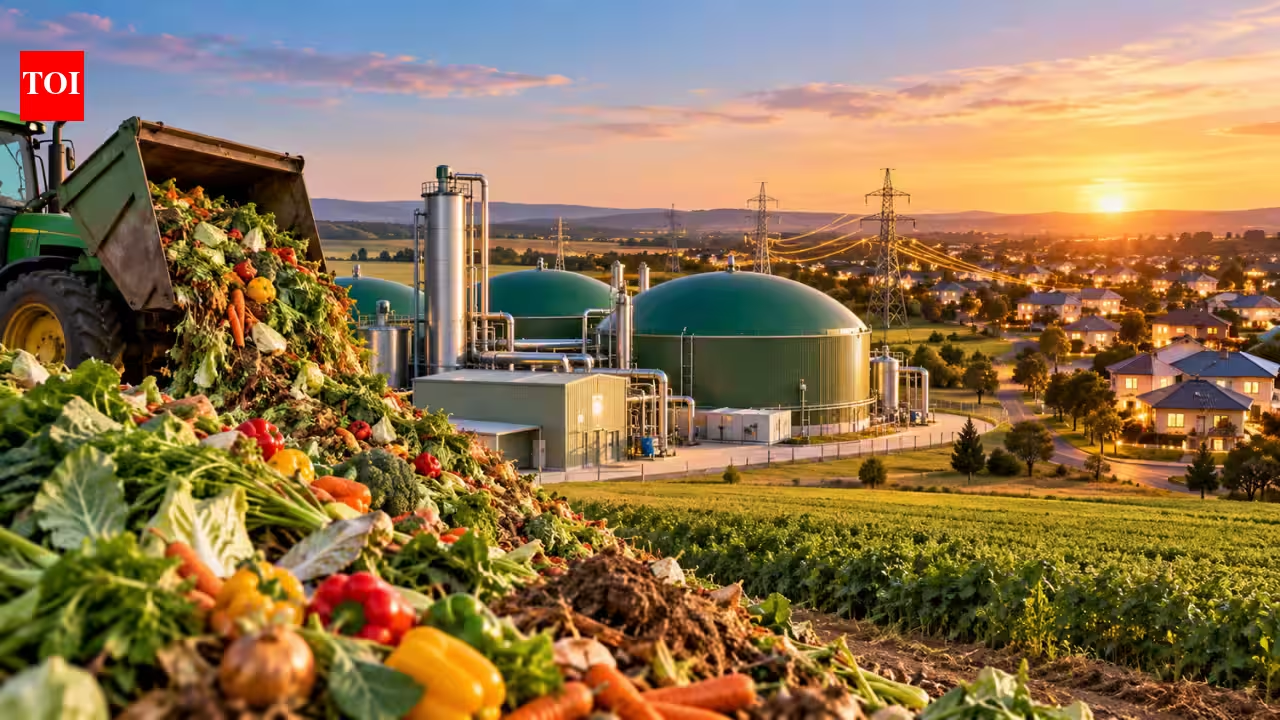
An Australian vegetable grower is backing a $291 million bioenergy and food precinct in Queensland that will turn agricultural and food waste into renewable energy and bio-fertilisers. Led by Kalfresh, the Scenic Rim Agricultural Industrial Precinct in Kalbar, south-west of Brisbane, has secured $80 million in joint investment from Queensland Investment Corporation and Wollemi Capital. According to the Queensland Government, the anaerobic digestion facility is expected to generate enough energy to power up to 31,000 homes or fuel up to 98 million kilometres of transport annually, with construction under way and the first energy flow scheduled for mid-2027.
How will Australia’s $291 million bioenergy project work
The Scenic Rim Agricultural Industrial Precinct will use anaerobic digestion to process agricultural and food waste and produce biogas. This approach will allow waste from the agricultural and food sectors to be used as an energy resource, while the facility will also produce bio-fertilisers for farming. The project brings food production and bioenergy infrastructure together at a single precinct in Kalbar, south-west of Brisbane.Kalfresh co-owner and chief executive officer Richard Gorman said the development would create opportunities to add value to agricultural waste. Gorman said: “Our food and bioenergy model will bring lasting benefits to the region through new investment in high-value manufacturing, value-adding waste into baseload energy and biofuels, and by creating valuable bio-fertiliser for the next crop.” The project is intended to connect agricultural production with energy generation and fertiliser production.
How is Kalfresh funding its $291 million bioenergy precinct
The $291 million precinct is being led by Kalfresh, a major Australian vegetable grower, and is supported by a joint $80 million investment from QIC and Wollemi Capital. The investment is intended to support the development of the bioenergy and food hub and advance the use of agricultural waste in energy production. The Queensland Government identified the project as part of its support for biofuels and other priority industries.Wollemi Capital is providing funding for the development alongside QIC. Tim Bishop, co-founder and co-chief executive officer of Wollemi Capital, described the project as “shovel-ready energy infrastructure”. In the government statement, Bishop said: “We’re backing this because it’s real, reliable and replicable – a model where agriculture and energy work together, underpinned by economics that stand up at scale.” QIC chief executive officer Kylie Rampa also highlighted the potential to create value from agricultural waste, stating: “This initiative will strengthen energy security while creating new value from what was once considered waste, and farmers are central to driving these practical solutions.”
How will Queensland’s $291 million bioenergy project create jobs
The Queensland Government said the Scenic Rim Agricultural Industrial Precinct is expected to deliver more than 1,000 jobs. This includes 641 positions during construction and 475 ongoing operational roles. The development is intended to support regional employment while creating additional opportunities in high-value manufacturing, bioenergy and agricultural production.Deputy Premier and Minister for State Development, Infrastructure and Planning Jarrod Bleijie said the project demonstrated how private-sector investment and industry innovation could contribute to regional development. According to the statement, Bleijie said: “Queensland is open for business, and we’re working with the private sector on strategic partnerships like this that will accelerate development and drive innovation in our priority industries, and create secure new jobs.” Minister for Finance, Trade, Employment and Training Ros Bates also highlighted the importance of investment in farming communities, saying: “We are focused on strengthening Queensland’s economy and making sure regional communities share in that growth.”
How will the Scenic Rim project combine food production and bioenergy
Construction of the Scenic Rim Agricultural Industrial Precinct has commenced, with the first flow of energy scheduled for mid-2027. Once operational, the facility is expected to provide energy for homes or transport while producing bio-fertilisers for agricultural use. The government has identified the project as part of its broader efforts to develop Queensland’s biofuels industry and strengthen energy security.The development places agricultural and food waste at the centre of a project combining food production, energy generation and fertiliser manufacturing. Its planned anaerobic digestion facility is expected to process waste into useful energy products, while the resulting bio-fertilisers will provide another output for the agricultural sector. With construction under way and the first energy flow scheduled for mid-2027, the project is set to become a new component of Queensland’s regional bioenergy infrastructure.