

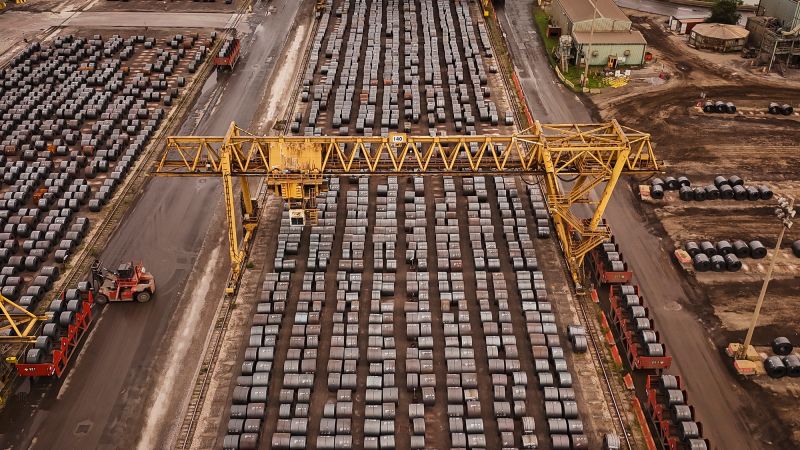
Rolled coils of steel sit in the yard at the ArcelorMittal Dofasco steel plant in Hamilton, Ontario, on August 20, 2026.
On September 8, Canada is set to enact tariffs ranging from 15% to 50% on over 700 American goods in an effort to match US tariffs dollar for dollar, Canadian officials announced on Tuesday
Notably, Canada is doubling its duties on US steel and aluminum to 50%, in line with the 50% tariffs the US had already imposed on Canadian steel and aluminum before the latest round of US tariffs. Canadian officials framed the move as a means of protecting Canadian manufacturing
The duties the US recently imposed on Canadian goods “will have real consequences for Canadian workers, businesses, and communities across our nation,” Canadian Finance Minister François-Philippe Champagne said in a press conference on Tuesday. “Canada must respond, and today we are in a proportionate, targeted, and strategic way.”
Canadian Industry Minister Mélanie Joly suggested that the levies were selected with upcoming US midterm elections in mind. “We’re also targeting products that will target states in the US. And so we’re being wise and strategic to put political pressure, and that’s why we think it’s the right thing to do right now,” she told reporters on Tuesday
These types of retaliatory tariffs are just some of the arrows Canada has in its quiver in a growing trade war with the United States
Beyond tariffs, Canada also has other tools at its disposal, including restrictions on key exports to the United States
Here’s what Canada is doing now, what could come next — and what each move could mean for Americans
Besides steel and aluminum, the retaliatory tariffs are concentrated on sectors such as paper products, construction materials, home appliances and agricultural products, including dairy and seafood
In total, the latest American tariffs cover about 5% of the goods the US imported from Canada last year, while Canada’s tariffs cover about 6% of the goods the US exported to Canada
Overall, Canada is the second-largest export market for American goods and is among the top destinations for many of the goods targeted by the new import duties
For example, Canada was the largest export market for US household appliances last year, purchasing more than $1 billion worth of the goods, most of which will now face a 25% tariff
In announcing the retaliatory actions, Canadian officials also unveiled a $7.5 billion CAD (around $5.4 billion USD) package to support domestic businesses harmed by the new duties
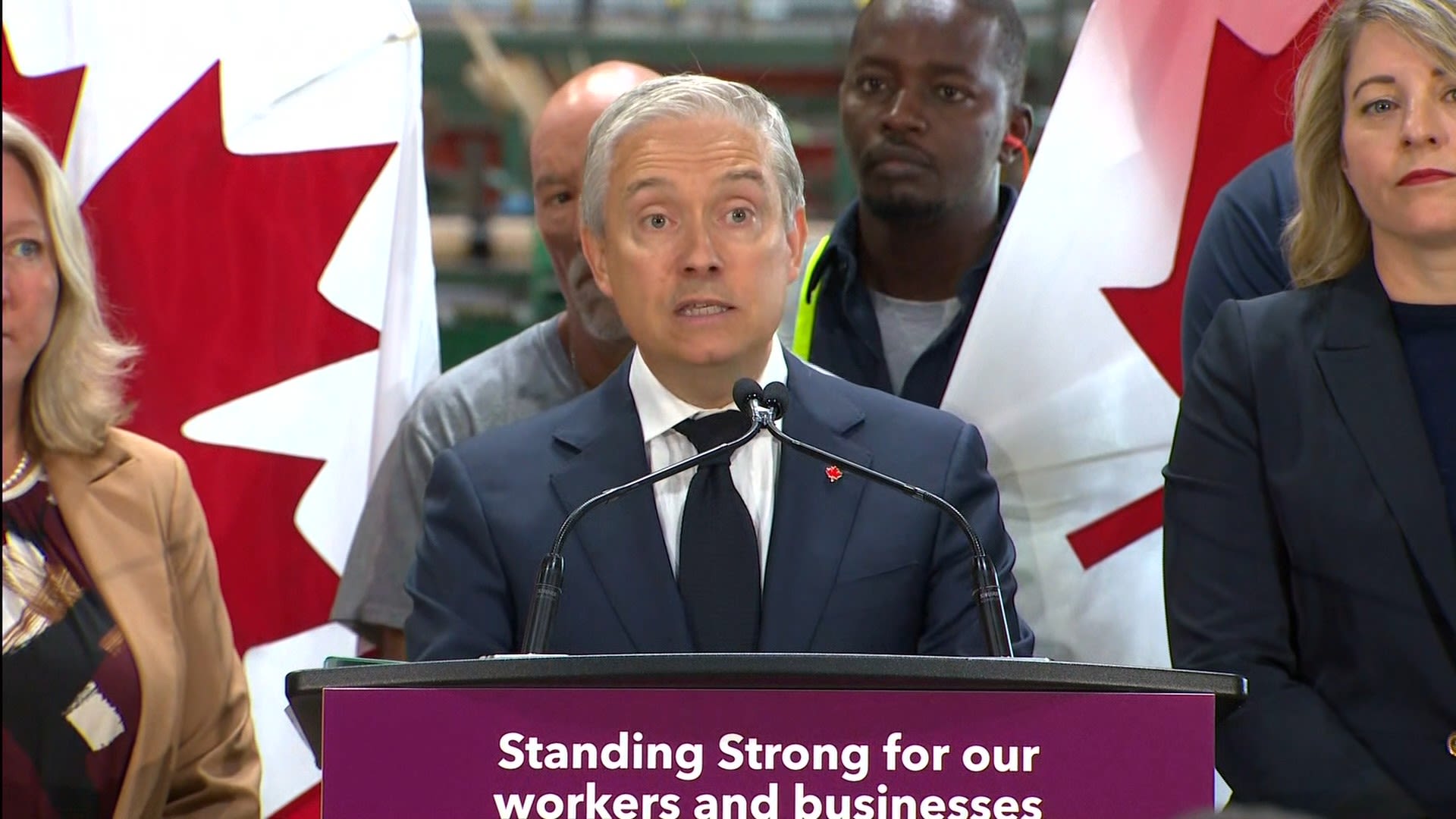
Canada announces new tariffs on US goods
0:32• Source:
CNN
Canada announces new tariffs on US goods
0:32
The risk for Americans here is that steep Canadian tariffs could weaken demand for these goods, which could force employers to cut workers’ hours or, in some cases, resort to layoffs
“The majority of these goods have been picked as they have readily available domestic alternatives, in an effort to hurt American businesses while minimizing the hit to Canadian consumers and industry,” Bradley Saunders, North America economist at Capital Economics, said in a note on Tuesday
Trump already signaled he may go beyond the latest tariffs in his trade fight with Canada, threatening on Monday to double tariffs on Canadian cars and auto parts to 50% starting January 1
And in another sign of the growing rift between the new nations, President Donald Trump threatened to rename Lake Ontario to Lake America. “I deal with many countries, and Canada is easily the most difficult and unreasonable,” Trump said in a Truth Social post
If Trump follows through on the auto taxes — or escalates in other ways — Ottawa could use other ammunition
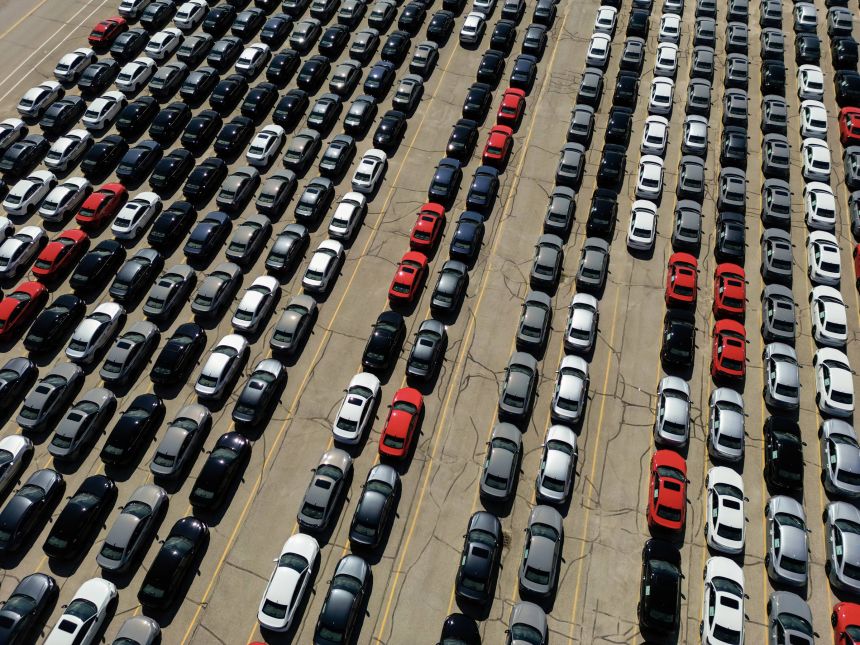
Cars are parked at a Manufacturing facility in Alliston, Ontario, on August 19, 2026.
Canada could restrict key exports to the US, such as energy and a key fertilizer ingredient known as potash, said Diamond Isinger, a policy strategist and former special advisor on Canada-US relations to Prime Minister Justin Trudeau
Another vulnerable area is electricity. Ontario Premier Doug Ford said in an interview published Monday that Canada should be prepared to cut off electricity exports to the United States if the trade war worsens, putting a potentially powerful weapon on the table. Ontario supplies electricity to several US states, including New York, Michigan and Minnesota
Carney echoed Ford on Monday, telling reporters that “nothing is off the table.”
Any such moves could add to the price pressures Americans have faced this year. Altogether the cost of living is up 3.4% from a year ago Gas prices, up almost 25% compared to last year, have weighed heavily on consumers’ finances. The cost of powering homes is also up, with electricity and piped gas both costing around 4% more annually
Tariffs could make it harder for US companies to sell their goods in Canada
Restrictions on energy, electricity or critical minerals, something Ford also floated, could instead raise costs for American companies and consumers by making key inputs more expensive or harder to obtain
For instance, last year, Ontario briefly applied a 25% surcharge on electricity imports to the United States. The Ontario government estimated at the time that it would affect 1.5 million American homes, costing up to $400,000 CAD (around $280,000 USD) “every day the surcharge remains in place.”
Restrictions on these key Canadian goods could quickly be felt by US businesses and consumers, making it harder to stay afloat, Isinger said
See all topics
