

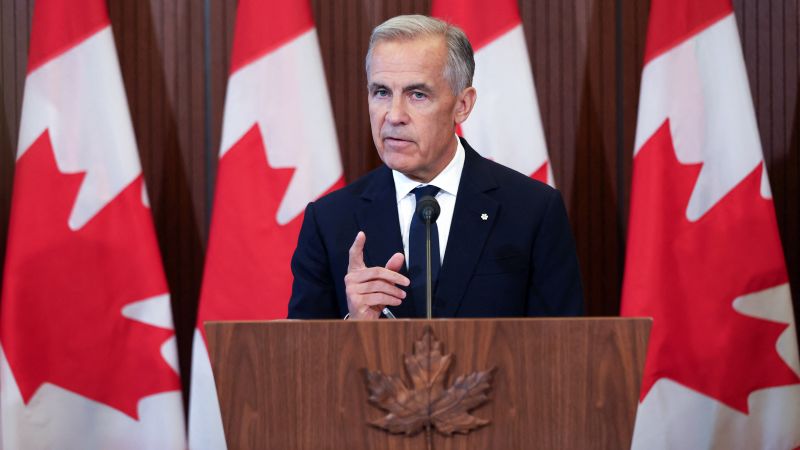
Canadian Prime Minister Mark Carney speaks at a press conference in Ottawa, Ontario, on August 22 <a href="https://todaytrendnews7.com/trump-says-canada-wants-benefits-of-being-us-state-after-trade-talks-collapse/" title="Trump says Canada wants 'benefits' of being US state after trade talks collapse”>after trade talks with the US collapsed.
See all topics
President Donald Trump threatened to double tariffs on Canadian cars on Monday, the latest sign that the United States and Canada are barreling toward a deeper trade war after last-ditch efforts to strike a deal collapsed Friday
The failed efforts resulted in President Donald Trump enacting 50% tariffs on roughly $20 billion worth of Canadian goods early Saturday morning. Canada is preparing to retaliate with “dollar-for-dollar” tariffs starting September 8, Prime Minister Mark Carney announced over the weekend
And on Monday, Trump escalated matters further, threatening to double duties charged on Canadian cars and car parts to 50% come January 1
“Canada has been ripping off the United States of America for years,” Trump said in a Truth Social post. “Not sustainable, and NOT ANYMORE!”
In his post Trump also threatened to increase steel duties to 50% on January 1; however, that’s the current tariff rate for those products
To avoid the Canadian duties, American businesses have a few options: stop importing the impacted goods altogether until they run through their inventory, pay the exorbitant tariff or switch suppliers
However, Canada may have been selected in the first place because it offered a cost or logistical advantage that isn’t easily replicated elsewhere. Companies that move their purchases, when possible, could therefore end up paying more anyway
And with the war in Iran already driving up energy and transportation costs, businesses have less room to absorb another hit. That increases the chances that at least some of the tariff costs ultimately land on consumers
If Ottawa proceeds with its retaliatory duties, Trump is all but certain to fire back, making the trade war with America’s second-top trading partner even more painful for both sides
For now, though, here are three areas where Americans could start to see goods get more expensive:
Everything from parchment paper to cups and plates made from paper are covered under the new levies. The duties also apply to kraftliner, which is a strong paperboard, primarily used in the outer layer of cardboard boxes
Among the hundreds of items listed were also around three dozen types of plywood
The products fall within broader categories that accounted for around $1.5 billion of US imports from Canada last year
Wine, beer, spirits, including whiskey, vodka, gin, are all impacted. The US imported about $1.5 billion worth of these goods last year, according to the data
Alcohol has been a sticking point between Canada and the US throughout negotiations after Canadian provinces pulled American alcohol products from their shelves last year in response to US-imposed tariffs
Those bans largely remain in place. Last week, amid trade talks with the US, Carney asked premiers to consider bringing US alcohol back to store shelves in hopes of reaching a deal
A wide array of dairy products from Canada are also caught up in the tariff crossfire. That includes milk, cheeses, butter and whey. In total, the US bought $780 million worth of dairy products from Canada last year
Along with alleged discrimination against American cars and alcohol, Trump claimed Canada has been unfairly restricting sales of American dairy there
See all topics
