

FC Dallas is chasing points on the field and frequent‑flier miles in the air
After returning from a two‑month World Cup break, the team will log 15,000 miles by the end of August — a staggering load that includes domestic trips to Portland, San Diego, Los Angeles and San José, as well as to Toluca, Mexico for Leagues Cup play.
This week alone brings flights to Salt Lake City, Vancouver and St. Louis
Article continues below this ad
The club hasn’t played an MLS regular‑season match at Toyota Stadium since May 13.Its next home game won’t come until Sept. 5, when Sporting Kansas City visits Frisco
This run is, by every measure, an anomaly. MLS teams occasionally endure long road swings, but nine straight league matches plus two additional trips for Leagues Cup play is virtually unheard of. The closest recent parallel is Vancouver, which opened its season with six consecutive road games
The mileage is staggering, but the deeper strain comes from the nonstop motion. Packing and repacking, the customs lines, the hotel shuffle, and the emotional weight of being away from home and family for weeks at a time. This stretch has become a genuine stress test of FC Dallas’ infrastructure and capability to handle an atypical schedule and a window into the behind‑the‑scenes operation that makes it possible
All hands on deck
The physical toll of travel is obvious. The logistical toll is harder to see
Article continues below this ad
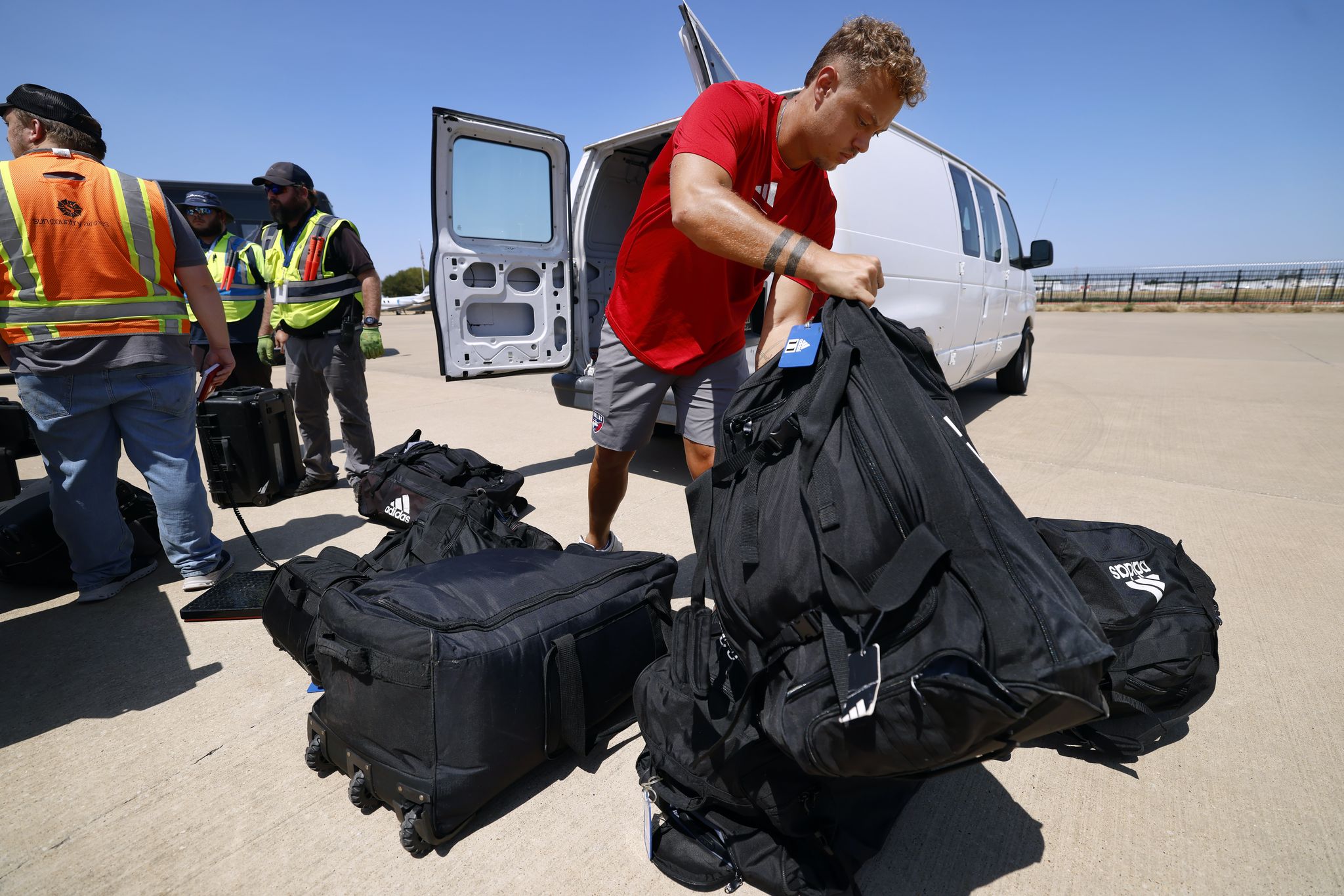
For its matches in Salt Lake City, Vancouver and St. Louis, FC Dallas travels with approximately 150 bags.
The players’ equipment weighs around 900 pounds: uniforms, 50 balls, cones, hurdles, resistance bands, GPS vests, gym equipment, rehab tools, practice cleats, game cleats, indoor shoes, and dozens of other items that make a professional team function
“It’s a lot of pressure and responsibility, but I love my job,” said equipment manager Alejandro ‘Nacho’ Pareja, who oversees the entire operation
Pareja’s office at Toyota Stadium is small, but it functions like a command center. Every player’s gear is organized in separate compartments, each tailored to individual preferences. And those preferences are endless
Some players wear compression shorts under their game shorts. Others insist on short‑sleeve training tops, while a few prefer long sleeves. Some cut their socks for comfort. Others use specialized socks different from the rest of the team. A handful request specific shoe models for training, another for matches and a third for gym sessions
Article continues below this ad
Pareja packs each player’s bundle separately. One might think he relies on a customized list with each player’s name and requirements
“No, no list,” he said. “I already know by memory what each of them likes.”
His memory is a tool as valuable as any piece of equipment he handles. But communication is just as important. Pareja says the constant dialogue with players builds trust — a bond that ensures they feel prepared, comfortable, and cared for
The work for Pareja and his crew never stops.
On Sunday night, FC Dallas played in Austin. After a three‑hour bus ride home, the team arrived in Frisco just before sunrise. A few hours later, Pareja and his crew were already in the laundry area, washing and folding uniforms for the next three matches on the road
Article continues below this ad
“You have to plan every trip, every training session, every game, every uniform,” he said. “That’s my job.”
Inside the logistical mayhem
While Pareja manages the day‑to‑day demands of keeping a team outfitted and ready, the broader challenge of moving FC Dallas across North America falls to Tanner Holley
Holley, the manager of soccer operations, is responsible for planning and executing every aspect of FC Dallas’ road travel.
Article continues below this ad
Charter flights. Hotel accommodations. Negotiations with airlines, hospitality partners and ground transportation companies
This season has tested him more than any other.
FC Dallas is in the final stretch of nine straight MLS road games, plus two additional trips — to San José and Toluca — for Leagues Cup matches. The scale of the challenge is unlike anything most MLS clubs face
“This is a planning job that takes months,” Holley said. “For a lot of these flights, we book even in January, during preseason. And then when Leagues Cup gets thrown at us, having to go to Toluca, some things change.”
Some trips are straightforward. Others are labyrinths
Article continues below this ad
The Toluca trip was one of the latter. To enter Mexico, the team had to hire an airline authorized to land at Toluca’s airport.
Nearly 150 bags went through Mexican customs. Players had to clear immigration.
The team played on Wednesday, Aug. 12, and immediately after the match headed to the airport for the return flight
A two‑hour delay meant the delegation didn’t reach North Texas until Thursday morning
For Holley, it was a logistical gauntlet. For FC Dallas coach Eric Quill, it was a milestone — his first international match coached outside the United States
“Toluca’s stadium feels like a beautiful cage,” Quill said. “The fans are on top of you. They have murals of all their champions and championship moments. It can be intimidating, but also an amazing experience we’ll cherish.”
Even the best‑laid plans can unravel sometimes. On Tuesday, FC Dallas was fully checked in at the charter terminal at Love Field, ready to depart for Utah ahead of its match against Real Salt Lake. But the aircraft assigned to the team suffered mechanical problems, prompting the airline to cancel the flight outright. The club didn’t reach Utah until Wednesday, turning a three‑hour journey into a same‑day dash before kickoff at America First Field
It ended with a thrilling 4-3 FC Dallas win
Keeping the team focused
For each road game, about 57 people travel: players, coaches, PR staff, executives, and support personnel.
Holley books at least 27 hotel rooms per trip. Players share rooms, as do most staff members
“My team’s job is to make sure everyone gets where they need to be on time and in the right place,” Holley said. “The goal is to take as much as we can off their plates and their minds so they can just focus on the game
That means anticipating everything: weather delays, customs bottlenecks, hotel check‑in issues, meal schedules, training‑ground availability, bus routes, and even the small comforts that help players feel grounded amid constant movement
From June 22 to the end of August, FC Dallas will have flown 15,000 miles — about 40% of its total seasonal travel
For comparison: a Premier League team in England flies 4,000 to 5,000 miles in an entire season
Between July 22 and Aug. 30, FC Dallas will have spent 29 days on the road — a rarity, if not a complete anomaly, in professional sports
The emotional toll is real. The physical toll is unavoidable. The mental toll is cumulative
Quill is acutely aware of all three
“We always ask guys to be strong‑willed,” he said. “We never want to create a narrative of weakness.”
The travel, he says, is taxing. It’s disruptive. It’s exhausting. But it’s also an opportunity
“My message is it’s never sympathetic,” Quill said. “It’s more like, ‘this is our job.’ We do our best work when we’re up against the odds.”
