

For the three months ending in May, the Fort Worth area added jobs at an annualized rate of 3.4%, easily outpacing the state’s 2.4% average over the same period, according to a report released Monday by the Dallas Fed.
The local job gains cooled in May compared to the two previous months, but the new data still amounts to another shot in the arm for one of the country’s most notable metro area success stories. Recent census data showed that Fort Worth proper added nearly 20,000 residents between July 2024 and July 2025, for a new population of 1.03 million, ranking it as the country’s 10th most populous city and among the fastest growing large cities.
Tarrant County has also been growing rapidly, and for years the Fort Worth metro area — home to notable aerospace and healthcare industries as well as a burgeoning entertainment industry largely tied to Landman creator Taylor Sheridan — has ranked among the country’s fastest growing local economies.
Article continues below this ad
“Fort Worth has experienced a surge of population and economic growth, broadening its economic base while maintaining its unique strengths in energy, transportation and distribution, and manufacturing,” Pia Orrenius, a senior economist at the Dallas Fed, said in a statement.
Because of the metro area’s recent growth, the regional bank is now tracking Fort Worth’s economy separately from Dallas’, noted bank representative Jon Prior. Along with reports for the Texas economy as a whole, the Dallas Fed regularly publishes reports on the state’s energy industry and various geographic regions, including Houston, Austin and the Rio Grande Valley, and will now add reports for Fort Worth
Prolonged explosive growth also comes with its own issues — Orrenius noted Fort Worth’s “rapid rise in home prices” — which local political leaders, while routinely celebrating the region’s success, have also acknowledged.
Article continues below this ad
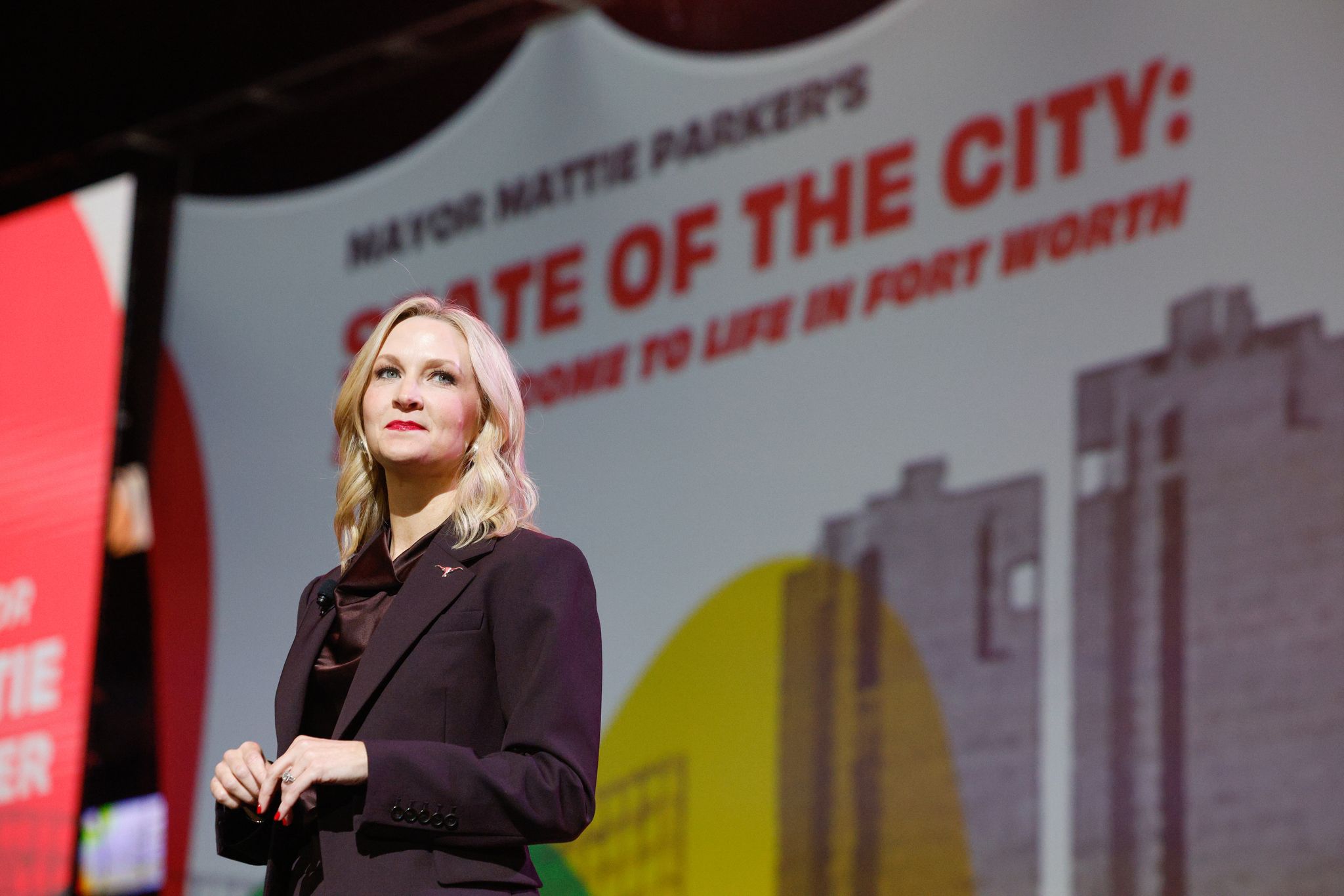
“Honestly, it comes with significant responsibility,” Fort Worth Mayor Mattie Parker said last fall during a State of the City address, after the city reached 1 million residents. “This is our defining moment of growth and opportunity.” Along with economic and workforce development, Parker has also often emphasized City Hall initiatives on public safety, local parks and education.
The latest Dallas Fed data, which also includes Arlington, showed the region’s recent economic growth was broad. While total nonfarm employment in the area grew by 3.4% over the three months ending in May, over the same period other sectors — professional and business services, leisure and hospitality and trade, transportation and utilities — grew at around 6%. Other sectors, including education and health services and construction and mining, grew at a slower rate, while information and manufacturing experienced job losses.
Related:An emerging tech hub? North Texas ranks among country’s hottest metros for tech job postings, report shows
In May, overall employment rose by an annualized 1.6%, while Texas employment rose by an annualized 1.2%. The metro area’s unemployment rate for the month was 4%, lower than Texas’ 4.3% rate, while the area’s average hourly wage was $37.23, up around $1.25 from a year earlier. Both the wage figure and year-over-year wage increase were slightly higher than those for Texas.
Article continues below this ad
Housing demand in the Fort Worth area softened slightly in May — existing home sales were down slightly from a month prior, and the median sales price was narrowly down from a year prior— but in the longer run local housing prices have soared. At the beginning of 2017 the median sales price in the region was just over $200,000. In May it was $355,000.
