

How Physical AI Is Changing Invoicing, Working Capital and Trade Finance
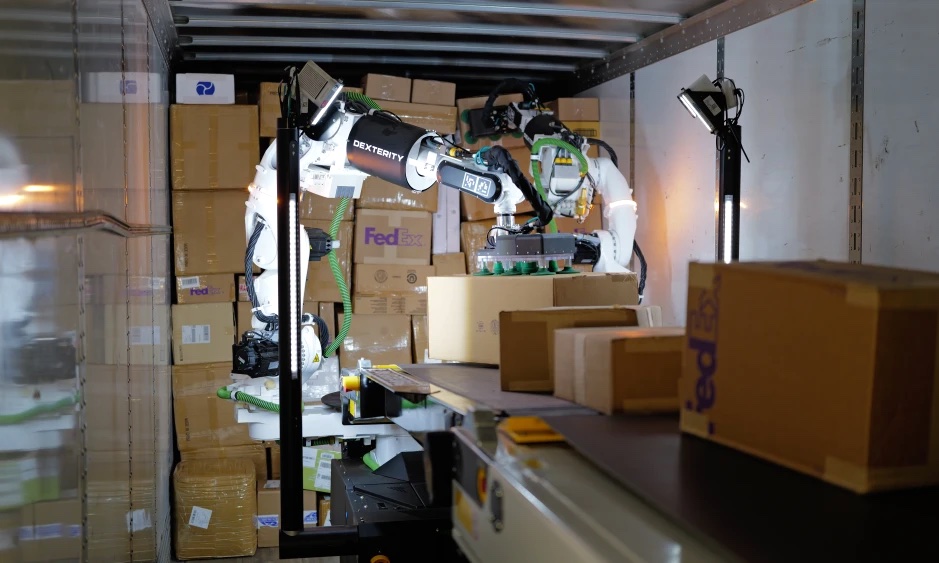
Robots like FedEx’s trailer-loading systems can observe and document events such as packages being identified, handled and shipped, potentially creating machine-generated evidence that invoices, payments and contractual milestones can rely on
More immediate operational verification could accelerate invoicing, approvals, cash forecasting and receivables, addressing the cash flow cycle
Machine telemetry could eventually support receivables financing and other trade finance decisions, but raw robot-generated records aren’t automatically bankable
The robots aren’t just coming. They are already here, across factory floors and logistics yards
North American companies ordered 8,940 robots worth $622 million in the second quarter, up 4.3% in units and 21.3% in revenue from a year earlier. Firms like FedEx, for example, are deploying physical artificial intelligence and robotic solutions into scaled real-world operational environments. FedEx’s system, announced in July, assists with trailer loading and combines a dual-armed robot called Mech with an AI platform to evaluate packages and determine where and how to load them
For FedEx, the immediate goals are operational, including safety, consistency, trailer utilization and throughput. But the deployment points toward a less obvious consequence of physical AI. As machines become capable of observing work, performing it and creating detailed records of what happened, they could produce an entirely new category of financially actionable data
Seealso:Big Tech Is Rewriting Procurement. The Rest of B2B Is Next
RobotsAreBecomingFinancialDataSources
Much of B2B finance still waits for proof that something happened in the physical world before money can move. A shipment was loaded. Goods left a warehouse. Inventory arrived. A delivery was completed. Cargo was damaged. A contractual milestone was met
FedEx said the technology will eventually connect with destination planning, trailer assignment, maintenance and workforce processes. FedEx loads tens of thousands of trailers each day across its network in the United States, and once machines can verify those events, the distance between doing the work and getting paid for it starts to shrink
B2B payments frequently suffer from latency that has little to do with the speed of the payment rail. Companies can send money electronically in seconds, yet an invoice may spend days waiting for someone to establish that the underlying obligation has actually been fulfilled. That makes the bottleneck one of verification rather than transportation
The PYMNTS Intelligence report “Time to Cash™: A New Measure of Business Resilience” found in October that 77.9% of chief financial officers see improving the cash flow cycle as “very or extremely important” to their strategy in the year ahead
Imagine a machine recording that a specific package was identified, handled and loaded into a particular trailer at a specific time. Connect that event with a purchase order, shipment identifier, contract and transportation management system, and the record potentially becomes useful beyond the warehouse
Readalso:Good CFOs Automate but Great CFOs Anticipate
WorkingCapitalStartsWithOperationalTruth
For CFOs and treasurers, the potential prize is not simply automation. It is time. The working capital cycle contains numerous gaps between when economic activity occurs and when finance learns enough about that activity to act
Even modest reductions in that latency could matter at scale. Accelerating invoice creation can lower days sales outstanding. Faster confirmation can allow buyers to approve invoices earlier and potentially capture discounts. More precise visibility into when commercial obligations are fulfilled can improve cash forecasting
Ben Ellis, senior vice president and global head of Large and Middle Markets at Visa Commercial Solutions, told PYMNTS in March that one finding from the most recent Working Capital Index should recalibrate how finance leaders think about their operations. Among low-performing firms that adopted AI for working capital management, cash flow unpredictability dropped from 68% to 17%
The bigger leap comes when machine-generated records move beyond internal corporate workflows and become evidence that external financial institutions are willing to trust
Receivables financing illustrates the problem
Banks advancing against invoices need confidence that a legitimate commercial transaction sits behind the receivable. Machine telemetry could eventually add anotherr moved
But a robot’s assertion that it loaded a package is not automatically a bankable commercial event
The important distinction is between machine-generated data and authenticated commercial evidence
For all PYMNTS AI and B2B coverage, subscribe to the dailyAI and B2B Newsletters
