

Cybersecurity expert warns China’s AI advances could intensify global tech competition
byTAYLOR FISHMAN | The National News Desk
Tue, July 7, 2026 at 7:57 AM
 3VIEW ALL PHOTOS
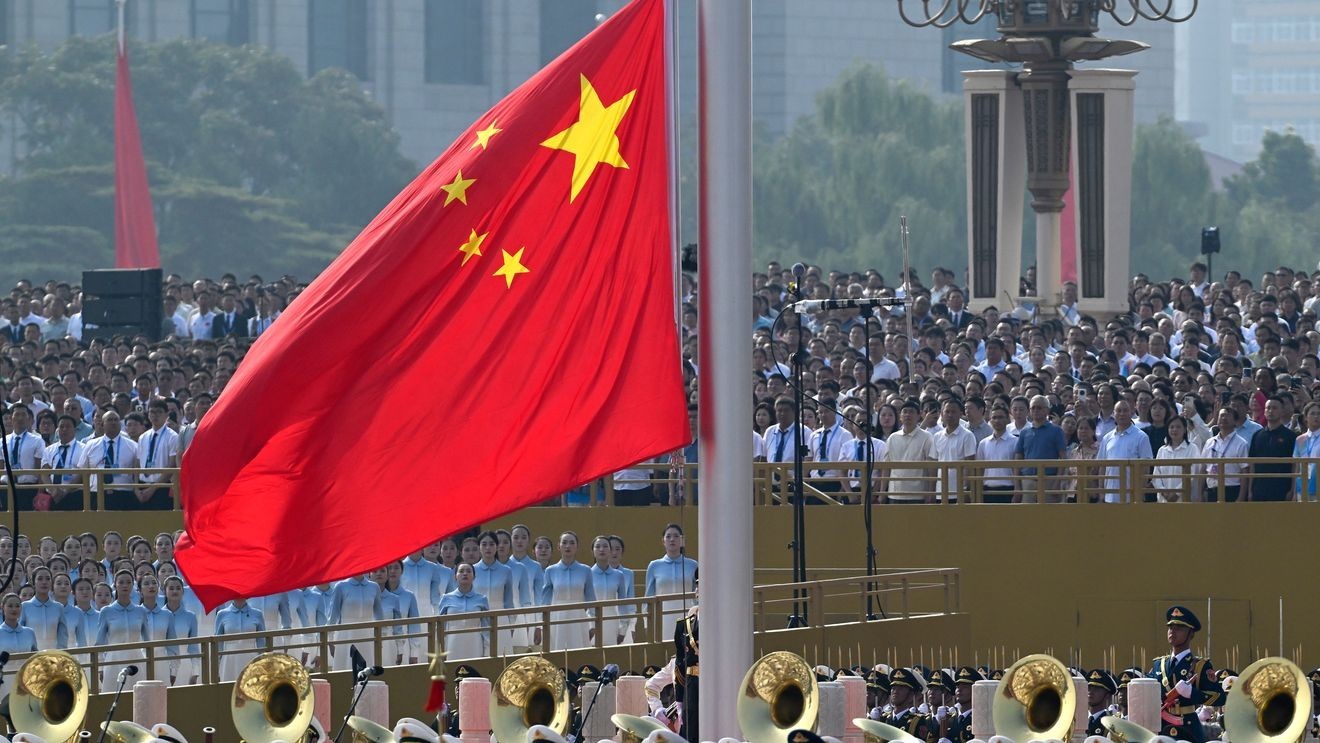
BEIJING, CHINA – SEPTEMBER 03: The China flag is hoisted during a military parade marking the 80th anniversary of victory over Japan and the end of World War II, in Tiananmen Square on September 03, 2025, in Beijing, China. China’s Victory Day military parade serves as a powerful display of national pride and military power. This year’s parade carries heightened geopolitical weight with the attendance of leaders like Vladimir Putin, Kim Jong Un and Masoud Pezeshkian, underlining China’s diplomatic alliances as it presents itself as an alternative global leader. (Photo by Kevin Frayer/Getty Images)
A Chinese artificial intelligence company claims it has developed a new AI model capable of matching the cybersecurity capabilities of one of the United States’ most advanced AI systems, a development that could have significant implications for the growing global competition in artificial intelligence
Speaking with The National News Desk, cybersecurity expert and privacy attorney Leeza Garber said that if independent researchers continue to validate those claims, the announcement could represent an important milestone in the international AI race
“If this is true, which many researchers are saying yes, and there are actually a couple companies coming out of China offering similar claims, then it’s a very big deal,” Garber said.
She said the technology is designed to identify vulnerabilities in software and digital systems, capabilities that could be valuable for both cybersecurity defense and offensive cyber operations
Garber noted that many of the most advanced AI cybersecurity tools developed in the United States face export restrictions and government oversight because of their potential national security implications
“The government is looking at how to best set guardrails so that there aren’t problems within our country opening up for exploitation,” she said
According to Garber, China’s regulatory environment differs significantly from that of the United States, creating a different landscape for AI development
“In China, there’s a different set of rules,” she said. “It really just ups the ante.”
The discussion comes as the Trump administration continues treating advanced artificial intelligence systems as strategic national security assets, limiting access to certain technologies out of concern they could strengthen China’s military, intelligence, or cyber capabilities
Garber said the United States has faced technological competition from foreign governments for decades but believes advances in artificial intelligence have accelerated those concerns
“This is a problem that the U.S. has been facing from various different countries for decades,” she said. “Now it’s really reached a boiling point because of China’s capabilities.”
She also warned that policymakers should remain focused on protecting critical infrastructure, including electric grids, water systems, and government networks
“We need to be very strategic, proactive,” Garber said. “There could already be Chinese ‘sleeper cells’ within different systems that are very prone to vulnerabilities.”
She argued that stronger cybersecurity policies and legislation will be necessary to help protect both government systems and private-sector infrastructure
The interview also addressed a separate development involving Ford Motor Company, which recently announced plans to rehire hundreds of experienced engineers after determining that AI-driven quality control systems failed to identify some manufacturing problems
Garber described the decision as a reminder that artificial intelligence still depends heavily on human expertise
“We have Ford saying we actually have to hire back over 300 human engineers because of their expertise, their experience in helping with quality assurance,” she said.
According to Garber, AI systems are only as effective as the data and human knowledge used to train them
“They’re really only as good as the algorithm plus the data set,” she said
She noted that many engineers initially left because they were concerned their expertise would be used to train AI systems that could eventually replace them
Garber believes the broader workforce will continue evolving alongside artificial intelligence rather than being completely displaced by it
“Humans are not going to be replaced by AI,” she said. “But the world is going to look different.”
As governments and companies continue investing heavily in artificial intelligence, Garber said the challenge will be balancing innovation with security while ensuring human expertise remains part of the equation in areas where judgment and experience continue to matter
