

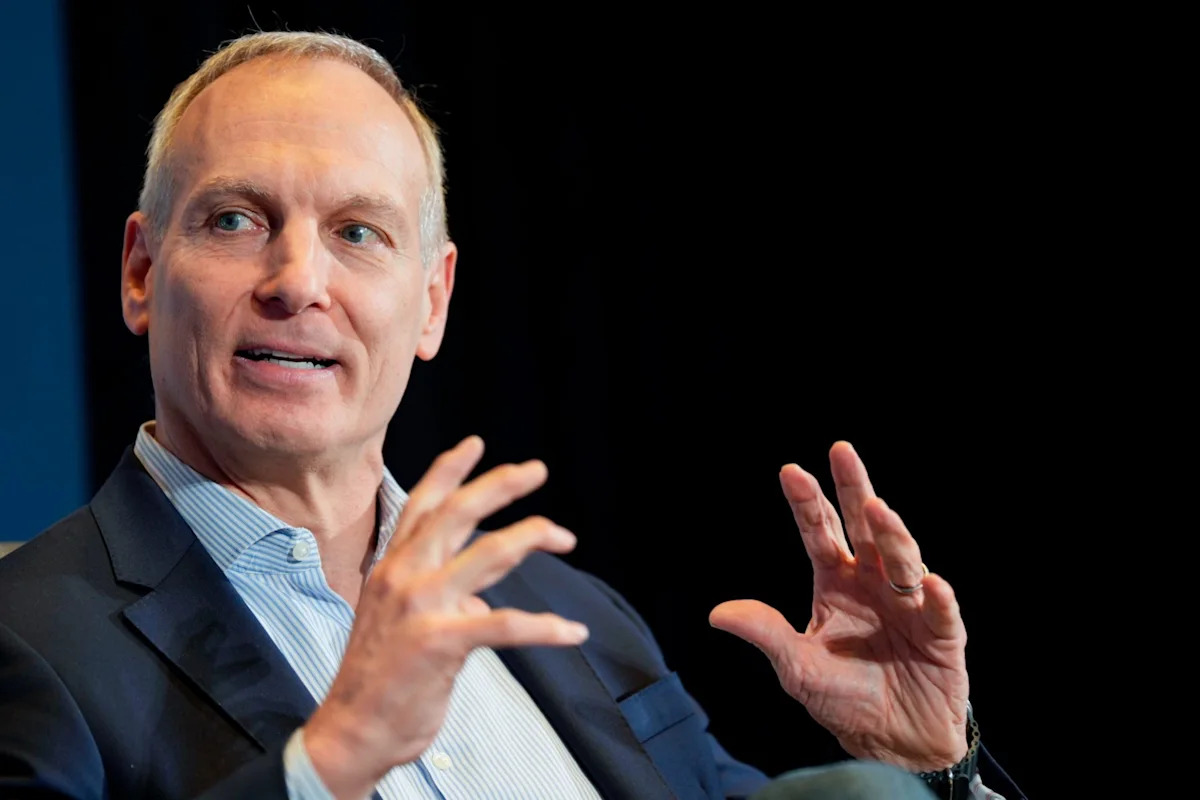
Glenn Fogel runs the world’s largest online travel business. He still personally reads customer complaints because ‘you gotta get that sh*t right’
Kamal Ahmed
Fri, August 14, 2026 at 3:37 PM GMT+5:30
5 min read
- BKNG
-0.60%
We still like to travel—despite Greta Thunberg’s protestations. In the first three months of 2026, more than 300 million of us packed our swimwear or skis and headed for the airport or train station, an increase of 6 million on 2025. International tourist numbers grew by 2% in the first quarter according to the UN’s Tourism Barometer. Europe, the world’s most popular travel destination, saw a 4% increase.
“What’s not going to change is the desire to travel,” Glenn Fogel, the chief executive of Booking Holdings told me when asked about the future of the sector. Booking owns booking.com, the world’s largest online travel agency, as well as smaller brands including Priceline and Open Table. It is number 169 on the Fortune 500 index.
The numbers are working in Fogel’s favor. Its second quarter results of $2.54 earnings per share, up 15%, on revenues of $7.4bn, up 8%, beat Wall Street expectations. The share price rose 6% on the day of the release. Tourism within America was particularly strong, offsetting the negative effects of the conflict in the Middle East.
“People love to travel,” Fogel said. “That’s something that the human species has had since the beginning. Maybe it’s why we’re all around the world. That’s the instinct in the system—go explore. We saw that so clearly during the pandemic, when people couldn’t travel. [We knew that] they were just dying to travel.”
The travel industry, like every sector, is experimenting with the best use cases for AI. On the day of the results, Fogel said that AI is already reducing the key “customer service cost” of each booking. It also means that any issues post-booking can be resolved more quickly. AI may eventually cure cancer, but it is at the smaller and simpler “friction” level where businesses are seeing more immediate returns on investment. Chief financial officers will be relieved.
“What is going to change over the next three to five years, and we’re going to be one of the leaders in this, is making it easier for everybody to experience the world,” he told me. “Because as much as we love to travel, everybody recognizes it is still hard. It’s hard to plan, it’s hard to decide where to go. It’s hard to actually execute it. Everybody knows things go wrong.”
“Trust arrives by foot and leaves in a Ferrari,” Mark Carney said, as banks sought to rebuild confidence following the Global Financial Crisis. Fogel knows the same is true of tourism. A whole year of planning can collapse in acrimony due to a misplaced piece of luggage or a hotel booking that went to the wrong email address. A relationship built up over a lifetime dies in that one moment.
