

- Related
- education
- WRAL education insider
- WRAL specialists
- Granville County
By Emily Walkenhorst, WRAL education reporter
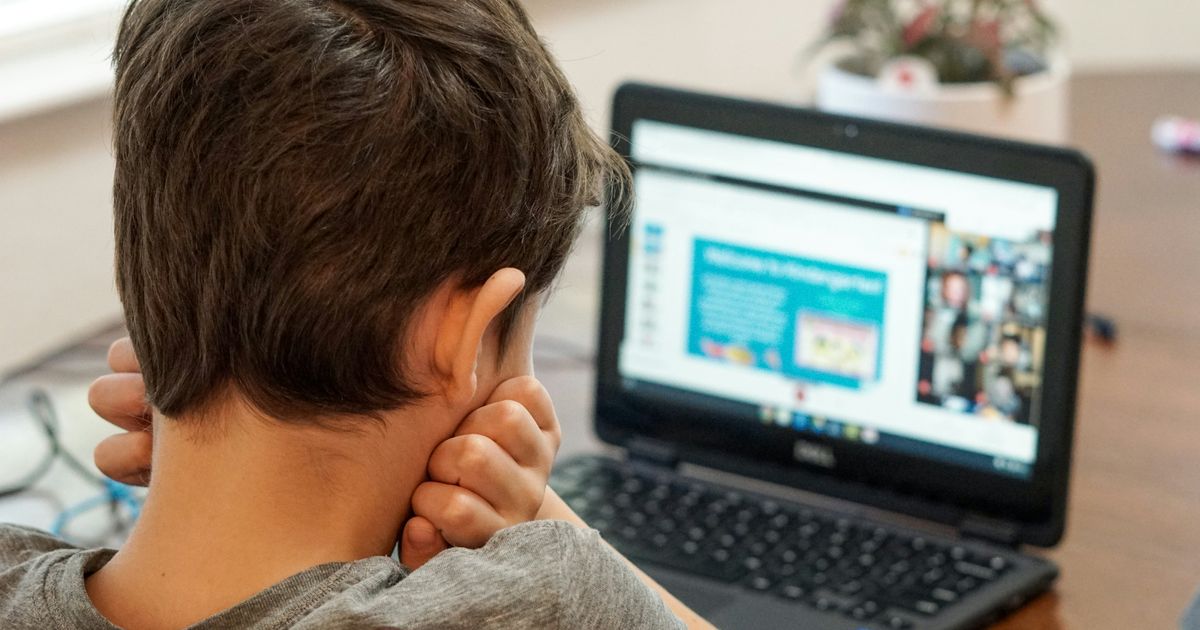
After years of cracking down on cellphones in schools, leaders in North Carolina and beyond have a new target: the laptops they issue to students
Granville County Public Schools is in its second year of going technology-free two days per week. Chapel Hill-Carrboro City Schools has a new digital-learning plan designed to reduce technology use. The North Carolina Department of Public Instruction this summer issued guidance to schools on “purposeful screen use.” Burke County Public Schools declared last year that pencil and paper would be students’ primary tools for assignments
Across the country, in school systems big and small, educators are prohibiting screens for younger children, reducing the issuance of take-home devices, or blocking student access to YouTube, social media and streaming apps without teacher approval
“Everyone agrees that there is a problem, and that our young people are spending too much time on devices,” said Stan Winborne, superintendent of the Granville district
Teachers in Granville schools were initially resistant to the technology-free days because they wanted more control over their lesson plans and whether to include devices. Students, especially the older ones, were resistant, too
“They enjoyed having unlimited access to their laptops,” Winborne said
Having two consecutive tech-free days — Mondays and Tuesdays this year — will help teachers better sequence their lessons and units. The effort is also stricter than in the past, removing devices from kindergarten through second-grade classrooms and eliminating take-home devices from third through eighth graders. Those students will now only have access to laptops via carts stowed at their schools. High schoolers will still have a device they can take home. Students won’t have access to YouTube.
Winborne and his administrators think technology’s value is in how it’s used, not whether it’s used. The way they see it: When students all have their own devices, they’ll overuse them — to the detriment of their own learning
Before going technology-free, the district tapped into its web-monitoring tools to see what students at two different schools were doing on their laptops
YouTube was the third-most popular app among J.F. Webb High School students, with nearly 40,000 uses in 30 days. It was less popular than Google’s search page and the education-focused app Google Classroom, but it was more popular than apps such as ClassLink, Google Docs, Gmail and Canvas — tools students use to view and submit assignments
YouTube was the fourth-most popular app among Granville Central Middle School students
“I would love to assume that that is all educational, but we knew it wasn’t,” said Michael Spradlin, Granville’s technology director. “We can see what’s popping up.”
Tech savvy v. tech saturated
For 50 years, computers have become increasingly present in education. Apple began marketing personal computers to schools in the late 1970s and other companies have since joined in
Computers started out in labs or at the desks of educators. As the price of devices dropped precipitously, personal laptops and tablets began playing a role in everyday lessons. The devices replaced physical textbooks, found their way into students’ backpacks and then ultimately into their homes, spending hours with students as they did their homework
Granville’s new approach to devices could be seen as a reversal of the technological progress that was for so long only a dream of education leaders. But Granville leaders think they’re being forward-thinking by reserving technology only for its best uses
“I have always been an advocate for the use of technology when it is enhancing student learning,” Spradlin said. “I really believe that there’s a place for technology in student learning.”
Spradlin, who was a teacher for years, enthusiastically used technology in his classes. But he wanted it to be engaging and productive. During his poetry unit one year, he had English students analyze music lyrics and then host podcasts talking in-depth about them
“The kids loved that project,” Spradlin said. “… They wanted to share their podcast with their family, with their friends.”
Too often, he said, technology use is repetitive and dull and doesn’t break through with students
But it’s ever-present, with new apps marketed to teachers and administrators every day
Teachers now need his approval before installing an app to use with students, to make sure it’s secure and to vet its academic use. Often, Spradlin said, apps are marketed as educational tools but function as little more than games. He has had to ban some applications that were previously popular
Many educators have long argued that students need to use technology so that they’re prepared for adulthood and the technological expectations that come with many occupations. Technology can even advance their achievement through new opportunities and help them be more prepared for their careers
Winborne doesn’t think he’s taking away students’ opportunities to become fluent users of technology
“There will still be plenty of time to develop those tech skills that are needed,” Winborne said. He wants to make sure students are thinking critically and engaging in the “struggle that comes with academic achievement.”
“Literacy skills, basic numeracy skills, that happens regardless of whether or not we’re using a computer, and in many cases, that paper and pencil is going to do a much better job,” he said
Numerous studies have found higher comprehension while reading print texts than digital ones. Additional research suggests negative health consequences from excessive screentime
One way to engage more is to have students write first drafts of essays by hand, said Mary Warehime, a district instructional coach. That’s the standard in the school system, where teachers need to be able to monitor students’ essay-writing progress and make sure they’re doing the work themselves, rather than relying on generative artificial intelligence
Warehime has all kinds of interactive lessons she encourages teachers to use, lessons that involve students walking around the classroom and working with other students to solve problems
Before technology-free days, the district found some students were on their laptops dozens of hours every week
“We know there’s some risk with these devices, and if we don’t do anything about it, I don’t think that’s responsible,” Warehime said. “We all want [students] to grow up to be strong, kind
independent adults, and tech is part of that, but also being off tech is part of that. We want
them to be able to live good lives without requiring that cognitive offloading on a device. There has to be the ability to do without.”
Not an easy switch
Granville has been surveying students and faculty about its tech-free days and plans to keep doing so. They’re working with Karl Johnson, an assistant professor at the University of North Carolina at Chapel Hill who studies public health
“One thing that I’ve constantly been speaking with leadership and teachers at Granville County is what this whole experiment kind of revealed about how education was happening at the county,” Johnson said. “I think it did reveal that it had become a little too dependent upon ed tech.”
He said some teachers used it well, but others may not have. Some students were using their devices to cheat on assignments, he said
The surveys showed the rollout hasn’t been perfect. Teachers reported frustration at not having enough paper to print off worksheets. Students complained about teachers merely printing off online material, instead of changing how they teach
Students said it has been good to talk with their classmates more, but that talking can sometimes make a classroom louder and more distracting. They said their hands now cramp sometimes from handwriting
The changes, at least after a year, haven’t drastically changed Granville’s students. Most don’t think tech-free days have improved their focus, reduced their stress or helped them feel calm
Winborne thinks reduced technology use won’t change children overnight, and he believes students remain attached to their devices
Re-engaging students
Teachers think tech-free days are making a bigger difference on students than the students realized, the surveys indicate
“You have to actually talk and communicate,” said Lynn Cooper, a teacher at Granville Central Middle School. “And if you don’t agree, you talk it out.”
Wendy Wilkins, a third grade teacher at Mount Energy Elementary, said she thinks her students have formed closer bonds with one another — and with her school — than she normally sees
“A laptop cannot have empathy and understanding and connection,” Wilkins said
Cooper and Wilkins are leaders in a district committee working on reducing technology use
Cooper considers her teaching style more old-fashioned and was excited to see the district moving toward a type of learning she wants her own children to experience. She has heard the same from others, including a new teacher who came to Granville from another state and was surprised to see the district’s pivot away from technology-first learning
The teachers think the students must be learning more, observing that they’re more mentally tired at the end of a tech-free day
“If you ask them now, ‘do you like having no tech days?’ They would probably say no,” Wilkins said. “But in their hearts, I really think they enjoy it.”
‘Brain breaks’
Granville isn’t alone in making changes
The North Carolina Department of Public Instruction is cautioning schools against passive screen use and unstructured screen use. DPI encourages schools to have students use technology for creative work, have adults guide its use, and ensure the technology is providing rich feedback. DPI discourages schools from giving students screen access as a reward or time-filler
This year, Chapel Hill-Carrboro City Schools is cracking down on technology, too. After the district held a handful of community meetings on the topic, the school board approved a three-year digital learning plan this spring designed to reduce students’ unnecessary use of laptops
To start out, for students, it will have more YouTube restrictions and improved web filtering. The district will phase out devices for kindergarten and first-grade students
It’s not as restrictive as Granville’s. Many parents and even Chapel Hill-Carrboro school board members wanted the district to go even further, talking for hours at school board meetings about whether the district could or should be more aggressive to curb technology use
During a board meeting this spring, one Chapel Hill-Carrboro school board member compared children’s frequent technology use to an opioid addiction and said fed-up parents have left the school district because of the frequent technology use. Another said teachers need to stop giving children “brain breaks” to use devices freely and stop giving them free time on their devices as a reward for finishing assignments early
Board Member George Griffin said the plan the district has now is great, but that it needs to take more dramatic measures
“Not for the sake of the drama, but for the sake of really addressing the problems,” Griffin said during a school board meeting about the plan this spring
Parents elsewhere are pushing for greater crackdowns, too
In Wake County, some parents have recently formed Community Advocates for Responsible EdTech. They want to eliminate generative artificial intelligence from schools until a comprehensive policy can be passed, and they want to limit technology’s use to only when it provides clear value
It was started by a Wendell mom whose daughter is still only in pre-kindergarten. Kaitlyn Sanderson fears her daughter being issued a device once she starts school next year and spending too much time on it. She’s met with Winborne to learn about what Granville’s doing, and she’s gotten to know parents and teachers at her daughter’s likely future school who also want to ensure tech is used properly
“If we’re putting them in front of a device where we’re gamifying that process, we’re not just taking them away from working one-on-one with their teachers, maybe or learning from their peers,” Sanderson said, “we’re now shortening their attention span and making it harder for them to really engage with a book.”
Wake County school board members have for years suggested the district get rid of student-issued devices for the district’s youngest students, partly in an attempt to save money and because they don’t think they’re needed. Superintendent Robert Taylor has floated the same idea
Those conversations haven’t gone anywhere. Recently, district officials told board members they doubt they could save much at all from that, because of how many devices would still be needed at those schools for testing and progress monitoring
The struggle to cut back on tech
Part of the challenge with reducing technology is how much schools have adapted their everyday tasks to easy device access
Children complete all kinds of tasks on devices now that there’s no longer a paper-and-pencil version of. Progress monitoring for the youngest kids, required by the state, must be done online. Practice exams must be online, to mirror the actual exam. Textbooks have moved to digital models, which are cheaper per book though can’t be passed down to future students. Assignments are distributed digitally and submitted right back online for grading
In Granville, schools have physical copies of textbooks for English, math and science. The district makes sure students have access to dictionaries, calculators and novels, too. Teachers have complained about not being able to print or copy as much as they want, and the district has had to buy more paper. Winborne believes the money spent on paper is “nominal” when considering what the district is saving through reduced technology use
And then there are times Granville simply has to make exceptions, such as when career and technical education courses need students to access software on tech-free days
“I’ll admit that it’s been risky to try this,” Winborne said. “It’s disrupted our business as usual, the status quo practice, and it’s been a lot of work. It’s been an adjustment, and change is difficult, but I’m proud of the work that we’ve done, and I believe that it’s the right thing to do.”
