

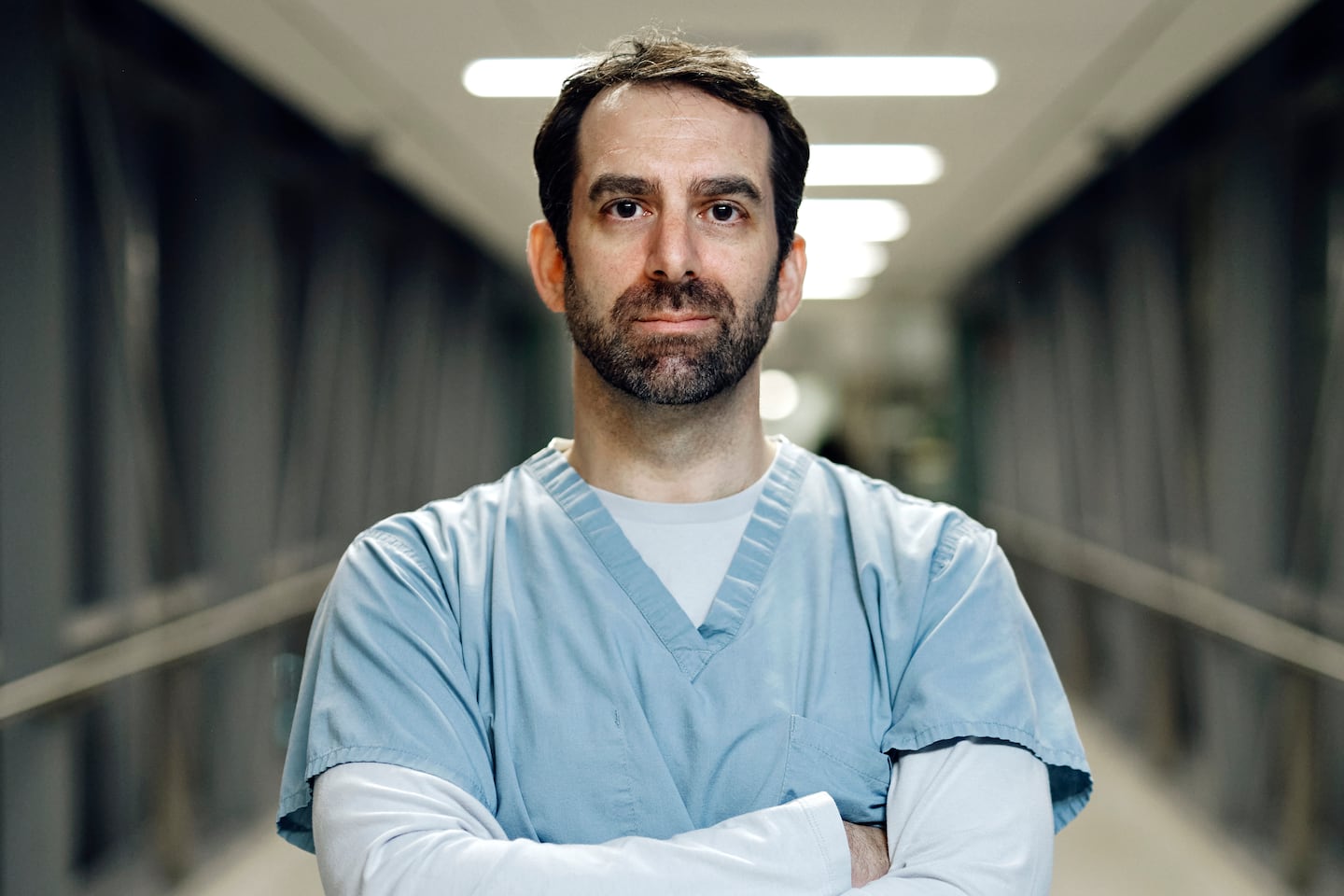
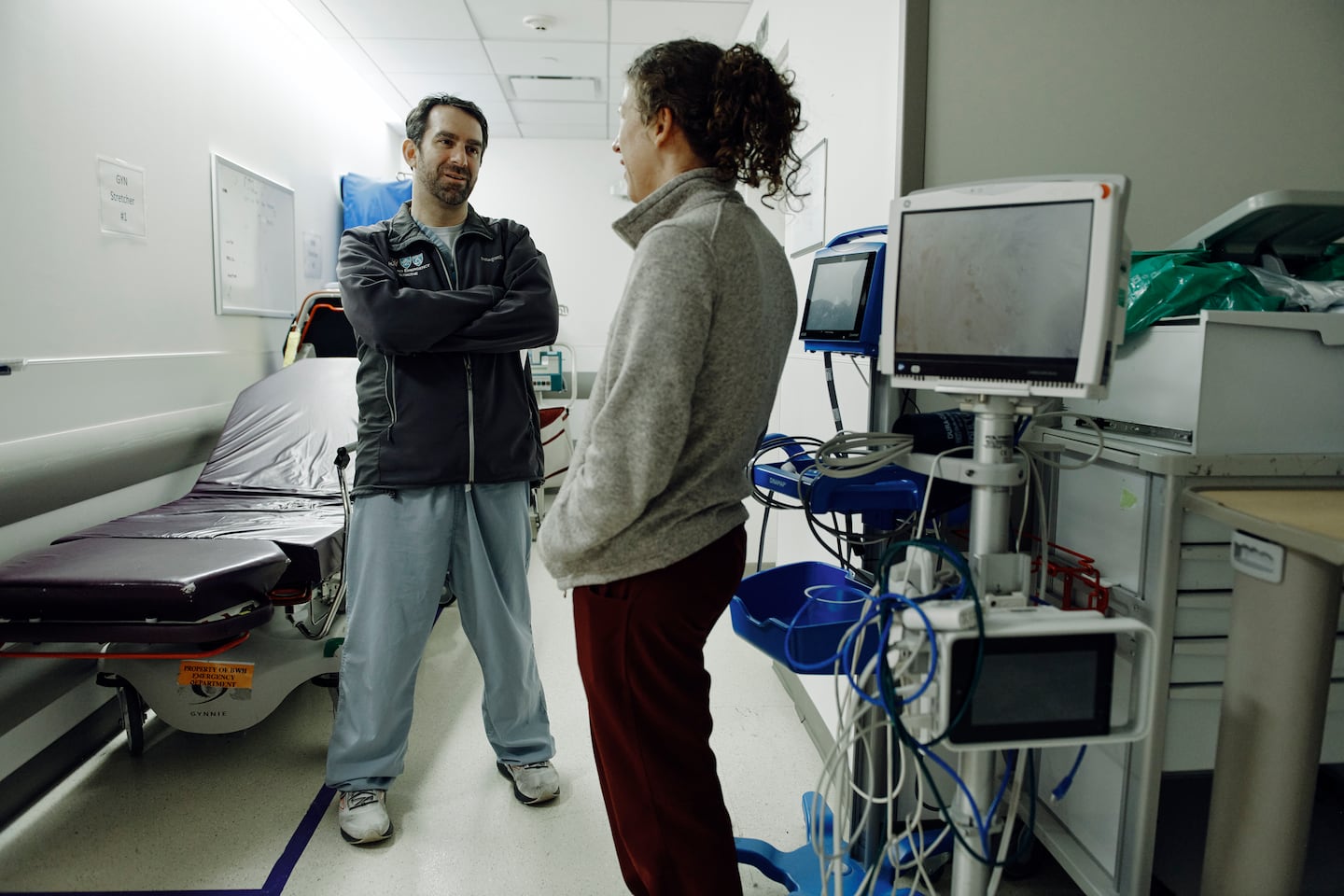
Dr. Jeremy Faust cuts through a hallway of Brigham and Women’s Hospital on his way to see a patient who is struggling to breathe. It’s the start of his evening shift, and the emergency department hums with ambient sound: bleeping monitors, the rumbling wheels of medical carts, the squeaky soles of hustling staff. People on gurneys line the corridor, some wincing in pain, others chatting with relatives
On this Wednesday evening in May, Faust is working what is typically a quieter shift, as far as emergency departments go. Still, he is overseeing a team of doctors, students, and physician assistants, and will tend to more than two dozen patients before signing off for the night
It’s an understatement to say Faust likes to keep busy. Minutes earlier, he’d posted an article on his influential Substack newsletter, Inside Medicine, providing an update on a major international news story. An alert sent to the newsletter’s nearly 85,000 subscribers announced his “scoop”: Twenty-six passengers aboard the MV Hondius, the hantavirus-hit cruise ship docked at the time off Cape Verde, had disembarked much earlier than previously known — raising the possibility they could spread the rare virus in the United States.
Then came his sobering warning on social media: “Still not a five-alarm fire, but an escalation.”
Faust tells me later he wrote the newsletter and Threads post before coming to work, scheduling them to publish after his shift began. Such multitasking is part of a typical day for Faust, 47, who also publishes peer-reviewed research, serves as editor in chief of a medical news site, teaches at Harvard, raises two young daughters with his wife in Cambridge, appears frequently on CNN and other outlets, and, many evenings, conducts the Longwood Chorus, a 100-person ensemble of medical workers and scientists.
“He’s a Renaissance-type guy,” says Dr. Anthony Fauci, the former director of the National Institute of Allergy and Infectious Diseases and presidential adviser for several administrations. Fauci became a mentor to Faust after discovering Inside Medicine, which he reads regularly. The newsletter, Fauci says, is an antidote to hot takes and misinformation online. “He’s very thoughtful and careful. He doesn’t just blast out against something; he gives it a fair evaluation and makes a helpful and useful comment. So he’s emerging as one of the most respected of the medical public health commentators.”
At a time when many working scientists are unwilling or afraid to publicly take on the Trump administration, or have been ordered not to by their employers and universities, Faust has used his Substack to condemn what he’s called a “public health blitzkrieg” — mass layoffs of federal health workers, grant cancellations, and anti-vaccination policies. But his forays into reporting have caused consternation among some of the journalists he competes with, who question whether he follows the same rules and standards they do.
He is unabashed about wanting to be the first to report news in his field and build his public profile. But hours spent shadowing him over the course of a month — at work, home, and in his musical endeavors — reveal other qualities that drive him: a restless curiosity, hunger to make a difference, and refusal to accept the boundaries others think should define his role
It’s a unique mix that has propelled Faust to become one of the most important medical voices in a city full of them. And he has no intention of letting up
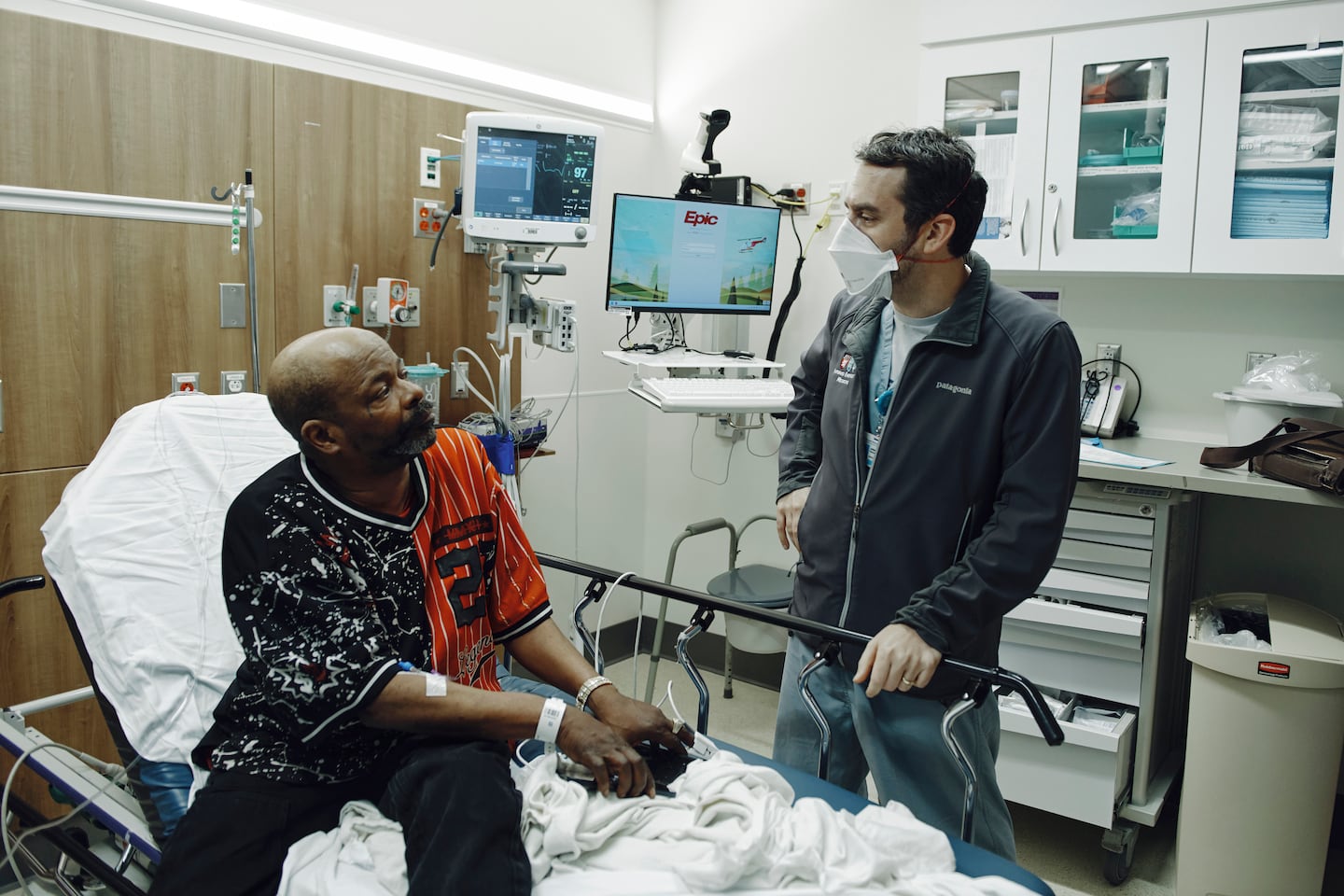
Not long after his story about the MVHondius posted, Faust, clad in a white N95 mask and pale blue scrubs, is standing at the bedside of Brian Johnson, the patient who came in with shortness of breath. Faust, a stethoscope notably missing from his neck, rests his hands on the bed rail and watches him closely
Sitting up, Johnson tells Faust he feels better but is still a little wheezy
“My feeling is, if you’re still feeling wheezy, I don’t need to listen to your lungs, I need to give you more treatments,” says Faust, who’s written that he finds stethoscopes mostly superfluous — medical tests, his observations, and a patient’s own words usually reveal just as much. “I believe what you’re telling me, because you’ve had this condition for a long time.”
A willingness to defy convention is one of Faust’s trademarks. By his own design, his path in medicine has been unorthodox
Growing up in San Francisco, Faust — whose mother is a retired school librarian and father a tax lawyer-turned-investment adviser — was drawn first to music, teaching himself piano early in grade school. He was writing music by age 9, joining the prestigious San Francisco Boys Chorus soon after
To this day, he remembers the first time he heard the chorus rehearse with an orchestra, the San Francisco Symphony. “It’s so incredibly powerful… When you catch that feeling, you’re like, ‘Oh, I’m gonna catch that high again.’”
Faust’s interest in medicine took hold around the eighth grade, when a friend’s father, a physician, brought them into an operating room to observe a Whipple, a complex procedure in which doctors remove cancerous tumors from the abdomen. Despite the blood, he realized he was intrigued — not repulsed — by the idea of cutting into people to make them better
As an undergrad at Williams College in Western Massachusetts, Faust majored in music while pursuing a pre-med track. He later earned a master’s in music theory and composition at the University of California, Davis, where he wrote dozens of short pieces, including string quartets and choral music. “I wanted to reach a certain point in music, so that when I returned to it — if I could return to it later — it was at a higher level,” he recalls
Toward the end of Faust’s second year at the Icahn School of Medicine at Mount Sinai in New York City, a more experienced colleague told him over drinks that specializing in emergency medicine, with its predictable shifts, would allow him to further his medical career while pursuing other interests
“There are very few professions where you can make a huge difference in people’s lives, and then go home and do something else and not get paged,” he says
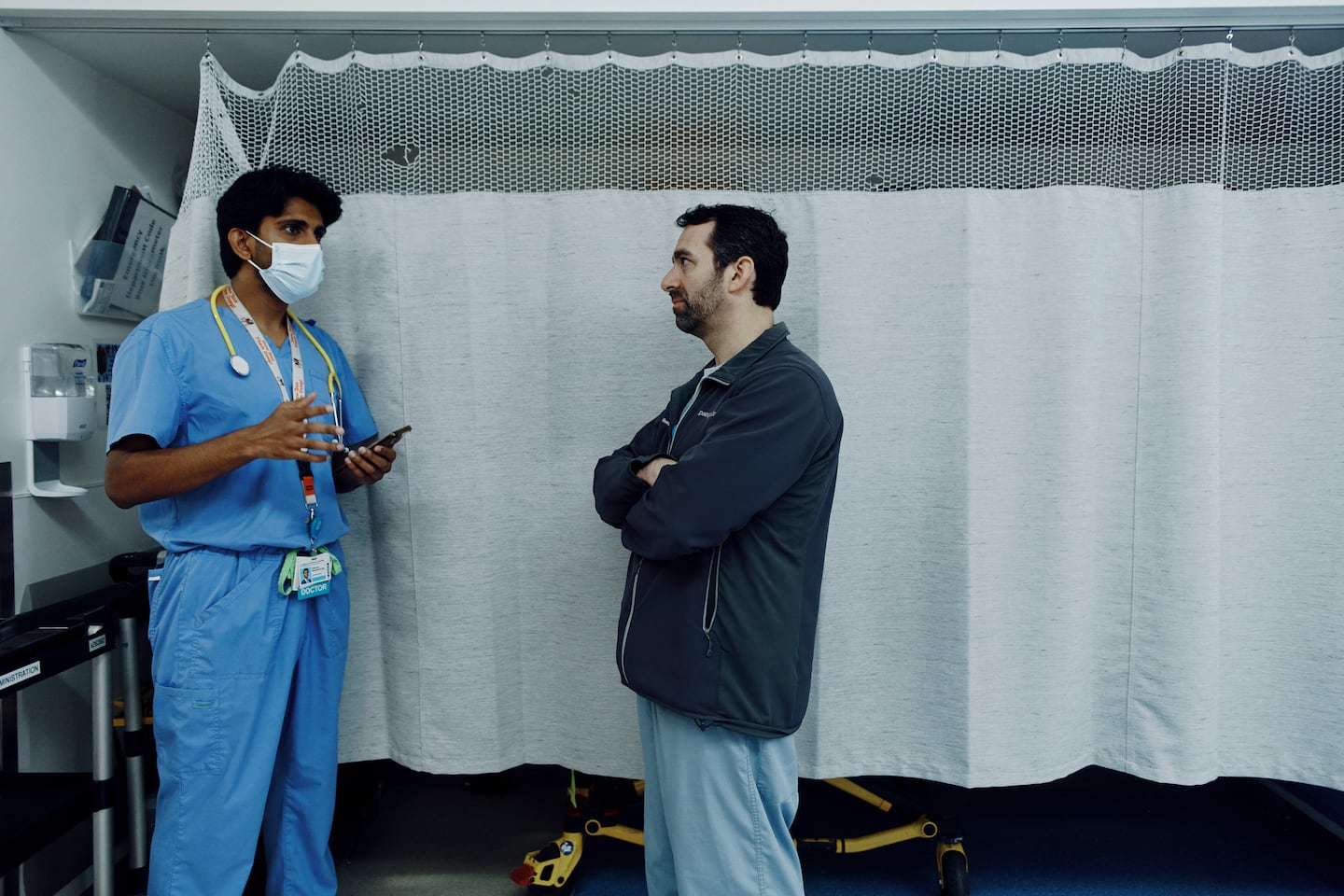
“Here’s the problem,” Faust is saying as he stands in a hallway with a resident, discussing a patient with back pain and tingling in his right foot. “Why am I gonna argue against that? Why am I arguing in favor of an MRI?”
Tilting his head and smiling, he waits for the junior doctor’s response. The resident, reading from notes on his cellphone, had said earlier that the person did not have any “red flag symptoms” that could signal a life-threatening condition
He now hazards a guess: “The new foot finding?”
Faust agrees and goes a step further. It’s not the pain or tingling, he explains, but specifically the new weakness in the foot. “New neuro-weakness is actually a red flag, technically,” he says
Then, like a coach huddling with a player, he pivots to boost the resident’s confidence
“You gave me the information,” Faust says, adding that it’s his own job as physician to connect the dots. “He actually does have indication for [an MRI]. Got it? Cool.” Then he claps his hands together. “Good talk.”
Faust applies his skills as an educator and communicator to his writing, which began to take shape more than a decade ago. As a resident doctor in New York, he started pitching stories to an industry magazine and was eventually given a regular column
“Once I learned enough about medicine to have something interesting to say, the part of my mind that likes to create things like music or think of ideas started merging with this medical knowledge,” he says
Some columns were irreverent, while others told humbling personal stories, such as the one about a neighbor who had died of alcoholism, leaving Faust to wonder what more he could have done. He started pitching stories toSlate, and wrote more than 50 pieces for the online magazine between 2014 and 2024
Around the time he began publishing, Faust reconnected on a dating app with a high school classmate, Kate Taylor, who’d become a New York Times reporter. He recalls talking with Taylor and her colleagues at cocktail parties, trying to “apprentice myself” to learn how they took a story idea and turned it into polished writing. The couple married in 2016 and later moved to Boston for Faust’s position at Brigham and Women’s, which is now part of Mass General Brigham
In the spring of 2020, with cases of COVID-19 mounting, Faust and two residents launched a two-page newsletter to help doctors, journalists, and the public keep up with the storm of new research, policy changes, and other developments
Virtually overnight, it gained around 20,000 followers, later prompting Facebook to offer Faust a deal to launch a project on its newsletter platform, Bulletin — marking the birth of Inside Medicine. The new income allowed Faust to cut his clinical work to around half-time
In late 2022, after Facebook folded Bulletin, Faust moved to Substack. Today, he says college-educated general readers make up the majority of his audience, though medical and science professionals subscribe, too. And while some content is kept behind a paywall, he says most of his stories — those he deems important for the public to know about — are free for anyone to read
Like many health journalists, I learned about Faust during the pandemic. I found his newsletter informative and thought-provoking, analyzing data in ways that cast new light on public health problems. One post from January 2023, for example, disproved with simple graphics the claim that COVID deaths were being massively overcounted
When I moved to Boston from Dallas four years ago, I reached out to him to learn more about his work, hoping he’d become aFaust became a competitor, too
The prospect of a second Trump term had many in Boston’s medical and scientific community on edge over the radical changes to federal health agencies proposed in Project 2025, the conservative blueprint to remake the government. Some of these fears were confirmed when the Department of Health and Human Services, led by Robert F. Kennedy Jr., began freezing grants, planning a radical restructuring, and muzzling and firing employees
Faust got to work, breaking stories about DOGE layoffs, publishing leaked documents, and securing exclusives including one pointing out an apparent leadership vacuum at the Centers for Disease Control and Prevention — a story cited by a US senator during an oversight hearing
Drawing on his expertise — and his anger, as a member of the community he felt was under attack — Faust covered America’s withdrawal from the World Health Organization and the dismantling of the US Agency for International Development, and told the personal stories of some who had been fired from the CDC
One such staffer, a single mother who had helped the CDC prepare for and respond to emergencies including bird flu and Hurricane Helene, had received top performance reviews until a termination notice arrived in her inbox telling her she was “not fit for continued employment.”
In his Substack post, Faust opined that the “administration’s actions have real effects on real people, and they will diminish important work that keeps all of us safe.”
He added that he’d asked the interviewee if he could set up a GoFundMe campaign on her behalf. She declined because she feared retribution, even with anonymity. According to Faust, she was eventually reinstated to her job and still works there
Faust’s journalistic efforts make him an outlier in academic medicine, where promotion is typically based on one’s ability to attract grants and publish studies in top journals — not break news stories. Still, he does find time to publish research on public health and epidemiology, despite not holding a degree in either one
“He’s sort of, like, this gem,” says Dr. Harlan Krumholz, a cardiologist and prominent health outcomes researcher at the Yale School of Medicine and another of Faust’s mentors. “He had all these ideas but was not someone who had gone through a traditional research pathway.”
The two connected in early 2020 when Faust reached out to Krumholz for a Slatecolumn about Bernie Sanders, after the Vermont senator suffered a heart attack during the Democratic primary race
Faust wanted to explain how doctors evaluate patients’ risks for a second life-threatening event after they recover from a first one. His takeaway: Sanders, because he’d made a good recovery, was healthy enough to continue his campaign and govern but that, especially in what he called the “age of the geriatric presidency,” candidates should be expected to release more complete medical records
Soon, Krumholz and Faust were discussing the pandemic and plotting new research questions to tackle together
They conducted a series of studies on the pandemic’s excess deaths — how many more people died in the overall population than would be expected based on historical trends. They argued this was a more comprehensive and objective way of measuring COVID mortality than looking at data from death certificates, because it avoids controversies over how deaths are classified and coded
They then broke down excess deaths by state and demographic group and found that states with lax pandemic protocols, including lower vaccination rates, suffered higher mortality rates than those with stricter policies
On his own, Faust has explored other public health questions, including whether Kennedy’s promotion of an unproven link between Tylenol use in pregnancy and autism in children caused a drop in the drug’s use by pregnant women (it did)
On the day of my visit to the Brigham, Faust tells me he had recently exchanged messages and phone calls with Tedros Ghebreyesus, the director-general of the World Health Organization. Ghebreyesus had helped him confirm information for a story about the hantavirus for the medical news site MedPage Today, for which Faust serves as editor in chief
“He called me twice in one day,” Faust says. “It was great to hear his voice.”
Usha Lee McFarling, director of the Knight Science Journalism Program at MIT, likens Faust to physician-writers such as Oliver Sacks and Atul Gawande, and says his inroads with leading experts strengthen his reporting
“He’s a really important voice, because he’s a physician at a very influential hospital system and medical school, and he is using that voice in a way that’s very loud and unafraid,” says McFarling, a former national science correspondent for the Globe’s sister publication, STAT, adding that he may be speaking for many who are reluctant to speak out
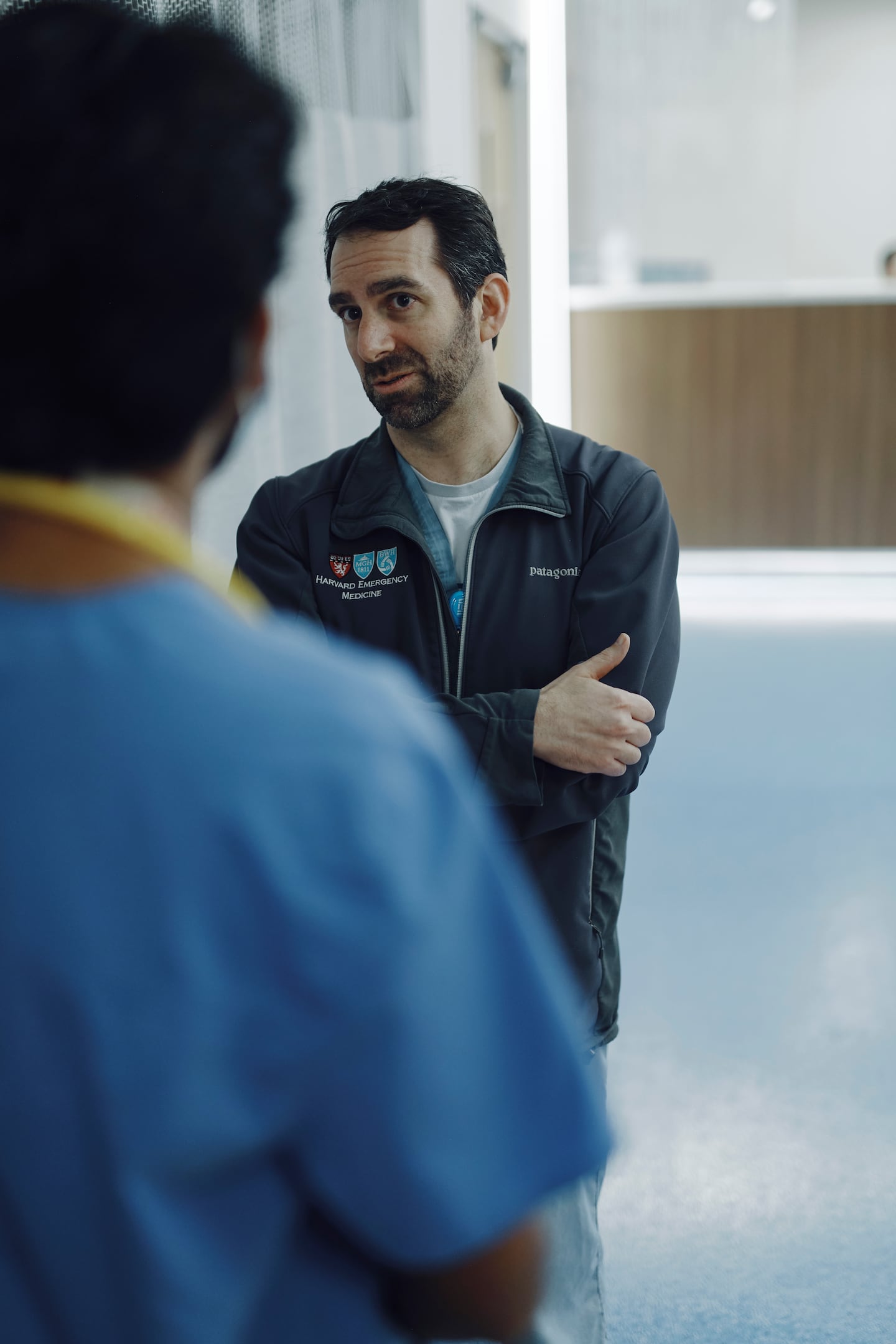
Some science reporters, however, have grumbled that Faust is “playing journalist,” pointing to his liberal use of terms such as “scoop” and “exclusive.” (In at least one case, he had to partially walk back his claim he was first to report a news story.) They also wonder whether his insider perspective — and being an employee of a major health care system — could pose conflicts of interest and blur the line between reporting and advocacy
I talked about his writing with Kelly McBride, senior vice president and chair of The Poynter Institute’s Craig Newmark Center for Ethics and Leadership
“He has a classic case of competing loyalties,” McBride says. “He has his loyalty to his audience, which is what he seems to be serving, but also to his profession and colleagues who are also hisnded mission statement that explains its purpose, ethics, and what he does to put his audience first
Faust, however, insists he is independent, can write on any subject he chooses, and would criticize people he considers friends if he saw reason to, though he concedes it would be more difficult. He points out that he got to know Ghebreyesus after criticizing the WHO on CNBC in the early days of the pandemic
“No matter how hard you try, journalism and advocacy are always intertwining,” Faust says, “and I think that some traditional media go to great lengths either to avoid that or to obscure that. I think that in 2026 it’s increasingly OK for those lines to… be overtly blurred.”
In an age where most Americans get some news from influencers or independent creators, there may be more tolerance for blurred lines than in the past, says Chris Roberts, a journalism professor at the University of Alabama and vice chair of the ethics committee of the Society of Professional Journalists. The SPJ, he says, is rewriting its code of ethics for the first time in more than a decade to reflect this landscape
Regardless of who is reporting the news, the main standards remain fairness, accuracy, independence, seeking truth, minimizing harm, and being transparent, Roberts says. But he adds: “Nothing in the First Amendment says you have to have any objectivity at all.”
Faust puts it this way: “If I saw you doing CPR successfully, I would say, ‘Good job.’ I wouldn’t say, ‘Why are you trying to play doctor?’ I think gatekeeping is stupid.”
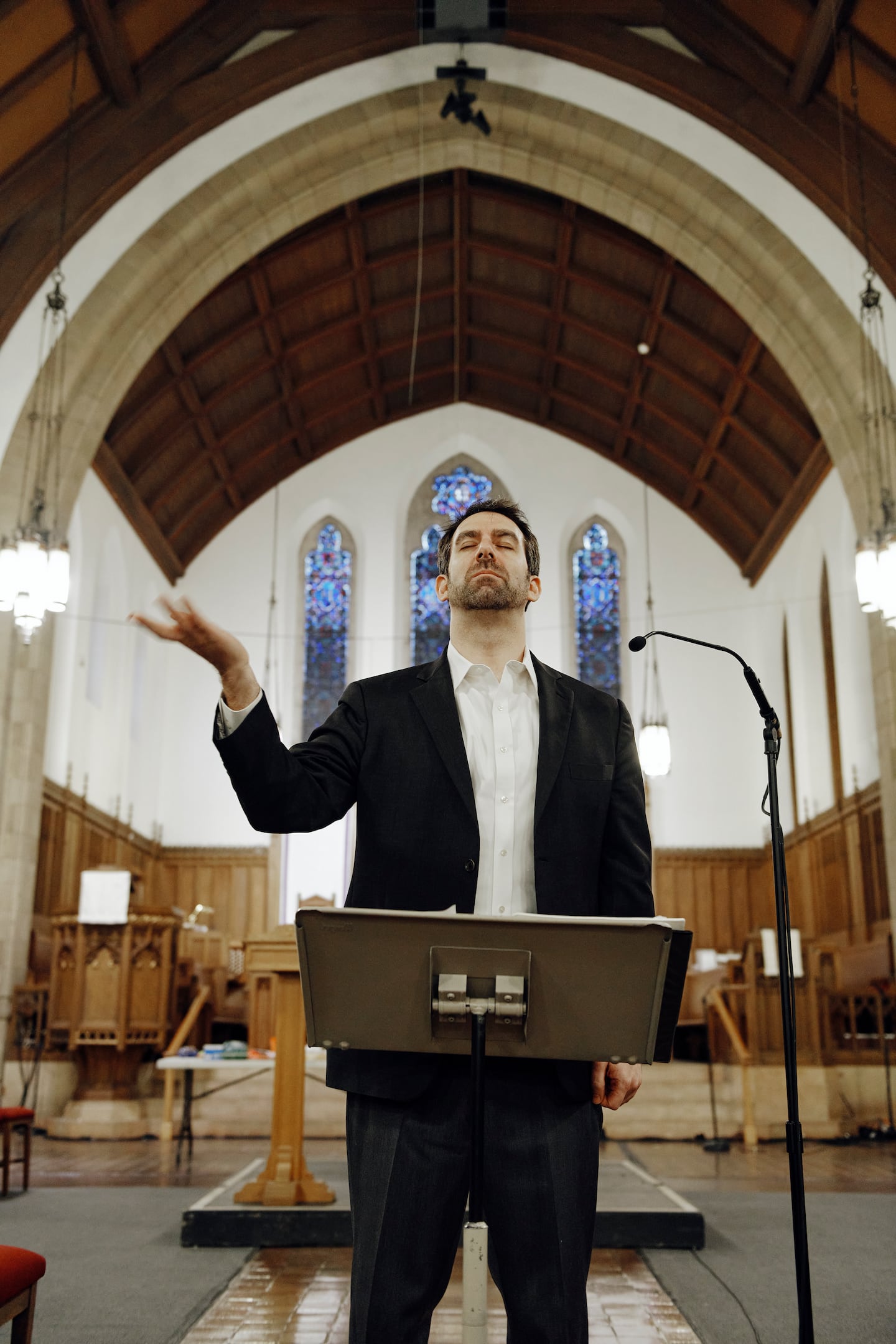
On a spring evening, Faust rushes into a cavernous Brookline church, a tote bag hanging off one shoulder. He sets the bag down, climbs atop a small podium, and greets the 110-plus members of the Longwood Chorus, an all-volunteer group made up of doctors, nurses, care coordinators, statisticians — a diverse slice of Boston’s medical and scientific community
They’re here to rehearse for an upcoming concert to mark the country’s 250th anniversary. Curated by Faust, the program spans Native American songs, Colonial music, spirituals, modern American music, and an arrangement of “The Star-Spangled Banner” that Faust pieced together from two other versions
“Ya, ya, ya, ya, ya!” they sing in a warm-up
“Tee, tee, tee, tee, tee!”
Faust runs them through portions of the 11 pieces they will perform, perfecting their diction, at points prompting one section to sing a bit louder, another softer
Afterward, Faust, wearing a dark blazer over an untucked white shirt and trousers, sits in the church’s nave. He tells me his brain feels “fizzy.”
“How I feel after these rehearsals is more energized and engaged than with anything else I do. It is like running four codes at once — one for each section [of the chorus],” he says, referring to the hospital alert when a patient needs resuscitation
He knows he won’t be able to sleep when he gets home. So after the rehearsal lets out around 9:15 p.m., he sits down and plays the church’s Steinway for about an hour
Last summer, he returned to playing piano regularly and taking weekly lessons to help displace his “doomscrolling” and cope with feelings of burnout. At home, he has only an electronic keyboard, and anyway, it would be too late for him to practice without waking his daughters
Two days before the concert, Faust is sitting at a cafe overlooking Harvard Square, his mind fizzy again — this time about the hantavirus outbreak. He’s been texting with colleagues and parleying on social media about how big a threat this outbreak might be and how far it could spread
“This week will definitely be one of the most memorable weeks of my career,” he predicts
In the coming days, he will flex his reporting muscles, breaking a story about a flight attendant testing negative after being exposed to cruise ship passengers on their way home — an indication the virus was not as contagious as some had feared. (When the WHO eventually made the news public, The New York Times credited Inside Medicine with being first to report the story.)
The virus fascinates him. It’s rare, deadly — sickening 13 people, including three who died — and offers an opportunity to watch a super-spreader event in progress. He hopes the outbreak will help researchers better understand the dynamics of this strain of hantavirus. How did it trigger this many cases? What’s the best way to stop it?
Faust’s penchant for making medical topics accessible to the public could lend itself to future endeavors he’s considered: writing a book, for which he has several ideas; public service, in the form of a post in the federal government; and possibly establishing a lab to investigate topical public health and epidemiological questions
Faust continues to see much of his work as journalism. Lately, though, he has described more directly how his various roles come together in his writing. The clearest example came in a June 13 post about a former MV Hondius passenger who was held against her will for 42 days in the National Quarantine Unit in Omaha. Faust had previously argued it would be safe for these passengers to return home after a period of time to finish their quarantine
In this post, he wrote that he and another public health expert had filed written analyses on her behalf when the case came before a CDC quarantine medical reviewer. In a foot note, he added:
“As before, I acknowledge that participating in this manner has straddled the line between journalism and advocacy. I don’t attempt to hide this. Rather, I embrace it as a strength of this platform.”
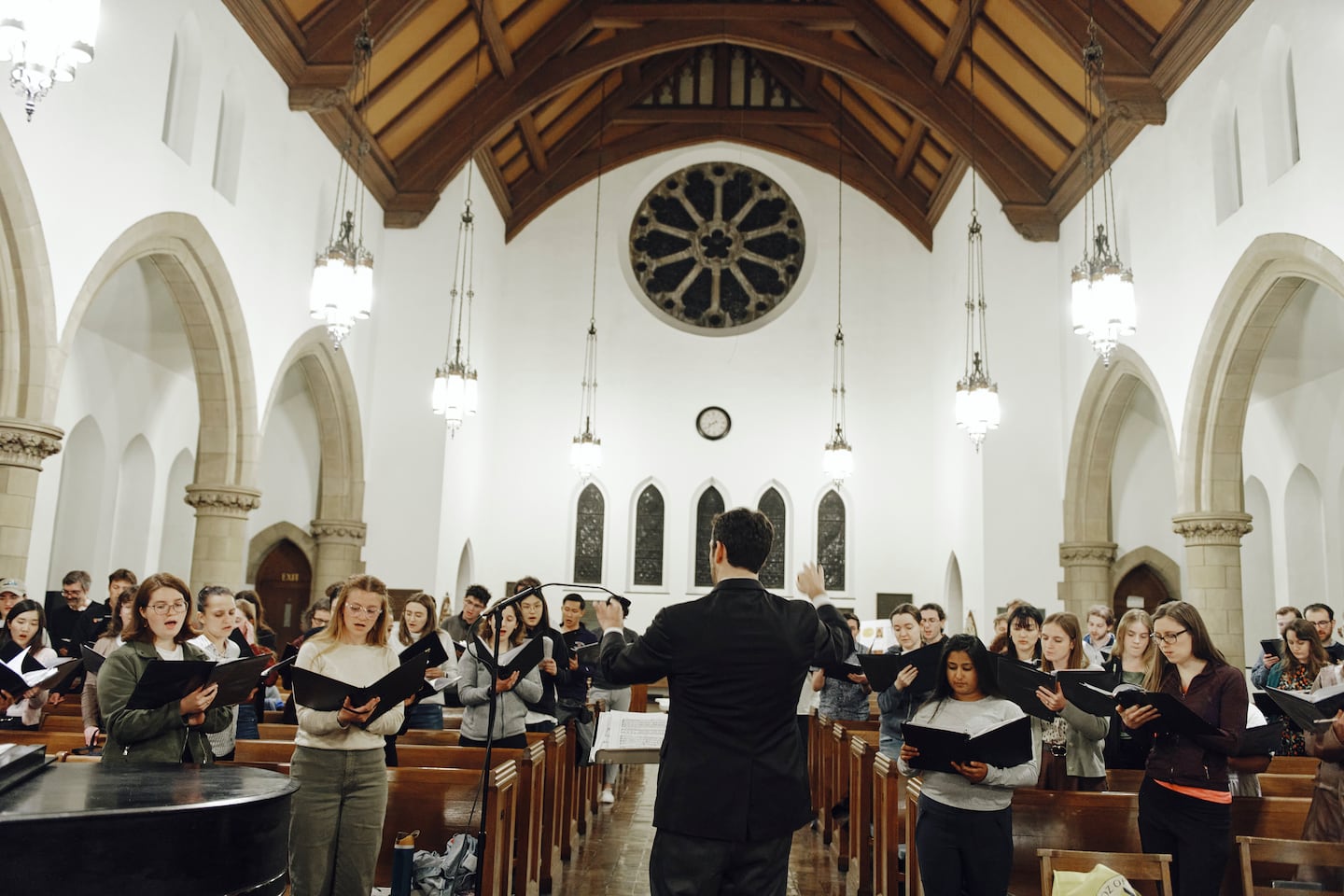
On Mother’s Day, a full house packs into Brookline’s All Saints Parish for the concert by the Longwood Chorus. Clad in black, the singers perform for an enthusiastic crowd of friends, family, and neighbors
Sitting in the empty audience area after the performance, his daughters occasionally running up to give him hugs or sit in his lap, Faust reflects on his role as conductor and the responsibility he feels to look out for the chorus members’ wellbeing
“In science and medicine, we always think of the primary outcome. What’s the first outcome of interest?” he says. As conductor, “It’s not how I feel, it’s not how the audience feels, it’s looking at the chorus and sensing how they’re doing, taking their temperature. A few weeks ago, I felt like I’m pushing them a little too much, but today I felt really good about them.”
It’s an equilibrium Faust is constantly recalibrating for himself as well
On any given day when he doesn’t work in the ED, it’s hard to predict where he will be. He could be appearing on television, working on a column, attending an event at his daughters’ school, chatting with a research collaborator
“I’ve made it such that I have time to slow down and think,” he says at one of our last meetings. “I don’t know what I’m doing Monday, but I know it’ll be good.”
Anna Kuchment can be reached at anna.kuchment@globe.com. Follow her @akuchment
