

This story is part of Peak,The Athletic’s desk covering the mental side of sports. Sign up for Peak’s newsletter here
One evening in the spring of 2001, I forgot how to throw a baseball
I was in eighth grade, on a new team, and had been sidelined by a knee injury for close to a month. When I returned to practice, I fielded a ground ball at second base but spiked the ball into the dirt when I tried to throw to first. I moved to the outfield and threw one over the backstop. When I tried to play a simple game of catch from 50 feet away, I could only guide the baseball to its target, lobbing it weakly
I felt a pit growing in my stomach. My heart pounded. The more I thought about how to throw a baseball hard and straight — something I had done a thousand times before — the more anxious I became
A friend seemed to realize what was happening before I did
“Dude,” he said. “Knoblauch!”
Chuck Knoblauch was the New York Yankees second baseman whose career was derailed by a mysterious condition known in sporting circles as “the yips.” In 1997, Knoblauch had been one of the best defensive second basemen in Major League Baseball. Two years later, he could not throw the ball 45 feet to first base
Knoblauch was not the first baseball player to have the yips. In the 1970s, Steve Blass, a pitcher for the Pittsburgh Pirates, battled them. In the 1980s, Los Angeles Dodgers second baseman Steve Sax had similar struggles. And in the 2000s, they befell Rick Ankiel, a promising young pitcher for the St. Louis Cardinals
Athletes in other sports were susceptible, too. Golfers seemed particularly vulnerable. So were NFL kickers and darts players, where the condition was known as “dartitis.” At the Tokyo Olympics, gymnast Simone Biles suffered from a case of the “twisties,” where she lost control of her body and withdrew from competition
The general understanding of the yips is fairly straightforward: They occur when we lose our instincts for certain task-specific movements, leaving us to try to intentionally control actions that usually happen subconsciously
After decades of research, we know more than ever about the complex relationship between the mind and body. But not enough to understand the unease or identify a single cure. In many ways, the yips remain a black box
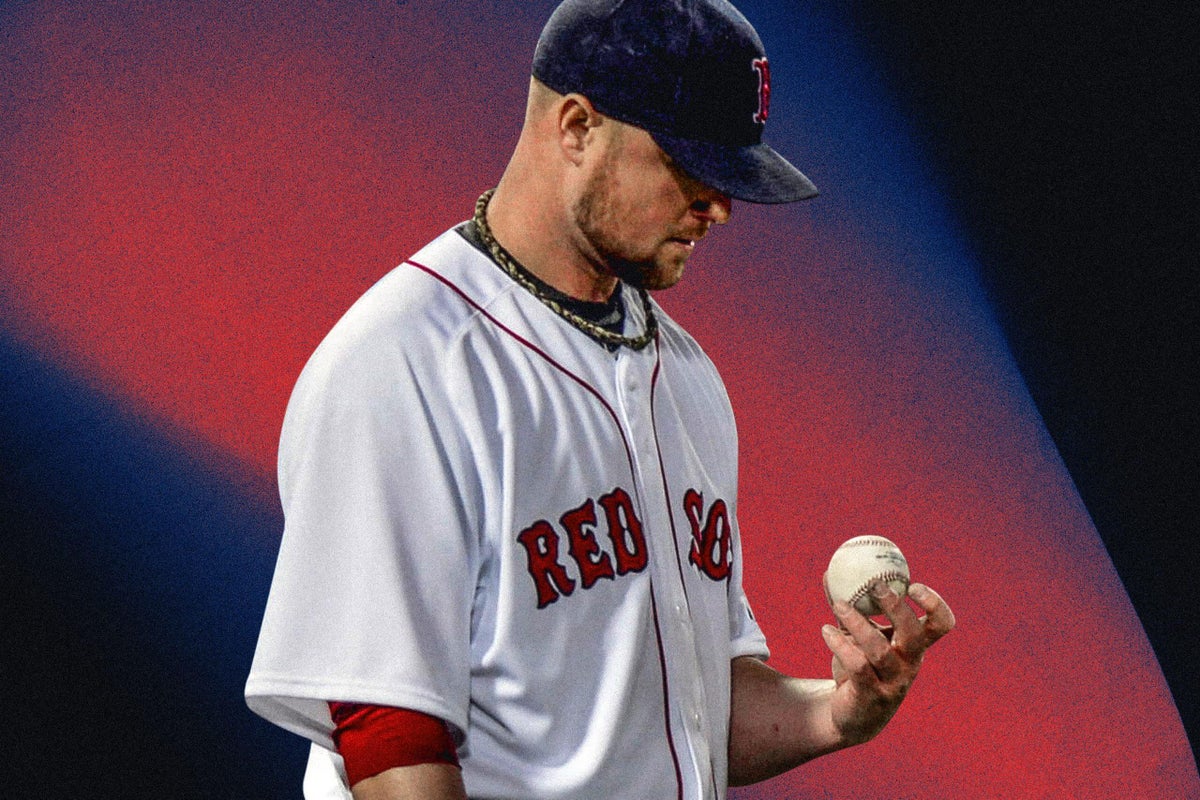
Many “yippers” report that performance anxiety is not a factor until after the yips begin. For others, the task-specific nature of the issue is confounding. Jon Lester, an All-Star starting pitcher for the Boston Red Sox and Chicago Cubs, could throw a 93 mph strike on the outside corner. But he could not even attempt to throw the ball to first base
For years, I tried to understand what happened to me when I was 14 years old. I white-knuckled my way through high school baseball, managing the condition as best I could. But the mental scars never quite disappeared, so I tried to bury the memory
Then I received an invitation last summer to play in a co-ed softball game. I showed up to the park and clutched a ball in my right hand. In an instant, the anxiety flooded back
I lobbed a throw to my friend. I threw another one low. He could sense something was wrong
“Do you have the yips?” he asked
Late in the game, the ball came to me at third base. I fielded it cleanly. Then I thought about what I needed to do next
I spiked the throw 10 feet short of first base. The pit in my stomach returned
A few weeks later, I decided to look for answers
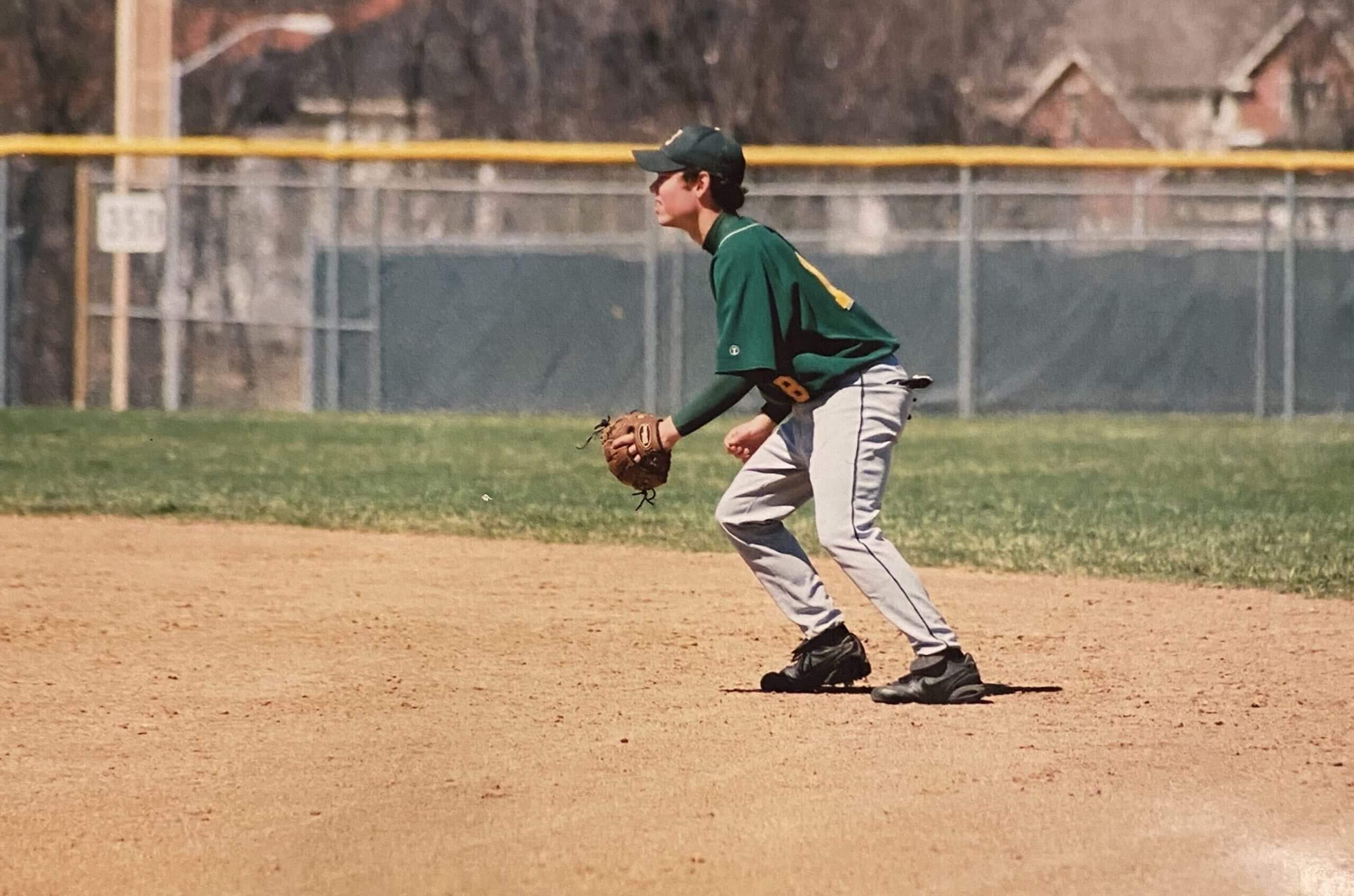
Rustin Dodd as a freshman in high school in the Kansas City area. (Photo courtesy of Rustin Dodd)
The term yips was coined by Tommy Armour, a golfer who won three majors in the 1920s and ’30s despite struggling with putts and possessing what he called “a brain spasm that impairs the short game.”
For decades, the consensus was that the yips were a psychological issue — a matter of stage fright or choking under pressure. But that started to change in the late 1990s, when a group of doctors and scientists affiliated with the Mayo Clinic began to suspect some of the causes may be neurological
One of the scientists was Charles H. Adler, a specialist in movement disorders such as Parkinson’s disease and dystonia, a neurological disorder defined by involuntary muscle contraction
There was a suspicion, Adler said, that the yips may have been similar to issues like writer’s cramp or musician’s dystonia, a neurological condition in which a small percentage of musicians lose control of their fingers and can no longer play
When Adler joined a team that started studying golfers in a putting lab (using devices to monitor brainwaves and arm muscles), they found some participants who reported having the yips also had excessive co-contractions in the forearm muscles and a slight rotation in the right wrist, often imperceptible to the naked eye. But participants who did not report the yips did not have the co-contractions
The findings suggested a focal dystonia. The studies led to a groundbreaking idea: The yips were not solely psychological. But they weren’t completely neurological, either. They instead existed on a continuum. On one side was performance anxiety or choking; on the other was a task-specific movement disorder
That finding provided hope that, in some rare cases, a fix could be found. If cases were neurological, they could be treated in the same ways doctors treat dystonia — with prescription drugs like Botox, sensorimotor training, beta blockers, or even procedures like deep brain stimulation or thalamotomy
It sounded complicated
But, I would soon learn, it was even more complex than I thought
There is a great irony with the yips: They almost never begin when you’re doing something difficult
For Alena Sharp, it started with a short putt
Sharp, an LPGA professional, was playing in the 2009 Kraft Nabisco Championship, the first women’s golf major of the year. Her playing partner was Karrie Webb, one of the best players on tour
In the middle of the round, Sharp missed a short putt, which was surprising. When she missed another, it caused her to overthink
She had always been a perfectionist who analyzed every aspect of the game. She knew, for instance, that the average success rate of an 8-foot putt was around 50 percent. If she had missed from that distance, she would have given herself some grace
But when she missed another short one, she started to spiral
“It’s almost like you forget how to do the easy things, and then it becomes so complicated and your brain just won’t get off that loop of trying to make the putt instead of just making the motion,” Sharp said
Sharp spent the next few years in the throes of yips hell. She researched the yips online. She called other golfers and coaches. At the recommendation of one, she changed her grip
At one point, as the yips threatened her tour status, she sought out Joan Vickers, a scientist with expertise in cognition and decision-making, famous for her “Quiet Eye” approach to putting. The Quiet Eye strategy demands a series of visual fixations on a target, which gave Sharp something else to focus on and provided some relief
Every solution proved temporary

Alena Sharp battled the yips putting on the LPGA Tour. (Photo by Douglas P. DeFelice / Getty Images)
John Buck, a former major-league catcher, told me an even weirder story. Buck played in the big leagues for 11 seasons. But one year he suffered a concussion, and as he tried to recover, he started overthinking. When he returned to the field, he struggled throwing the ball back to the pitcher, a real-life example of Rube Baker, the young catcher with the yips in the film “Major League II.”
When the game was live, Buck could throw a dime to second base to cut down a base stealer. But when it came to softly tossing the ball back to the pitcher, he felt paralyzed
“If there was a foul ball and the ball was dead, I was very conscious and I would have to whip that s— back at the pitcher like I was throwing it to second,” Buck told me. “How weird is that?”
I told Buck about a similar experience I had. When I came down with the yips in eighth grade, my dad was perplexed, so he sent me to take lessons with a private pitching instructor
On the first day, the unwitting instructor asked me to play catch. For the next five minutes, I awkwardly lobbed the ball back to him, occasionally spiking throws into the ground or hitting the top of the net in the batting tunnel. I can still remember the quizzical expression on the instructor’s face
Moments later, I stepped onto an indoor pitching mound and, relieved that the game of catch was over, started pumping strikes
“You know what?” the instructor finally said, still a little bewildered. “Some guys just can’t throw soft.”
For reasons I could not understand, stepping on the mound caused my anxiety to dissipate. A neuroscientist and yips researcher named Christian Marquardt told me that actually made sense
“The easier it becomes, the more you think you need to be accurate, and the more you are endangered,” he told me. “This is the paradox. Yes, it’s more easy (to play catch). But for the brain, it’s the opposite. And that’s something which needs to be understood.”
Three pro athletes have the same favorite mental advice
Elise Devlin
As I heard more stories, they all had a similar pattern, a basic mistake creating a negative feedback loop that spiraled out of control. Marquardt even had a name for it: “The Vicious Circle.”
Marquardt was an expert in motor control who spent most of the 1990s studying movement disorders and rehabilitation. In the early 2000s, he turned his attention to the yips and founded Science & Motion, a German company that makes motion-analysis systems for golf
The work culminated in a 2009 paper, which included a data set of 264 amateur golfers who had putted in the Science & Motion Putt Lab and presented a model for how golfers became trapped in the disorder
- It starts with a trigger, such as a missed putt or wild throw.
- The athlete then becomes perceptive and hyper-aware and begins anticipating another mistake.
- The awareness leads to anxiety, which causes an impulse to overcontrol the situation.
- The overcontrol causes interference with the brain’s automatic motor program, which often leads to yanking or jerking. Whatever is happening in the subconscious has become scrambled.
“We cannot control our automated movements because they are organized differently,” Marquardt said
To illustrate, Marquardt told me to imagine the difference between drawing and handwriting. When we draw, it is slow enough to control consciously. But when most people write letters by hand, they do so subconsciously without thinking about each letter
What was different about Marquardt’s circle is that he argued it could start with any stage. The trigger might seem innocuous at first, so subtle that you don’t even notice, but in time, it might feel more traumatic
It was one reason I could roughly remember the day I developed the yips, but I couldn’t remember the exact moment
It often comes out of the “clear blue sky,” Marquardt said
“All of a sudden you felt something was different,” he said. “And the more you felt it was different, the worse it became.”
There are ways to break the cycle, Marquardt said. When I told him my story, he posed a question I’d never heard
“When you had the yips,” he said, “did you ever try to throw with the back of your hand?”
I was confused
“Like did you ever try anything really different?” he asked
In essence, I needed to reset the program, to try something so radical that it might help focus attention away from the failed task and out of the negative feedback loop
It seemed logical, but it still felt difficult. A quarter-century had passed since I first experienced the yips, and I still felt a measure of anxiety when I held a ball in my hands
But then I heard about a training method that helped Tyler Matzek, an MLB pitcher, and Lucas Glover, the 2009 U.S. Open champion
Not long after, I was on the phone with a former Navy SEAL
Before Jason Kuhn started trying to help athletes cure the yips, the condition ended his college baseball career
It happened at Middle Tennessee State in 2002, when Kuhn, a reliever, appeared in an intrasquad game and did not throw a single strike. Not long after, he entered a game and threw more than 20 balls to the backstop
Unsure of where to turn, he spent eight years in the Navy. When he left the military, he ventured back into sports, working with the Vanderbilt football team on teamwork and leadership. Through a chance encounter, he connected with Tyler Matzek, a 2009 first-round pick who was suffering with the yips. When Matzek turned his career around and won a World Series with the Atlanta Braves, Kuhn started working with Glover and 2013 PGA Championship winner Jason Duffner
The curriculum was informed by personal experience and years of searching. Because of his Navy experience, Kuhn believed the yips had nothing to do with a lack of mental toughness
“It’s very similar to post-traumatic stress,” he said. “You have to heal the wound.”
He developed a process he called “closing the loop,” which included repetition, positive reinforcement and a cue. Glover thought of it as a toolbox to use when “the monster” arrived. When an athlete felt tension, Kuhn told them to acknowledge it and use self-talk: I trust freedom
Next came the cue — the most technical part of the process — a 1-2-3 mental checklist to provide assurance and consistency. It reminded me of something I started doing during pitching lessons
Because pitching did not carry the same mental baggage for me as playing catch, I started to use my same exaggerated pitching mechanics when I played catch before practice. I imagined myself swinging my hands apart, as if I was pouring out two pitchers of water, as a coach had once taught me. I added a little crow-hop to make me feel athletic
I was, in essence, closing the loop
It worked … until it didn’t. I told Kuhn the feeling of the yips had never gone away. When I started talking to professional athletes, I was shocked at how many people said the same thing
The most severe stories like Knoblauch’s generate headlines and remain associated with the yips. But one of the deepest secrets, as Buck told me, was just how many baseball players he knew during his playing days who dealt with it. The list included star players who will make the Hall of Fame
I thought about that one day last month when I returned to the softball field. As I started to warm up, I felt a measure of anxiety. My throws felt shaky. But I tried to interrupt the Vicious Circle. Then I tried to think of a cue
I pointed my shoulder at the target, felt my hands breaking apart, did a little crow hop, and hit my friend in the chest
