

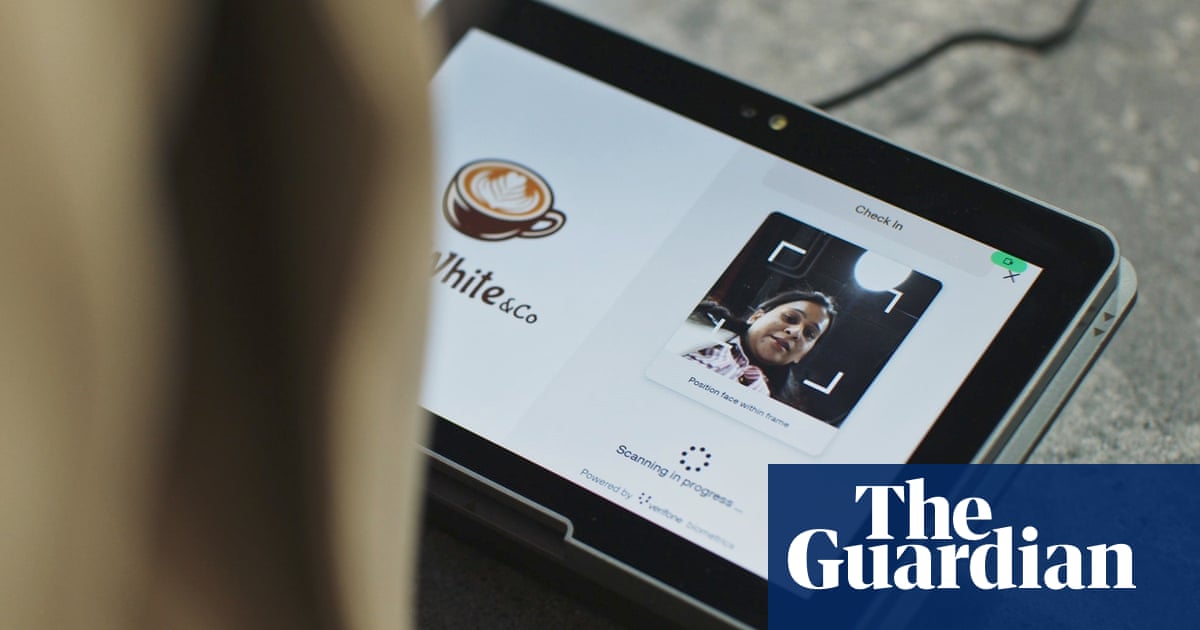
Pay with a glance at a screen as biometric technology company begins push into Australian retail
Customers will be able to pay using face and palm scans, potentially speeding up transactions – but rollout of the technology is likely to be slow
Follow our Australia news live blog for latest updates
Get our breaking news email, free app or daily news podcast
The company behind 300,000 Eftpos terminals across Australia is hoping shoppers will want to make payments by simply glancing at a screen, as biometric technology pushes further into retailing
Verifone is selling the innovation as “pay for your coffee with a smile”, promising faster checkouts for people who opt in to having their face or palm-vein – the veins in people’s hands – biometrics used for Eftpos transactions in Australia
It may take a long time before the technology is widely available, however, with cafes, restaurants and retailers required to upgrade their existing equipment
Sign up for the Breaking News Australia email
The head of product for Asia Pacific at Verifone, Ben Hughes, said the biometric payments will ease the “friction” of slow transactions
“If you go to a grocery store and you have to tap a loyalty card, plus tap a payment card, that’s the kind of thing that now we’d be able to speed up,” he said
He said the company was expecting retailers to deploy the Verifone Victa devices, which launched last month, incrementally as their current terminals reached their end of life
Hughes said the technology will need buy-in from banks and other organisations that want to allow their customers to pay using biometrics
Biometrics are converted into tokens on the device, he said, meaning images are not stored by Verifone, but biometric profiles are managed by merchants, banks or digital wallet providers
Customers will be able to continue to use contactless payments on their card or phone
Hughes said the company had measures in place to avoid users “spoofing” other people’s hands or faces, as has been seen in the rollout of facial verification technology, similar to that used in age assurance technology for Australia’s social media ban
The company is expecting some pushback on the shift to biometrics, but compared it to initial wariness over contactless payments
“This is continuous evolution, if you remember when contactless first came out, the amount of negative press we actually got from that initiative,” Verifone’s Asia Pacific president, Paris Tsounias, said
AI agents aren’t legally responsible for any harm that they cause, experts say. So who is?
Read more
“If you look at today, the stats, it’s over 90% of transactions are all contactless
“Now, no one even thinks of the risk around it. And we’ve covered the risk through the multitude of different type of certifications and compliance.”
Card-related fraud losses were $2.2bn in the 2024-2025 financial year, according to the Australian Bureau of Statistics, which did not break down the number of incidents related to contactless payment fraud, when people unknowingly have their cards tapped for payment
Part of the acceptance of contactless may have been that, according to the ABS, nearly 78% of people who reported card-related fraud did not lose any money after reimbursements
There has also been a shift away from using physical cards
In March, the Reserve Bank of Australia reported that, in 2025, the number of people paying by tapping a card had declined from a peak in 2022 of nearly 80% to under 60%, with payment by devices such as phones or smartwatches increasing to nearly 40%
Explore more on these topicsShare
Reuse this content
