

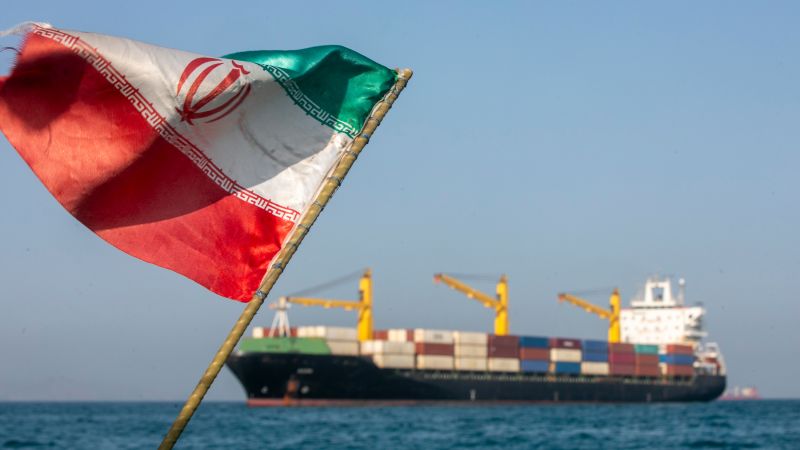
•Iran’s conditions: Iran’s national security chief has issued a list of demands for the US to fulfill before the Strait of Hormuz is reopened. The conditions, published by state media, include lifting the US naval blockade, compensation for war damages, and the release of frozen Iranian assets
•Strait of Hormuz:Separately, Iran and Oman have signaled they are close to a deal to manage the strait. As part of the agreement, vessels would transitthat would replace the historic “Traffic Separation Scheme,” which ships had been using before the war
• Supreme leader:Iranian state media shared an undated video of Supreme Leader Mojtaba Khamenei, who has not appeared publicly since becoming the country’s top political and religious authority. The post provided no detail on the timing of the footage and will likely only fuel speculation over his whereabouts and health
7 Posts
The list of demands from Iran can’t have surprised the White House. Hardliners have been repeating the mantra on a daily basis: the limited agreement in the works with Oman on the Strait of Hormuz is not the same as reopening the vital waterway
For that, they say, “America must correct its behavior.”
On Saturday, Mohammad Bagher Zolghadr, a highly influential figure in the Revolutionary Guards, set out what that correction would entail
Zolghadr demanded the US lift its naval blockade and withdraw its military forces from around Iran
The US must pay damages caused to Iran by the wars this year and in June last year (which was principally conducted by Israel), he said. And it must lift sanctions and release, unconditionally, Iranian assets frozen abroad
The implication of Zolghadr’s statement was that these conditions must be fulfilled before or in tandem with any compromise on the strait, which US President Donald Trump has consistently pledged to reopen
Iran’s demands are at odds with the memorandum of understanding reached with the US in June, which held that sanctions would be fully removed once a final deal regarding Iran’s nuclear program was reached and envisaged a phased release of assets
The Trump administration has not responded to the latest Iranian demands
“What we’re really working through now is how you can actually set up a traffic scheme so that the ships that pass can pass through safely,” US Vice President JD Vance told Fox News on Saturday
Yemen’s Houthi rebels claimed an attack on Saudi Aramco’s Jazan refinery Sunday, a major crude oil refinery located on the Red Sea coast in southwestern Saudi Arabia
In a statement, the Houthis said they “successfully targeted the Aramco refinery in Jizan with a drone,” adding that the attack was “in response to the Saudi enemy’s drones incursions into the airspace of Saada and Hajjah governorates.”
The Saudi Energy Ministry said a fire had broken out at dawn at a facility belonging to Saudi Aramco’s refinery in Jazan, that was extinguished by the company’s firefighting teams. It added that no injuries had been reported
Remember: The incident comes as the Middle East war has been expanding. The Houthis are one of several Iranian proxies that have threatened to widen the conflict with the rebel group striking commercial shipping and recently ramping up attacks targeting Saudi Arabia
For Riyadh, the revived Houthi threat is sabotaging its attempts to reroute millions of barrels of oil from the Persian Gulf to the Red Sea for export as the Strait of Hormuz remains effectively shut
Aramco is the world’s top oil exporter. On Tuesday, the company’s CEO Amin Nasser, said 2.6 billion barrels of crude have been lost from global supplies during the war with Iran, Reuters reported
Iran says it is “very close” to a deal with Oman on managing the Strait of Hormuz, but that an agreement won’t be sufficient on its own to reopen the vital waterway
Iran’s Foreign Minister Abbas Araghchi said under the agreement, vessels would transit the straitthat would replace the historic “Traffic Separation Scheme,” which ships had been using before the war
The waterway has been effectively closed by Iran since the US and Israel began the war back in February. It is the main route for shipping crude from oil-rich countries such as Saudi Arabia and Kuwait to the rest of the world
Both Tehran and Muscat have Exclusive Economic Zones (EEZ) in the strait
According to the United Nations, a state has “sovereign rights” to explore, exploit, conserve and manage the natural re
However, under the United Nations Convention on the Law of the Sea (UNCLOS), “ships of all States, whether coastal or land-locked, enjoy the right of innocent passage through the territorial sea.”
A coastal state should not “hamper the innocent passage of foreign ships through the territorial sea,” it says, except in specific outlined scenarios. It may “take the necessary steps in its territorial sea to prevent passage which is not innocent,” UNCLOS outlines
CNN’s Hanna Ziady, Aida Karimi and Sana Noor Haq contributed to this reporting
Tehran has issued a list of demands for the US to meet before it will agree to reopen the Strait of Hormuz, according to state media
Meanwhile, fighting persists in Yemen, where troops carried out a military operation against Iran-backed Houthi militants on Saturday
- Iran sets conditions:Tehran’s national security chief Mohammad Bagher Zolghadr called for the US to lift its naval blockade, withdraw military forces and end the war permanently. “Until America corrects its behavior, the Strait of Hormuz will not be reopened,” he said Saturday, in a statement published in state media.
- Managing Hormuz: Iran and Oman say they are close to striking a deal to manage the vital waterway. However, Oman urged caution, saying ongoing attacks on shipping could derail progress.
- Washington’s next move: Sources tell CNN the chairman of the Joint Chiefs of Staff has privately emphasized that the US needs to find an off-ramp from the war with Iran, as escalating militarily could backfire.
- In Yemen:Troops from Yemen’s internationally recognized government launched a military operation against Iran-backed Houthi militants on Saturday. A spokesperson for Yemen’s armed forces criticized the group, saying it has “dragged Yemen into regional conflicts in service of foreign agendas and schemes.”
- Supreme leader:Iranian state media released a video of Supreme Leader Mojtaba Khamenei, who has not been seen in public since assuming his role as the nation’s top political and religious figure. The video, shared Saturday, was undated which will likely only fuel speculation over his whereabouts and health.
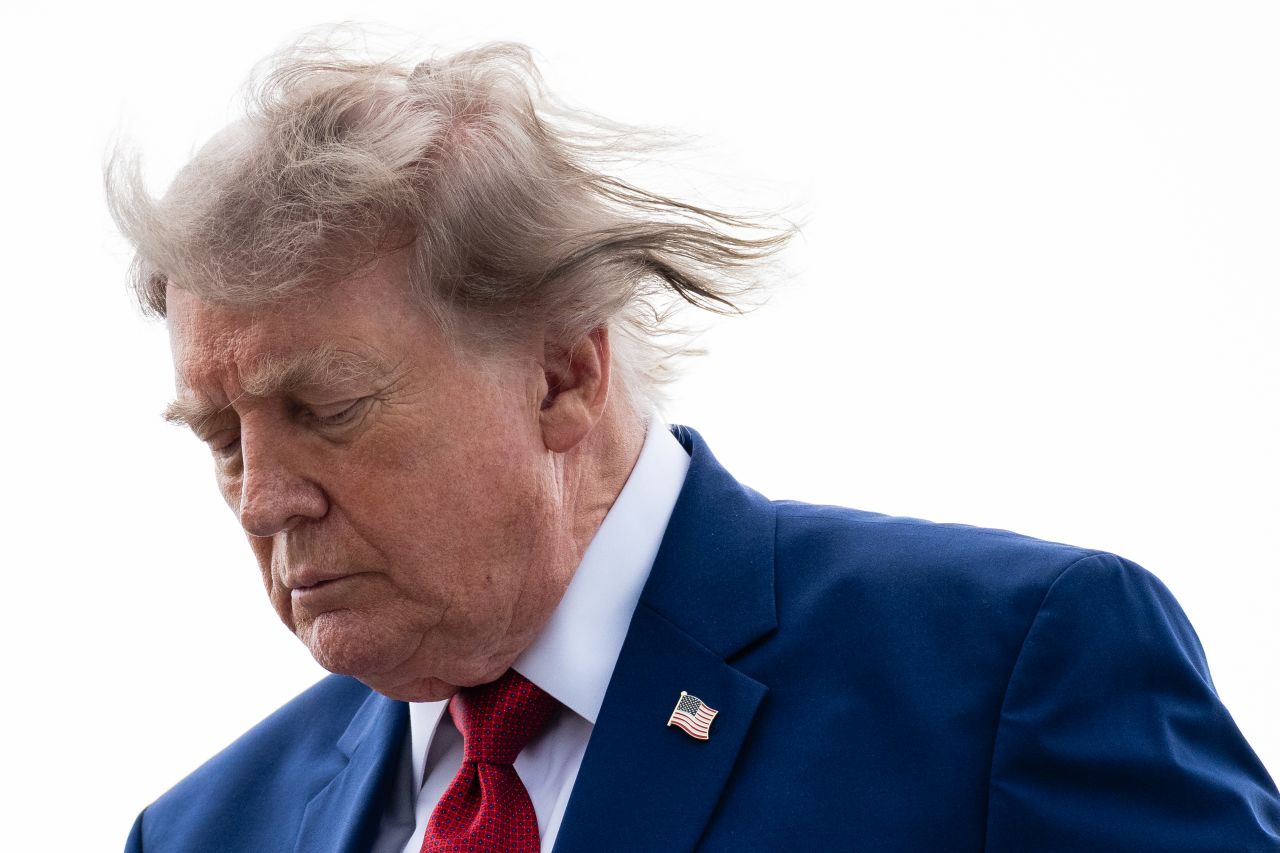
President Donald Trump walks off of Air Force One at Newark Liberty International Airport on August 7.
Over the last few weeks, Chairman of the Joint Chiefs Gen. Dan Caine has privately made clear to other top advisers that the US needs to find an off-ramp from the war with Iran
The military options on the table to escalate the conflict could backfire and airpower alone is unlikely to achieve President Donald Trump’s stated objectives, according to three
Caine is not alone in his view that the war has reached a crossroads. He has discussed concerns about the military options for escalating the conflict and raised the prospect of finding an off-ramp from the war with other key Cabinet officials, including CIA Director John Ratcliffe, Secretary of State Marco Rubio and Vice President JD Vance, two of the
The top US general has recently side-barred with some of those key, like-minded Trump advisers in an effort to ensure they are on the same page ahead of meetings with the president. The aim has been to make clear the limitations and pitfalls of the available military options, including those that do not involve putting US boots on the ground, the
Trump has consistently appeared averse to the idea of deploying ground troops in Iran, instead signaling he believes that air bombing can force them to agree to a deal on his terms
Caine and others in Trump’s Cabinet privately view that outcome as unlikely and instead have sought to develop other options that fit within the president’s own parameters, according to multiple
Read thefull story on the US military’s options in Iranhere
Tehran’s national security chief Mohammad Bagher Zolghadr issued a list of demands for the US to fulfill before Iran would reopen the Strait of Hormuz
State media published the list of requirements from Zolghadr, the secretary of the Supreme National Security Council. The list includes measures such as lifting the US naval blockade, withdrawing military forces and permanently ending the war
Zolghadr also calls for the US to compensate Iran for damage caused by the conflict and release frozen Iranian assets
“These are the demands of the Iranian people, which they have loudly proclaimed during 160 days of steadfast presence in the field and in the streets,” the politician said
“Until America corrects its behavior, the Strait of Hormuz will not be reopened,” his statement read
CNN has reached out to the White House for comment
Some background: Earlier on Saturday, Iran’s Foreign Minister Abbas Araghchi said that Iran is “very close” to reaching a deal with Oman on managing the Strait of Hormuz
But he cautioned that the reopening of the strait was “subject to other conditions,” including the US making amends for what he said was a violation of the memorandum of understanding agreed between the two countries in June
Oman’s Ministry of Foreign Affairs described the negotiations as “positive and constructive.”
On Friday, Iran’s state-affiliated Islamic Republic of Iran Broadcasting (IRIB) reported that Iranian lawmakers had largely landed on a proposed framework agreement with Oman but were waiting for “final approval.”
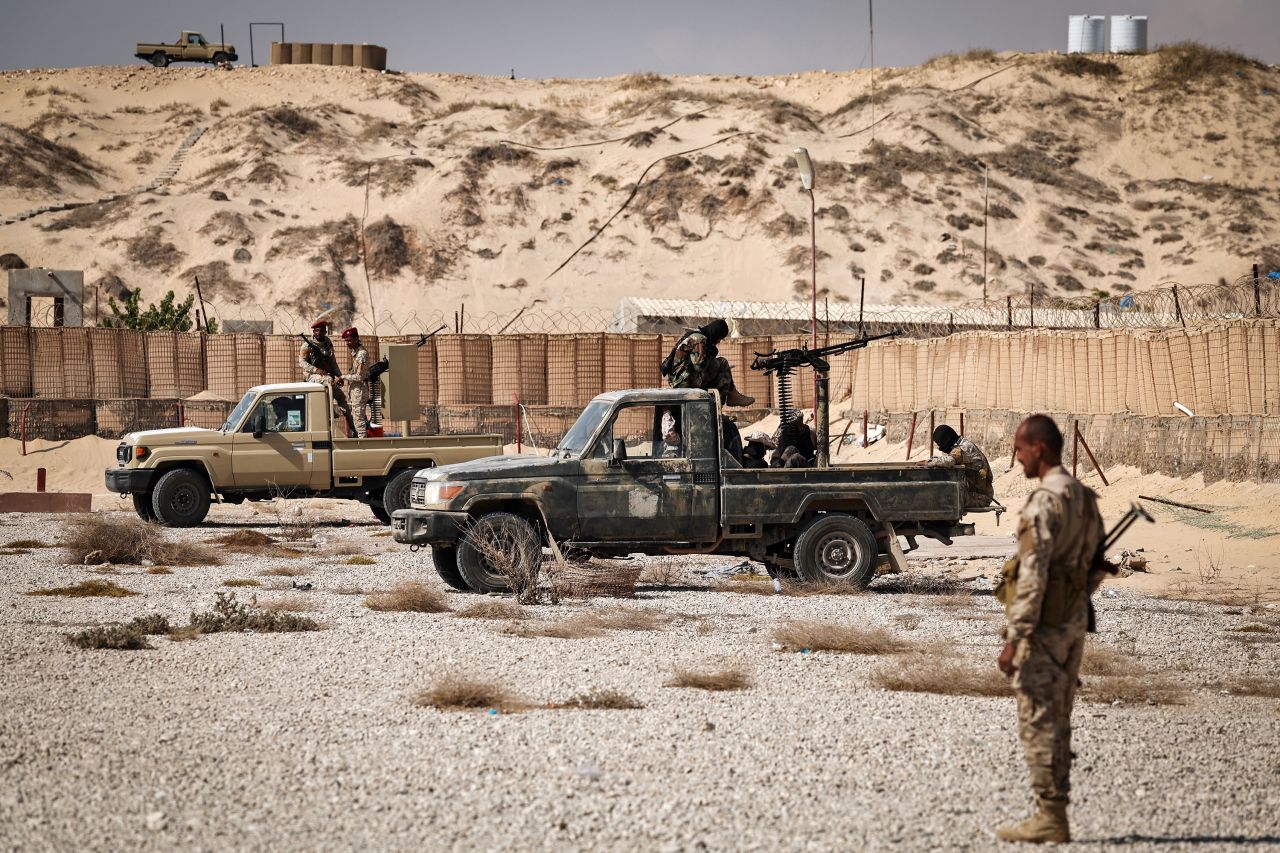
Saudi-backed Yemeni forces in the city of Mukalla in Yemen’s coastal southern Hadramawt province on January 20.
Yemeni troops conducted a military operation targeting Iran-backed Houthi militants on Saturday. A spokesperson for the country’s armed forces condemned the group, saying it has “dragged Yemen into regional conflicts in service of foreign agendas and schemes.”
The Houthis are among several Iranian proxies that have threatened to widen the conflict as the US and Israel remain at war with Iran. The rebel group has struck commercial shipping and recently ramped up attacks targeting Saudi Arabia. Saudi officials last week signed a NATO-like defense agreement with Pakistan and Turkey as they looked to bolster the kingdom’s mutual defense
The war in Yemen dates back over a decade, and is primarily a conflict between the Houthis and a Saudi-led coalition backing the internationally recognized government
After the Arab Spring in 2011, the Houthis seized a northern province and later the capital Sanaa, which they still hold, along with much of Yemen’s Red Sea coastline. In the process they became part of Iran’s “Axis of Resistance,” a network of allied militant groups across the region, receiving weapons and technology
US-allied Saudi Arabia spent seven years trying and failing to dislodge the Houthis from northern Yemen, launching a large-scale offensive against the militant group in 2015. The ensuing conflict provoked one of the world’s worst humanitarian crises
Now, experts say the Yemeni rebel group sees an opportunity to regain some of its losses during the Iran war, deepening a sense that the Middle East is on the edge of a wider regional conflict
