


After a career spanning two decades at Bear Stearns, Lehman Brothers, and Morgan Stanley, I gained an institutional perspective on dividend stock investing. My tenure at these premier Wall Street firms exposed me to fundamental analysis, credit evaluation, and risk management practices that directly translate into selecting high-quality dividend-paying companies. Having witnessed firsthand the 2008 financial crisis and its aftermath, including the collapse of Bear Stearns and Lehman Brothers, having left both firms before their respective collapses, I developed an appreciation for balance sheet strength, sustainable payout ratios, and the importance of dividends as a stabilizing force during market turbulence.
While much has changed since I started as a stockbroker in 1991, quality energy companies that dominate the industry and pay dependable high-yield dividends never go out of style. The big integrated giants dominated then and continue to do so, while the top midstream master limited partnerships (MLPs) still control the movement and storage of oil and gas. Five companies that investors can buy now at reasonable valuations can be stashed in a growth-and-income portfolio and held forever. All five are rated by the top Wall Street firms we cover.
Why Do We Cover High-Yield Energy, Dividend Stocks?
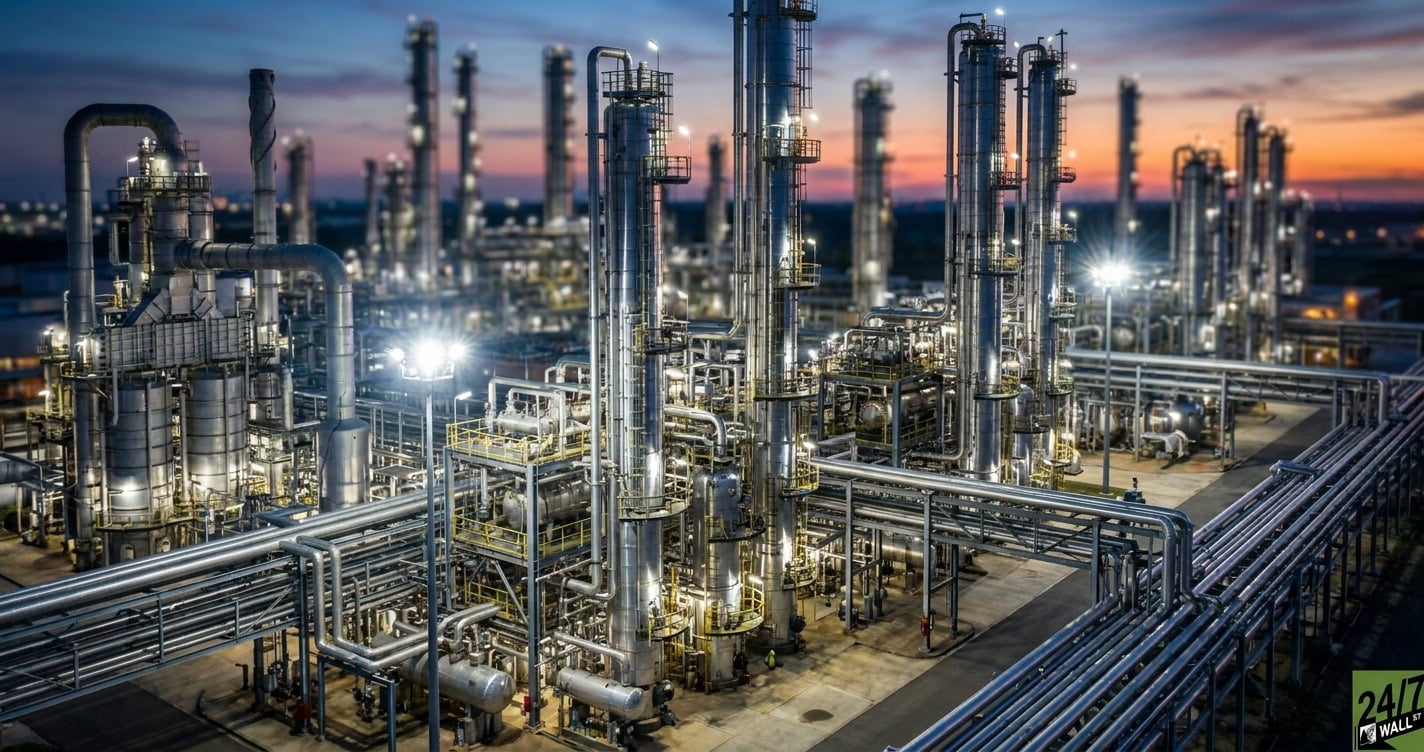
Since 1926, dividends have accounted for approximately 32% of the S&P 500’s total return, while capital appreciation has accounted for 68%. Therefore, sustainable dividend income and the potential for capital appreciation are essential to total return expectations. A study by Hartford Funds, in collaboration with Ned Davis Research, found that dividend stocks delivered an annualized return of 9.18% over the 50 years from 1973 to 2023. Over the same timeline, this was more than double the annualized return for non-payers (3.95%).
Chevron
Chevron (NYSE: CVX | CVX Price Prediction) is an American multinational energy company primarily focused on oil and gas. It is a safer option for investors looking to position themselves in the energy sector, and it pays a substantial 3.55% dividend, which was raised by 5% earlier this year. Chevron operates integrated energy and chemicals businesses worldwide through its subsidiaries
The company operates in two segments. The Upstream segment is involved in the following:
- Exploration, development, production, and transportation of crude oil and natural gas
- Processing, liquefaction, transportation, and regasification associated with liquefied natural gas
- Transportation of crude oil through pipelines, and transportation, storage
- Marketing of natural gas, as well as operating a gas-to-liquids plant
The Downstream segment engages in:
- Refining crude oil into petroleum products
- Marketing crude oil, refined products, and lubricants
- Manufacturing and marketing renewable fuels
- Transporting crude oil and refined products by pipeline, marine vessel, motor equipment, and rail car
- Manufacturing and marketing of commodity petrochemicals, plastics for industrial uses, and fuel and lubricant additives
It also involves cash management, debt financing, insurance operations, real estate, and technology businesses
Bank of America has a Buy rating with a $227 price target
ConocoPhillips
The big always gets bigger, and this company completed a $22.5 billion purchase of Marathon Oil in November of 2024. This deal added high-quality assets, particularly in the Eagle Ford and Bakken shales, to the company’s portfolio. ConocoPhillips (NYSE: COP) is an exploration and production company with a rich dividend yield of 2.84%
Its Alaska segment primarily explores for, produces, transports, and markets crude oil, natural gas, and natural gas liquids (NGLs). The Lower 48 segment covers operations in the 48 contiguous states of the United States and the Gulf of Mexico. Canadian operations consist of the Surmont oil sands development in Alberta, the liquids-rich Montney unconventional play in British Columbia, and commercial operations
The Europe, Middle East, and North Africa segment consists of operations principally located in:
- The Norwegian sector of the North Sea
- The Norwegian Sea
- Qatar
- Libya
- Equatorial Guinea
- Commercial and terminalling operations in the United Kingdom
The Asia Pacific segment has exploration and production operations in China, Malaysia, and Australia, as well as commercial operations in China, Singapore, and Japan. The Other International segment includes interests in Colombia as well as contingencies associated with prior operations in other countries
UBS has a Buy rating with a $143 target price
Energy Transfer
Energy Transfer (NYSE: ET) is one of North America’s largest and most diversified midstream energy companies. This top MLP is a safe option for investors seeking energy exposure and income, as the company pays a 6.58% distribution yield. Energy Transfer owns and operates one of the largest and most diversified portfolios of energy assets in the United States, with a strategic footprint across all major domestic production basins
The company is a publicly traded limited partnership with core operations that include:
- Complementary natural gas midstream, intrastate, and interstate transportation and storage assets
- Crude oil, NGLs, and refined product transportation and terminalling assets
- NGL fractionation
- Various acquisition and marketing assets
Following the acquisition of Enable Partners in December 2021, Energy Transfer owns and operates over 114,000 miles of pipelines and related assets in 41 states, spanning all major U.S. producing regions and markets. This further solidifies its leadership position in the midstream sector
Through its ownership of Energy Transfer Operating, formerly known as Energy Transfer Partners, the company also owns Lake Charles LNG Company; the general partner interests, the incentive distribution rights, and 28.5 million standard units of Sunoco (NYSE: SUN); and the public partner interests and 39.7 million standard units of USA Compression Partners (NYSE: USAC)
Jefferies has a Buy rating on the shares, with a $23 target price
Enterprise Products Partners
This top American midstream natural gas and crude oil pipeline company is headquartered in Houston, Texas. Enterprise Products Partners (NYSE: EPD) is one of the most extensive publicly traded energy partnerships and pays a reliable 5.78% dividend. The company’s debt-to-EBITDA ratio ranges from 3.1x to 3.4x, which is moderate for a midstream energy company, and its interest coverage ratio is 5x
The company generates strong free cash flow, with an operating cash flow of approximately $8.8 billion, resulting in approximately $4.2 billion in free cash flow annually after deducting capital expenditures. Another significant benefit for shareholders is that most of the corporate debt is fixed-rate, thereby limiting the risk of rising interest rates
Enterprise Products Partners provides various midstream energy services, including:
- Gathering
- Processing
- Transporting and storing natural gas, NGLs, and fractionation
- Import and export terminalling
- Offshore production platform services
Its four reportable business segments are:
- Natural Gas Pipelines and Services
- NGL Pipelines and Services
- Petrochemical Services
- Crude Oil Pipelines and Services
One reason many analysts like the stock might be its distribution coverage ratio. The company’s coverage ratio is well above 1x, making it relatively less risky among the MLPs
UBS has a Buy rating with a $45 price objective
Exxon Mobil
Exxon Mobil (NYSE: XOM) manages an industry-leading portfolio of resources and is one of the world’s largest integrated fuels, lubricants, and chemical companies. The decline in oil prices presents investors with an excellent entry point to secure a strong 2.69% dividend yield. Exxon is the world’s largest international integrated oil and gas company, exploring for and producing crude oil and natural gas in the United States, Canada, South America, Europe, Africa, Asia, and Australia/Oceania.
Exxon also manufactures and markets commodity petrochemicals, including olefins, aromatics, polyethylene, and polypropylene plastics, as well as specialty products. Additionally, the company transports and sells crude oil, natural gas, and petroleum products
Top Wall Street analysts expect the company to remain a key beneficiary in a higher oil price environment. Most remain optimistic about the company’s sharp positive inflection in capital allocation strategy, upstream portfolio, and leverage to a further demand recovery. Exxon offers greater downstream/chemicals exposure than its peers
Exxon completed its purchase of oil shale giant Pioneer Natural Ren. The deal created the largest U.S. oilfield producer and guarantees a decade of low-cost production
Morgan Stanley has an Overweight rating and a $168 target price
Contact [email protected] for any questions or corrections
