

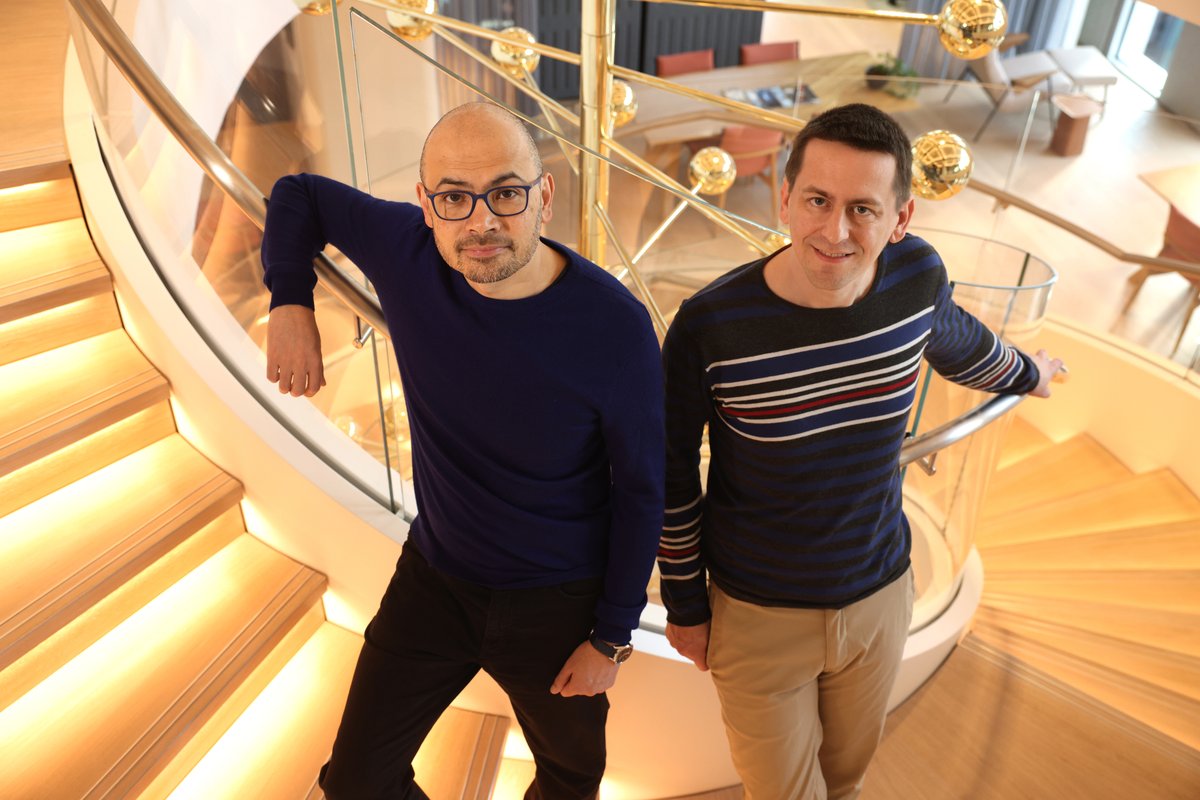
After eight years, more than 200 million predictions and a Nobel Prize for two of its creators, the team behind AlphaFold—Google DeepMind’s artificial intelligence program to predict protein structure—has itself folded
The Financial Timesreported last week that DeepMind had dissolved the dedicated AlphaFold team. Some members left the company; AlphaFold2 co-creator John Jumper announced in June that he was leaving for Anthropic. Other researchers were reassigned to other projects within Google or moved to Isomorphic Labs. A DeepMind spokesperson tells Scientific American that many of those moves happened more than a year ago. The program’s public database and prediction server remain available
So did the project complete the scientific mission DeepMind set for it? By the benchmark the company chose, the answer appears to be largely yes. AlphaFold achieved remarkable accuracy at predicting a protein’s likely three-dimensional structure. And because researchers outside DeepMind have already reproduced and extended much of AlphaFold’s work, the team’s breakup may have less effect on the field than it might at first seem
On supporting science journalism
If you’re enjoying this article, consider supporting our award-winning journalism bysubscribing. By purchasing a subscription you are helping to ensure the future of impactful stories about the discoveries and ideas shaping our world today
DeepMind began developing AlphaFold in 2018 to solve the “protein folding problem,” or the task of predicting a protein’s 3D structure from just its amino acid sequence. Though scientists had achieved some prediction success since research on the problem began in the 1970s, AlphaFold used an artificial intelligence model trained on lab-determined protein structures and amino acid sequence data to generate highly accurate models in minutes or hours—giving researchers a starting point for experiments that otherwise might have taken months or years.
In 2020 the program’s second iteration dominated the Critical Assessment of Structure Prediction, or CASP, a blind test that compares computational predictions with experimentally determined structures that have not yet been released. The third iteration, released in 2024, expanded its prediction abilities to interactions among proteins and other molecules, including DNA, RNA and potential drugs. That year Jumper and DeepMind chief executive Demis Hassabis shared half of the Nobel Prize in Chemistry for developing AlphaFold2.
John Moult, a computational biologist at the University of Maryland, who co-founded CASP, said in 2020 that AlphaFold had “largely solved” the structure-prediction problem. That DeepMind has now moved on, Moult says, is “not surprising.” The team’s breakup follows from the way the company defined AlphaFold from the beginning. “They decided that this was a good problem where they could show whether they succeeded or not in a clean way—not only show the world but genuinely show themselves,” he says.
From DeepMind’s perspective, he adds, “they did it. What’s the next mission?”
AlphaFold quickly became useful far beyond the CASP benchmark. Problems with protein folding contribute to diseases such as Alzheimer’s and cystic fibrosis. Researchers have used AlphaFold’s public prediction data to investigate a range of biological problems, including work toward a malaria vaccine and efforts to engineer more resilient crops. DeepMind also launched the drug discovery company Isomorphic Labs to build on AlphaFold’s research
The program’s prediction accuracy, Moult says, “was an amazing achievement in itself, but it also opened up large areas of science, so you can start exploring the protein universe in various ways.”
Still, “largely solved” applies to a specific benchmark, not to structural biology as a whole. Many proteins work as parts of larger molecular machinery. They may switch among multiple shapes as they function, and researchers still struggle to predict what those changing states will be or how molecules will bind to them. “There’s a whole string of these problems,” Moult says, that “certainly aren’t fully solved yet.”
Those open questions do not make DeepMind’s decision surprising to Debora Marks, a computational biologist at Harvard Medical School, whose group pioneered approaches to protein prediction that helped lay the groundwork for AlphaFold
“I’d do exactly the same,” she says. “Why would you carry on if you were already done?”
In 2024 DeepMind released AlphaFold3’s inference code and made its model weights available for academic research, and independent groups have since developed their own versions and extensions. Moult doubts the team’s breakup will slow that work. “I don’t think it has any serious impact on the usefulness of what they did,” he says, “because other people are now doing it, too.”
It’s Time to Stand Up for Science
If you enjoyed this article, I’d like to ask for your support.Scientific American has served as an advocate for science and industry for 180 years, and right now may be the most critical moment in that two-century history
I’ve been a Scientific Americansubscriber since I was 12 years old, and it helped shape the way I look at the world.SciAmalways educates and delights me, and inspires a sense of awe for our vast, beautiful universe. I hope it does that for you, too
If yousubscribe toScientific American, you help ensure that our coverage is centered on meaningful research and discovery; that we have the re.S.; and that we support both budding and working scientists at a time when the value of science itself too often goes unrecognized
In return, you get essential news,captivating podcasts, brilliant infographics,can’t-miss newsletters, must-watch videos,challenging games, and the science world’s best writing and reporting. You can evengift someone a subscription
There has never been a more important time for us to stand up and show why science matters. I hope you’ll support us in that mission
