

Getting your Trinity Audio player ready…
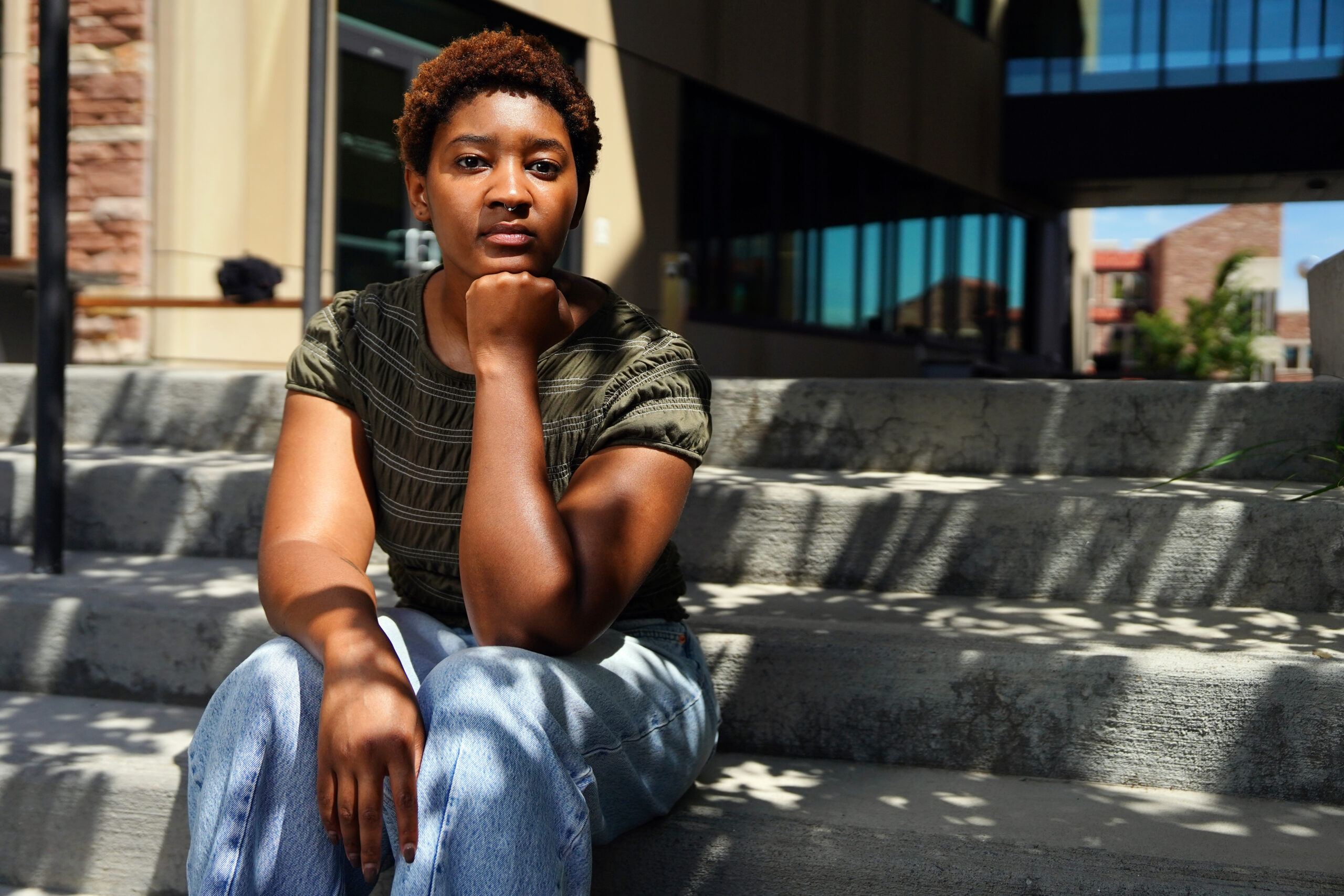
Mirakle Wright thought her peers’ opposition to generative artificial intelligence in a world increasingly beset with the technology evoked the convictions held by wartime pacifists
“People have such negative feelings about AI. They’re becoming resisters — conscientious objectors,” said Wright, a University of Colorado Boulder graduate student
An expanding pool of research on AI’s impact on education exists, but Wright said she couldn’t find much literature about holdout college students <a href="https://todaytrend<a href="https://todaytrendnews7.com/49ers-news-welcome-to-the-bay-kion-smith/” title=”49ers News: Welcome to the bay, Kion Smith”>news7.com/avoiding-these-3-things-in-middle-age-may-delay-dementia-risk-by-13-years-national/” title=”Avoiding these 3 things in middle age may delay dementia risk by 13 years – National”>avoiding the pull of popular generative AI tools like ChatGPT
“The assumption is people want to adopt it, and maybe they don’t know how to use it, but they’re going to at some point,” Wright said. “I had been seeing something different in my peers. I have a lot of friends who do not like AI. I wanted to understand where that was coming from.”
Now, the 25-year-old Wright is on the front lines, researching growing tensions between students who reject generative AI and their universities, some of which are spending millions to partner with AI companies to roll out their technologies to students and faculty en masse
In a small sampling of CU students who described themselves as AI-avoidant, Wright documented an array of reasons for abstention: environmental hangups over the tech’s high water use, data privacy concerns, objections to the way AI scrapes existing work, and fears about a self-described “cognitive decline” they experienced while using it
“The majority of my participants flat out don’t think AI has a place in education,” Wright said. “Most said something like the university is supposed to foster intellectualism and debate and analysis, and that AI is the complete opposite to that, so there’s a lot of tension there.”
That strain is coming to a head as some Colorado students question why their institutions of higher education are aligning themselves with big AI companies
During the last academic year, the University of Colorado system announced a $2 million partnership with OpenAI to roll out a CU-specific ChatGPT. Colorado State University in Fort Collins made its own deal to create a CSU version of ChatGPT
CU pitched its partnership as a way to provide equitable tools for everyone on campus to engage with AI technology in a more secure way. If tens of thousands of students are already using AI, CU Vice President of Communications Michele Ames said, at least this way, the university can teach them how to use it responsibly and prepare them for AI in the workforce
“It’s better for us to be in a position to help students learn how to work with the technology and build up their critical thinking skills and deal with this honestly,” Ames said. “To pretend AI doesn’t exist, that it won’t exist in the workplaces they’re going into… would be doing them a disservice.”
With generative AI platforms like ChatGPT, users can pose questions or give prompts, and the chatbots draw information gathered from the internet or programmed into their networks to create text responses, images and sounds to fulfill the queries. (The Denver Post and other newspapers have sued ChatGPT maker OpenAI and Microsoft, alleging the companies illegally harvested copyrighted articles to create their generative AI systems.)
‘You can’t write an email on your own?’
CU information science professor Casey Fiesler, one of Wright’s professors, said she’s seen young people’s feelings about AI come full circle. The revolutionary tech is considered “cringe” in some circles, said Fiesler, who studies AI ethics
“They’re like, ‘Oh my gosh, there’s all this AI slop and my parents keep telling me that AI is the future and I have to learn it, yuck.’” Fiesler said. “I’ve seen students in my class sort of poke at each other a little bit being like, ‘Seriously, dude, you can’t write an email on your own?’”
Communications major Nate Wasylik stood before the CU Board of Regents during an April meeting, pleading with the university’s governing body to stop CU from turning over student data to ChatGPT creator OpenAI
“I am asking you to protect us,” Wasylik said during the meeting. “I am horrified at this board’s handling of the OpenAI contract.”
In an interview, Wasylik said he is tired of academics and older adults pushing AI onto students to prepare them for the workforce. He said he wants CU to end its contract with “the giant plagiarism machine.”
“I didn’t think education was about any of that,” Wasylik said. “AI is adverse to the idea of learning. An educational institution should be focused more on teaching us than making us ready for a job. I’m not measuring my success on a billionaire’s mindset. I want education for the sake of education. I want to learn.”
Elizabeth McKinnie, a 28-year-old Ph.D. student in CU Boulder’s information science department, was formerly a software engineer at Microsoft
McKinnie had early access to ChatGPT through Microsoft. If she hadn’t already been leaving the company to pursue graduate school, the technology would have pushed her to quit with “no intention of returning to software engineering.”
On Feb. 10, McKinnie was at CU Boulder listening to computer scientist Timnit Gebru — former co-lead of Google’s ethical AI research team — give a talk about the harms of generative AI and the movements working to stop those harms
“That talk made me feel really inspired and hopeful about the future,” McKinnie said
Hours later, McKinnie was dumbfounded to receive an email from CU announcing its partnership with the controversial OpenAI. An Associated Press investigation linked OpenAI usage to Israeli military operations and the company has an agreement with the U.S. Department of War.
“Aligning yourself with a company doing terrible things is not a good thing,” McKinnie said. “For a while I thought, ‘Maybe I’m just being a Luddite,’ because I don’t think AI should be in the classroom. What I’ve settled on more is that I really think there is a difference in its use when you are learning something vs. when you are already skilled at something. You don’t really learn something until you do it yourself.”
Students were supposed to gain access to the CU-sanctioned technology in March, but the announcement drew so much backlash from students and faculty who said they felt blindsided by the deal and worried about data privacy concerns that the university pushed back access until later this summer
Students on the Boulder campus will get access to CU’s version of ChatGPT beginning Saturday
Nearly 800 CU researchers, students and professors from departments spanning computer science to creative writing to business signed an open letter of dissent about the partnership
“The critiques were heard,” CU’s Ames said. “They are acknowledged.”
In response, Ames said there are working groups including students, staff and faculty looking at different policies surrounding the partnership. Because of the backlash, Ames said students will be required to have training before using the CU AI program
And to address privacy concerns, the university also made amendments to the original contract between OpenAI and CU to “make it crystal clear” that CU’s ChatGPT could not train its large language model using the campus’ data, Ames said
‘This is a major phenomenon in our lifetime’
Teresa Nugent, a CU Boulder English professor, is among the faculty members charged with crafting the student training
Nugent is uniquely qualified for the role. The professor is a teacher of both Shakespeare and science fiction. She’s familiar with how the printing press changed the world, but also knows her way around “Black Mirror,” the dystopian science fiction show often featuring plots about technology gone wrong
Some of her English students come in over-reliant on ChatGPT, convinced they are using it responsibly, while others are fearful of the technology and refuse to touch it, she said
“I’m trying to help the ones who are overly confident be more critical about what they’re doing and show them how it works, and the ones who are really scared of it to create a space where they’ll be a little more open minded, test it out and get a better sense of what it’s doing, how it works, what are some of the potential good uses of it for society but also validate their concerns and get them all involved in being informed citizens,” Nugent said
Nugent developed a course she teaches about writing in the age of AI. Students are asked to interrogate AI, feeding it texts they’ve already read to determine how well it summarizes information, see what it gets wrong, what it does well and where there might be biases, Nugent said
Students watch movies like “Her,” in which a man develops a relationship with an artificial intelligence system, and “Black Mirror” episodes. They are tasked with learning how generative AI is used in their field of study. Then, with the help of AI, they research and write an opinion piece on whether the technology belongs in their discipline
Nugent is using her approach in the classroom to guide the creation of training material for students, which will be required if they choose to use CU’s ChatGPT. The training largely focuses on AI literacy, she said
“This is a major phenomenon in our lifetime, and it’s good that we’re paying attention and trying to figure out the most sensible way of responding to it, managing it and learning what’s going on here and informing and educating as many people as we can about how to interact with it,” Nugent said
‘It’s a hard time to be a college student’
You will not catch 21-year-old CSU journalism major Aubree Miller using ChatGPT
“It’s a little bit scary that universities are so immediately hopping on an AI bandwagon without knowing what these programs will actually do, how people will use them,” Miller said. “It’s a little antithetical to the goals of higher education. If you’re not paying for something, you’re the product.”
Miller knows her peers regularly use generative AI to do their coursework
“How many people that I’m graduating with have actually done their own stuff and learned from it?” Miller said. “What’s the point of going to college and getting a degree if you’re not there to learn and do something with that knowledge?”
At CU Boulder, Fiesler and Wright said they’ve heard from students who admitted their use of ChatGPT took a noticeable toll on their ability to learn
A computer science student told Fiesler they had to cut themselves off from AI because they had lost the ability to code by themselves
Fiesler pointed to a 2025 study in the Proceedings of the National Academy of Sciences journal that found generative AI without guardrails can harm learning. However, students in the study who used AI with guardrails — like an AI tutor providing teacher-designed hints instead of just giving out the right answer — mitigated the negative learning effects
“It’s a hard time to be a college student,” Fiesler said. “People who have been out of college for a long time are telling students that everyone needs to use AI, but those people already know how to do things. They learned how to do them without AI. If people are using ChatGPT to do things for them from the very beginning, then they will never learn how to do those things.”
Wright hopes her research continues to grow and provides a solid base from which academics can base their AI policies
“Does that look like the university getting some sort of exemption for students who don’t want to use it or working with professors to do that?” Wright asked. “Does it look like, for students that want to use it, creating a contract between students and professors at the beginning of the semester?
“What I’m hearing is if there is going to be AI education, it needs to be more deliberate and critical.”
Get more Colorado news by signing up for our Mile High Roundup email newsletter
