

This is an edition of The AtlanticDaily, a newsletter that guides you through the biggest stories of the day, helps you discover new ideas, and recommends the best in culture.Sign up for it here
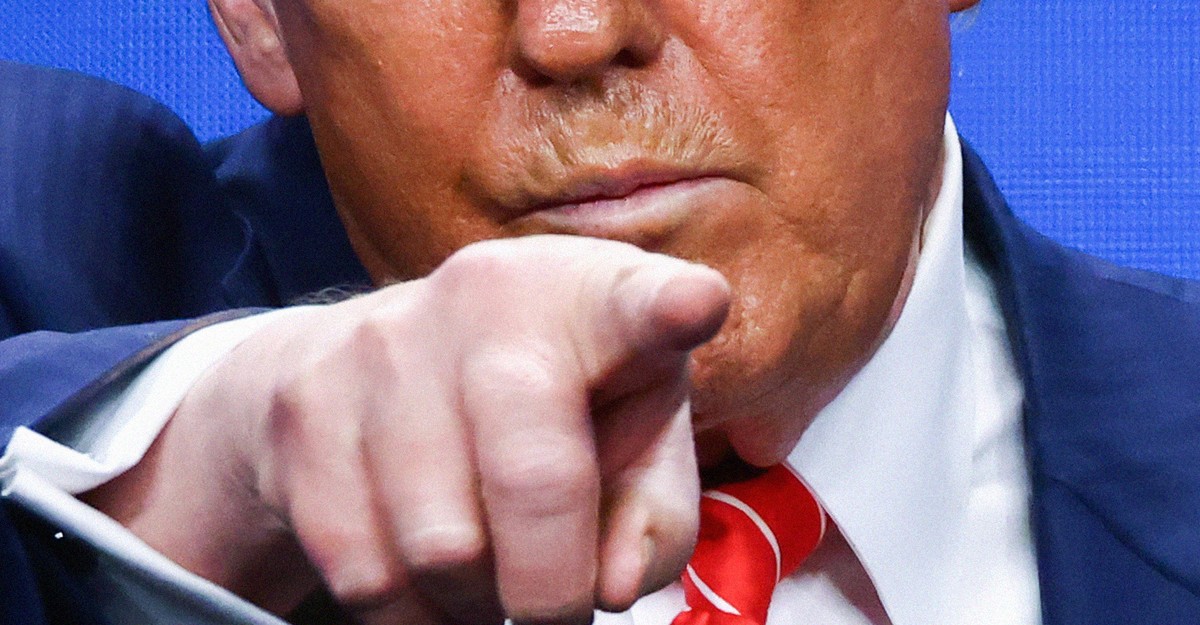
At this year’s annual meeting of the World Economic Forum, Donald Trump told a room full of the world’s most prominent CEOs about a routine that he performs when he meets a successful businessperson:
They say, “On what?”
I said, “You’ve doubled your net worth since I’ve been president, right?”
This is how Trump has long pitched himself—as the savior of American commerce. One of his central promises to voters in 2024 was that he would encourage private investment in the United States, boosting the stock market and ushering in a “golden age” of economic activity. Everyone, he vowed, would be making money
But the president now seems less pro-business than he once did. On Monday, in response to a question about the gargantuan profits being posted by U.S. oil companies, Trump told reporters that ExxonMobil and Chevron are “making too much money based on a shortage.” Energy companies adjust their prices as global markets move; when Trump took the country to war against Iran, in February, the world’s oil supply was abruptly pinched, and prices shot up. Chevron and ExxonMobil announced that they’d earned $12.1 billion and $14.5 billion, respectively, last quarter—many billions more than they’d made during the same period last year. “They ought to give some of that back to the public, and they better cut the retail price, the consumer price,” Trump said.
This statement echoes the president’s previous accusation of price gouging in the industry. Back in June, after the U.S. and Iran signed a memorandum of understanding, Trump claimed that companies were keeping gas prices from falling as quickly as oil prices were. There are legitimate economic reasons that gas prices and oil prices aren’t always perfectly synced, and Big Oil doesn’t unilaterally set retail gas prices at American pumps (fewer than 5 percent of U.S. gas stations are owned directly by major oil companies, according to the American Petroleum Institute). The Department of Justice and the Federal Trade Commission subsequently called for states to investigate possible retail-price manipulation. To shift some of the responsibility for high gas prices, the president is now scolding an industry he once championed—but it won’t change the reality that most Americans are unhappy with the economy, and that Trump is largely to blame.
Oil interests reportedly spent more than $75 million to get Trump reelected, and the administration has consistently supported the industry over the past two years. “Drill, baby, drill” has been a mantra for his administration since day one. The White House recently revoked protections for endangered species, clearing the way for companies to drill in critical wildlife habitats. The secretary of the interior, Doug Burgum, has pushed to increase offshore drilling and drilling on public lands. Trump’s suggestion that Big Oil return some of its money “to the public” represents, by his own admission, a hard pivot. “I should be the last one to say it, because I’m a big free-enterprise guy—nobody bigger,” he said on Monday. (ExxonMobil declined to comment for this story, Chevron didn’t respond to my request, and the White House told me that “President Trump’s priority has always been and continues to be lowering gas prices for American families.”)
The Trump administration has made a point of celebrating businesses that have cut costs for consumers in recent months. In July, Trump applauded a new chain of gas stations called the Freedom Fuel Network for selling gas at a discount across the mid-Atlantic. On Truth Social, the president wrote that this “VERY smart Retailer” was “stepping up” on account of its patriotism, and that others should follow its example. Brooke Rollins, the agriculture secretary, wrote on X yesterday that a co-owner of 14 Piggly Wiggly supermarkets (who has been invited to the Oval Office in the past) was “answering Trump’s call” by “boldly stepping up to lower costs for families.” She praised Walmart for implementing similar price-cutting measures, and wrote a few days ago that another grocer, Meijer, was also “answering the call” by lowering prices on more than 1,000 items. But it’s unclear whether these companies’ discounts were actually responses to the president, as Rollins has suggested.
Trump and his party have every reason to be worried about high prices. All kinds of consumer goods have become more expensive since the start of the Iran war, and Americans are now broadly worried about the cost of living, just as they were before Trump took office. People’s dissatisfaction with the president’s handling of the economy is reflected in his abysmal approvalratings, which pose a problem for Republicans in the midterms. Trump’s strategy has so far been to avoid taking responsibility for any Iran-driven inflation and to insist that, actually, the U.S. is experiencing an economic boom. He’s right that some indicators have lately been positive: The stock market continues to set record highs, and inflation did cool in June after three straight months of acceleration—although it’s still higher than it was before the start of the war.
With his comments on Big Oil, the president seems to be acknowledging that high prices are indeed a problem for many Americans. He also seems to expect that private companies will bail him out during a moment of political weakness. This administration has created the conditions—both domestically and abroad—for consumer goods to become more expensive, and for the cost of oil to jump. No piecemeal discount can undo what Trump himself has already done
Related:
- Get used to high gas prices.
- The great Chinese oil mystery
Here are three new stories from The Atlantic:
- The new parent trap
- How the U.S. squandered its strategic advantage
- What El-Sayed does next matters.
Today’s News
- The Senate Homeland Security Committee voted along party lines to hold Anthony Fauci in contempt of Congress after he refused to answer questions by invoking the Fifth Amendment at last week’s hearing. The resolution sends a referral to the Justice Department for possible prosecution over his alleged refusal to comply with a congressional subpoena.
- Iranian media said that Iran and Oman are close to an agreement on new arrangements for the Strait of Hormuz; President Trump said that “a lot of progress has been made” and suggested that an announcement could come soon.
- A Government Accountability Office report found that many of the Department of Government Efficiency’s claims of savings of $110 billion from contracts, grants, and leases may have been inaccurate or overstated, or could not be verified because of insufficient documentation.
Dispatches
- The Weekly Planet:Running from a fire should not be this routine, Joshua Partlow writes.
Explore all of our newsletters here.
Evening Read
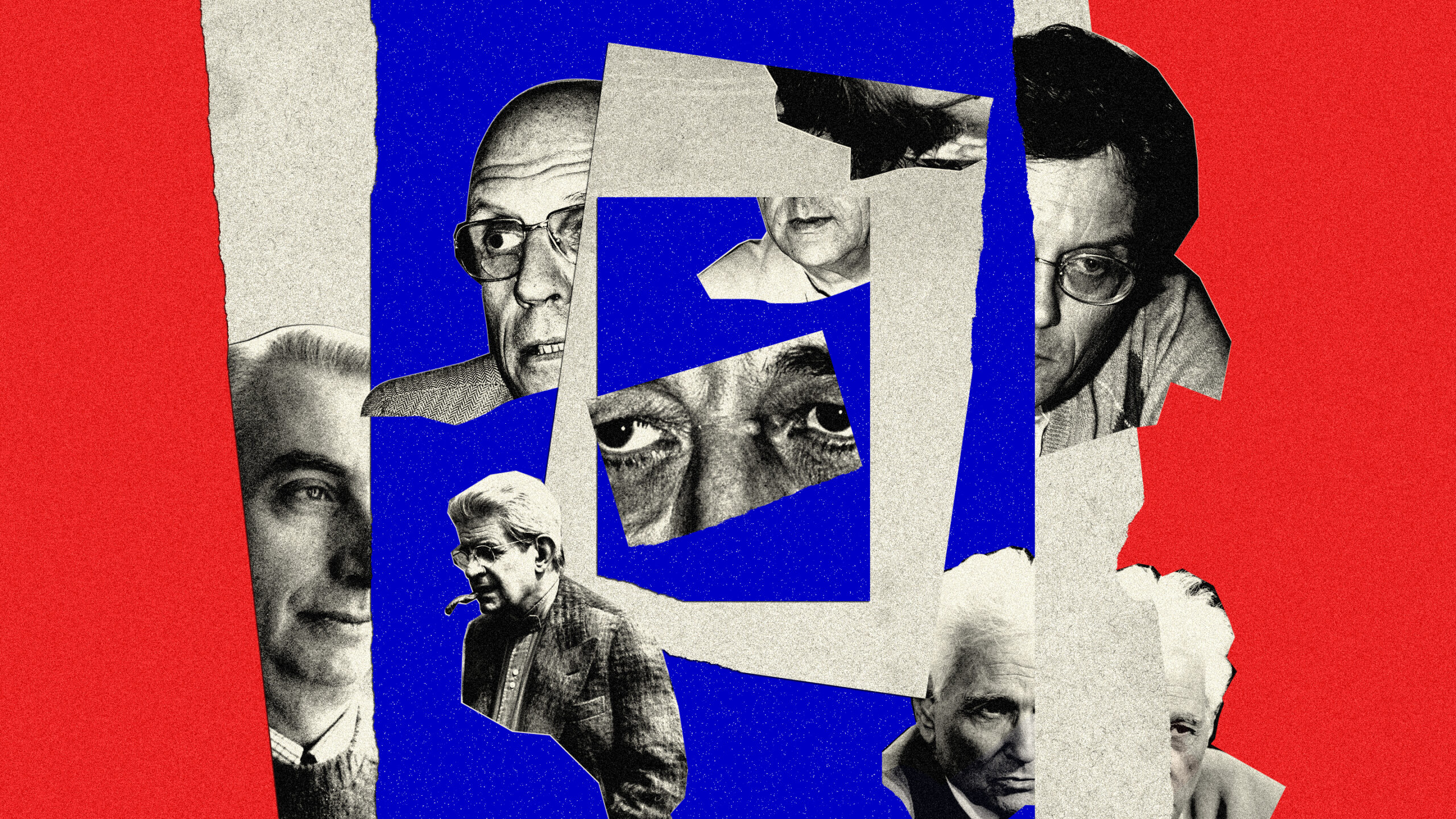
How Theory Took Over the World
By Lynn Steger Strong
Separating facts from lies, and real thoughts from fabrications, can seem more difficult than ever: Words and images are easily faked, and some writers at every stage—students, academics, novelists—are letting machines do the work for them. The author may as well be dead. Ubiquitous cameras are eroding human privacy, creating the sense that we live in a panopticon. And across many popular platforms, information is often shorn of context, if not outright false
The fact that I feed my kids and pay my rent as a novelist and teacher likely intensifies the queasiness I feel at these developments. Yet my profession also helps me understand that the idea of society coming apart might be the oldest story in the world
Read the full article
More From The Atlantic
Culture Break
Explore.One surprising thing about The Odyssey: its R rating. Sophia Nguyen examines how the U.S. is a relative outlier in keeping the film away from younger audiences
Watch.Tony (out now in select theaters) follows the summertime hijinks of a pretentious bad boy—who just so happens to be Anthony Bourdain. But the film skews more coming-of-age tale than biopic, David Sims writes
Play our daily crossword
Rafaela Jinich contributed to this newsletter
When you buy a book using a link in this newsletter, we receive a commission. Thank you for supportingThe Atlantic
Explore More Topics
Donald Trump
