

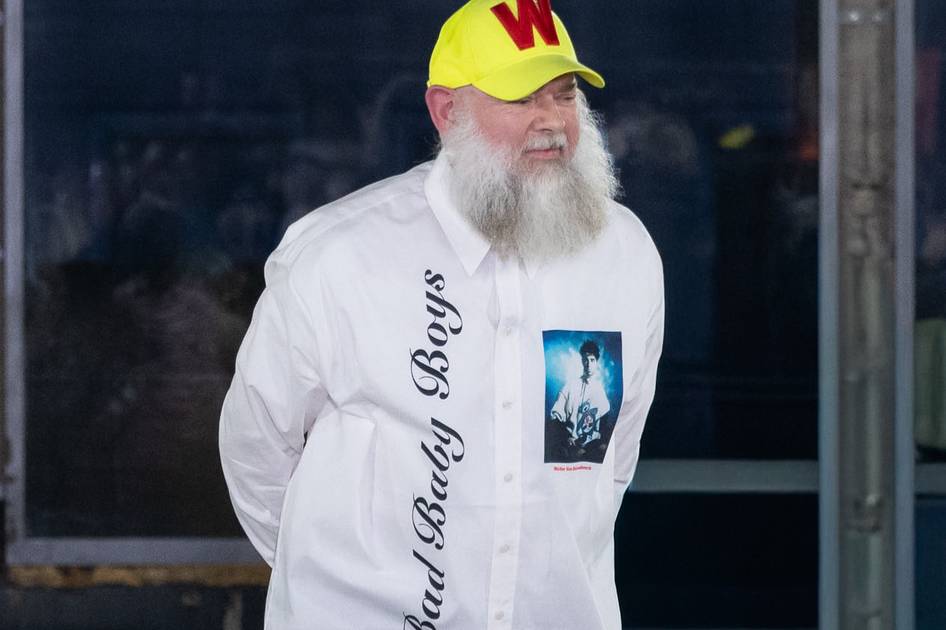
Walter Van Beirendonck officially joined the Paris Fashion Week Menswear calendar in January 1997. In an interview with The Impression marking his forty-year career, relayed by his Parisian press office Totem Fashion, he takes a very critical view of the current fashion industry
According to him, major groups now prioritise marketing, profitability and the constant replacement of artistic directors, to the detriment of creativity
He believes that fashion is losing its soul and strongly defends the role of independent designers, whom he sees as the true drivers of innovation
Creativity has become a variable in service of commercial strategy
According to him, the balance has shifted. Previously, a fashion house was built around a designer and their vision. Today, major groups prioritise marketing over creativity
In practical terms, this means that: collections must primarily meet the expectations of the market and shareholders; products are designed to be easily sellable and generate large volumes; and storytelling, marketing campaigns, social media and collaborations sometimes take on as much, if not more, importance than the garment itself
For Van Beirendonck, the risk is that the designer is no longer the one guiding the brand, but simply the one executing a strategy decided by marketing or financial departments
Financial pressure and criticism of the pace imposed on artistic directors
Today, a designer may be required to produce: several main collections per year; pre-collections; capsule collections; collaborations; shows; and constant content for social media. This pace leaves very little time for research or experimentation
According to Walter Van Beirendonck, creativity needs time. When a designer is asked to produce without interruption, they naturally end up recycling ideas or responding to commercial imperatives
Revolving door of artistic directors and the loss of soul
In recent years, houses have been changing artistic directors at an unprecedented rate: Gucci, Chanel, Dior, Balenciaga, Bottega Veneta, Valentino, Loewe, and others. Designers sometimes stay for only two or three years
This is probably one of the subjects that annoys him the most. For him, this instability prevents the development of a true artistic vision
He recalls that designers like Yves Saint Laurent, Martin Margiela, Rei Kawakubo or Dries Van Noten developed a personal language over several decades
Today, many do not even have time to establish their vision before being replaced. Yet fashion should surprise, question society, tell a story, provoke emotion and advance culture
He believes that a large part of the industry today seeks to limit risks. Collections are becoming more conventional, more calibrated, more easily consumable. In other words, they are less able to create surprise
Independents as fashion’s laboratory
Walter Van Beirendonck has always worked independently. According to him, it is in these structures that true innovations are born
An independent designer can: take risks; propose something that will not please everyone; and defend a personal vision without having to immediately appeal to millions of consumers
He believes that many ideas launched by these smaller designers are then adopted several years later by the major houses
In his recent statements, he addresses a message to young people starting out: longevity comes from a strong identity, not from constant adaptation to market expectations
His message is quite consistent with his entire career. He does not tell them, “Look for what will sell,” but rather: “Develop your own language; do not copy trends; stay true to your vision; accept that success may take time; and work extremely hard.”
Result: WLT celebrated its forty years in Antwerp rather than Paris
His attachment to Antwerp, the city where he built his career, is partly due to his role as a teacher at the Royal Academy of Fine Arts
For his anniversary show, the designer reopened his archives, going back to his earliest creations from the 80s. He has always sought to push the boundaries of materials, prints and techniques, considering experimentation essential to his work
Through silhouettes representative of his evolution, he looks back on a career of highs and lows. He emphasises that he has never missed a single season, which he considers a real achievement
His new collection marks, according to him, an evolution towards something more spiritual and serene, influenced in particular by his interest in India
Paris Fashion Week
Walter Van Beirendonck
