

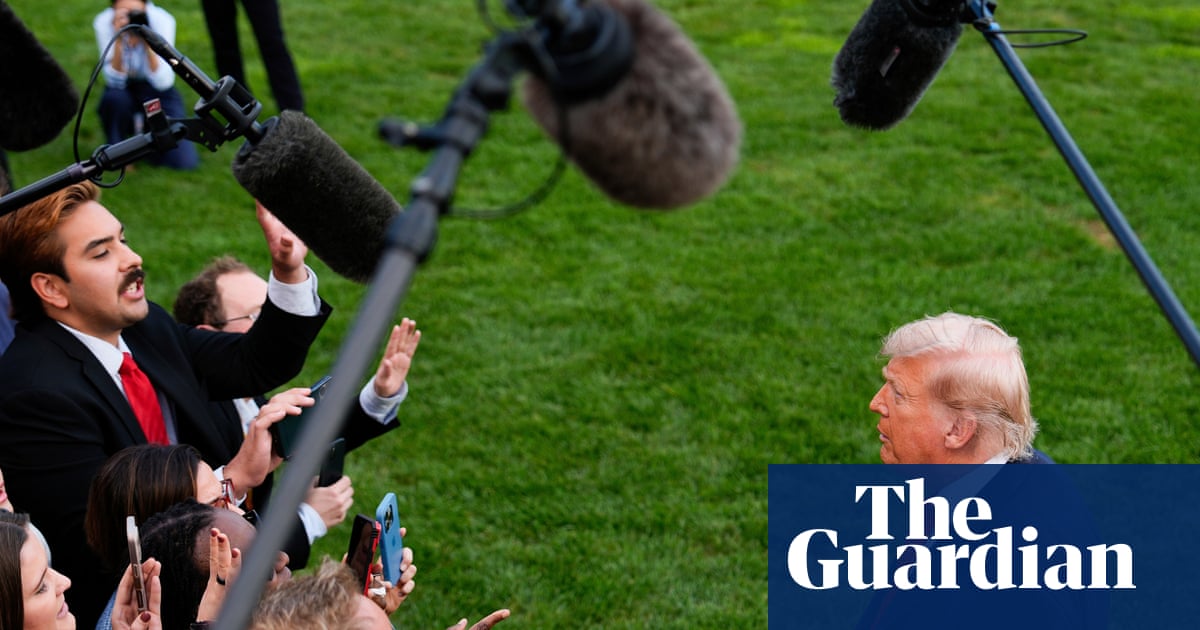
Trump is pioneering the role of commentator-in-chief when issues grow thorny
David Smithin Washington
The president is constantly assigning motives, identifying heroes and villains, and telling his audience what to think
This was originally published in This Week in Trumpland.Sign up to receive it in your inbox every Wednesday
From Charles Barkley to Thierry Henry to John McEnroe, the path from the arena to the commentary box is well trodden, and plenty of politicians have made the transition from elected office to the TV studio. One man, however, insists on doing both at the same time
Donald Trump is the US president, empowered to kill terrorists, grant pardons, sign and veto bills, and represent the nation on the world stage. But when issues become thorny, as they have of late, he is wont to embrace an alternative role as commentator-in-chief
The president has become his own talking head, offering a running voiceover on everything from crime and immigration to the Iran war and his own administration’s scandals. His off-the-cuff remarks are typically peppered with phrases such as “people are saying”, “I hear” and “some people think”, rather than “I have decided”
Let them eat SUVs: Trump White House orders fleet of luxury cars as Americans struggle
Read more
Take the sorry saga of the algae-afflicted Lincoln Memorial reflecting pool. On Saturday, Trump used his Truth Social platform to paint a colourful – and fictitious – picture, posting: “Look for yourselves at the VANDALISM that took place at The Reflecting Pool. The material is being cut with a knife or a box cutter, for all to see!”
On Monday he opined that US attorney Jeanine Pirro “choked” and “folded like an umbrella” in moving to drop charges against a former Olympian accused of vandalising the pool. Sitting in the Oval Office, he launched a tirade worthy of the extras in the Trump presidency DVD boxed set. Of course it included exaggerated accusations against some of his favorite targets
“Biden spent $58m. Barack Hussein Obama spent much more than that. He said, ‘I have an idea. Let’s take the river from, let’s take the water from the Potomac.’ So they took the water from the Potomac and it was putrid. It was putrid. It was a disaster,” the president said
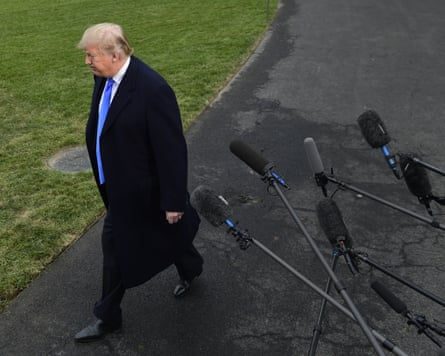
Perhaps Trump’s past life as a reality TV host has something to do with his steady stream of commentary. He is constantly assigning motives, identifying heroes (he regularly uses “from central casting” as a descriptor) and villains, and telling his audience what they should think. When things get awkward, he has an instinct to fill the silence and supply the talking point of the day. He is subject, narrator and critic all in one
When, for example, pressure mounted over his administration’s handling of the Jeffrey Epstein files, Trump did not simply maintain a dignified silence and let the justice department answer questions, as his predecessors might have done. He put himself front and centre of the news cycle – attacking critics, dismissing the matters, sympathising with people who “innocently met” the convicted paedophile and telling supporters to move on
More recently, when his attorney general nominee Todd Blanche said he would abandon Trump’s controversial $1.8bn “anti-weaponisation fund” to secure the support of Republican senators John Cornyn and Thom Tillis, the president made clear that it was not his decision – but he had plenty of thoughts
“All I know is that Todd Blanche is great,” he told reporters, sounding like a guest analyst lamenting a policy he had no power over. Yet he still insisted that his supporters should get compensation from the justice department. “These people were treated horribly, and this fund could have given them some solace
“But, you know, it happens to be very popular among many quarters. And I don’t participate in that fund. I was certainly treated badly. I don’t participate, but I thought it would be very fair for people that spent years in prison, people that were treated so badly for, in many cases, people that did absolutely nothing wrong.”
These informal exchanges with reporters in the Oval Office and on Air Force One are an exercise in postmodern punditry. Trump frequently breaks the fourth wall by interrupting questions to “correct” the premise, insult the reporter (“piggy”, “very nasty person”, “very obnoxious person”) or their network and offer an alternative interpretation of the day’s news. He does not want their narratives to get in the way of his own
skip past newsletter promotion
There is a paradox here. During an interview with New York Times reporters Maggie Haberman and Jonathan Swan for their book Regime Change, Trump showed off a document asserting that he is the most powerful person to ever walk the earth, ranking above despots such as Attila the Hun, Genghis Khan, Napoleon, Stalin, Mao and Hitler
Yet his constant commentaries in response to actions taken by Iran, the courts or his own government departments are evidence of impotence, an admission reminiscent of the Vicomte de Valmont in the play Les Liaisons Dangereuses: “It’s beyond my control.’” When supreme court justices ruled against him on tariffs, Trump lamented: “They were appointed by me, and yet have hurt our Country so badly!”
Like sports professionals, the president’s time is finite. He continues to tease an unconstitutional third term. If that doesn’t happen, he will surely commentate on his own succession, leaving JD Vance, Marco Rubio and other potential contenders facing the unen verdict on their every move
And then: Trump as host on Fox & Friends? Trump firing off ornery letters to the New York Times? Trump as crank caller on C-Span’s phone-in shows? The words will continue to flow – but it is less certain whether they will still be good for ratings
Elsewhere on the Guardian
Abdul El-Sayed wins Michigan Senate primary in defining race for Democrats
Trump administration targets children amid push to ‘deport at all costs’
‘They’re selling the safety of the traveling public’: TSA workers decry Trump privatization push
Explore more on these topicsShare
Reuse this content
