

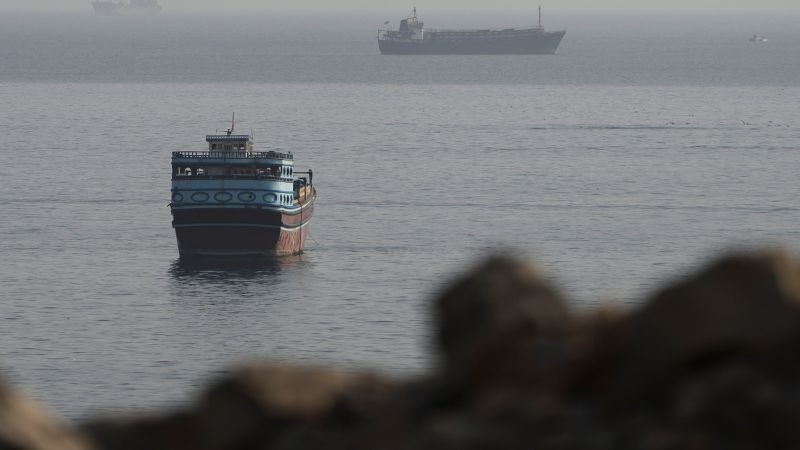
• Strait of Hormuz:Iran’s Foreign Ministrysays it is in talks with Oman to establish a safe, “temporary” route for vessels through the critical waterway, adding that these negotiations have no bearing on whether it is “open or closed.”There is some movement in the lane close to the Omani coast, according to shipping
• War talks:President Donald Trump said talks between the US and Iran were due to start today, after he called off threatened strikes over the weekend. He also claimed there was a deal in place on the strait, with an agreement to follow on “denuclearization.” Days before Trump’s threat,ew ideas to pressure Iran
• Regional tensions:Meanwhile, six Saudi-operated tankers diverted around Africa to avoid a Houthi-declared blockade in the Red Sea, ship tracking data shows. The Iran-backed militia group has warned it would target any Saudi shipping trying to transit the Bab al-Mandeb chokepoint
42 Posts
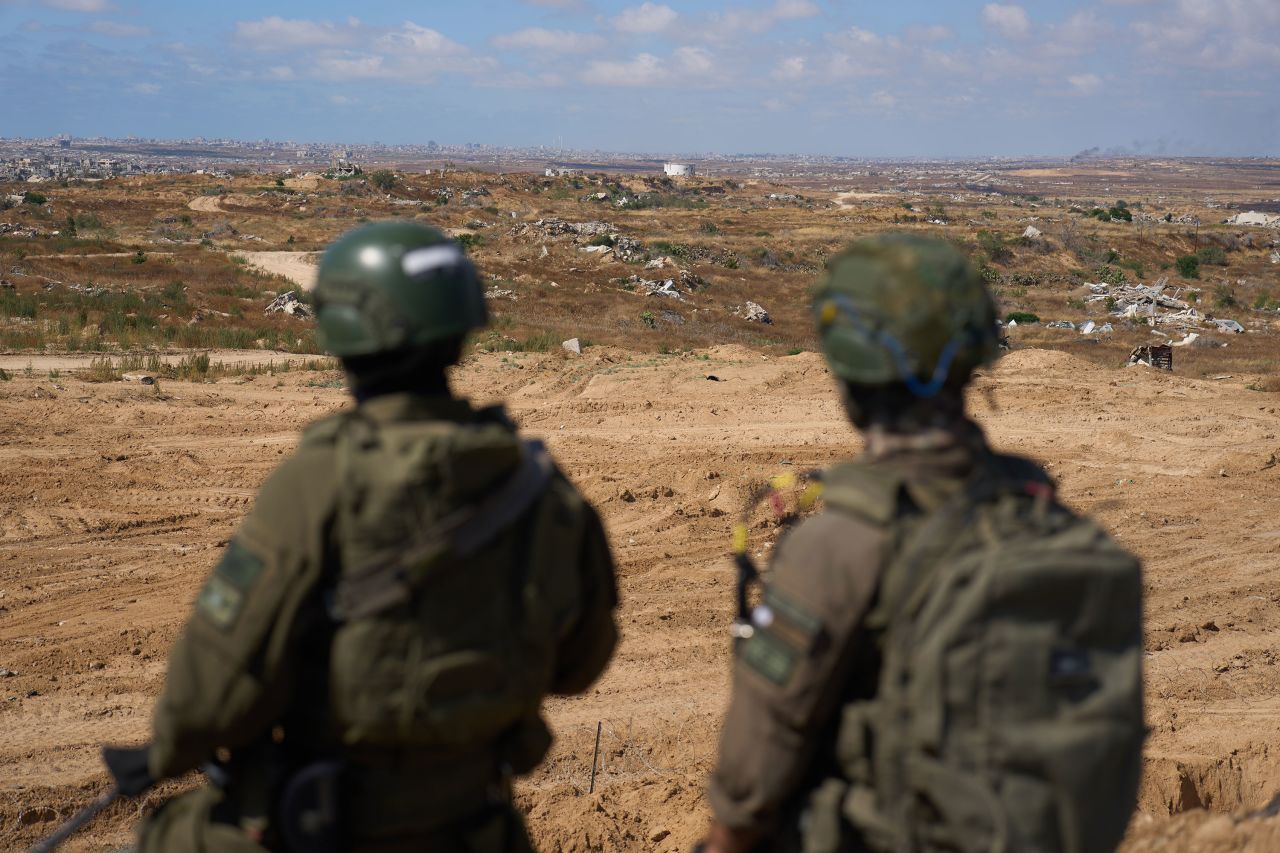
Israeli soldiers occupy a military position overlooking the “yellow line” in Gaza on May 26.
Amid efforts by the US and the Board of Peace to get Israel to halt strikes in Gaza, an Israeli official said Israel “will continue to thwart any threat to our civilians and soldiers.”
The official also reiterated that Israel will not pull troops back from the “current line” – meaning the additional territory it has taken since the October ceasefire agreement went into effect
Israel had continued expanding its control of Gaza, cramming its population into a shrinking area of land
The comments came after Israeli strikes killed 28 people in Gaza since US President Donald Trump announced a deal to disarm Hamas
Hamas has said it will only follow through with the deal if Israel halts strikes in Gaza and pulls troops back to the Yellow Line, as defined by the October ceasefire agreement
The comments also come as Nickolay Mladenov, the Board of Peace’s high representative, arrives in Israel on Monday to discuss the implementation of the Hamas disarmament agreement
Six Saudi-operated tankers have diverted around Africa, adding at least two weeks to their journeys, to avoid a Houthi-declared blockade in the Red Sea, ship-tracking data show
Last month, the Iran-backed Houthis in Yemen warned they would target any Saudi shipping trying to transit the Bab al Mandeb chokepoint at the southern end of the Red Sea
The ships’ route shows them leaving the Gulf of Aden near the coast of Oman and heading down the coast of East Africa, with several showing South African ports as their destination, according to vessel-tracking service MarineTraffic
One is showing Gibraltar as its next port
All the ships are shown as “in ballast” meaning they are not carrying oil. Several appear to have been returning to Saudi ports from Asia when they changed course. A Saudi bulk carrier is in the same group of ships, now sailing between the Kenyan coast and the Seychelles
Using the long route around Africa and through the Suez Canal to return to Saudi ports on the Red Sea normally adds some 15 days to the journey
Traffic through the Bab al Mandeb Strait has been close to normal since the Houthis declared their blockade on July 20, but Saudi ships have avoided the route or in some cases turned off their ship-identifying (AIS) signals, according to shipping
The Houthis declared the blockade in retaliation for Saudi efforts to stop flights and commerce entering parts of Yemen controlled by the group
US President Donald Trump said yesterday he called off planned strikes on Iran after allies in the Middle East told him they “think there’s a deal.”
Washington was in talks with Tehran about its nuclear program before the US and Israel struck Iran back in February. Trump was determined to ensure Iran would “never have a nuclear weapon,” despite Iran’s insistence that it was not pursuing this
A Congressional Research Service (CRS) report on Iran and nuclear weapons says that there were concerns about Iran’s uranium enrichment since the early 2000s
In 2015, Tehran signed the Joint Comprehensive Plan of Action (JCPOA), which capped uranium enrichment for 15 years and facilitated UN-led inspections to ensure adherence to the deal
Trump abandoned the JCPOA in 2018, during his first term
A US assessment of Iran’s nuclear weapons capability published in 2024 said that while “Iran (was) not building a nuclear weapon,” it had, however, “undertaken activities that better position it to produce one, if it so chooses.”
Just days after the US and Israel’s strikes on Iran, the head of the United Nations’ nuclear watchdog, Rafael Grossi, told CNN that Tehran was not days or weeks away from having a nuclear weapon
There were “many elements” in Iran that were “of serious concern,” Grossi said, including the “unjustified accumulation of huge amounts of almost military-grade material” and a “lack of transparency in inspections.”
But despite this, “we never had information indicating that there was a structured systematic program to build or to construct a nuclear weapon,” he said
US President Donald Trump spoke to reporters aboard Air Force One yesterday, where he discussed his decision to call off planned strikes on Iran
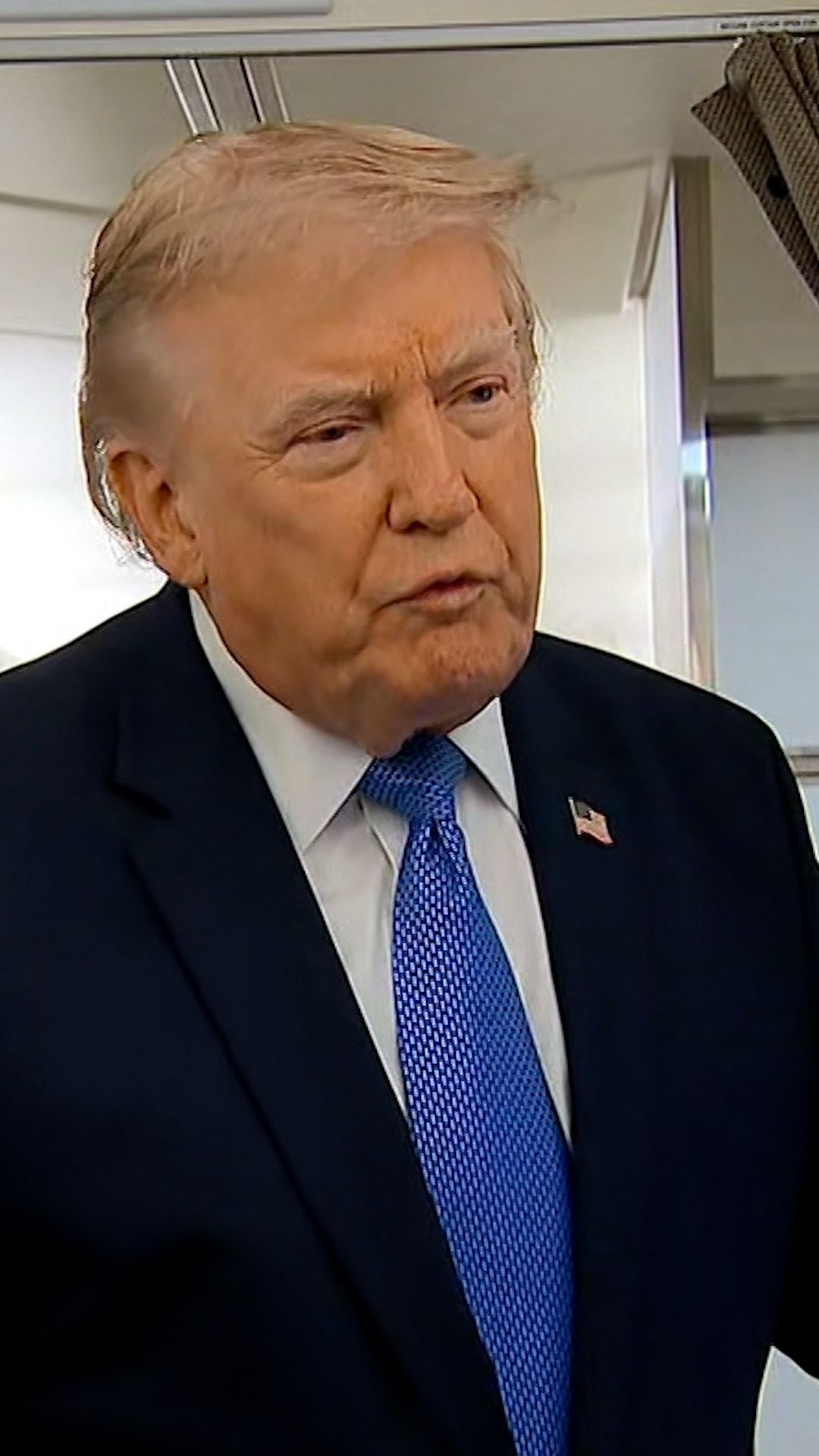
President Trump: Iran talks will resume
President Donald Trump told journalists aboard Air Force One that talks between the US and Iran would resume. He added that after he canceled plans for what he called a “massive attack” on the country
1:12• Source:
CNN
President Trump: Iran talks will resume
1:12
Here’s some of the topics he touched on:
- Strikes called off:Trump said he called off the planned strikes on Iran after he was asked to do so by Saudi Arabia, the United Arab Emirates, Qatar and Iran. “It would have been a massive attack,” he said.
- A potential deal:Saudi Arabia believes that a deal between the US and Iran is “imminent,” Trump said. “There’s a deal on Hormuz, and then there will be a deal on the nuclear, or you might call it the denuclearization of Iran. I call it the denuclearization of Iran.”
- Resumption of talks with Iran:Trump said that discussions between Washington and Tehran would begin again today. “What we’re doing is we’re talking to them in the form of a negotiation,” he told reporters.
Before Iran said this morning that it was working with Oman on a new “temporary” route, vessels had three options for transiting the Strait of Hormuz
One route is controlled by Iran and runs through its territorial waters. Tehran has required vessels to use it since June 19, designating it the strait’s only safe passage in an effort to use the crucial waterway as leverage
Iran has repeatedly fired on vessels attempting to use other routes through the waterway, prompting US military retaliation and contributing to the collapse of the ceasefire Washington and Tehran reached in June
Another route, proposed by the UN’s International Maritime Organization and Oman, hugs Oman’s coastline south of the strait. Iran has accused Oman of opening the route under US pressure. Iranian forces have also fired on commercial vessels in Omani territorial waters near the strait – attacks Washington says violated its memorandum of understanding with Tehran
The third is the pre-war shipping lane near the center of the strait, which Iran now designates a “danger zone.” Despite security risks, some vessels continue to use it. This lane is considered particularly dangerous because of the risk of mines laid by Iran
The Strait of Hormuz has been impassable since fighting resumed between the US and Iran on July 8 – weeks after the two sides agreed to a ceasefire. Roughly 20 million barrels of oil transited the strait before the war, and shipping traffic had increased following the ceasefire, resulting in the release of 200 million barrels during the pause in hostilities
On Monday, Iran said it is currently in talks with Oman to establish a safe, “temporary” route for vessels through the strategic waterway
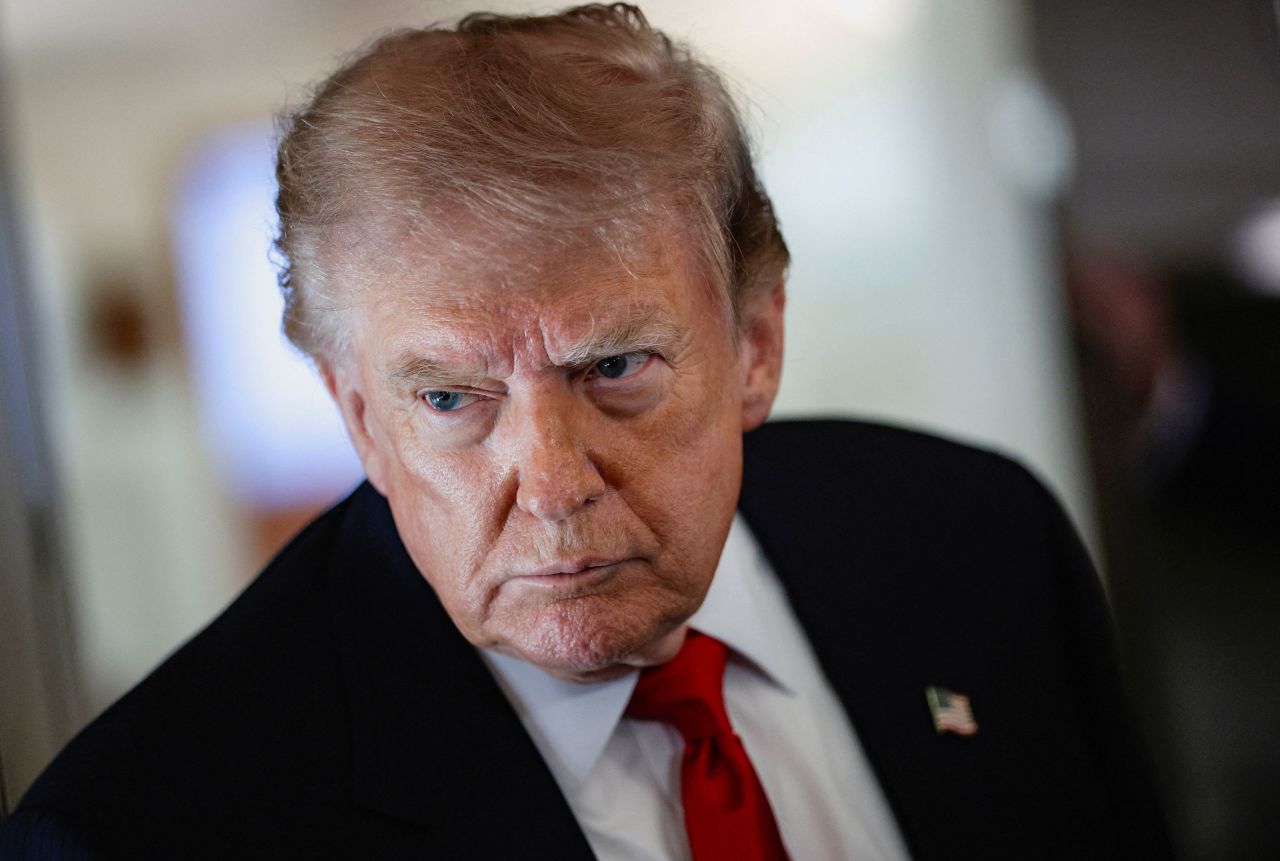
US President Donald Trump speaks to reporters aboard Air Force One en route to Michigan on July 27.
US President Donald Trump announced on Saturday that he called off planned strikes on Iran, adding later that officials from Washington and Tehran will meet for talks later today. Iran has denied it is having discussions with the US
This is not the first time during the conflict that Trump has threatened attacks then called them off
Here’s a look at some of the previous times this has happened:
- On March 21, Trump said the US would “hit and obliterate” Iranian power plants if Tehran did not reopen the Strait of Hormuz within 48 hours. On March 23, shortly before Trump’s deadline was set to expire, the president said the US and Iran had held “productive conversations” and that he would hold off on striking energy sites for five days.
- On April 7, Trump warned that “a whole civilization will die tonight” if Iran did not agree to end the war and reopen the Strait of Hormuz. Hours later, a two-week ceasefire between the countries was announced.
- On April 21, the day before the ceasefire was set to expire, Trump said he expected “to be bombing” if negotiators couldn’t reach a deal. Later that day, he extended the ceasefire.
- On May 17,Trump warned that “for Iran, the Clock is Ticking, and they better get moving, FAST, or there won’t be anything left of them.” The next day, he said that he would “hold off” on a plan to attack Iran, citing a request from Qatar, Saudi Arabia and the United Arab Emirates.
- On June 11, Trump said that the US military would be hitting Iran “VERY HARD TONIGHT,” adding that it would also “be taking Kharg Island, and other oil infrastructure points.” Hours later, Trump said he was canceling the strikes because “final points” of an agreement between the two sides had been approved.
- On August 1, Trump said the US was “locked and loaded and ready” to attack Iran “at levels of Military Terror, Strength, and Power not seen since World War II.” Despite this, he said, “I have agreed, for the future benefit of the WORLD and, likewise, the survival of a successful and prosperous Iran, to cancel the attack, subject to being able to rapidly make a DEAL.”
CNN’s Izzy Lippolis, Alejandra Jaramillo, Kevin Liptak, Aileen Graef, Kit Maher, Betsy Klein, Alayna Treene and Kaitlan Collins contributed to this reporting
Negotiations between Iran and the US could resume today who announced over the weekend that he called off a “massive attack” on Iran following requests from allies such as Saudi Arabia, the United Arab Emirates and Qatar, and also by Iran
However, Iran’s Foreign Ministry said it was not currently in negotiations with the US
- Global oil prices sank today after Trump’s weekend remarks that he called off the attack on Iran and that peace talks would restart today.
- Iran is currently in talks with Oman to establish a safe, “temporary” route for vessels through the Strait of Hormuz, Iranian Foreign Ministry spokesperson Esmaeil Baghaei said today. Iran last closed the strait in July because of “outside interference from foreign powers” regarding the waterway, the country’s Islamic Revolutionary Guard Corps said.
- Up to five million barrels of crude oil are flowing out of the Persian Gulf through the southern lane of the strait close to the Omani coast, according to shipping sources, despite sporadic Iranian drone attacks on vessels.
CNN’s Molly English, Izzy Lippolis, Anna Cooban, Nadeen Ebrahim, Eleni Giokos and Tim Lister contributed to this reporting
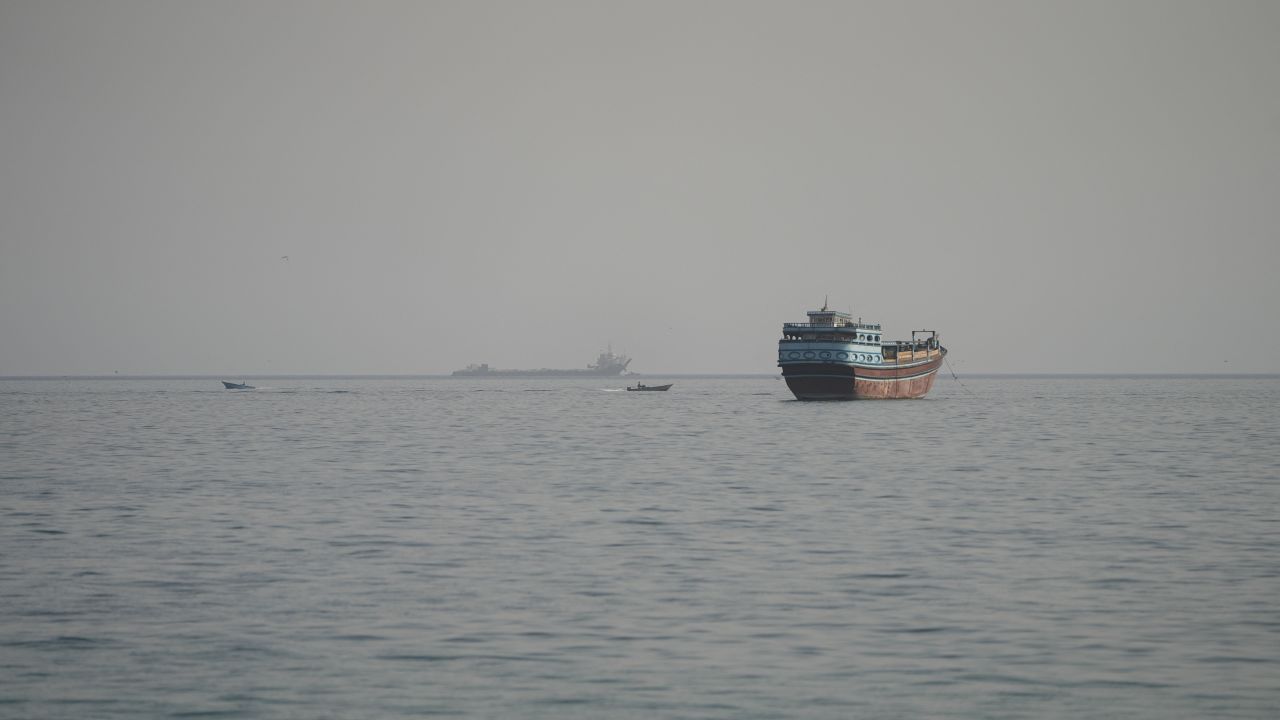
Vessels in the Strait of Hormuz, as seen from Musandam, Oman, on Monday.
US President Donald Trump spoke optimistically at the weekend about a resumption of negotiations with Iran and prospects for a swift agreement on the Strait of Hormuz, the issue at the heart of the stop-start conflict
But according to the language and tone from Tehran Monday, Iran is not talking with the United States and feels no need to, and is rather focused on a bilateral deal with Oman on how to manage the critical waterway
And they would not lead automatically to a reopening of the strait, he added
That route would be temporary, serving the “interests of both coastal states.” It would be a single corridor, rather than two routes – one close to the Iranian coast and one close to Oman’s – that had been discussed previously
“Whether this stage and this process can be connected to another process that leads to a reduction of tensions in the region, we must wait and see,” Baghaei said
Tehran is essentially saying that it’s oblivious to Trump’s remarks and blames the United States for blowing up the Memorandum of Understanding agreed in June
While that remained the case, he asserted, “naturally no significant change will occur in the situation of the Strait of Hormuz.”
Trump also suggested Sunday that talks would broach what he called the “de-nuclearization” of Iran. There has been no word from Tehran on that aspect of the negotiations
Global oil prices sank on Monday after US President Donald Trump called off a “massive attack” on Iran and said that peace talks would restart
Brent crude futures, the global oil benchmark, fell 4.2% just before 5 a.m. ET to trade at $84 a barrel. WTI, the US benchmark, was down 5% to $80 a barrel
Prices were falling despite Iran giving no indication that it is prepared to fully reopen the Strait of Hormuz. Iran’s Foreign Ministry said Monday that the country is in talks with Oman to establish a safe, “temporary” corridor for vessels
Currently, as many as 5 million barrels of crude are leaving the straitping 20 million barrels left the strait per day
Saudi Arabia has redirected a chunk of its oil exports west toward the Red Sea. These barrels have exited the regiond by the Iran-backed Houthi rebels in Yemen
Up to five million barrels of crude oil are flowing out of the Persian Gulf through the southern lane close to the Omani coast, according to shipping
“Traffic through the Strait of Hormuz remains active with all the challenges in place,” a maritime intelligence agency
“Commercial movements through the Omani traffic lane are limited but continue, with estimated crude flows remaining at approximately 3–5 million barrels per day, indicating that the waterway has not yet transitioned into a fully enforced exclusion regime,” Marisks said
Before the conflict, an average 20 million barrels a day left the Gulf through Hormuz, accounting for about 20% of global supply
Iran has said it is currently in talks with Oman to establish a safe, “temporary” route for vessels through the strait, Foreign Ministry spokesperson Esmaeil Baghaei said Monday
An empty tanker (the Velos Amber) transiting the Omani lane into the Gulf was subjected to what appears to have been an Iranian warning action on Sunday, according to shippinghe United Arab Emirates early Monday
At 4am ET Monday, tracking data showed very little traffic in the strait, though some vessels do not indicate their position
In the Red Sea, shipping has been relatively stable despite the warning by the Iranian-backed Houthis last month of a blockade against Saudi and Israeli-linked shipping
Thirty-four vessels transited the Bab al-Mandeb strait at the southern end of the Red Sea on Sunday including 18 cargo vessels and five tankers entering the Gulf of Aden. Nine cargo vessels and two tankers entered the Red Sea
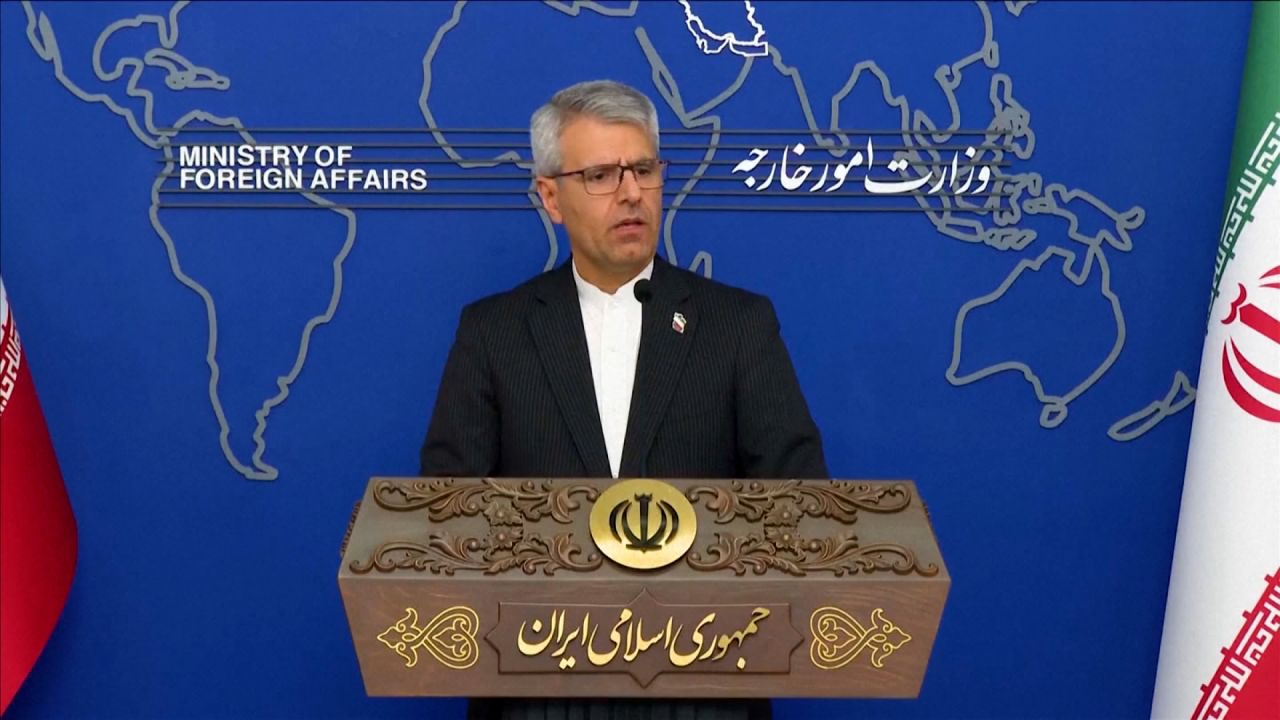
Iran in talks with Oman for “temporary” route through Hormuz
0:31• Source:
CNN
Iran in talks with Oman for “temporary” route through Hormuz
0:31
Iran is currently in talks with Oman to establish a safe, “temporary” route for vessels through the Strait of Hormuz, Iranian Foreign Ministry spokesperson Esmaeil Baghaei said Monday
“The effort is to determine, at the earliest opportunity and in consultation with Oman, a route that is naturally temporary and based on which the safety of navigation through the Strait of Hormuz can be ensured,” the Iranian official said
Baghaei stressed that Iran is not negotiating with the United States. But US President Donald Trump said talks with Iran will resume Monday, just a day after he said he called off a “massive attack” on the country
Katie Bo Lillis and Zachary Cohen contributed reporting
The goalposts have changed considerably since the beginning of the war and the conflict is taking a toll on Gulf states, a regional analyst said
“First, there was talk about regime change, then surrender. Now, what seems to be the discussion is opening the Strait of Hormuz,” Mehran Kamrava, Professor of Government at Georgetown University in Qatar, told CNN’s Newsroom on Monday
The Iranians want to retain administrative influence over the critical waterway in conjunction with Oman, and sanctions relief is also a priority, Kamrava said. “Whereas for the United States, it’s simply the Strait of Hormuz at this point,” he added
The effective closure of the strait is levying a high cost on Gulf states
“So far, there’s no shortage of foodstuffs but you can imagine heavy construction equipment,” he said. “Household appliances, all of those kinds of goods that transit through the Strait of Hormuz, are beginning to dwindle here in the Persian Gulf region.”
Gulf nations have also been on the receiving end of Tehran’s counterattacks as the US hammered Iran with air strikes
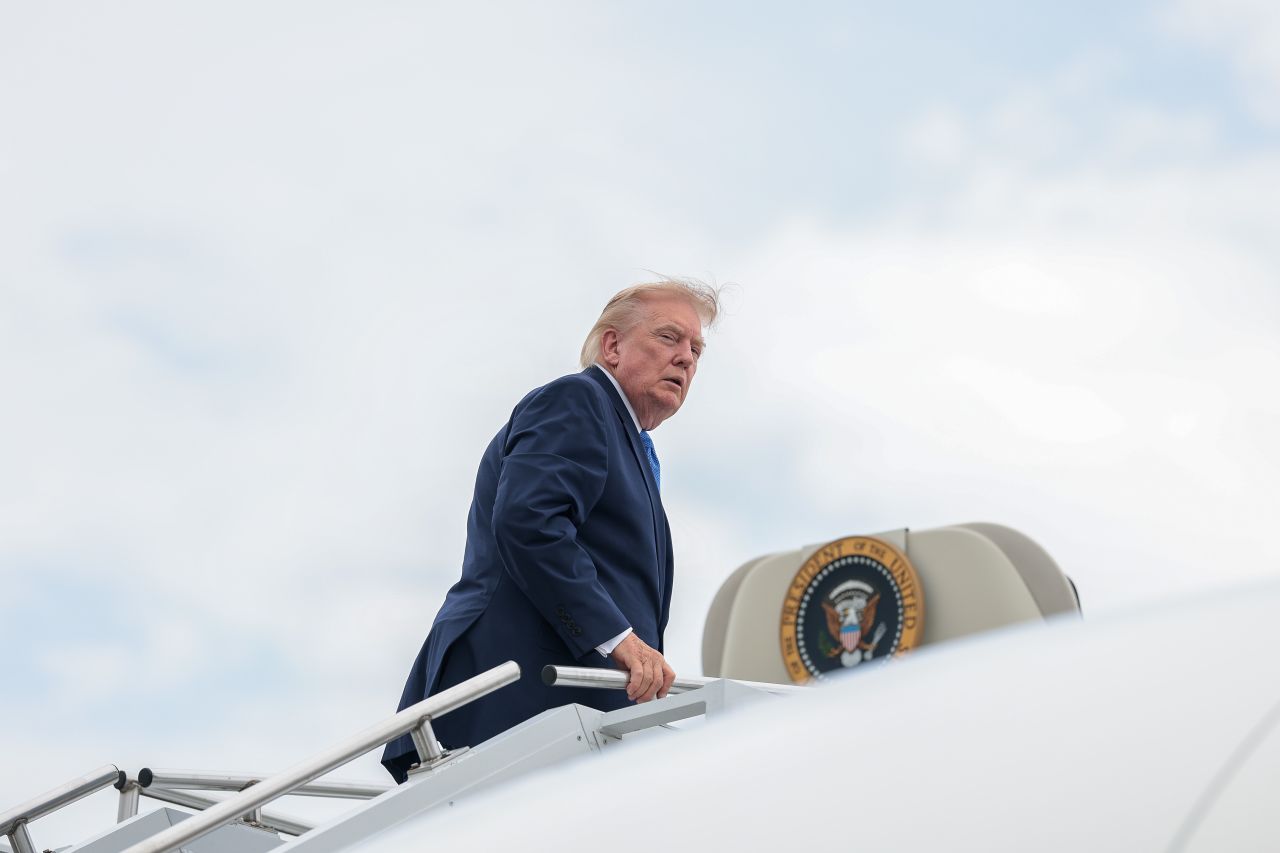
President Donald Trump boards Air Force One at Morristown Municipal Airport in Morristown, New Jersey, on Sunday.
We’ve been reporting that US President Donald Trump said negotiations with Iran will start on Monday, after he canceled plans for what he called a “massive attack” on the country
However, Iran has not publicly signaled a change in its stance, while state media mocked the president earlier on Sunday after he announced the cancelation of strikes
More on this and other headlines:
Strikes called off:Trump said he was asked to call off the planned attack by allies such as Saudi Arabia, the United Arab Emirates, Qatar and by Iran. Crown Prince Mohammed bin Salman held a phone call with Trump in which he pushed for a deescalation of the war, Saudi Arabia’s state news agency reported earlier. But Iranian state media gave no indication that Tehran asked for the attacks to be called off
More on the planned strikes:Trump refused to answer a question on whether the planned attack would have hit energy targets. In an update on X, Defense Secretary Pete Hegseth said the US is “locked and loaded” and “remains ready — at levels not seen since World War 2.”
Diplomacy efforts: Iranian Foreign Minister Abbas Araghchi spoke with his Saudi counterpart Prince Faisal bin Farhan Al Saud and Pakistan’s Army Chief Asim Munir on Sunday in a second round of diplomatic calls within 24 hours, state media Press TV reported
Oil prices down:Oil futures dropped Sunday after Trump announced the pause in strikes. Brent crude, the international benchmark, fell about 5.6% to about $83 a barrel, and US crude fell about 5.5% to about $80 a barrel
US military officer’s message:A senior officer at US Central Command told troops in an email: “We are looking for new creative and unconventional ways to pressure and punish Iran.” The email preceded Trump’s threat to launch new strikes
Ship movements:At least five vessels transited the Strait of Hormuz over the past 24 hours, while 34 vessels transited Bab al-Mandeb Vessel traffic through these chokepoints are still low compared with pre-war levels
CNN’s Molly English, Auzinea Bacon, Laura Sharman, Katie Bo Lilis and Zachary Cohen contributed reporting
The request from a senior officer at the US military command carrying out President Donald Trump’s war with Iran came in an email: We need ideas
A second last week soliciting new ideas for how to deal with Iran
The crowdsourcing-style query, which military officials said was unusual over email, is one sign of the limited — and potentially unpalatable — options available to Trump to force Iran into a deal on his terms. Hoping to find an alternative, the official at CENTCOM kicked off the brainstorming sessionvaluate the strategy
“U.S. Central Command has a long history of thinking and working in innovative ways,” Capt. Timothy Hawkins, a spokesperson for CENTCOM, said in a statement. “Admiral Cooper, in particular, reaches out to members of our great team, regardless of rank, to achieve the highest levels of operational performance possible.”
The email preceded Trump’s threat to launch new strikes against Iran, only to call them off over the weekend after regional officials — namely Saudi Arabia’s crown prince — intervened by calling the president and urging him to de-escalate
Read the exclusive report here.
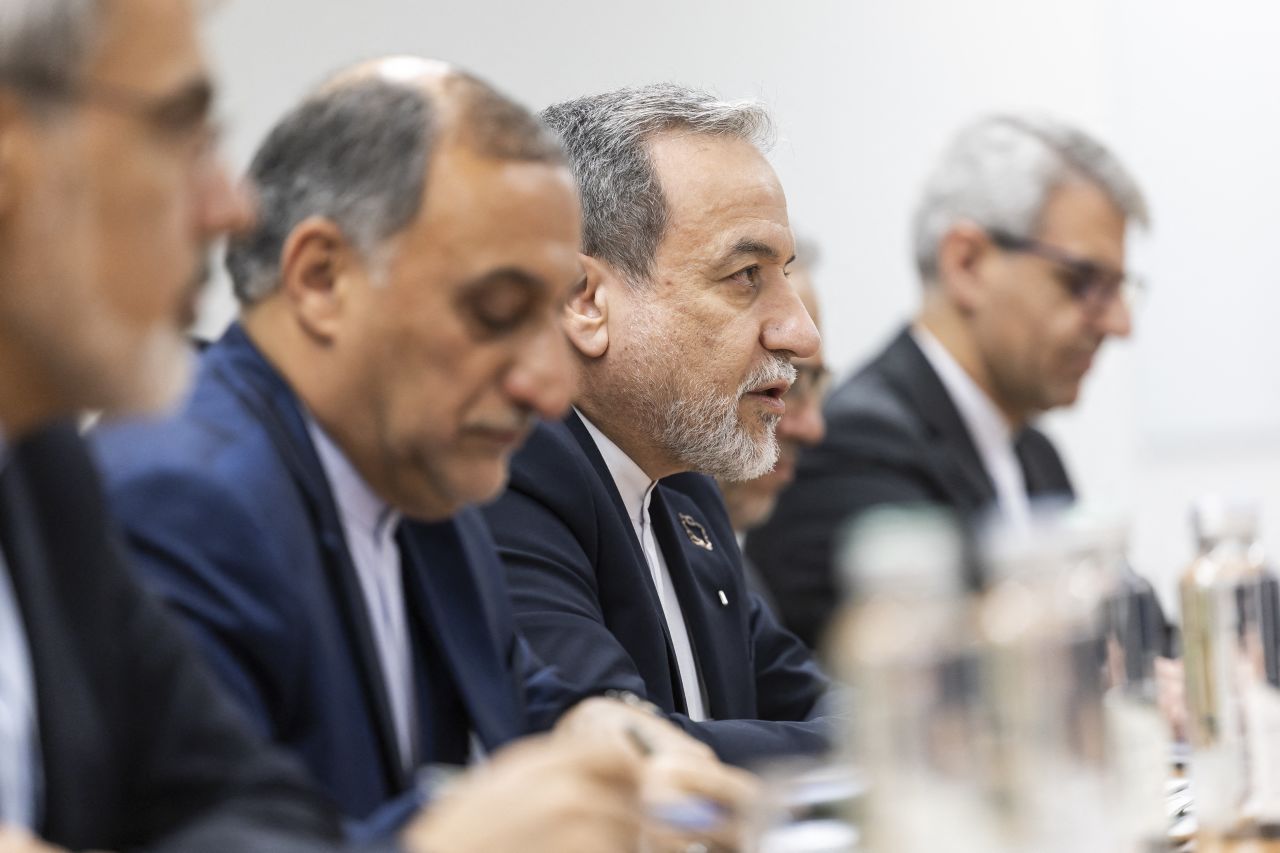
Iran’s Foreign Minister Abbas Araghchi speaks during a bilateral meeting between Switzerland and Iran during a second round of US-Iranian talks in Geneva on February 17.
Iranian Foreign Minister Abbas Araghchi spoke with senior Saudi and Pakistan officials, according to local media
Araghchi held “a series of high-level telephone conversations” Sunday night with his Saudi counterpart Prince Faisal bin Farhan Al Saud and Pakistan’s Army Chief Asim Munir, which marked his second round ofdiplomaticcalls within 24 hours, Iranian state media Press TV said
During the call, they discussed “the current situation” and establishing security and stability in the region, the outlet said, citing an X post by Araghchi
The previous day, Araghchi warned his Saudi counterpart that “any aggression or hostile action” by the United States and Israel “would be met with a firm and proportionate response,” reported Press TV
Araghchi also held separate calls on Saturday with Turkish Foreign Minister Hakan Fidan and Asim Munir, warning that Iran would respond in kind to any “adventurous action” by the United States
Oil futures dropped Sunday after President Donald Trump announced a pause in strikes against Iran, signaling that negotiations were progressing to reopen the Strait of Hormuz
Brent crude, the international benchmark, fell about 5.6% to about $83 a barrel, and US crude fell about 5.5% to about $80 a barrel
The Strait of Hormuz has been impassable since fighting resumed between the US and Iran on July 8 — weeks after the two sides agreed to a ceasefire. Roughly 20 million barrels of oil transited the strait before the war began and shipping traffic had increased following the ceasefire, resulting in the release of 200 million barrels during the pause in hostilities
While Trump canceled plans to attack Iran, Tehran has not signaled a change in its stance on the waterway. An Iranian Foreign Ministry spokesperson on Sunday said that an “understanding” with Oman over a new shipping route did not mean the Strait of Hormuz would reopen. Ships have attempted to move along the Omani coastline, though Iran has warned ships against using non-designated routes, which threatens its control over the strait
Some vessels have been targeted by the Iran Revolutionary Guard Corps while attempting to transit the strait. Saudi Arabia has increasingly moved oil through the Bab al-Mandeb strait, but that waterway has been targeted by the Iran-backed Houthi rebels in Yemen
On Sunday, OPEC’s Joint Ministerial Monitoring Committee, which includes some of the world’s top oil exporters, expressed concerns for market stability. The committee did not specifically mention the war with Iran, but said that attacks on energy infrastructure will require time-consuming and costly repairs. They added that maritime trade disruptions “increase market volatility.”
The prolonged elevation of oil prices has sent US gas prices higher. The national average for a gallon of gasoline was $4.09 on Sunday, a drop of two cents from a week ago But Sunday’s average is roughly 34% higher than before the war began
Meanwhile, Dow Jones futures gained about 0.5%, S&P 500 futures jumped about 0.5%, and Nasdaq futures climbed about 0.8%
President Trump: Iran talks will resume
President Donald Trump told journalists aboard Air Force One that talks between the US and Iran would resume. He added that after he canceled plans for what he called a “massive attack” on the country
1:12• Source:
CNN
President Trump: Iran talks will resume
1:12
President Donald Trump said talks with Iran will resume on Monday after he said he called off a “massive attack” on the country
Trump said he was asked to call off the planned attack by allies such as Saudi Arabia, the United Arab Emirates, Qatar and by Iran
“We’re all set to go, but when the allies asked to call it off, they got us sort of saying, ‘Well, let’s see.’ And the reason they ask is they think there’s a deal,” Trump said. “There’s a deal on Hormuz, and then there will be a deal on the nuclear, or you might call it the denuclearization of Iran. I call it the denuclearization of Iran.”
Saudi Crown Prince Mohammed bin Salman held a phone call with Trump in which he pushed for a deescalation of the war, Saudi Arabia’s state news agency reported on Sunday. Earlier,to strike Iran during the call
Trump refused to answer a question on whether the attack would have hit energy targets and still emphasized in a Saturday Truth Social post that the United States remains “locked and loaded and ready to go” against Iran
Iranian state media has denied it asked Trump to stop planned attacks
“Trump the fool has run out of steam!” posted the semi-official news agency Fars on Sunday
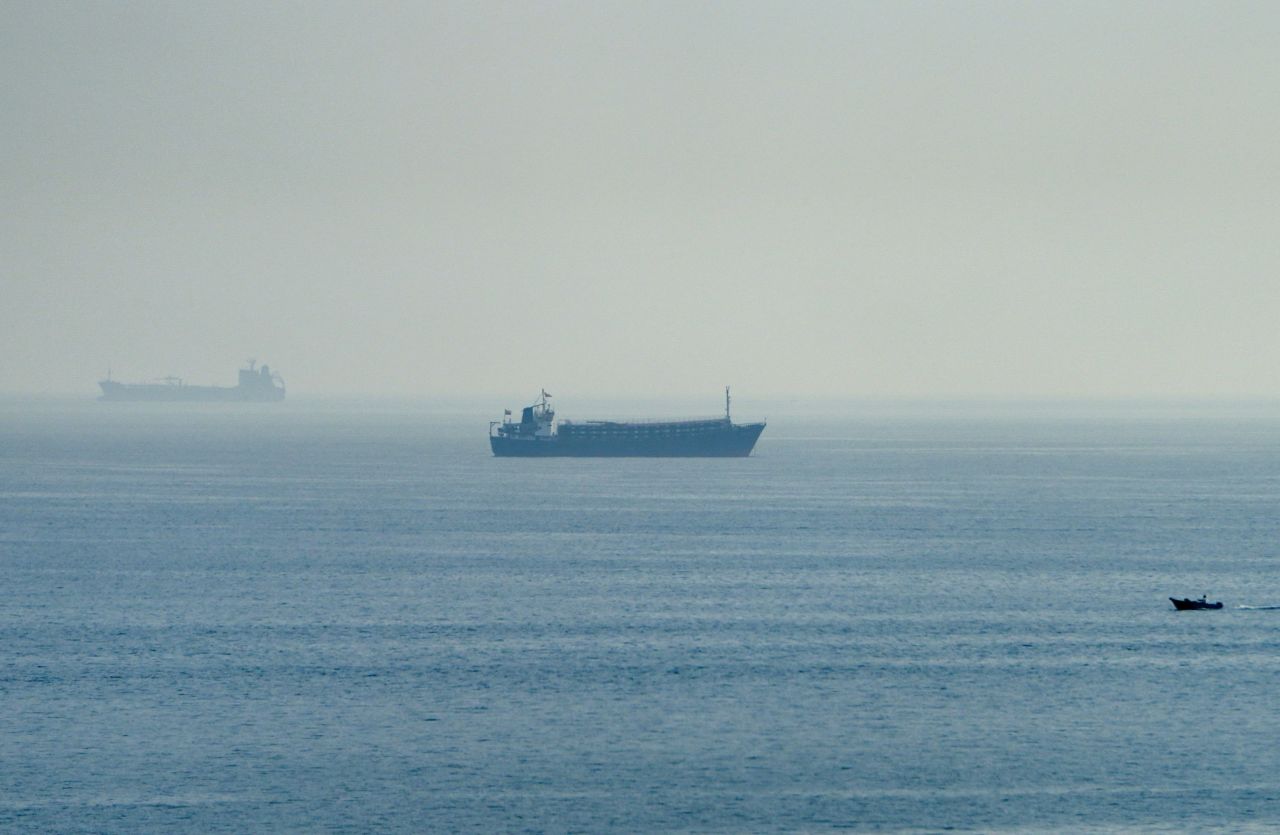
Vessels in the Strait of Hormuz, as seen from Musandam, Oman, July 31.
If you’re just joining us, we’ve been covering the uncertainty surrounding the state of Iran war talks, as well as the conflict’s persistent economic impacts
We’re awaiting the open of the oil futures market at 6 p.m. ET, which will provide our first glimpse at prices since US President Donald Trump said this weekend that he was holding off on new strikes against Iran for now
Trump said he is canceling a planned attack on Iran, contingent on the two sides “rapidly” making a deal. He touted progress in talks, including on reopening the Strait of Hormuz. But Iranian state media gave no indication that Tehran asked for the attacks to be called off or has changed its stance on the vital waterway
The collapse of the initial US-Iran ceasefire last month has been followed by greater disruptions to global shipping in the strait and elsewhere in the region, and Americans are facing high gas prices as a result
Here’s what else is happening:
- The Organization of the Petroleum Exporting Countries and its allies, known as OPEC+, has agreed to increase oil production in September in light of the disruptions to the energy market.
- Iran’s understanding with Oman on a new shipping route does not mean the Strait of Hormuzwill reopen, Iranian Foreign Ministry spokesperson Esmaeil Baqaei told Iran’s Islamic Republic News Agency. There have been ongoing negotiations between the countries regarding management of the strait.
- Iranian media outlets have reacted with glee and mockery to Trump’s announcement about holding off on strikes. Iranian state media claimed the US president was retreating, not responding to diplomatic developments.
- Meanwhile, Iranian officials have acknowledged mounting domestic economic and social problems after five months of the conflict. Iran’s unemployment has worsened since the conflict began, and its currency has hit new lows.
CNN’s Mohammed Tawfeeq, Auzinea Bacon, Tim Lister and Issy Lippolis, Andrew Carey, Abeer Salman and Ibrahim Dahman contributed to this report
Iran’s understanding with Oman on a new shipping route does not mean the Strait of Hormuzwill reopen, Iranian Foreign Ministry spokesperson Esmaeil Baqaei told Iran’s Islamic Republic News Agency (IRNA)
There have been ongoing bilateral negotiations between Iran and Oman regarding a mutual mechanism to manage the strait
“The understanding between Iran and Oman regarding a new route is unrelated to the reopening or continued closure of the Strait of Hormuz,” Baqaei said, describing the agreement as “a necessary condition, but not a sufficient one.”
Baqaei blamed the strait’s closure on “the United States’ breach of commitments, the US naval blockade of Iran,” and added, “therefore, the reopening of the Strait of Hormuz is an entirely different equation.”
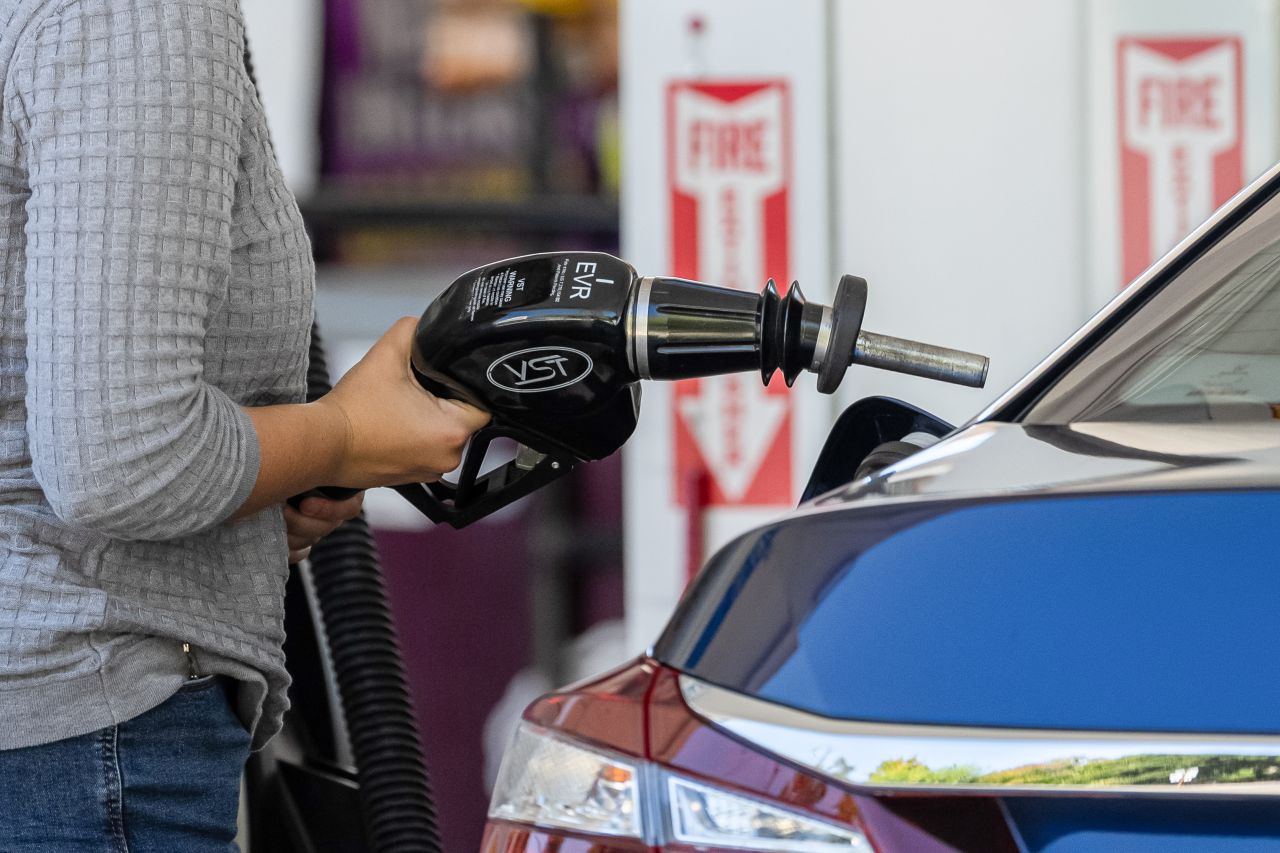
A driver refuels a vehicle at a Shell gas station in Palo Alto, California, on Tuesday, July 21.
The Organization of the Petroleum Exporting Countries and its allies, known as OPEC+, has agreed to increase oil production in September as the Strait of Hormuz remains impassable to maritime traffic
The oil-producing group will raise daily output by another 188,000 barrels a day, marking the cartel’s sixth consecutive agreement to increase production amid the war with Iran. The increase completes the commitment to gradually unwind a 2023 decision to cut production by 1.65 million barrels a day
The big picture:The group’s statement did not mention the war with Iran or disruptions to the Strait of Hormuz, through which about 20 million barrels of oil transited before the war began. Ship traffic through the strait has declined in recent weeks due to renewed strikes between the US and Iran. The Islamic Revolutionary Guard Corps has also targeted ships attempting to transit the strait
In a video conference, OPEC’s Joint Ministerial Monitoring Committee “expressed concern regarding attacks on energy infrastructure,” which will increase market volatility and require costly and time-consuming repairs
Oil market disruptions have also been exacerbated by the Russia-Ukraine conflict and Iran-backed Houthi rebels effectively blocking the Bab al-Mandeb Strait, through which Saudi oil flows. That waterway provided an alternate route from the Strait of Hormuz
Oil prices have climbed and Americans have faced higher gas prices since the initial US-Iran ceasefire agreement collapsed last month
