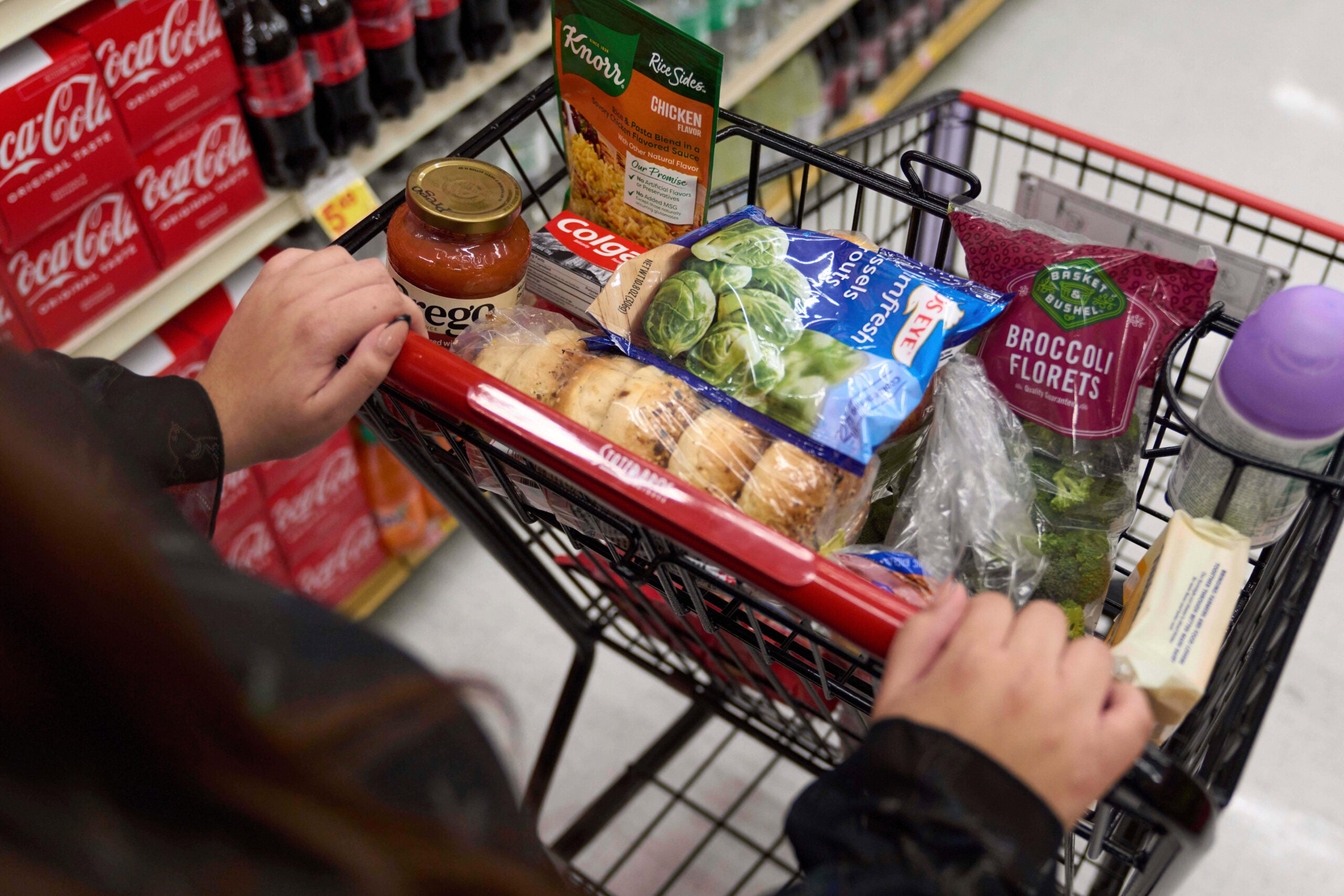
An estimated 24,000 to 33,000 fewer Wisconsinites are receiving federal food aid between last July and this April, a period in which new work and paperwork requirements went into effect
William Parke-Sutherland, government affairs director at Kids Forward, the nonprofit group that advocates on behalf of children and families in Wisconsin, said if there’s a silver lining in the cuts, it’s that they could have been worse
“That’s considerably smaller than most other states,” Parke-Sutherland told WPR’s “Wisconsin Today.” “Wisconsin has been in a particularly good place, and actually was able to allocateconsiderable amounts of money to help address some of these big federal cuts and the paperwork requirements.”
Understanding Wisconsin, Together
WPR’s “Wisconsin Today” newsletter keeps you connected to the state you love without feeling overwhelmed. No paywall. No agenda. No corporate filter
Data from the Wisconsin Department of Health Services shows that more than 688,000 Wisconsinites were getting food aid when the law was passed last July. In April, department data shows just over 655,000 people getting benefits — a drop of 33,000. The Center on Budget and Policy Priorities runs a SNAP tracker showing about 24,000 fewer Wisconsinites getting benefits during that same period.
There are many reasons why people could stop receiving food aid. People die, move to another state, get a better job or start a new relationship, or minors age out of the system. But nationally, the number of people receiving food aid through the Supplemental Nutrition Assistance Program, or SNAP, has declined by about 4.5 million since last July, according to the Center’s SNAP tracker
Critics argue the federal governmentis deliberately pushing people off the program.
Parke-Sutherland said it’s unclear why people have lost benefits in Wisconsin.
“It’s hard to parse that out, but what we know is that these kinds of paperwork barriers, prove-you’re-working requirements, make it harder for people to qualify,” he said. “The whole idea of the cut from the federal government — it’s only a cut if it cuts out people who were otherwise eligible. That’s an important distinction. We just don’t know exactly what is happening. There’s also fear and misinformation, and that could also be triggering some of the people who are losing access to their food assistance.”
Changing work requirements
The One Big Beautiful Bill Act, which Congress and President Donald Trump approved last year, expanded who must work in order to receive food benefits. Previously, many people 18 to 54 were required to work, or go to school for 80 hours a month to qualify
The new general work requirementmandates anyone 16 to 59 to work, unless they are in school or a drug treatment program, are caring for a child 6 or younger, or have a physical or mental disability. Exemptions from the general work requirement for people who are homeless, veterans and young people who have aged out of the foster care system have ended.
There is a separate work requirement for “able bodied adults without dependents,” who are 18 to 54 who want to receive SNAP benefits for more than three months. They must work, volunteer or be going to school for 80 hours a month.
“This is why this is so confusing and why it’s so hard for people to figure out what to do,” Parke-Sutherland said. “The federal government hasn’t provided all of the guidance that I think they intend to for how states are to implement these things.”
In addition, states can be penalized for errors made on benefit applications, which has led some states to increase the documentation required to receive benefits. The New York Times reported that in Arizona, more than 400,000 people have lost benefits, even though many of them still qualify. However, Wisconsin has one of the lowest error rates in the country.
Food pantries seeing uptick
The new restrictions on federal food aid are being felt at food banks around Wisconsin, said Jackie Anderson, the executive director of Feeding Wisconsin. The demand is up about 30 to 40 percent at most food banks, and has risen 400 percent at one.
“To be honest, we started to see that even before these new SNAP work requirements went into place, for a lot of different reasons,” she said. “Rent is going up, groceries are expensive.”
She worries that another change coming will exacerbate the need for food assistance. Starting in early 2027, people who are 19 to 64 will have to work, go to school or volunteer in order to receive healthcare through Medicaid.
DHS: 63K Medicaid members lack documentation to meet federal work requirements next year
“What we foresee with Medicaid changes that are coming up is that the number is going to increase even more because people are going to have to make the hard decision: ‘Do I pay for healthcare or do I pay for food?’” Anderson said. “So we are bracing ourselves for that number to go up.”
Parke-Sutherland recommends that anyone who is receiving SNAP benefits make sure their contact information is updated with the state Department of Health Services and that they pay attention to any notices the state sends
“This comes from the One Big Beautiful Bill Act, which was passed on July 4 of last year, and it’s the largest cut to food assistance and Medicaid in the nation’s history,” he said. “These are big substantive changes that are going to mean fewer people have access to food and fewer people have access to healthcare through Medicaid.”