

Getting your Trinity Audio player ready…
A gardener working in the hot sun to remove unwanted plants from a vegetable patch or a perennial bed may find a lot of words to describe them
But it’s important to use that vocabulary carefully. “Words such as weedy, aggressive and invasive can sound like they mean the same thing, but they don’t,” said Sharon Yiesla, plant knowledge specialist in the Plant Clinic at The Morton Arboretum in Lisle. “Understanding their specific meanings can help you understand what to expect from plants and how to choose and care for them.”
To begin with the basics: What’s a weed? Merriam-Webster defines it as “a plant that is not valued where it is growing and is usually of vigorous growth, especially one that tends to overgrow or choke out more desirable plants.”
Plants that are widely considered weeds in North America tend to be generalist species that reproduce readily by producing a lot of seeds and can grow in a wide variety of environments. That makes it easy for them to take advantage of disturbed soils, such as those in farm fields and gardens
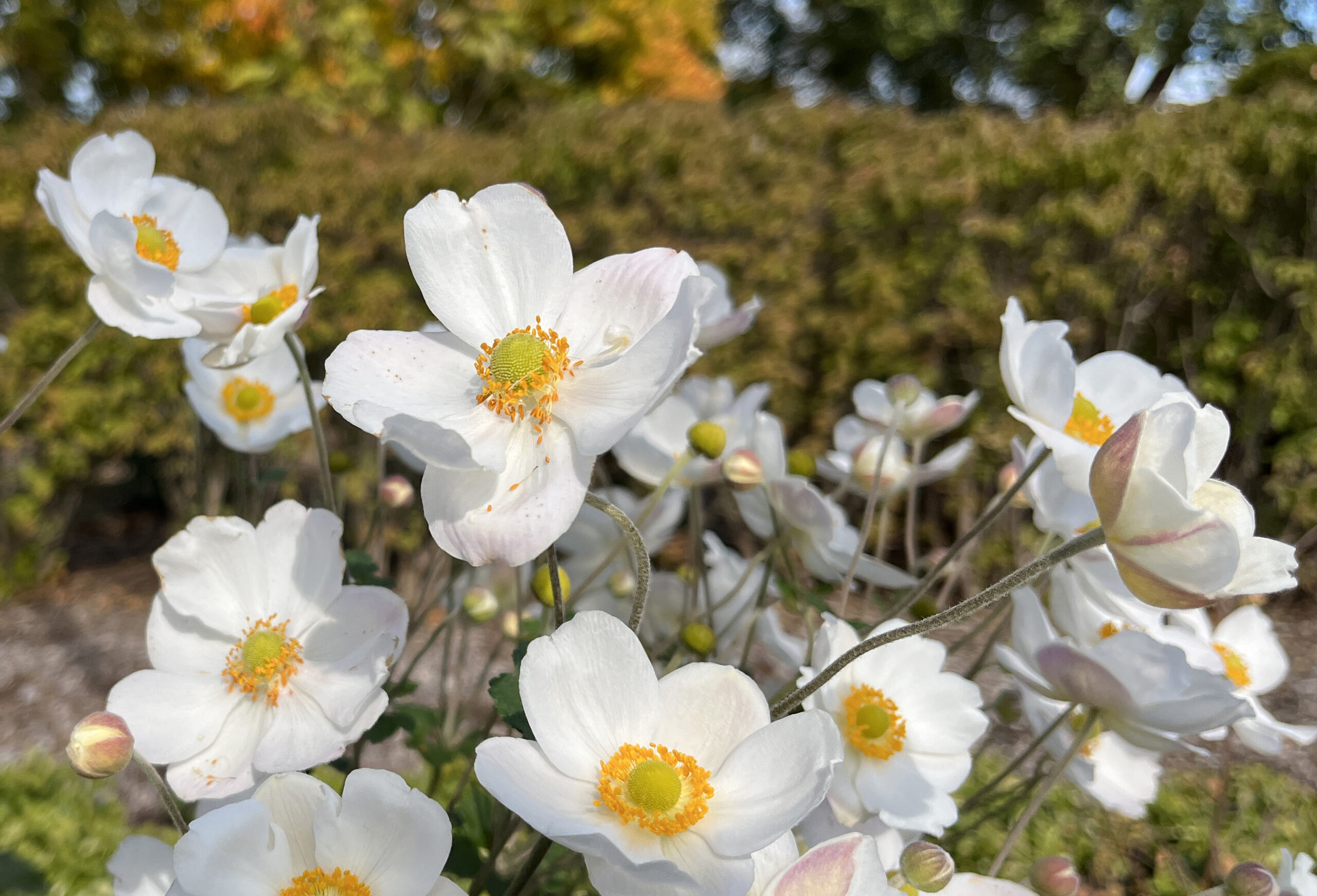
Even a plant that we value in one place may be a nuisance if it starts growing somewhere else. “A nice patch of Japanese anemones can be lovely blooming in September, but you won’t necessarily want them everywhere,” Yiesla said. The Plant Clinic’s website says that Japanese anemone (Anemone hupehensis) “can be an aggressive spreader once established.”
“When we call a plant aggressive, we mean that it tends to spread more quickly than desired and may need extra maintenance to keep it where we want it,” she said. “It’s annoying, as opposed to harmful or dangerous.”
Sometimes native plants can be considered aggressive in cultivated areas. For example, the black cherry tree (Prunus serotina) is native to the Chicago area. Still, it reseeds very readily, which can lead to an aggravating number of seedlings in a garden or along fencerows
Many people use the word “weedy” to refer to plants that reseed easily, although that meaning isn’t standard. In most dictionaries, “weedy” means “full of weeds.”
The term that seems to cause the most confusion is “invasive.” “Invasiveness is not about a plant invading your garden or invading a place where you don’t want it,” Yiesla said
As the Plant Clinic uses the term, an invasive plant is a plant not native to the area under consideration whose presence negatively impacts (or is likely to impact) ecological, economic or human health
The term is most often used to refer to non-native plants that threaten the ecosystems of natural areas by outcompeting with native plants. That’s usually because they left their natural enemies and other constraints behind in their native ecosystems somewhere else in the world
Common buckthorn (Rhamnus cathartica) is a notorious invasive plant in the Chicago region, a shrub whose berries, spread by birds, sprout throughout forest preserves and national parks as well as vacant lots and fencerows. Along with other invasive shrubs such as Japanese barberry (Berberis thunbergii) and Japanese honeysuckle (Lonicera japonica), it is a major threat to native forest plants, from wildflowers to oak trees
These shrubs were all originally brought from Europe or Asia to the Midwest to be used as ornamental plants. Many invasive plants have invaded natural areas from gardens
Regulating invasive plants is a complicated business, and the terminology is not standard. Most state and local regulations use terms such as exotic, noxious, prohibited and restricted instead of invasive. For a list of plants that are considered invasive or are regulated by various states, see the website of the Midwest Invasive Plant Network (mipn.org)
Because the terminology is not settled, the Arboretum’s website uses the general category “problem plants” for those that are invasive, poisonous, toxic to touch, or otherwise a major problem for gardeners and landscape professionals
“Our best advice for a gardener is to read information about a plant all the way through,” Yiesla said. “Find out the specific reason a plant is being described as aggressive, weedy, invasive or otherwise problematic.”
For tree and plant advice, contact the Plant Clinic at The Morton Arboretum (630-719-2424, mortonarb.org/plant-clinic, or plantclinic@mortonarb.org). Beth Botts is a staff writer at the Arboretum
