

• War with Iran:The United States is planning a wave of new strikes on Iran as soon as this weekend, officials said. The precise scope of the strikes and potential targets were not clear. Both US officials cautioned that until the strikes begin, they could be called off
• Earlier today:President Donald Trump signaled the plan when he said the US would be “hitting them very hard.” He met with Cabinet officials at Camp David as the administration seeks an exit ramp from the expanding conflict
• Gaza peace effort:Separately, the president said the US and Israel are aligned on plans to begin implementing a new agreement in the Palestinian enclave, where Hamas has said it will disarm if Israel upholds its end of a truce. That would mark a critical diplomatic breakthrough, but major questions remain
37 Posts
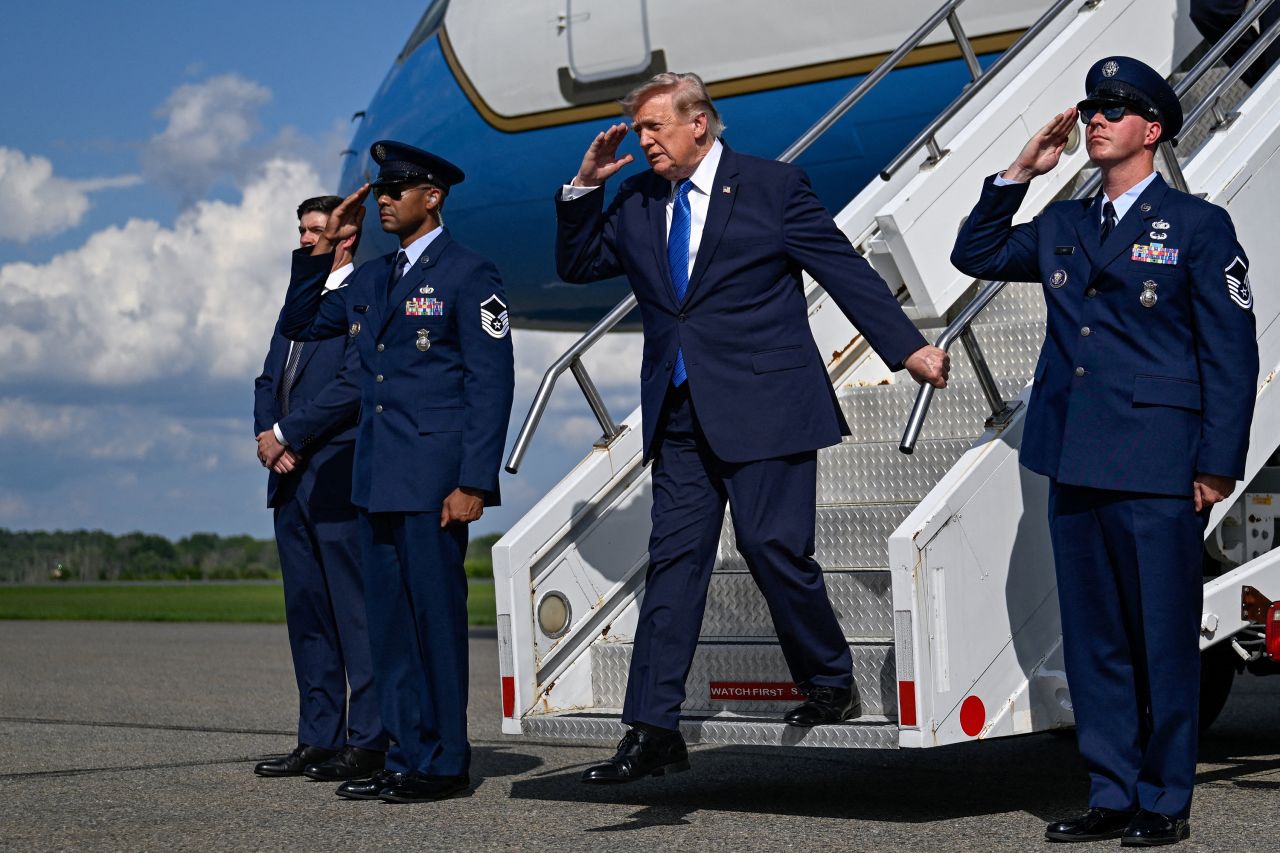
US President Donald Trump salutes as he disembarks Air Force One at Morristown Municipal Airport in Morristown, New Jersey, July 31.
The United States is planning fresh strikes on Iran as soon as this weekend as President Donald Trump seeks a resolution to the war, according to two US officials familiar with the plans
The precise scope of the strikes, and potential targets the US may go after, were not clear, and both officials cautioned the strikes could be called off
Trump, speaking at a Cabinet meeting earlier Friday, previewed a renewal of heavy strikes while venting anger at diplomatic efforts that have fallen short
US Central Command has prepared options and readied its forces for expanding the war, including a heavy 2-week bombardment of Iran’s missile sites
There has also been planning around options that would target energy sites, the officials said
The Trump administration has been leery of striking Iran’s energy infrastructure over concern that Tehran could retaliate against Gulf infrastructure sites and shock global energy markets already under strain from the war
Earlier this week, the Israeli Defense Minister said the country’s leadership wanted to strike Iranian energy infrastructure as a means of causing even more economic pressure on Iran. “We very much want to strike Iran’s energy targets — the US is not approving it at this time,” Israel Katz said
There is no indication Israel would take part in a new wave of US strikes on Iran
And the US military has made preparations to launch a series of strikes targeting Iranian nuclear infrastructure to include Pickaxe Mountain, though not specifically limited to that site, south of Tehran. Those preparations have picked up momentum in the last few days, the officials said
Asked about reports Trump had ordered a new round of weekend strikes, the White House said the president would not “stand by and allow this terrorist behavior to occur.”
While some global leaders are expressing optimism about a new agreement in Gaza, the actual implementation is still uncertain
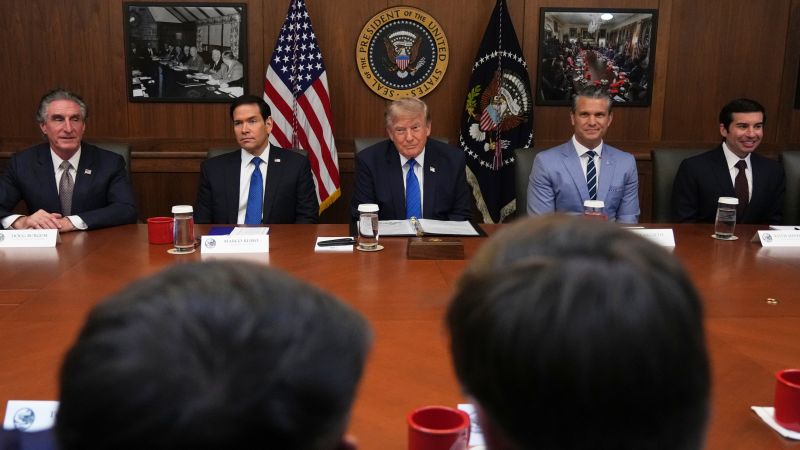
President Donald Trump held a Cabinet meeting at Camp David after announcing the agreement, where he discussed Gaza and the ongoing war with Iran
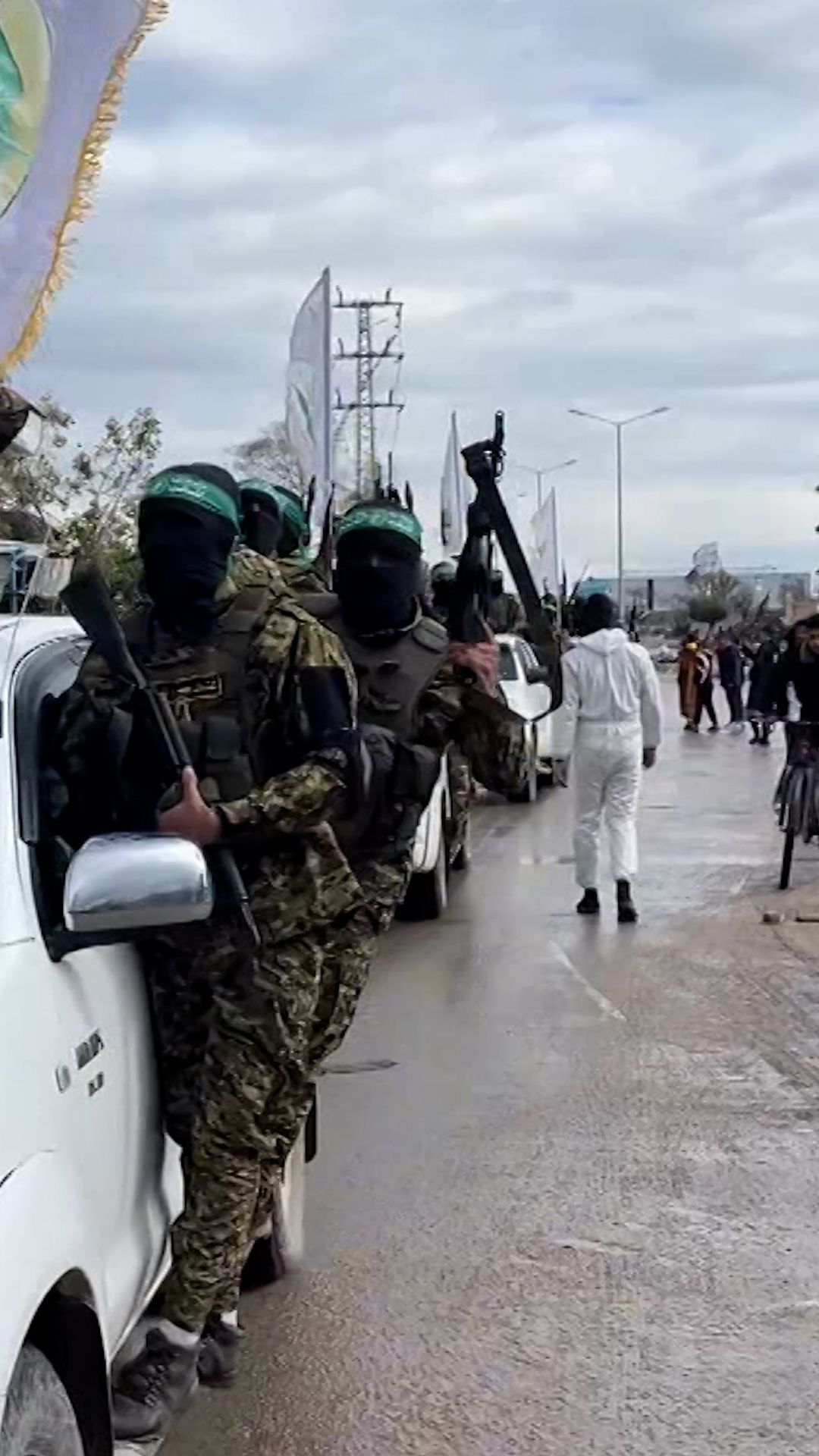
Hamas agrees to give up arms but uncertainty remains
Hamas has for the first time agreed to a specific plan to hand over its weapons in Gaza. But a senior Hamas official told CNN the group will only disarm if Israel upholds its end of the ceasefire agreement. CNN’s Jeremy Diamond reports
2:01• Source:
CNN
Hamas agrees to give up arms but uncertainty remains
2:01
- New Gaza plan: The United States had an “understanding” with Israel to begin implementing a peace deal in Gaza that would require Israeli forces to withdraw and Hamas to give up its weapons, Trump said. He stopped short of detailing the sequence of the complicated reciprocal steps.
- Roadmap: The US-backed Board of Peace, tasked with overseeing a long-term peace settlement in Gaza, issued a revised 15-point ceasefire roadmap.
- What Israel has said:Earlier, an Israeli official rejected key elements of the reported framework, stressing that “complete disarmament” of Hamas remained a precondition for any process. There would be no Israeli withdrawal from the Gaza “yellow line,” the official said, until demilitarization is completed.
- What Hamas has said: Meantime, senior Hamas official Ghazi Hamad told CNN that Israel must first cease fire, stop all targeted killings in Gaza, withdraw its troops to the “yellow line” and allow for a surge of humanitarian aid consistent with the October ceasefire agreement.
- UN chief’s reaction: The announced agreement is “the only good news in recent days,” UN Secretary-General António Guterres said, and he called for fighting on “all fronts” in the region to stop.
- US strikes not ending: While US Central Command has not yet reported any strikes in Iran on Friday, Trump said the US would be “hitting them very hard,” signaling that attacks are not likely to end any time soon.
- Cyberattack blame:Trump downplayed reports that Iran was responsible for a recent cyberattack on critical infrastructure in Minnesota, instead taking aim at the state’s Democratic-led government.
- Maritime blockade:The US military has redirected a total of 30 commercial vessels, disabled two ships and boarded two others as part of its naval blockade on Iranian ports, US Central Command said in an update Friday.
- Attacks in Lebanon: Lebanese Prime Minister Nawaf Salam accused Israel of breaching Lebanon’s sovereignty amid Israeli attacks in the south of the country. He also called the attacks a “clear violation of the ceasefire.”
CNN’s Betsy Klein, Kevin Liptak, Billy Stockwell, Ibrahim Dahman, Michael Rios and Eyad Kourdi contributed reporting
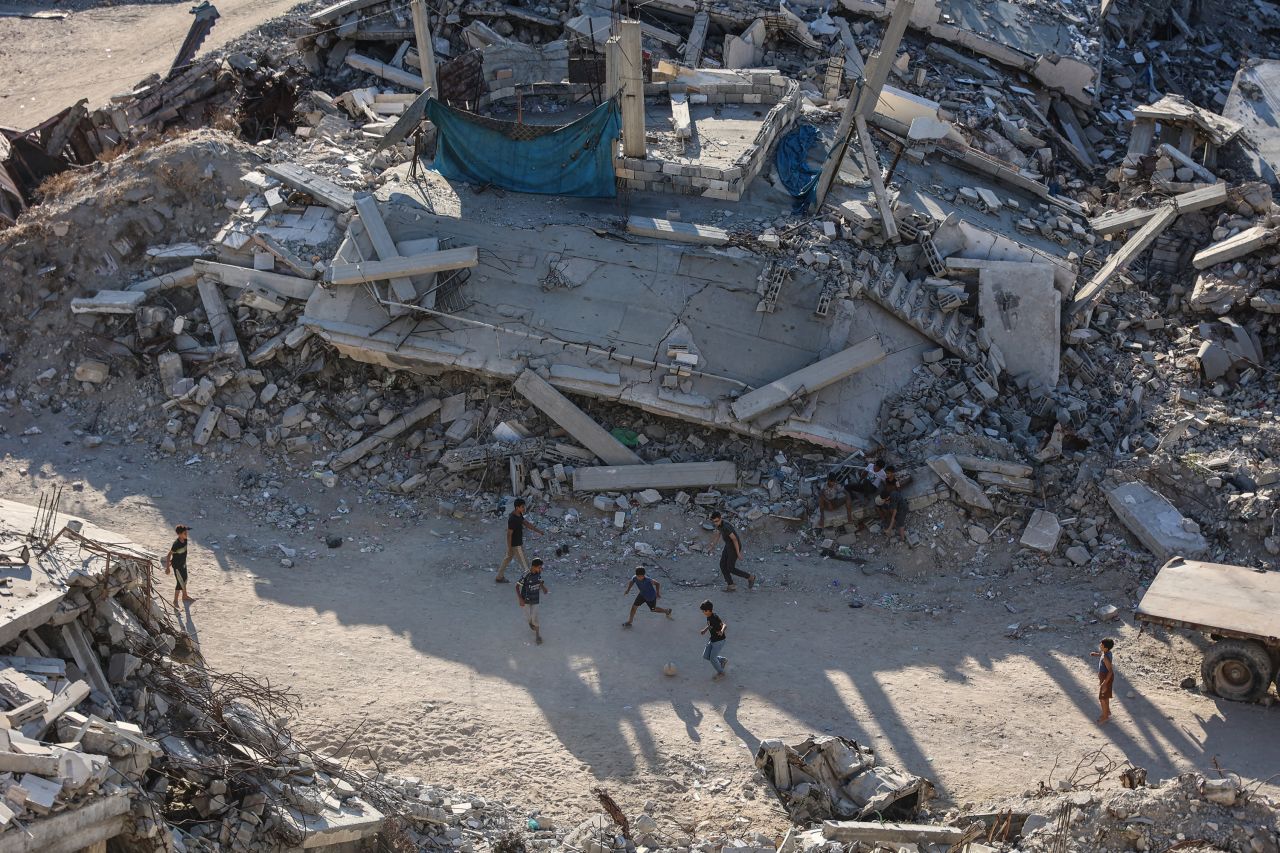
Children play football amid the ruins of destroyed buildings in Gaza City on July 27.
The announced agreement for Hamas to disarm and for Israel to withdraw from Gaza is “the only good news in recent days,” UN Secretary-General António Guterres said Friday
Speaking to reporters about his recent trips to Syria, Jordan and Cyprus, the UN chief said the Middle East cannot afford more war
“Let me be clear: The fighting must stop on all fronts in the region,” he said
Guterres also urged both Israel and Hamas to implement what was agreed
“It was announced already that there is a roadmap to implement these objectives. That roadmap must be followed without any questions, skepticism or determination to undermine it,” he said
Lebanese Prime Minister Nawaf Salam accused Israel today of breaching Lebanon’s sovereignty amid Israeli attacks in the south of the country, which he said involved explosions, shelling and “systematic destruction.”
The ongoing attacks constitute a “clear violation of the ceasefire, as well as a blatant breach of Lebanon’s sovereignty and security and of the principles and rules of international law,” Salam posted on X
On Thursday, Israeli Prime Minister Benjamin Netanyahu and Defense Minister Israel Katz said in a statement that the Israeli military had destroyed tunnels in the Beaufort area of southern Lebanon using about 700 tons of explosives
The statement alleged that the underground infrastructure was central to a plan by Hezbollah to invade communities in northern Israel. It added that the operation followed what Israel described as Hezbollah’s “blatant violation” of a ceasefire agreement one day earlier, but provided no further details
In response, Lebanese President Joseph Aoun condemned the operation, as well as the “severe damage and serious repercussions (the Israeli military) are causing across most villages in southern Lebanon, threatening the safety and security of civilians,” the president’s office said in a statement
Both Lebanese leaders also drew attention to the impact of the latest Israeli attacks on UNESCO World Heritage sites in the country’s south
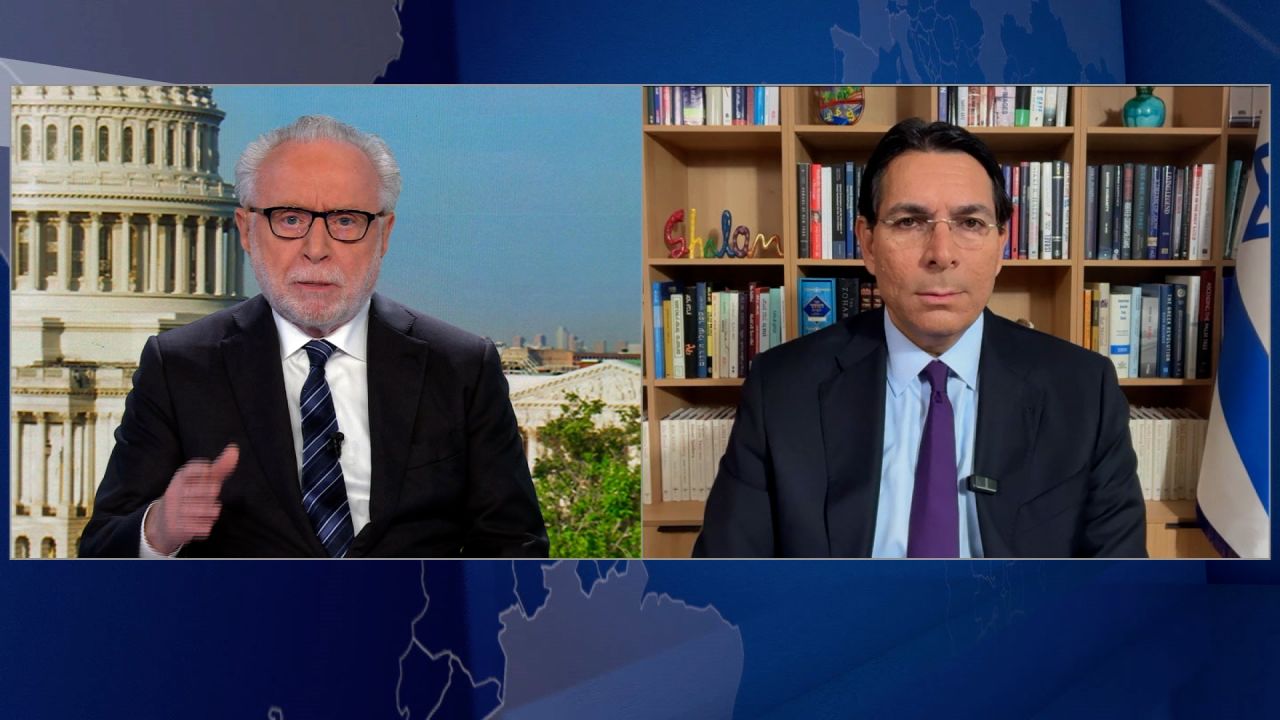
Israeli Ambassador to the UN says Trump will “absolutely not” be disappointed by Israel’s response to Hamas disarmament deal
3:58• Source:
CNN
Israeli Ambassador to the UN says Trump will “absolutely not” be disappointed by Israel’s response to Hamas disarmament deal
3:58
Israel’s Ambassador to the United Nations Danny Danon said Hamas must “actually” disarm, adding that “cosmetic solutions” will not work for Israel. He said that the sequence of events surrounding disarmament, humanitarian aid and Israel’s withdrawal of troops to the so-called “yellow line” in Gaza could be discussed in future talks
“Those issues we can discuss and we can resolve … you can build the sequence with the mediators,” Danon told CNN’s Wolf Blitzer on Friday. “The main point is whether Hamas is actually willing to disarm or not. Because if they are playing games and offer cosmetic solutions, it will not work.”
US President Donald Trump on Thursday announced what he described as a historic agreement to secure the disarmament of Hamas and all other armed groups in Gaza – months after he first announced a US-brokered ceasefire agreement between Hamas and Israel
Senior Hamas official Ghazi Hamad told CNN that Israel must first cease fire, stop all targeted killings in Gaza, withdraw its troops to the “yellow line” and allow for a surge of humanitarian aid consistent with the October ceasefire agreement
Asked on Friday if Trump should prepare to be disappointed by Israel’s willingness to engage with the peace plan, Danon replied: “Absolutely not.”
About the “yellow line”: The so-called “yellow line” is a demarcation line that Israeli troops withdrew to under the October 2025 ceasefire agreement. It encompassed roughly 53% of Gaza, but the line has been shifting toward the Mediterranean Sea as Israel expands its control, cramming Gaza’s population into a shrinking area of land
CNN’s Alejandra Jaramillo, Jeremy Diamond, Tal Shalev and Sophie Tanno contributed to this report
The US-backed Board of Peace, tasked with overseeing a long-term peace settlement in Gaza, issued a revised 15-point ceasefire roadmap today
The new plan has fewer points than the initial 20-point proposal released by US President Donald Trump last year, which has gone through various iterations since. Today’s new roadmap offers fresh insight into the disarmament of Hamas, and how it could work:
- According to the roadmap, all police weapons must be transferred into the hands of the National Committee for the Administration of Gaza (NCAG), a Palestinian body tasked with governing Gaza, after it enters the territory.
- Personal weapons shall be subject to relevant Palestinian laws, overseen by NCAG, the plan said.
- Meanwhile, weapons owned by militias, who will not be integrated into Gaza’s new police or security services, shall be “decommissioned and stored under NCAG authority.”
- A “process” to decommission and store heavy weapons, military production sites and tunnels will begin in Gaza after NCAG’s entry into the territory and the deployment of an International Stabilization Force (ISF), among other conditions, per the plan.
- This process shall be “linked to an Israeli withdrawal, in phases, from the areas under its control in Gaza,” the roadmap said.
- No weapons shall be transferred or handed to Israel or non-Palestinian parties, and at the end of the process, only NCAG shall store and control weapons in Gaza, the plan said.
- The proposal also includes a commitment to end military parades and armed demonstrations.
However:Before any of this revised roadmap can happen, various steps must be completed. All parties must reaffirm their commitment to Trump’s plan, which – the roadmap said – is aimed at securing full Israeli withdrawal from the Gaza Strip and enabling Palestinian governance, reconstruction, security, recovery and economic development
To move to phase two of the deal, all requirements of the first phase must have been met and verified, and a timetable for the implementation of the second phase must have be agreed upon, according to the proposal. Only then can NCAG enter the Gaza Strip and “assume its responsibilities.”
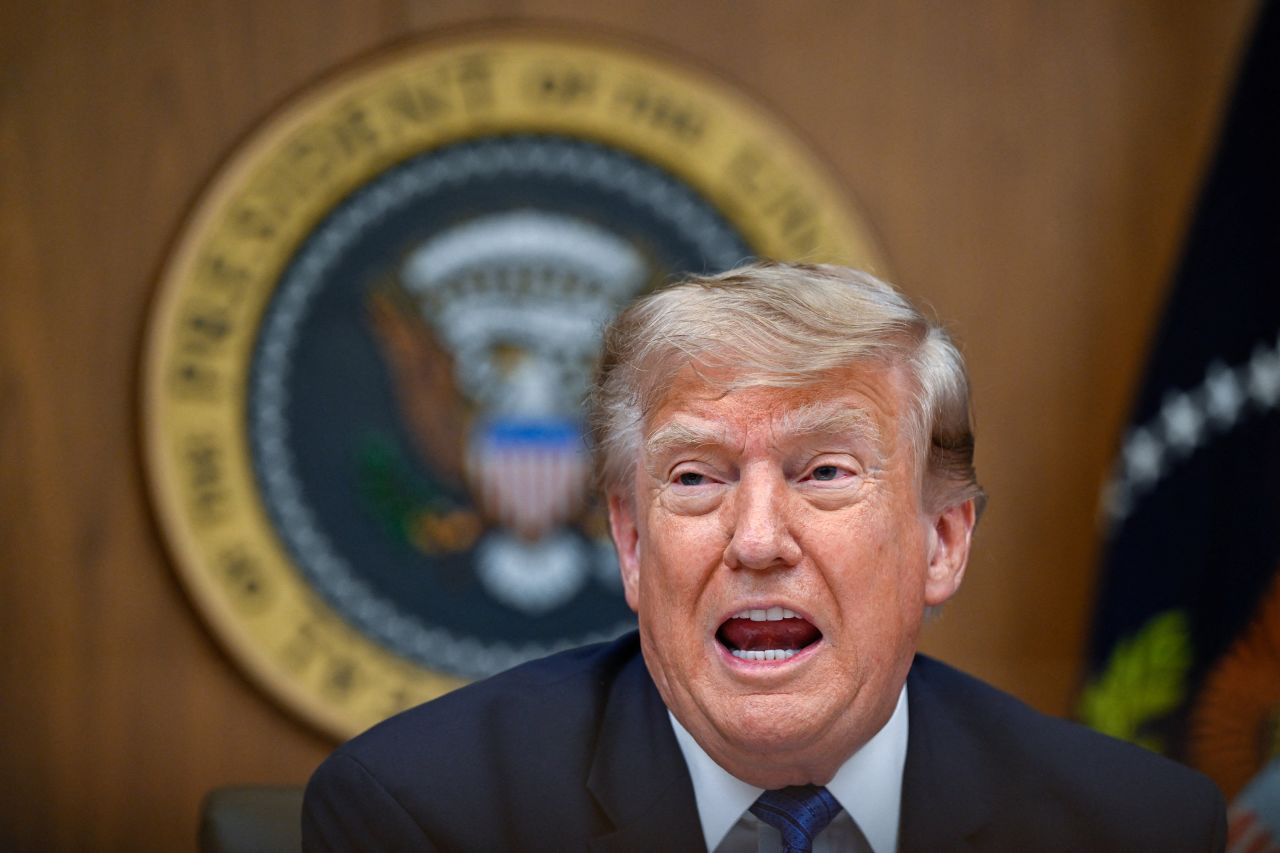
US President Donald Trump participates in a cabinet meeting at Camp David in Thurmont, Maryland, July 31.
President Donald Trump appeared to suggest that ongoing US strikes on Iran were unlikely to end anytime soon, telegraphing a strategy to continue attacks until Iran returns to the negotiating table
“We’ll be hitting them very hard and, you know, at some point, they’re going to say, ‘We just can’t take it anymore,’” Trump said during a Cabinet meeting
The comments come five months into the conflict and weeks after a ceasefire agreement signed in June fell apart
Trump has repeatedly threatened to escalate attacks on Iran in recent weeks, signaling the possibility of targeting critical infrastructure like power plants and bridges, but has yet to follow through, and there have been signs this week that the conflict is widening throughout the region
The US unleashed a “heavy wave of strikes” overnight Wednesday which has not yet reported any strikes Friday
Trump is under significant political pressure to bring the war with Iran, which is deeply unpopular with the American people, to a close. Only 28% of Americans approve of his handling of the conflict, which has had far-reaching economic consequences, including rising gas prices at home
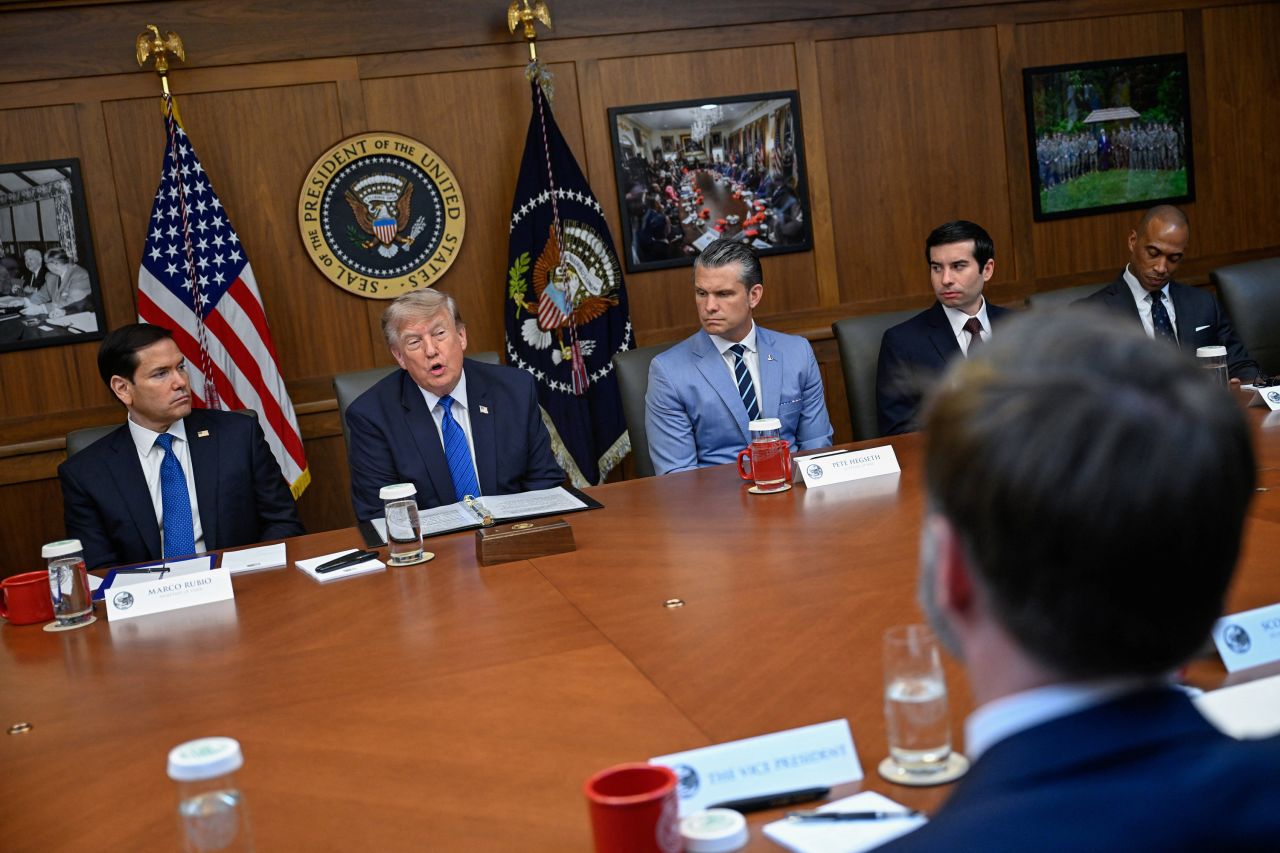
US President Donald Trump, Vice President JD Vance, Secretary of State Marco Rubio, Secretary of Defense Pete Hegseth, Secretary of Labor Keith Sonderling and Secretary of Housing and Urban Development Scott Turner participate in a cabinet meeting at Camp David in Thurmont, Maryland, on July 31.
President Donald Trump said the US had an “understanding” with Israel to begin implementing a peace deal in Gaza that would require Israeli forces to withdraw and Hamas to give up its weapons
But he stopped short of detailing the sequence of the complicated reciprocal steps, insisting only the deal was a breakthrough for the besieged enclave
Earlier, an Israeli official rejected key elements of the reported framework, stressing that “complete disarmament” of Hamas remained a precondition for any process. There would be no Israeli withdrawal from the Gaza “yellow line,” the official said, until demilitarization is completed
Trump, however, offered a more optimistic assessment of the deal, while acknowledging it would likely undergo future tests
He linked the accomplishment to Iran, where he has not been able to achieve a lasting diplomatic end to the conflict
“That shows you how much success we’re having with Iran, because if you go four months ago, five months ago, a deal like that would have been impossible,” he said. “So it’s a big step for the Middle East, and people are really impressed by it, and they’re surprised by it.”
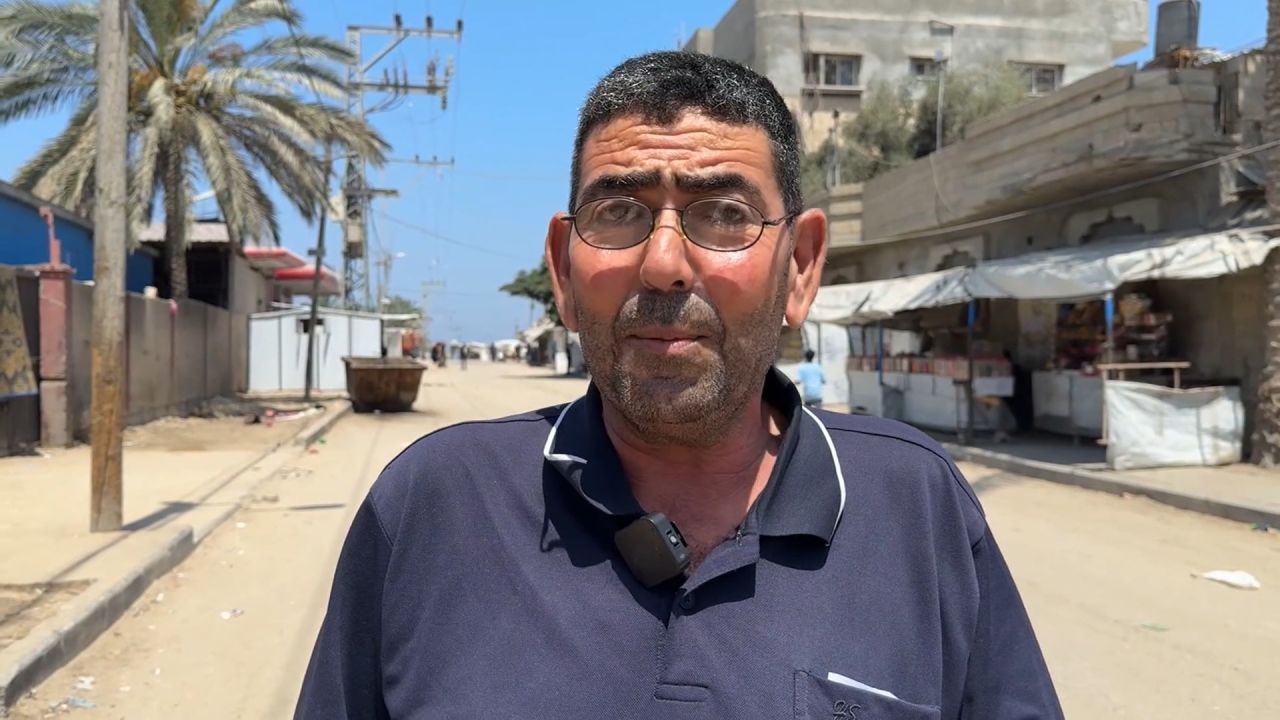
CNN speaks to Gazans on the ground as Palestinians fear new peace deal won’t hold
0:25• Source:
CNN
CNN speaks to Gazans on the ground as Palestinians fear new peace deal won’t hold
0:25
Two young girls walk arm-in-arm on a sandy pathway in CNN video from central Gaza. Nearby, boys push metal jerrycans on rickety carts in the city of Deir al-Balah, where residents reacted with skepticism to the latest “breakthrough” developments touted by Washington
After the Trump administration claimed progress on a US-led peace deal between Israel and Hamas on Friday, several Palestinians told CNN that hopes of long-term peace and self-determination have been blighted by repeated lethal attacks on Gaza. Israeli bombing and siege following the October 7, 2023 attacks has flattened large swaths of the enclave, including Deir al-Balah, into a landscape of plastic tents and blown-out apartment blocks
Another woman, Um Mohammad Wadi, told a journalist working on behalf of CNN that she hoped that “Israel will be truthful this time,” adding, “Every day we lose the best of our youth.”
Both Israel and Hamas have insisted their role in advancing the multi-phase peace plan to end the war in Gaza is contingent upon the other’s obligations under the October ceasefire deal. That means Friday’s announcement of Hamas’ agreement to disarm is fraught with uncertainties
President Donald Trump downplayed reports that Iran was responsible for a recent cyberattack on critical infrastructure in Minnesota, instead taking aim at the state’s Democratic-led government
“We heard in Minnesota, there was a cyberattack and they blame it on Iran. I don’t think so. I think — I blame it on Minnesota because they’re grossly incompetent,” Trump said as he began a Cabinet meeting at Camp David
CNN has reported that hackers have targeted water systems in several US states, including Minnesota, in a coordinated cyberattack that has caused some utilities to issue boil-water notices and switch to manual mode, taking their systems offline
Federal and state officials are treating Iran as one of the suspects behind the hack, but have not made a formal determination of who is responsible and are wary of false flags
The president dismissed any connection to Iran, instead using the opportunity to lash out at Minnesota Gov. Tim Walz, the 2024 Democratic nominee for vice president with whom Trump has long publicly tangled
“I would blame it on Minnesota and the governor, the corrupt governor of Minnesota. They like to say, ‘Oh, it was Iran.’ Iran should be so lucky. Iran’s got bigger problems than worrying about Minnesota,” Trump said
CNN’s Sean Lyngaas contributed to this report
US President Donald Trump is holding a Cabinet meeting at Camp David after announcing that Hamas agreed to a deal with the Board of Peace, the Trump-backed international organization aimed at securing Gaza’s future
Here’s what has developed around the deal:
- Silence from Israeli leader:Israel’s Prime Minister Benjamin Netanyahu is yet to publicly comment on Trump’s announcement, but members of his right-wing coalition have voiced opposition to the agreement. An Israeli official did say that Israel won’t withdraw its forces from the current “Yellow Line” before the disarmament of Hamas.
- US expectations: Trump would be “very, very disappointed” if Israel does not adhere to their end of the peace plan, a US official said, but added that Washington believes Israel will “be a good partner in this and comply” given the “different issues they have going on.”
- Cautious optimism from global community: While uncertainty over the deal remains, the German Foreign Minister Johann Wadephul described the news as “hopeful.” France welcomed the news but added that the action must follow agreement. Other countries have reacted in a similar vein.
- The situation in Gaza:Palestinians have faced near-daily bombing since Israel and Hamas signed a fragile truce in October.
Meanwhile, we’re also watching developments in Iran:
- Kuwait said it intercepted Iranian drones that were trying to target military facilities on Friday morning local time.
- The Iranian body tasked with overseeing passage through the Strait of Hormuz said today that Tehran-approved transits through the critical waterway can gradually return “once stability and calm are restored.”
CNN’s Betsy Klein, Kaanita Iyer, Ibrahim Dahman, Mustafa Qadri, Kit Maher, Tal Shalev, Sana Noor Haq, Sophie Tanno, Billy Stockwell and Aida Karimi contributed to this report
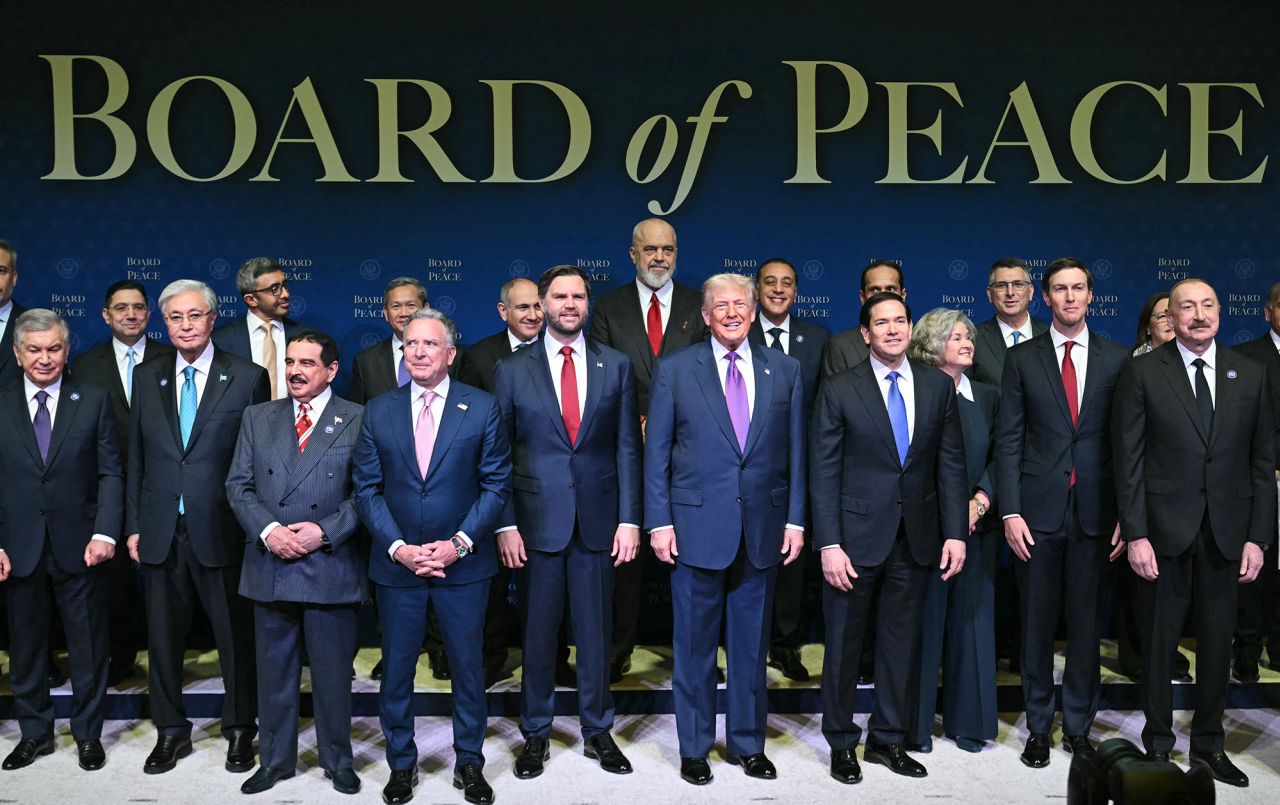
US President Donald Trump, center, flanked by US Vice President JD Vance, left, and US Secretary of State Marco Rubio, right, joins leaders for a group photo during the inaugural meeting of the “Board of Peace” at the US Institute of Peace in Washington, DC, on February 19.
A senior Hamas official confirmed to CNN on Friday that Hamas reached an agreement with the Board of Peace to relinquish its weapons, subject to Israeli actions
But what exactly is the Board of Peace?
Remember: Trump had initially floated the Board of Peace as part of a second phase of the US-brokered 20-point Gaza ceasefire plan in September
The United Nations Security Council backed the plan in November — giving it international legitimacy — with a mandate for the board to oversee the demilitarization and rebuilding of Gaza
But Trump had longer-term plans. The charter draft, obtained by CNN, describes the Board of Peace as an “international organization” promoting stability, peace and governance “in areas affected or threatened by conflict.”
Trump will serve as chairman of the board indefinitely, according to the charter, possibly holding the post beyond his second term as president
Its members include:Israeli Prime Minister Benjamin Netanyahu, Saudi Arabia’s Crown Prince Mohammed bin Salman, Emirati President Mohamed bin Zayed Al Nahyan, Pakistani Prime Minister Shehbaz Sharif and several other world leaders
The Board of Peace will also sit above a “founding Executive Board” that includes Trump’s son-in-law Jared Kushner, Secretary of State Marco Rubio, special envoy Steve Witkoff and former British prime minister Tony Blair
Early this month, the board wrapped up two days of what it called “highly productive” meetings in Cyprus. The meetings — which included experts, advisers and the Palestinian technocratic committee intended to run Gaza — focused on “what can be done immediately” to “ease conditions on the ground.” The group said it reviewed plans for the reconstruction of Gaza, security and governance
CNN’s Mustafa Qadri, Tal Shalev and Ibrahim Dahman contributed to this report
In the weeks after Israel and Hamas reached a ceasefire agreement intended to end the war in Gaza, top Hamas officials cast doubt on a key element of Trump’s 20-point plan: their disarmament
Hamas leader Khalil Al-Hayya, for example, suggested the group would only hand over its weapons to a future Palestinian state
It took nearly 10 months of start-and-stop negotiations for Hamas and the Board of Peace to finally reach this point. Nickolay Mladenov, the Board of Peace official charged with brokering that agreement, acknowledged Thursday “there were several points when I did not believe we would make it.”
So there’s no question that this deal marks a major milestone toward making President Donald Trump’s Gaza peace plan a reality
But, as Mladenov acknowledged: Now comes the tough part
The new 15-point roadmap is sequenced: Israel must take certain steps before Hamas takes its own, and vice versa. And Hamas is emphatic that it won’t begin any handover of weapons until Israel complies with its commitments under the deal: stopping its near-daily attacks on Gaza, moving back to the agreed-upon “yellow line” and allowing a surge of humanitarian aid
And that’s where we’re already seeing the challenges emerge. While the Israeli Prime Minister’s Office has yet to officially comment, an Israeli official told CNN Israel won’t withdraw any troops “from the current ‘yellow line’ without the genuine disarmament of Hamas.” That could be a problem, since the “current” yellow line has swallowed at least 4% of Gazan territory beyond the October agreement
And the reaction in Israel underscored the political dilemma Israeli Prime Minister Benjamin Netanyahu faces fewer than three months before elections, with figures across the political spectrum slamming the disarmament agreement as a capitulation
“The State of Israel must not accept a reality in which Hamas survives, rearms, and waits for the opportunity to carry out the next massacre!” Gadi Eisenkott, Netanyahu’s chief rival to be prime minister, posted
But Netanyahu is facing another pressure in Washington, where US officials have made clear they expect him to adhere to the deal, warning Trump would be “very, very disappointed” if Israel doesn’t comply. Those are the same officials Netanyahu needs to help him achieve the objectives he laid out in another, larger war: the one with Iran
The announcement from US President Donald Trump of an agreement to secure the disarmament of Hamas has been met with cautious optimism in the international community, while uncertainty over the deal remains
Germany’s Foreign Minister Johann Wadephuldescribed the news as “hopeful” and said he welcomed the agreement
EU foreign affairs chief Kaja Kallas was also cautious in her optimism
British Foreign Secretary Ed Milibandwelcomed the announcement and said the focus should now be on implementing the ceasefire plan in full, including the withdrawal of the Israeli military from Gaza
France’s Foreign Affairs Ministryapplauded the diplomatic efforts that “made this result possible,” but said the agreement must be “followed by action,” including Hamas handing over its weapons and Israel withdrawing its forces from the territory
Canadian Prime Minister Mark Carney said the proposed agreement, if implemented, could be an “important step towards peace and security.” He added that Canada “stands ready to contribute to this effort.”
Saudi Arabia’s Foreign Affairs Ministry commended Trump’s leadership role in securing the “historic milestone,” but stressed it was a “starting point” in a broader process toward a more comprehensive peace deal
The National Committee for the Administration of Gaza (NCAG), which was established in January and authorized by the United Nations to manage civilian administration in Gaza in the wake of a peace agreement, said in a statement today that it “welcomes the progress announced yesterday regarding the roadmap, and the opening of a path toward beginning its implementation.”
This post has been updated with additional responses. CNN’s Eyad Kourdi contributed reporting
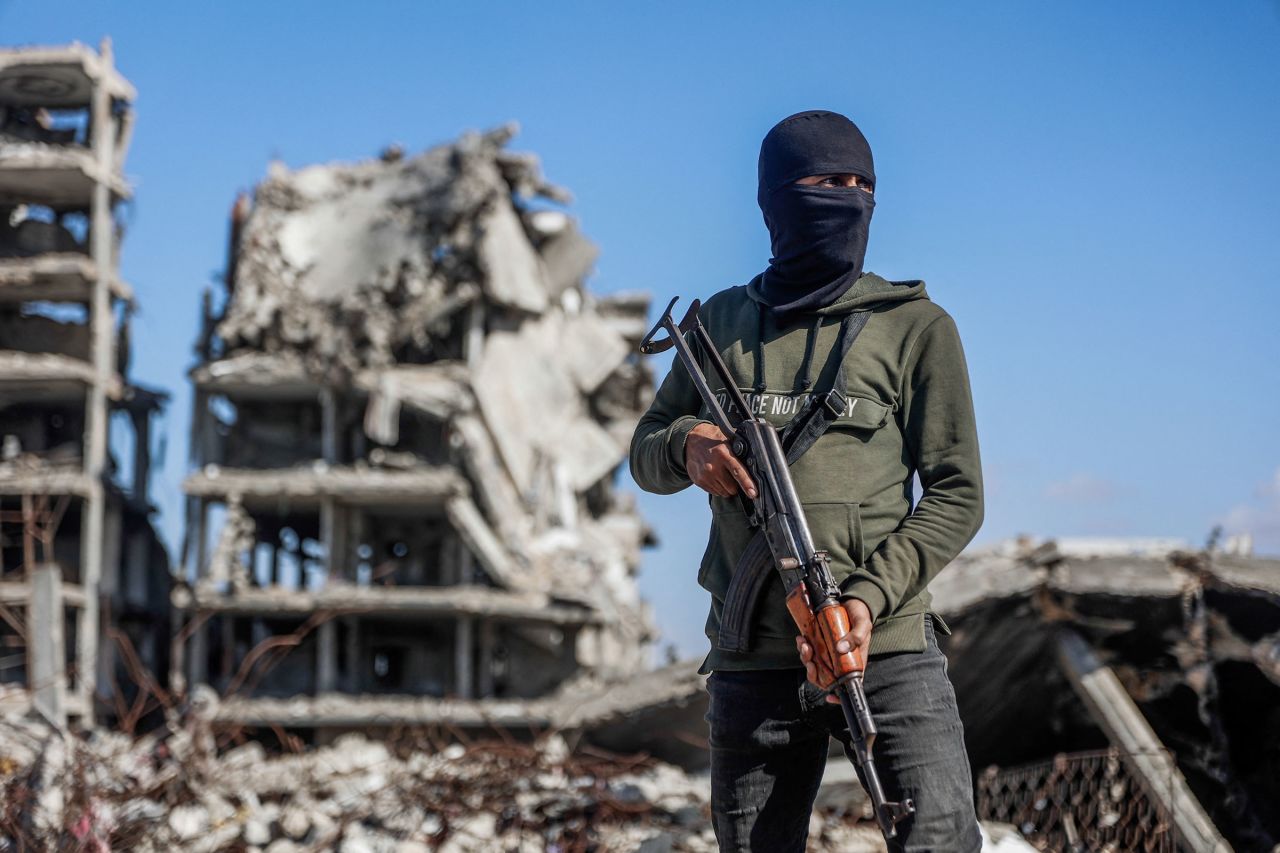
A Hamas militant stands guard as Egyptian workers and members of the International Committee of the Red Cross (ICRC) search for the last two remaining bodies of Israeli hostages under the rubble of the Jabalia refugee camp, Gaza, on December 1.
Hamas’ agreement to disarm in Gaza constitutes a major breakthrough in the group’s years-long conflict with Israel – but one that remains fraught with uncertainties
This is “a major compromise” for Hamas, said Muhammad Shehada, an expert on Gaza and a visiting fellow with the European Council on Foreign Relations, adding that the militant group would not have publicly agreed to it if it didn’t have sufficient guarantees from mediators that its own conditions will also be met
Hamas insists the deal is contingent upon Israel upholding its obligations under the US-led plan signed in October, which include Israel withdrawing its troops to the so-called Yellow Line
Why now?Firstly, Israel is heading toward a new election cycle, where Israeli Prime Minister Benjamin Netanyahu is likely to keep, if not ramp up, the Gaza front to garner support, Shehada said
Secondly, Hamas may have been disappointed to see Iran fail to include Gaza by name in its ceasefire negotiations with the US, but instead included Lebanon. This left the group feeling “like they were left to fend for themselves,” the expert said
Finally, Hamas has been losing support in Gaza among Palestinians who have now endured nearly three years of war, and has been unable to pay the majority of government employee salaries there
But while Hamas felt it was time to agree to this concession, several obstacles remain
Shehada said that the biggest obstruction to the deal will likely be the Netanyahu government, which is likely to oppose any withdrawal of troops or reconstruction of the enclave before the elections
A smaller but potentially significant obstacle is the hardline factions among armed groups in Gaza, Shehada said. They may demand stronger incentives to surrender their weapons
The Iranian body tasked with overseeing passage through the Strait of Hormuz said today that Iran-approved transits through the critical waterway can gradually return “once stability and calm are restored.”
“Due to the continued aggressive actions of US military forces in the region, transit through the Strait of Hormuz is not currently possible,” the Persian Gulf Strait Authority (PGSA) posted on X
But US Central Command disputed Tehran’s claims, saying later on Friday the waterway remains open for commercial vessel transit. “Iran does not control it. Thousands of ships have sailed through the international waterway over the past four months,” CENTCOM posted on X
Earlier this year, Iran launched the PGSA to exert its control over the movement of ships through the strait, introducing fees and permits. Tehran has frequently attacked vessels that do not adhere to its instructions
As a result, traffic through the vital oil chokepoint remains low. Only five vessels passed through the waterway on Thursday, according to marine traffic data. All five ships crossed
The Trump administration on Wednesday imposed sanctions on two Iranian firms accused of supporting a protection racket in the Strait of Hormuz
This reporting has been updated with CENTCOM’s post
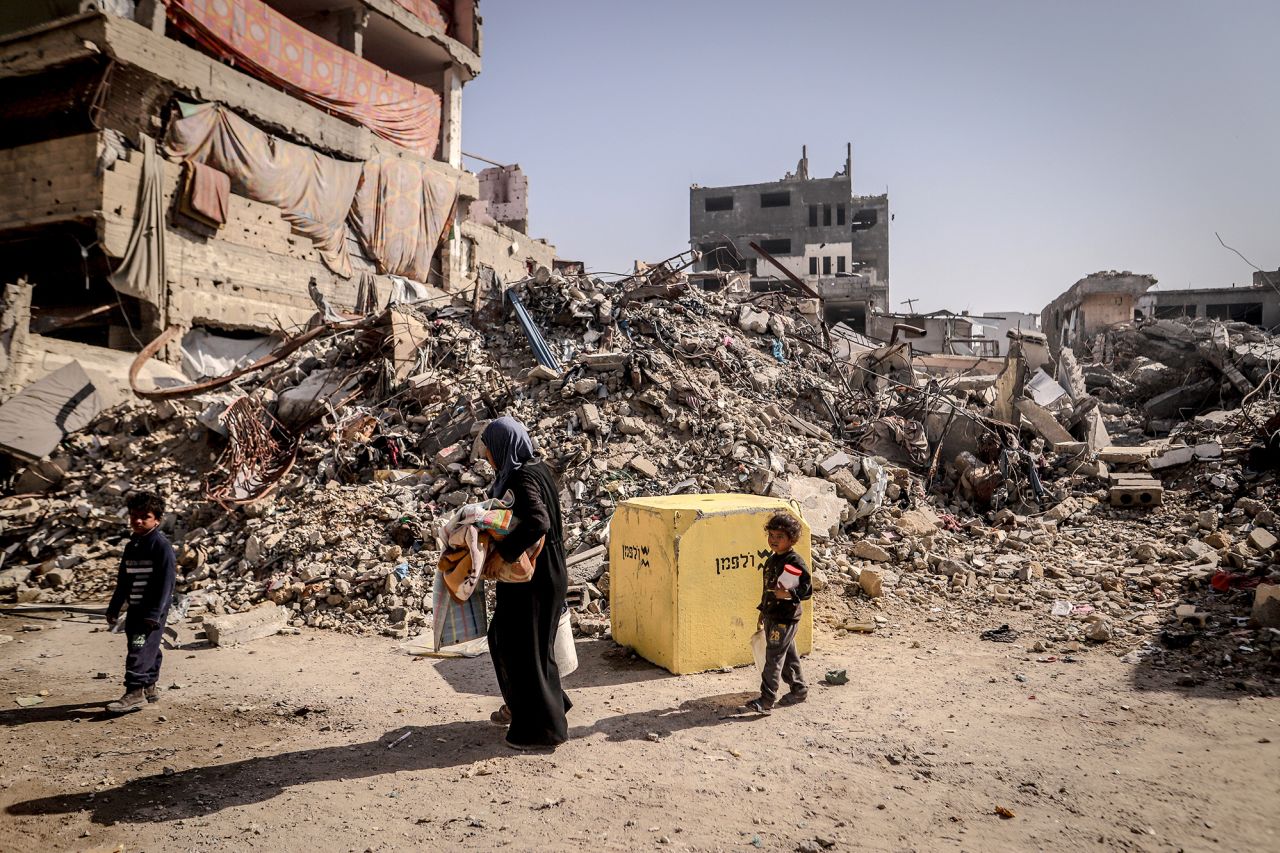
Palestinian families set out for areas considered safer after the Israeli army expanded the so-called ‘Yellow Line’, by placing new concrete blocks and carrying out attacks in the area in violation of the cease-fire, in Gaza on November 21, 2025.
Israel won’t withdraw its forces from the current “Yellow Line” before the disarmament of Hamas, an Israeli official said Friday, in Israel’s first comment on the agreement announced by US President Donald Trump
“In response to various reports this morning regarding diplomatic progress in the Gaza Strip, Israel has reiterated that there will be no withdrawal of IDF forces from the current ‘yellow line’ without the genuine disarmament of Hamas,” the official said
It comes after a Hamas official told CNN that it had agreed to disarm based on Israel upholding its obligations under the October ceasefire agreement, including withdrawing its troops to the Yellow Line
The Yellow Line is a demarcation line that Israeli troops withdrew to under the October 2025 ceasefire agreement. It encompassed roughly 53% of Gaza, but the line has been shifting towards the Mediterranean Sea as Israel expands its control, cramming Gaza’s population into a shrinking strip of land
Trump said Thursday that a historic agreement to secure the disarmament of Hamas had been reached, a critical step in implementing a multi-phase peace plan to end the war in Gaza
Several Palestinians were wounded by Israeli attacks on northern and southern Gaza Friday, according to local officials in the enclave, where people have faced near-daily bombing since Israel and Hamas signed a fragile truce in October
An attack on the Sheikh Radwan neighborhood, in northern Gaza, injured a man and a child, Dr. Muhammad Abu Salmiya, the director of Gaza’s Al-Shifa Hospital, told CNN. Footage from the hospital courtyard showed several men carrying a limp girl onto a stretcher
Further south, an attack injured one man in Khan Younis, according to Gaza’s Civil Defense
CNN has reached out to the Israeli military for comment
At least 1,219 have been killed by Israeli attacks since October 11, the Palestinians Ministry of Health told CNN on July 31. Of those, 287 were children, the health ministry said
Nearly one child has been killed in Gaza every day on average since October, according to a CNN tally of health ministry figures
Gaza peace agreement:The latest attacks come hours after the White House claimed a diplomatic breakthrough on a ceasefire deal between Israel and Hamas. On Friday, senior Hamas negotiator Ghazi Hamad told CNN that the group’s disarmament under a US-led ceasefire deal was dependent upon Israel upholding its obligations – including the cessation of attacks on Palestinians
CNN’s Eugenia Yosef contributed reporting
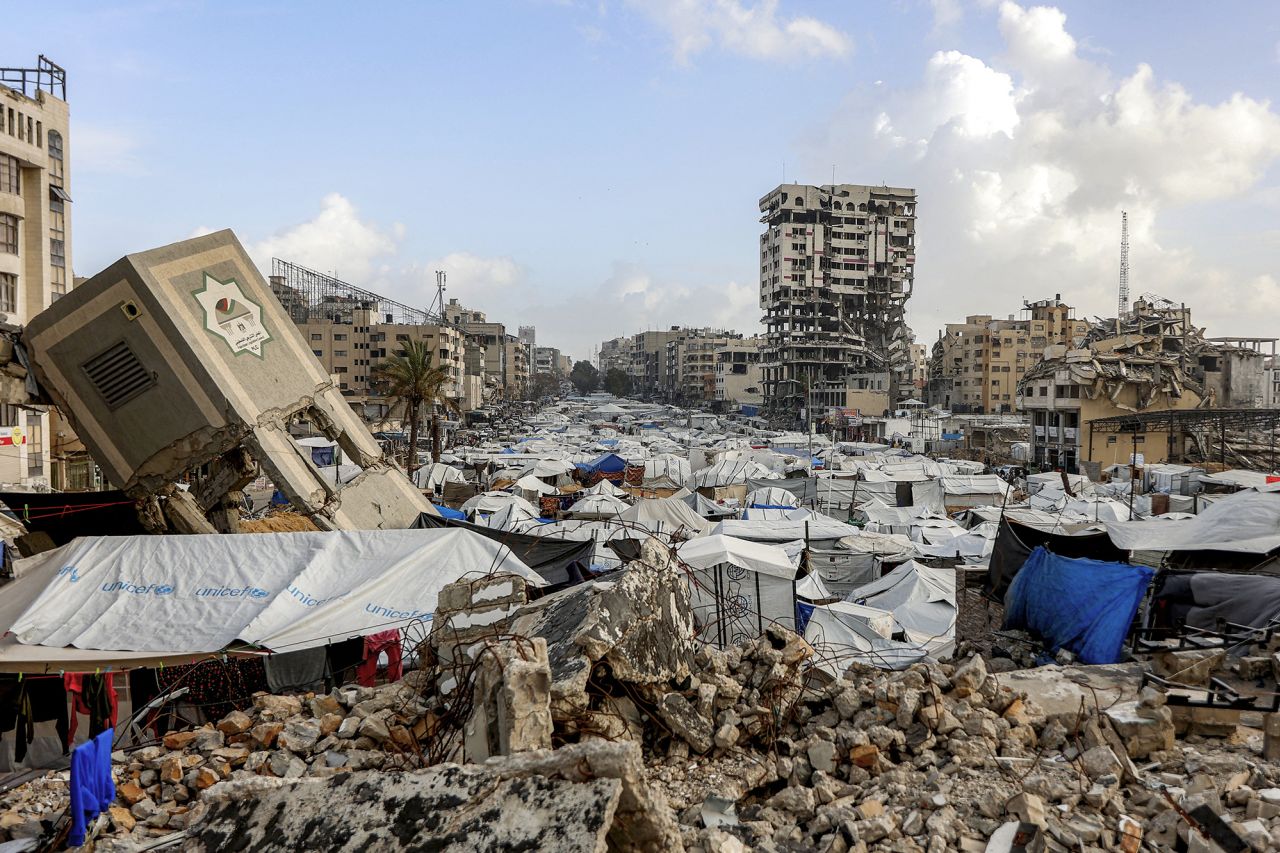
Tents and shelters are pictured at a camp for people displaced by conflict in Gaza City on January 28.
The war in Gaza has shifted from an intense Israeli military campaign into a fragile ceasefire framework and an evolving diplomatic process, paving the way for US President Donald Trump’s announcement that an agreement to secure the disarmament of Hamas has been reached
How it began:On October 7, 2023, Hamas militants killed around 1,200 people and take more than 250 hostages in surprise attacks on Israel. This prompted Israel to declare war and launch an intense military campaign on the Gaza Strip, resulting in the deaths of tens of thousands of Palestinians. Hamas leader Yahya Sinwar, identified by Israel as a chief orchestrator of the October 7 attacks, was killed by Israeli forces in October 2024
Temporary truces:In November 2023 and January 2025, pauses in fighting saw Israeli hostages released in exchange for Palestinian prisoners, before Israel and Hamas agreed to the first phase of a durable US-brokered ceasefire plan including hostage and prisoner releases and a partial Israeli withdrawal, in October 2025. On October 13, 2025, the final remaining living Israeli hostages returned home

Released Israeli hostage Avinatan Or greets well-wishers upon arriving at Beilinson Hospital in the Rabin Medical Centre in Petah Tikva in central Israel on October 13, 2025.
Where things stand on the ground: However, months on from the fragile ceasefire,little appears to have changed in Gaza. Both parties have accused each other of violating the terms — which envision the eventual withdrawal of Israeli soldiers, the full disarmament of Hamas, the deployment of an international force and a new Palestinian governing body
The situation in the enclave remains volatile, and ongoing Israeli operations have resulted in the bloodshed of further Palestinians. At least 1,214 Palestinians have been killed by Israeli attacks since the ceasefire was implemented on October 11, the Palestinian Ministry of Health said on July 30. Meanwhile, a new generation of Palestinians say they are psychologically scarred from the horrors of the present and paralyzed by the task of building the future
The announcement that Hamas has agreed to give up its arms — subject to Israeli actions — could mark a crucial turning point in implementing the multi-phase peace plan
CNN’s Sana Noor Haq, Ibrahim Dahman, Sarah Tamimi and Eyad Kourdi contributed reporting
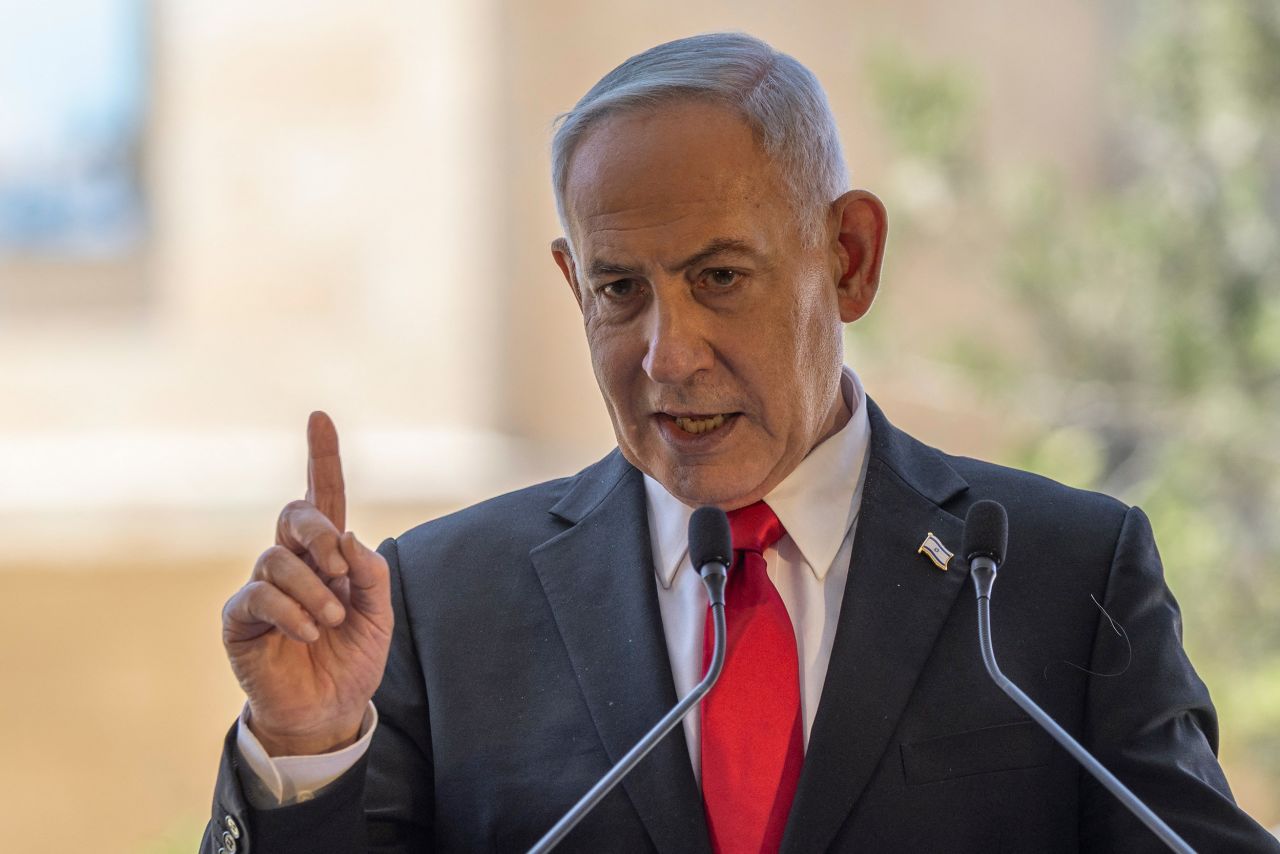
Israeli Prime Minister Benjamin Netanyahu speaks during a ceremony in East Jerusalem on July 5.
Israeli Prime Minister Benjamin Netanyahu has so far remained publicly silent following US President Donald Trump’s Thursday announcement of a new agreement aimed at disarming Hamas in Gaza. But the developments triggered sharp political reactions in Israel, heading into October elections
While Netanyahu has not issued an official response, hours before Trump’s announcement, an Israeli official rejected key elements of the reported framework, stressing that “complete disarmament” of Hamas remained a preconditions for any process. There would be no Israeli withdrawal from the Gaza “yellow line,” the official said, until demilitarization is completed
The muted response did not extend to Netanyahu’s right-wing coalition, who voiced strong opposition to the agreement. National Security Minister Itamar Ben Gvir rejected any agreement reached “through a third party,” insisting the only acceptable outcome remains Hamas’ destruction. Religious Zionist party minister Orit Strouk described the agreement as “dangerous.”
Despite the criticism, Israel has recently advanced elements of the broader Trump 20-point Gaza plan. The security cabinet approved on Sunday the deployment of a limited international stabilization force – 200 troops from Morocco and Uganda – to enter a pilot zone in Rafah. But the Israeli official described it as an initial and limited measure, stressing that any further deployment would require specific approval from Israel
An Israelipublicly oppose the disarmament agreement, as he “calculates that Hamas will ultimately violate its terms and not uphold its commitments.” Thehead of October’s elections
Opposition leader Gadi Eisenkot, currently Netanyahu’s chief electoral challenger, criticized Netanyahu’s silence, accusing him of concealing the deal from the public, saying it “raises serious questions as to whether Israel is a partner to it, or whether, once again, an agreement is being imposed on Israel without its involvement.”
