

US hits dozens of targets in Iran overnight as peace efforts under threat
Central Command says strikes aimed at diminishing Iranian military while mediators say talks are continuing
Middle East crisis – live updates
The US struck Iran overnight and Tehran retaliated at US allies in the region, reigniting the low-intensity, tit-for-tat war as mediators struggled to pull the two countries back to the negotiating table
The US carried out overnight strikes on Iran – the first inmore than five days – hours after Donald Trump vowed to hit the country “very hard” following Tehran’s targeting of a base in Jordan that hosts American troops
The latest attacks come after a days-long pause in violence between the two sides. The resumption of fighting and the stalling of the diplomatic process has brought the war into uncharted territory and prompted concerns of a renewed regional war
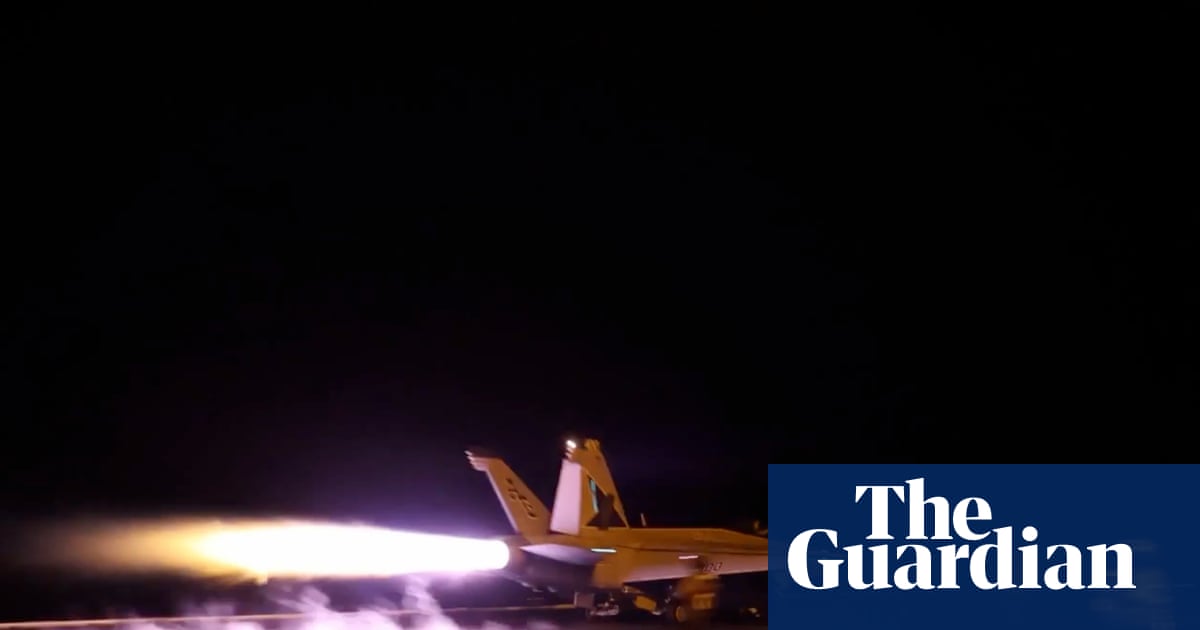
US Central Command said it hit dozens of Islamic Revolutionary Guard Corps (IRGC) targets in Iran as part of a “heavy wave of strikes”, including military command centres and missile and drone facilities, in a two-hour wave of strikes
Map of attacks across Middle East since 7 July
“The strikes aimed to further diminish threats posed by Iran and its proxies to American forces, commercial shipping, and neighbouring Gulf countries,” it said
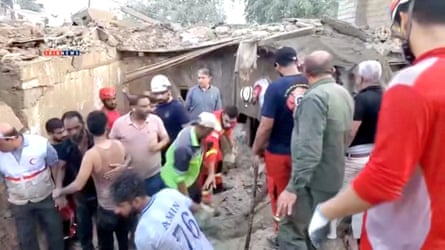
Iranian state media said three people were injured in attacks on the island of Qeshm, in the strait of Hormuz, and that explosions were also reported in Khuzestan province, to the north-west. The IRGC said three of its members were killed by US strikes in the north-western province of Zanjan
Jordan reported incoming missiles for the second day in a row, with no reports of casualties, while Kuwait accused Iran of carrying out a strike that hit a building, killing one person. Both strikes are believed to have been part of an Iranian retaliation against the US attacks
Mediators insisted talks were continuing despite the renewed exchange of strikes, with the Pakistani foreign ministry spokesperson, Tahir Andrabi, saying they were doing their “utmost to bring all parties back” to the negotiating table
The renewed strikescame after the US partnered with Saudi Arabia to strike Iran-backed militias in neighbouring Iraq on Wednesday, killing at least 20 fighters and six Iranian advisers. The attacks reignited the armed conflict between Iran and the US and extinguished hopes that diplomacy would be given space to breathe
US-Saudi strikes in Iraq push region into ‘uncharted territory’, analysts warn
Read more
Elsewhere, drone strikes led to fires on two natural gas vessels at the Egyptian gas import hub at the port of Damietta, according to the British maritime security firm Ambrey. The Egyptian government confirmed that a drone attack ignited the blaze, but it was not immediately clear who was responsible for the strikes on a US-owned floating storage facility and a Greek-owned tanker. No injuries were reported and the port remained operational
It was the first time Egypt has been attacked since the Iran war started in late February and signalled a potential widening of the conflict.The Iran-allied Houthi rebels in Yemen said they were not responsible

Asked during an Oval Office event if Iran was behind the strikes on the natural gas vessels, Trump responded: “It’s a little more of the same.”
“In the meantime, we’re going to be hitting them very hard because it’s our turn to hit them,” he added
Analysts said the flare-ups on multiple fronts after several days of relative calm had pushed the region into “uncharted territory”. They also underscored the difficulty of winding down a five-month conflict that has jolted the world economy and which remains unpopular among Americans
The fighting was also likely to add to concerns that the US is further drawing down its already diminished stockpiles of sophisticated munitions needed to defend its bases and allies
Wednesday’s joint US-Saudi strikes on Iraq came after Riyadh had accused Iraqi militias of firing drones against its oil facilities. An umbrella group of Iraqi militias initially denied the allegations
The Popular Mobilization Forces, a coalition of primarily Shia Iranian-backed armed groups that is officially under the command of the Iraqi military, said at least 20 fighters were killed and 32 wounded in the overnight strikes
Iran’s deputy governor for political, security and social affairs in Markazi province told Iranian state media that four advisers from Tehran were also killed
The coalition joined the fight against the Islamic State group after it seized large sections of Iraq in 2014. The Iraqi government later designated the coalition as an “independent military formation” within the armed forces, but the militias have significant autonomy and some have attacked US facilities
Before the latest eruption, mediators had expressed optimism about bringing the US and Iran back to the negotiating table. An interim agreement collapsed in recent weeks over renewed fighting in the strait of Hormuz
The renewed hostilities sent oil prices spiking. Brent crude, the international standard, jumped 7.3% to more than $88 a barrel
Saudi Arabia is also locked in a renewed conflict with the Houthis. The Iran-backed militants have declared a blockade of Saudi shipping that could choke off another crucial Middle East trade route, the Bab el-Mandeb strait from the Red Sea into the Gulf of Aden
On Wednesday, the Saudi defence minister, Khalid bin Salman, met Trump and the US vice-president, JD Vance, the Associated Press reported. The Saudi decision to conduct joint strikes with the US was meant to send a message to Iran that it was displeased with strikes on its energy facilities, but the kingdom still preferred negotiations rather than a return to war
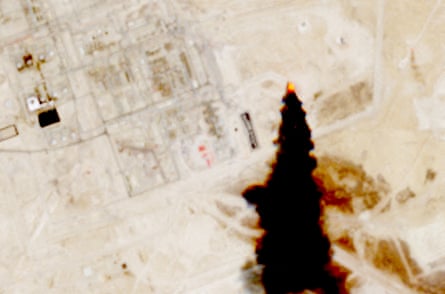
On Monday, the Houthis said they had launched drones targeting oil facilities used to transport oil across Saudi Arabia to the Red Sea port city of Yanbu, a key bypass for Saudi exports blocked by Iran’s chokehold on the strait of Hormuz
The rebels said the attack was in response to a Saudi drone they said had breached Yemen’s airspace
Explore more on these topicsShare
Reuse this content
