

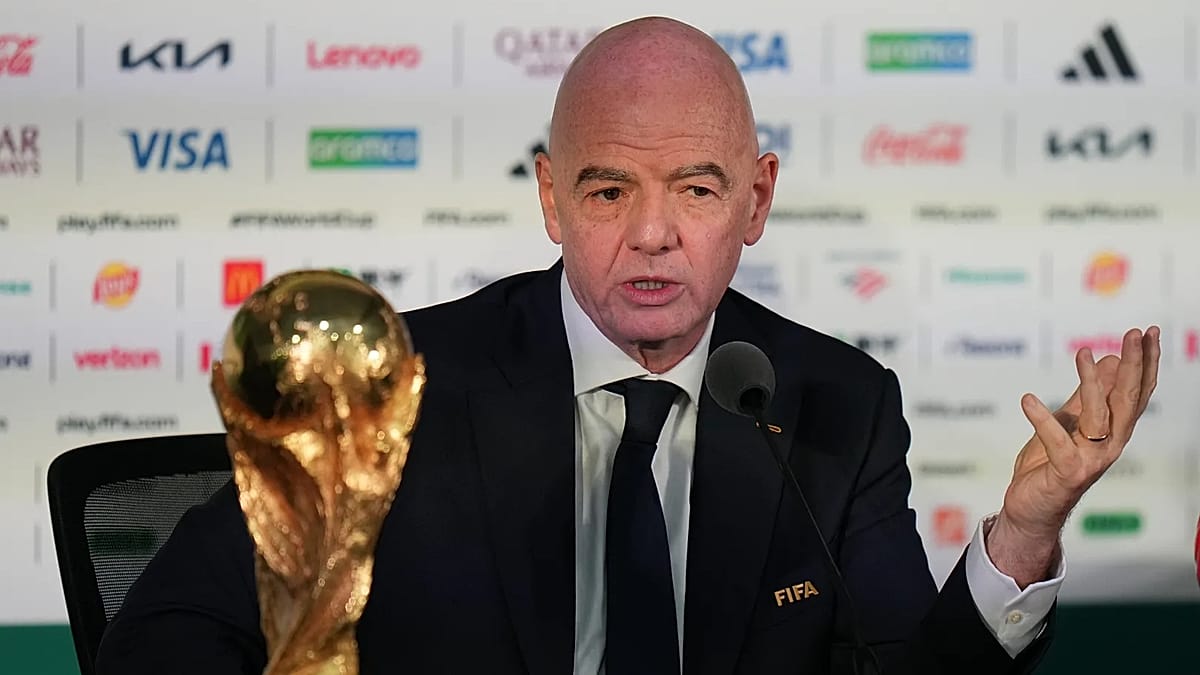
UEFA says the World Cup “cannot be treated as an investment product” and has threatened to pull its national teams from FIFA competitions unless the proposal is withdrawn
The Union of European Football Associations (UEFA) announced on Thursday that it would boycott future men’s and women’s World Cups in response to FIFA President Gianni Infantino’s plan to allow private investment in its competitions
ADVERTISEMENT
ADVERTISEMENT
In a statement issued after an emergency meeting of its 55 member associations, UEFA “unanimously and unequivocally” rejected FIFA’s proposal to launch a new World Cup spin-off. The plan involves selling stakes of up to 20% to external investors, including Joshua Kushner, whose brother Jared is US President Donald Trump’s son-in-law
The World Cup “cannot be treated as an investment product,” the statement reads
“National associations around the world are now presented with an ultimatum: accept the irreversible capture of football’s greatest competitions or bear the consequences,” the statement said
UEFA added that no national team from its member associations would take part in any FIFA competition “for so long as these proposals remain alive”, unless FIFA abandons the plan in its entirety and provides binding assurances that it will never again open its governance or competitions to private ownership
UEFA believes that under Infantino’s proposal, commercial pressure from investors would spill over into sporting decisions, leading to an unprecedented change in the world of football
“Football’s future cannot be dictated by the expectations of those whose first duty is to maximise financial return,” the statement reads
Boycotts are not new in the history of the World Cup
England snubbed the first three editions (1930, 1934 and 1938), believing itself superior to the rest of the footballing world
African countries boycotted the 1966 World Cup by withdrawing from the qualifying competition in protest at FIFA’s allocation of places, while the Soviet Union refused to play a qualifying match against Chile after Augusto Pinochet’s military coup, giving up the chance to qualify for the 1974 tournament
However, a coordinated European withdrawal would be an unprecedented move. It would dramatically escalate the conflict with FIFA and would have major consequences for players, broadcasters and sponsors
UEFA is FIFA’s most influential confederation, both politically and financially, and its 55 member associations represent more than a quarter of FIFA’s 211 members
European national teams are arguably the most valuable asset for FIFA, having won 13 of the 23 men’s World Cups and four of the nine women’s World Cups so far
This article is being updated
Go to accessibility shortcuts
