

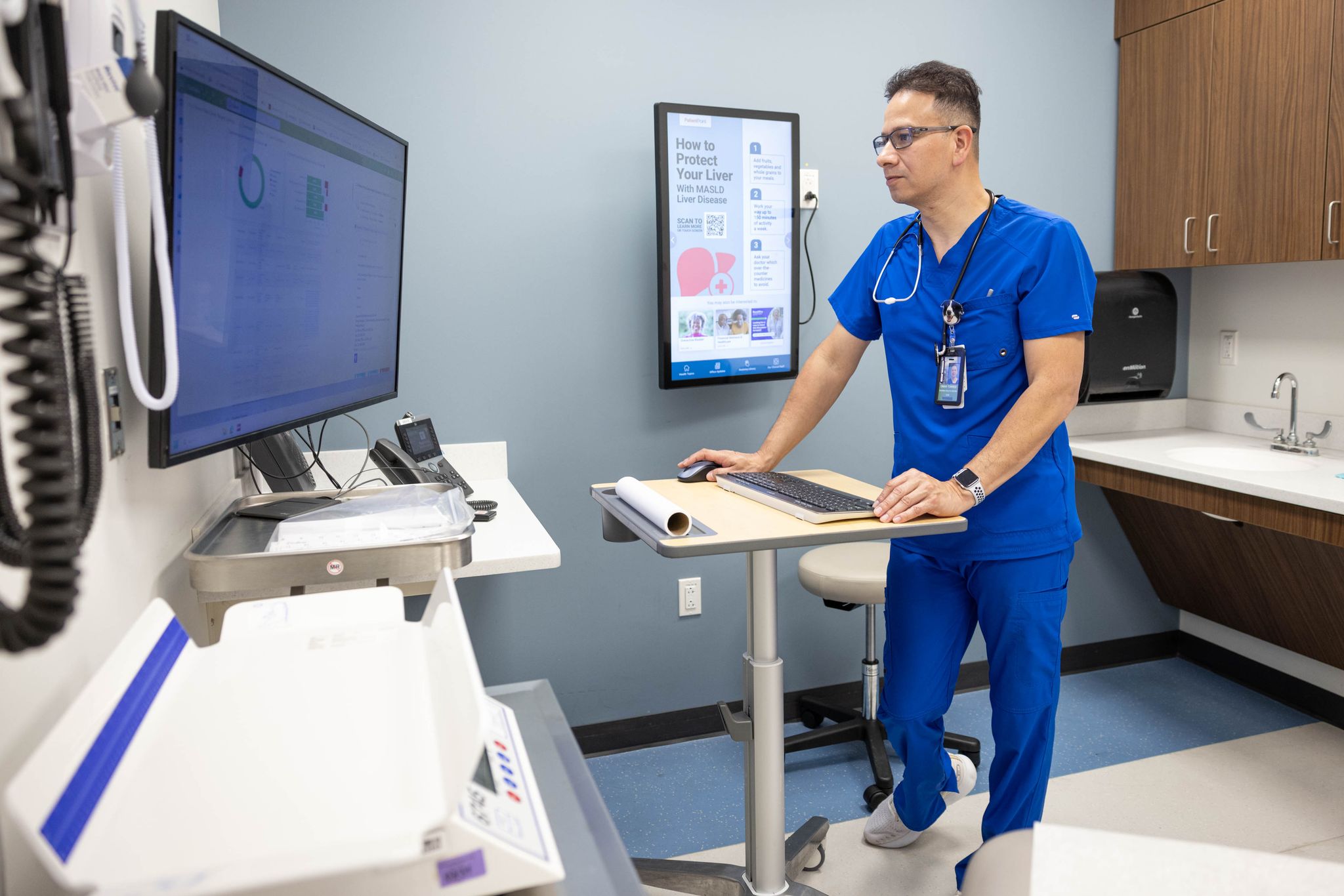
Nearly 1.3 million people live in Collin County, one of the fastest growing counties in the country. Yet, unlike the neighboring Dallas and Tarrant counties, it doesn’t operate a public hospital or hospital district.
Instead, residents rely on a network of private hospitals, nonprofit partnerships, indigent care programs, and in some cases, nearby public hospitals like Parkland Health in Dallas.
One reader asked Curious Texas, “Why does Collin County not have a public hospital?”
Article continues below this ad
Here’s what we found out
What is a public hospital?
Public hospitals are typically government-owned hospitals operated by a county, hospital district or public authority.
In Texas, public hospitals often serve as a region’s safety net healthcare system, providing care for uninsured and underinsured populations while also operating trauma centers and specialty programs. The biggest public hospitals in the Dallas-Fort Worth region are Parkland Memorial Hospital and John Peter Smith Hospital in Fort Worth.
Private hospitals, such as Baylor Scott & White and Medical City, also treat uninsured patients, as required under federal law, but their long-term and charity care options may differ from public hospital options.
Article continues below this ad
As Collin County continues to add thousands of residents each year, demand for healthcare grows alongside it. About 143,000 residents in Collin County lack health insurance, according to an April report from Texas Health Re
Under current population growth estimates, Texas Health Re
Katherine Yoder, Parkland’s vice president of government relations, said the Texas Constitution outlines the state legislature can authorize public hospital districts if approved through a local election.
The Texas Constitution also outlines how public hospitals or districts can determine taxes, bonds, governance and more.
Article continues below this ad
Public hospitals can be funded through a variety of methods. Parkland Health, for example, is funded through a combination of Dallas County property taxes, patient revenue and government programs like Medicaid supplemental funding.
Why doesn’t Collin County have a public hospital?
Despite not having one now, Collin County operated a public hospital several decades ago
“As the county experienced significant growth and the healthcare landscape evolved, the county hospital was purchased by a hospital system to expand healthcare services for the growing population,” a statement from Collin County Public Health said.
The former county-owned hospital was called Collin Memorial Hospital. In 1982, the Collin County Commissioners Court ordered the sale of the hospital, which was sold to American Medical International, according to the statement from Collin County Public Health.
Article continues below this ad
The sale was completed in 1983, which was the same year Collin County voters rejected a $16 million bond election to renovate Collin Memorial Hospital, according to a 2004 article from The Dallas Morning News
Since then, private hospital systems have expanded rapidly throughout the county, opening new hospitals and facility expansions alongside the rapid population growth.
Collin County is among the largest Texas counties without a public hospital or hospital district
What happens when uninsured or underinsured Collin County residents need healthcare?
Federal law requires hospitals to screen and stabilize anyone experiencing a medical emergency, regardless of their insurance or ability to pay, through the Emergency Medical Treatment and Labor Act.
Article continues below this ad
However, Yoder said accessing long-term medical care for patients without insurance can be more complicated, leading many to public hospital care programs.
For instance, many Collin County residents end up seeking care at Parkland.
The hospital saw at least 9,019 unique patients from Collin County in fiscal year 2025, making up nearly 3% of Parkland’s total patient count for the year, according to data from Parkland Health. In comparison, Parkland treated at least 282,399 patients from Dallas County
Parkland Health also saw thousands of patients from Tarrant, Denton, Kaufman, Ellis and Rockwall counties, according to the Parkland data.
“As the population is growing in these other counties, the needs of those counties are growing too, and we’re seeing that,” Yoder said.
Article continues below this ad
When seeking care in Collin County, eligible residents may have access to limited healthcare through the Texas Indigent Health Care and Treatment Act. In Collin County, residents over age 18 and who fall within 100% of the federal poverty level income may qualify for the county’s indigent care program.
More information about the program and eligibility can be found on the county’s website
The county also collaborates with Project Access Collin County, a community partnership connecting eligible uninsured residents with donated medical care.
Could Collin County create a public hospital?
Under state law, the county could call for an election where residents vote on creating a public hospital or hospital district.
At this time, no plans exist from Collin County to establish a public hospital or hospital district, according to the Collin County Public Health statement.
“Collin County is served by a strong network of hospitals and healthcare systems that provide residents with access to emergency care, inpatient services, specialty care and outpatient healthcare throughout the county,” the Collin County Public Health statement said.
Dallas County Judge Clay Jenkins said not all counties may have a need for a public hospital, but Parkland has been “a blessing for the people of North Texas.”
“Everybody’s needs are different,” Jenkins said. “For us, it’s definitely the way to go.”
Yoder said not all public hospitals have to be county-owned or levy property taxes, and some counties have expanded their indigent care program through hospital partnerships, a route Collin County could explore.
“There’s a role for every type of hospital out there,” Yoder said. “But there’s also a role for a public hospital, and we’re fortunate Dallas County elected to have one.”
