

Prisoners at Iran’s largest jail sew lips shut in hunger strike as executions soar
At least 1,500 protest after six men on drug-related charges put in solitary confinement before possible execution
Prisoners at Iran’s largest jail have sewn their lips shut as hundreds of them joined a mass hunger strike amid a surge in executions over drug offences and charges linked to anti-government protests
The hunger strike, involving at least 1,500 death row prisoners at Ghezel Hesar prison near Tehran, began two weeks ago after six men convicted on drug-related charges were transferred to solitary confinement before their possible execution
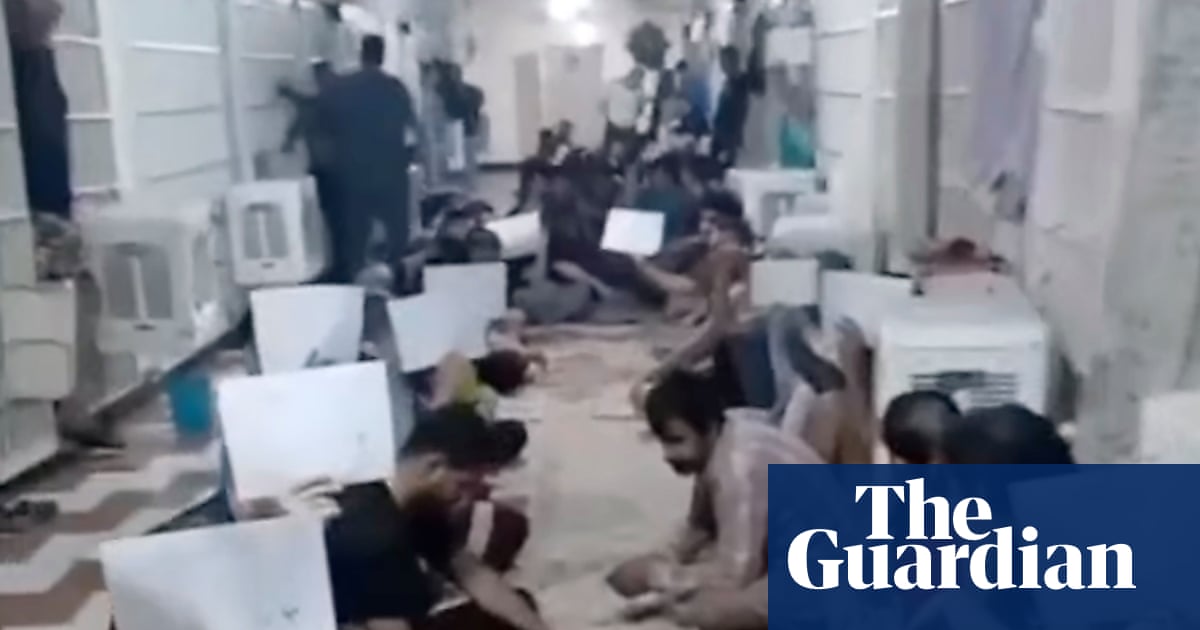
In a series of videos shared by rights groups in exile, prisoners are seen sitting in a prison hallway, holding placards reading “No to Executions” and chanting “Be our voice”
In one graphic video, a prisoner addresses the camera to say he is sewing his lips shut because, six days into the hunger strike, no prison official has responded to the protest
The footage then shows another prisoner off camera using a needle and thread to stitch the man’s lips together. In another video, a prisoner calls for urgent medical help for those whose conditions he says are deteriorating. “The guards will not open the door so we can take them to the prison infirmary,” he says
The protest is the latest act of defiance in the prisoner-led campaign against executions, which began in January 2024 and has spread across prisons in Iran amid a sharp rise in the use of the death penalty
There has been a huge spike in executions this year amid the war with the US, and families of those on death row and rights groups have raised the alarm over the worsening human rights crisis in the country
At the weekend, Donald Trump abruptly called off a two-week bombing campaign, but has threatened to restart strikes unless negotiations with Tehran make progress
Onelifts even slightly, the regime becomes more savage. They noted that a prisoner was executed on 6 April – the date that the US and Iran agreed to a ceasefire. “The intensity of executions has actually increased since the war supposedly ended.”
According to the Oslo-based non-profit Iran Human Rights (IHRNGO), at least 424 executions have been carried out this year, with hundreds more on death row. Most executions were handed down in drug-related cases, IHRNGO said
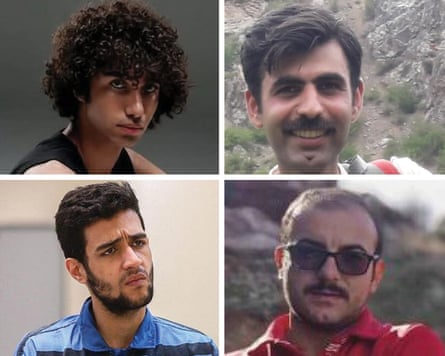
On Tuesday, officials hanged two men who were convicted of “waging war on God” over the deaths of two police officers during the anti-government protests. Twenty-six people linked to the January protests have been hanged this year
Mahmood Amiry-Moghaddam, the director of IHRNGO, said people sentenced to death for drug offences were among the most marginalised and voiceless prisoners on death row
“Last year alone, at least 795 people were hanged on drug-related charges, with almost no international reaction and hardly any domestic or social media campaigns to save them. By staging this protest, the prisoners in Ghezel Hesar are taking an extraordinary risk. They know that the authorities can execute them at any moment, yet they have chosen to raise their voices in the hope that the international community will finally hear them and increase the political cost of these executions,” he said.
According to Amnesty International, revolutionary courts, which have jurisdiction over national security and drug-related offences, lack independence and routinely impose harsh sentences, including death sentences, after grossly unfair trials
In a message relayed to the Guardian, one death-row protester said: “We are prisoners who turned to such mistakes simply to afford the basic necessities of life, and deeply regret our actions. Where else in the world is a human life taken for a first mistake?”
A similar protest was held at the prison in October 2025, when more than 1,500 prisoners went on a six-day hunger strike, leading to a rare visit by authorities. But activists say conditions have not improved since. Moein Khazaeli, a human rights lawyer at Dadban, a legal counselling centre for Iranian activists, said executions continue following unfair trials over drug-related offences
“In many cases, defendants do not have access to lawyers or a meaningful right to defend themselves. There are also cases in which charges are fabricated against people from ethnic minority or poor backgrounds,” Khazaeli said. “Death sentences issued by the revolutionary courts are a violation of human rights and even Iran’s own laws.”
Trump warns of return to ‘strong military action’ if Iran diplomacy fails
Read more
Executions have also surged among political prisoners and protesters arrested after the nationwide protests in January. Many of the death sentences were issued on the basis of confessions extracted under torture, Amiry-Moghaddam said
“The Islamic Republic has no legitimate justification for using the death penalty for drug offences. It is not required by Islam, and the authorities themselves have repeatedly acknowledged that executions have failed to deter drug trafficking or drug use. On the contrary, both drug trafficking and addiction have continued to rise over the years. Those sentenced to death are rarely major traffickers; they are typically the lowest-ranking couriers, recruited because of poverty for a small payment. Many are convicted solely on the basis of confessions extracted under torture,” he added.
Families of those on death row in Ghezel Hesar have staged protests outside the prison in support of those inside, but
Additional reporting by Patrick Wintour
Explore more on these topicsShare
Reuse this content
