

Health and medicine
Ancient cooking technique offers modern defense against dangerous food toxin
Findings from new ASU study suggest culturally familiar cooking practices could play important role in improving food safety
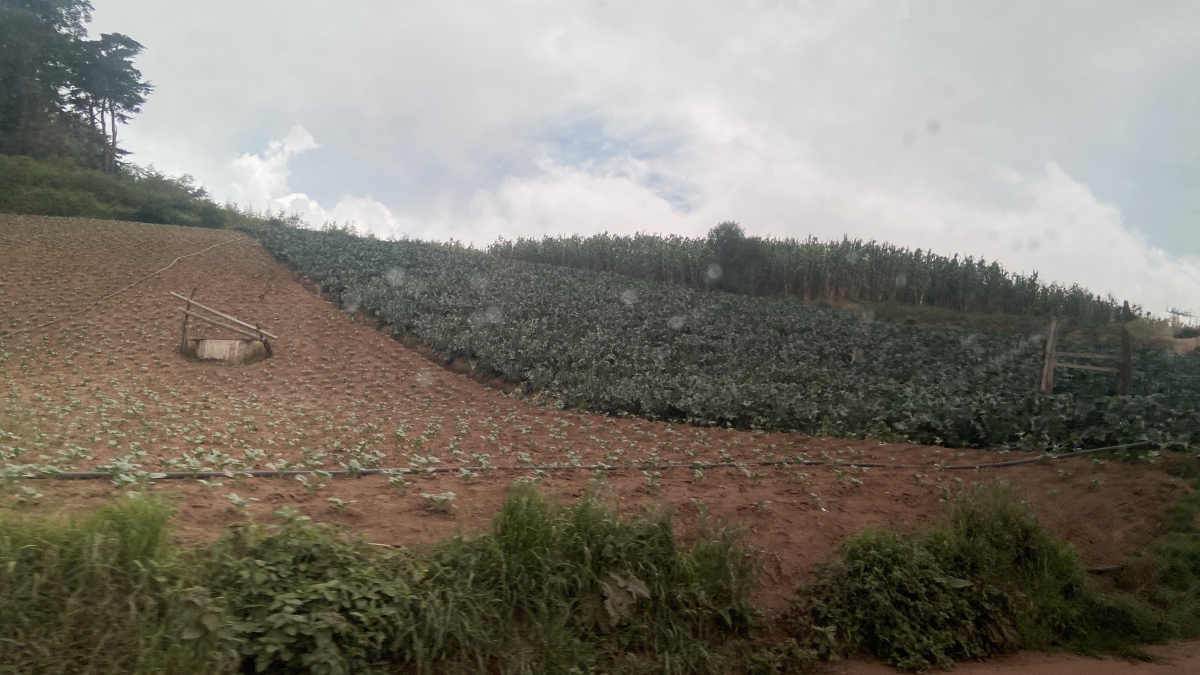
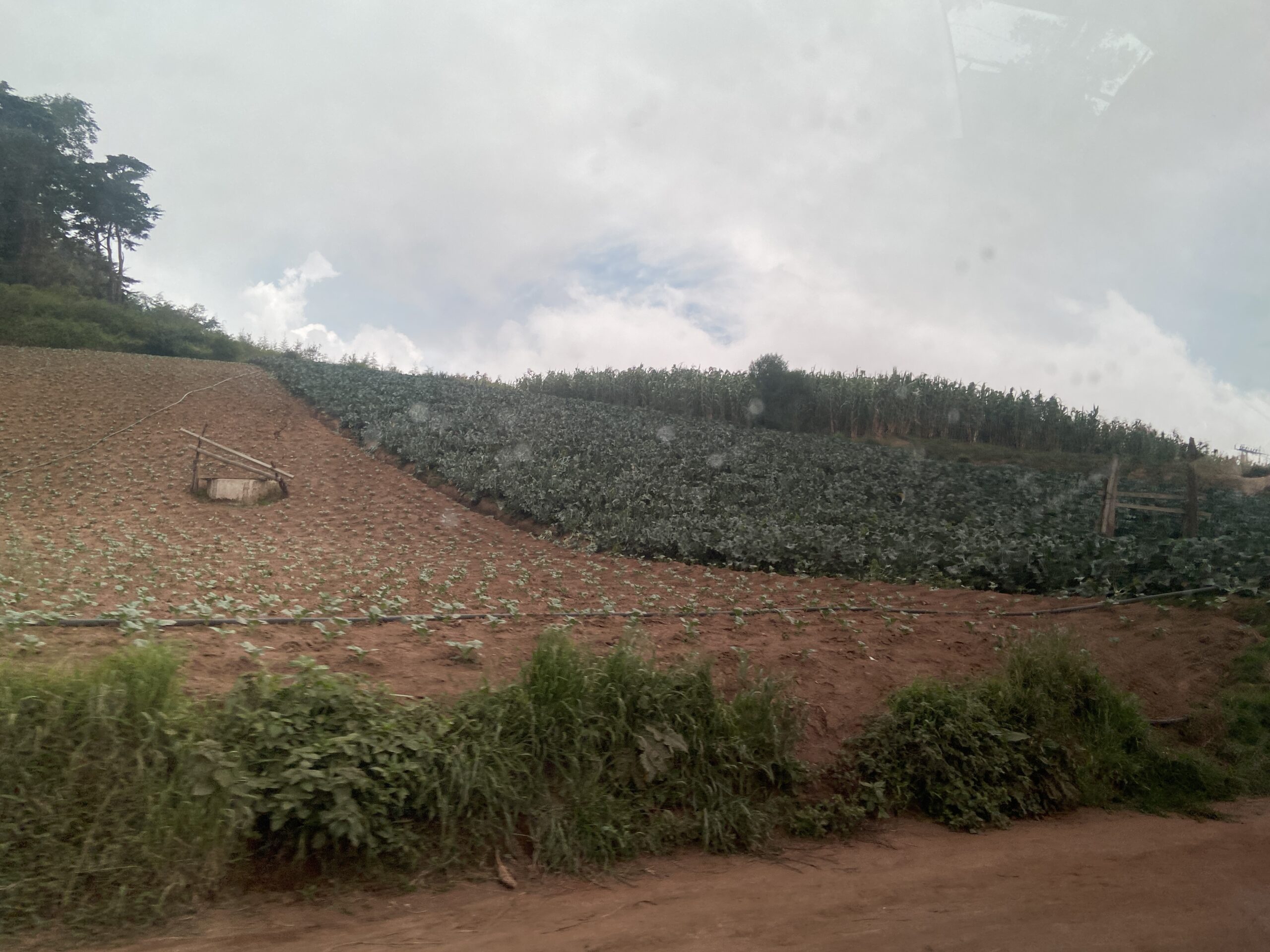
Cornfield in Guatemala. Photo by Hannah Glesener/ASU
Aflatoxin is one of the world’s most dangerous food toxins, having been linked to liver cancer, impaired immune function and chronic inflammation
As climate change creates warmer and more humid growing conditions in many agricultural regions, researchers expect aflatoxin contamination to become an increasing concern in many parts of the world, making practical, culturally accepted ways to reduce exposure even more important
For centuries, people across Latin America have prepared maize using a cooking technique known as nixtamalization, which has been shown to decrease aflatoxin concentrations. The process involves steeping corn in an alkaline solution, washing it and grinding it into dough
However, past studies tested aflatoxin concentrations differently, making it unclear which steps in the cooking process had the most impact on aflatoxin removal. Now, researchers at the Biodesign Institute Center for Health Through Microbiomes at Arizona State University have grounded that question in the actual way families cook, systematically recreating household methods to narrow down what drives this toxin concentration decrease
The research team, consisting of Hannah Glesener, Lee Voth-Gaeddert and Rosa Krajmalnik-Brown, recreated these methods used in rural Guatemala and showed that the process decreased concentrations of aflatoxin B1, a known human carcinogen, by 81%. The study’s findings suggest that culturally familiar cooking practices could play an important role in improving food safety
“Aflatoxin exposure is a major health issue because of its global prevalence and toxicity,” said Voth-Gaeddert, a research assistant professor in the center. “More than 50% of the world’s population are exposed to this Group 1 carcinogen.”
While countries with centralized agricultural systems, such as the U.S., invest heavily in monitoring and testing contaminated grain, those safeguards are often more difficult to implement in decentralized agricultural systems and local markets
“The problem is hard to solve because contamination often happens before food reaches the kitchen,” said Glesener, lead author of the study and a PhD student at ASU. “Within food systems where monitoring and control are limited, specific cooking techniques can actually help mitigate the toxin.”
To investigate whether traditional cooking practices could reduce aflatoxin exposure, the research team first surveyed households in Guatemala’s Western Highlands to document how families prepare maize. They found considerable variation in cooking times, steeping durations, calcium hydroxide concentrations (or culinary lime, the essential agent used in this process) and washing practices
The researchers then recreated those household methods under controlled laboratory conditions, systematically testing how differences in individual steps influenced aflatoxin removal
The results showed that every nixtamalization method tested decreased aflatoxin concentrations in the finished tortillas, but some cooking practices performed better than others
One of the most important factors was steeping time. Allowing maize to soak longer in the alkaline cooking liquid significantly improved toxin reduction. Maintaining sufficient calcium hydroxide concentrations also proved essential
“Those steps give the alkaline solution time to penetrate the corn kernels, loosen the outer layers, move a portion of the toxin into the processing liquid and break down the toxin,” Glesener said. “Multiple actions are happening simultaneously, leading to less aflatoxin in the final food product.”
Many people might assume that cooking tortillas at higher temperatures would destroy more of the toxin. Instead, the researchers found that extremely high cooking temperatures actually reduced the effectiveness of the process
“Simply cooking hotter appears to be slightly counterproductive,” Voth-Gaeddert said. “Extreme heat causes rapid moisture loss, cutting short the time the alkaline liquid has to draw out and break down the toxin, so more of it remains in the final product.”
Although nixtamalization substantially lowered aflatoxin concentrations, it did not eliminate them completely. The researchers emphasize that traditional cooking should be viewed as one layer of protection rather than a replacement for preventing contamination earlier in the food supply chain
“Nixtamalization is a good traditional cooking method that has the added benefit of helping decrease aflatoxin concentrations,” said Krajmalnik-Brown, director of the center and professor at the School of Sustainable Engineering and the Built Environment. “However, it will not completely remove the aflatoxin if it is present.”
For households purchasing food through larger commercial supply chains, the team noted that monitoring programs and food safety regulations already reduce much of the risk. But in communities where maize is grown, stored and sold locally, nixtamalization can provide an additional safeguard when combined with careful grain selection and proper storage
Beyond food safety, the researchers also examined how nixtamalization affected the nutritional composition of maize. They found that the process significantly increased calcium content while largely preserving other important nutrients, including iron, magnesium and protein.
The team also looked at thousands of naturally occurring compounds in the maize, identifying chemical changes that may contribute to antioxidant and other health-promoting properties of the final food products
The researchers chose to focus on Guatemala because the country faces well-documented challenges with aflatoxin contamination while maintaining strong traditions of nixtamalization.
“Guatemala presents a scenario that, if solved, can apply to much of the decentralized agricultural system problems faced in the U.S.,” Voth-Gaeddert said. “Across the communities we worked with, they represented a wide range of nixtamalization practices that capture much of the variability seen in the U.S. and globally.”
Looking ahead, the team hopes the findings can support practical community education rather than major changes to traditional food preparation. By building on cooking traditions that families have practiced for generations, these approaches could improve food safety without requiring expensive new technologies.
Biodesign Center for Health Through MicrobiomesFacultyHealthy LivingSDG 03 Good Health and Well-BeingStaffBioscienceTempe campusSchool of Sustainable Engineering and the Built EnvironmentHealth and medicineLatino / ChicanoFood and DiningBiodesign InstituteResearchKnowledge Enterprise
Biodesign Center for Health Through Microbiomes, Faculty, Healthy Living, SDG 03 Good Health and Well-Being, Staff, Bioscience, Tempe campus, School of Sustainable Engineering and the Built Environment, Health and medicine, Latino / Chicano, Food and Dining, Biodesign Institute, Research, Knowledge Enterprise
More Health and medicine

When people think of health care professionals, what often comes to mind are doctors and nurses. In reality, there are more than 250 distinct professions in the field. This summer, a new…
Read this story
Health careCommunity involvementCommunity partnershipsNursing
Regina Fields is a 35-year-old woman with an acute kidney injury. She’s short of breath, nauseous and having trouble urinating.The nurses taking care of Fields have questions about her condition, so…
Read this story
Artificial intelligenceInnovationHealth careTechnologyNursing
If your power goes out during a scorching summer day in the Valley, what will happen to your pets? Where will you sleep?The Health Observatory, a research initiative at Arizona State University, has…
Read this story
Healthy LivingHeat
