

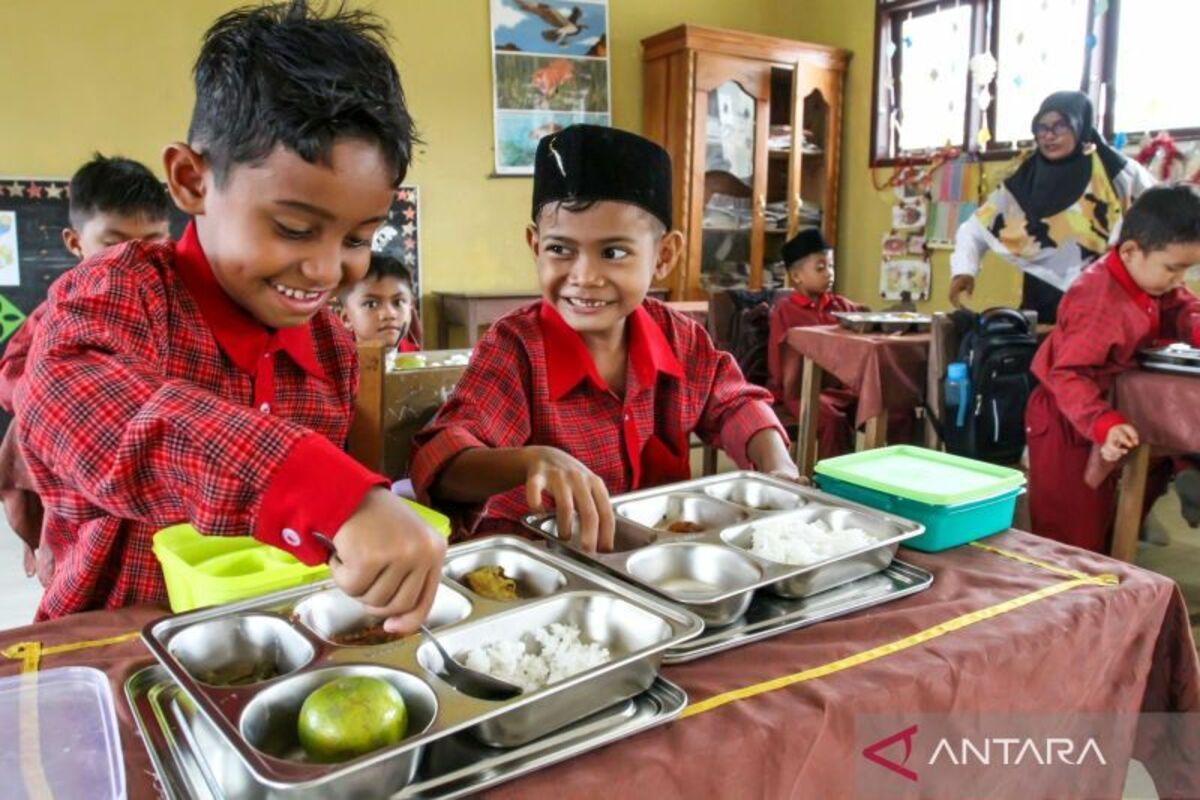
Indonesia is being forced to scale back President Prabowo Subianto’s flagship free school meal program as budget pressures mount amid growing public dissatisfaction following corruption scandals and food poisoning incidents
The retrenchment comes after Prabowo declared in January at an international conference in Switzerland that the program would soon surpass McDonald’s by serving more meals each day than the fast-food chain sells worldwide
The initiative aims to provide free meals to about 83 million people, including children under 5, kindergarteners, school students from elementary through high school, pregnant women and breastfeeding mothers
The program is intended to improve nutrition in Indonesia, an emerging economy that aims to become one of the world’s five largest economies by 2045
Although poverty levels have improved, about 20 percent of Indonesian children suffer from stunted growth, a condition in which children are shorter than average due to malnutrition
The government had aimed to provide meals to all eligible recipients within the year, with the number of beneficiaries having reached around 62 million by May
But the rapid expansion of the program has triggered a series of problems
Operations at about 28,000 meal centers were outy operators lacked adequate hygiene standards. According to the Network for Education Watch Indonesia (JPPI), at least 37,000 people have suffered from food poisoning linked to the program
At a public elementary school in East Jakarta, 77 of around 470 students fell ill after eating the meals in May
Mohamad Naufal Zaelani, a 12-year-old student who was hospitalized for four days, said the program had helped his family’s finances but that he was now “scared if I have to eat the meals again.”
The program’s initial budget for the current fiscal year was 335 trillion rupiah (about $18.6 billion), accounting for around 9 percent of Indonesia’s national budget
While the initiative has received support from some members of the public, critics say the scale of spending risks pushing other priorities aside
JPPI national coordinator Ubaid Matraji said issues including raising teacher salaries and renovating school buildings were being neglected
“We need to allocate education budget on three main priorities: teachers, school infrastructure and children who are out of school, not free meals,” he said
Concerns over the program intensified in June when the former head of the National Nutrition Agency, which oversees the initiative, and others were arrested on suspicion of corruption
They are suspected of awarding contracts to operate school meal centers to businesses with which they had ties and receiving illicit profits in return
The arrests came as worsening tensions in the Middle East put pressure on Indonesia’s national finances and concerns over inflation grew. The scandal triggered a series of protests calling for the program to be suspended
The government cut the program’s budget to 268 trillion rupiah in May, but it is now under pressure to make further reductions. One proposal under consideration is to remove high school students from the list of eligible recipients
With hygiene management becoming an increasingly pressing issue, the government is seeking to shift the program’s focus from expanding the number of meals served to improving their quality and the operation of meal centers
Ubaid said the government should halt the program, review its operations and prioritize children suffering from malnutrition, poor families and areas with nutrition problems
“The government has too high a target and wants the program running fast. It forgot to strengthen the system and governance,” Ubaid said
Related coverage:
