

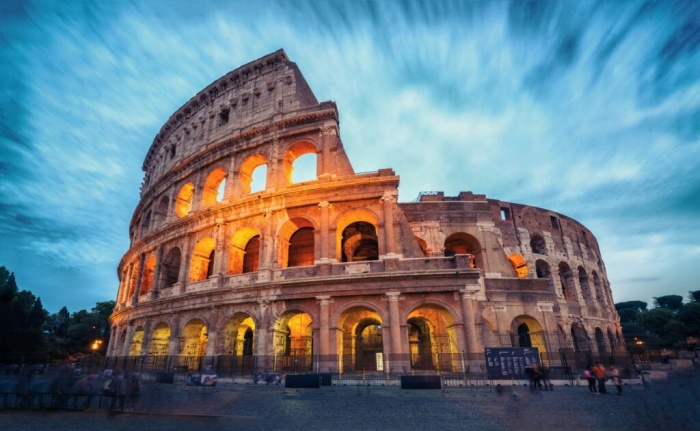
Interest in Italy’s rich history and cultural heritage is on the rise, with searches for “Pompeii tours”1 increasing by more than 5,000% over the last month, while searches for “UNESCO Italy”2 have risen by 80% in the past week alone
While Italy is known for its food, coastline and picturesque towns, it is also home to more UNESCO World Heritage Sites than any other country in the world, with 61 recognised cultural and natural landmarks3. From Rome’s iconic ruins and Pompeii’s frozen in time streets to Sicily’s Greek temples and Ravenna’s Byzantine mosaics, every region offers a different chapter of the country’s story
With this in mind, Heather Green, Head of Product at Citalia, has revealed her top destinations for travellers looking to experience Italy through its past. Showcasing both headline landmarks and hidden gems, the guide highlights where visitors can uncover centuries of Roman, Greek and Byzantine influence while exploring some of the country’s most captivating locations
Rome – Walk in the Footsteps of Emperors
As the former capital of the Roman Empire, Rome offers one of the world’s greatest journeys into the ancient past
Heather says: “One of the best ways to experience Ancient Rome is by walking through the Roman Forum and up to Palatine Hill early in the morning. According to legend, this is where Romulus founded Rome in 753 BC, and from the top you can overlook the very heart of the ancient city.”
Beyond its famous landmarks, like the Colosseum, Roman Forum and Pantheon, Rome is full of hidden history. Visitors can explore the underground levels of the Basilica of San Clemente or discover the remains of Emperor Nero’s lavish Domus Aurea. Even today, archaeologists continue to uncover ancient roads, temples and buildings beneath Rome’s streets, proving there is still more to learn about the Eternal City
Pompeii and Herculaneum – Italy’s Time Capsules
Preserved by the eruption of Mount Vesuvius in 79 AD, the UNESCO-listed Archaeological Areas Pompeii and Herculaneum remain among the most extraordinary archaeological sites in the world
Heather shares: “Pompeii gives you a rare opportunity to experience Ancient Rome beyond the history books. Walking through its streets, you gain a real sense of how ordinary Romans lived, worked and socialised nearly 2,000 years ago.”
Heather also recommends visiting nearby Herculaneum: “While smaller than Pompeii, Herculaneum is often overlooked. The city was buried by volcanic mud rather than ash, meaning wooden doors, furniture and intricate interiors have survived, offering an even more detailed glimpse into Roman life.”
Sicily – Where Ancient Greece Meets Italy
Long before Rome dominated the Mediterranean, Sicily was home to some of the ancient world’s most powerful Greek cities. Today, visitors can explore UNESCO World Heritage Sites including the Valley of the Temples in Agrigento, Villa Romana del Casale and Syracuse, while the spectacular Greek Theatre at Taormina continues to host performances more than 2,000 years after it was first built, with breathtaking views across Mount Etna and the Ionian coast
Heather says: “Sicily offers a fascinating blend of cultures and civilisations. One day you can be exploring ancient Greek temples, while the next you’re discovering Roman mosaics or Norman architecture. It tells the story of the Mediterranean like nowhere else.”
Many of Sicily’s ancient landmarks feature as part of Citalia’s Treasures of Italy small-group escorted tour, allowing travellers to discover the island’s rich history alongside expert local guides
Naples – The Ancient Gateway to Southern Italy
Often overlooked in favour of nearby Pompeii, Naples is one of Italy’s oldest continuously inhabited cities. Originally founded by the Ancient Greeks, the city’s UNESCO-listed historic centre contains layers of Greek, Roman and medieval history
Heather adds: “It’s one of the best places to understand how Ancient Italy evolved. I always recommend visiting Naples Underground, where you can walk through ancient Greek and Roman passageways hidden beneath the modern city, before exploring the National Archaeological Museum, which houses many of the artefacts recovered from Pompeii and Herculaneum.”
The city’s National Archaeological Museum allows visitors to admire world-famous mosaics, sculptures and frescoes at the Naples National Archaeological Museum, including pieces that once decorated the villas of Pompeii
Ravenna – The City That Preserved an Empire
While Rome tells the story of the Empire’s rise, Ravenna reveals what happened after its decline. The city’s UNESCO-listed Early Christian Monuments are renowned for their spectacular mosaics, considered some of the finest surviving examples anywhere in the world
Heather explains: “History lovers should spend a day exploring landmarks including the Mausoleum of Galla Placidia, famous for its deep blue, star-filled mosaic ceiling, and the Basilica di Sant’Apollinare Nuovo, whose mosaic-lined walls tell stories of emperors, saints and everyday life during the Byzantine era.”
Unlike many historic sites, Ravenna’s mosaics remain incredibly vibrant, allowing visitors to experience them much as they would have appeared centuries ago
