

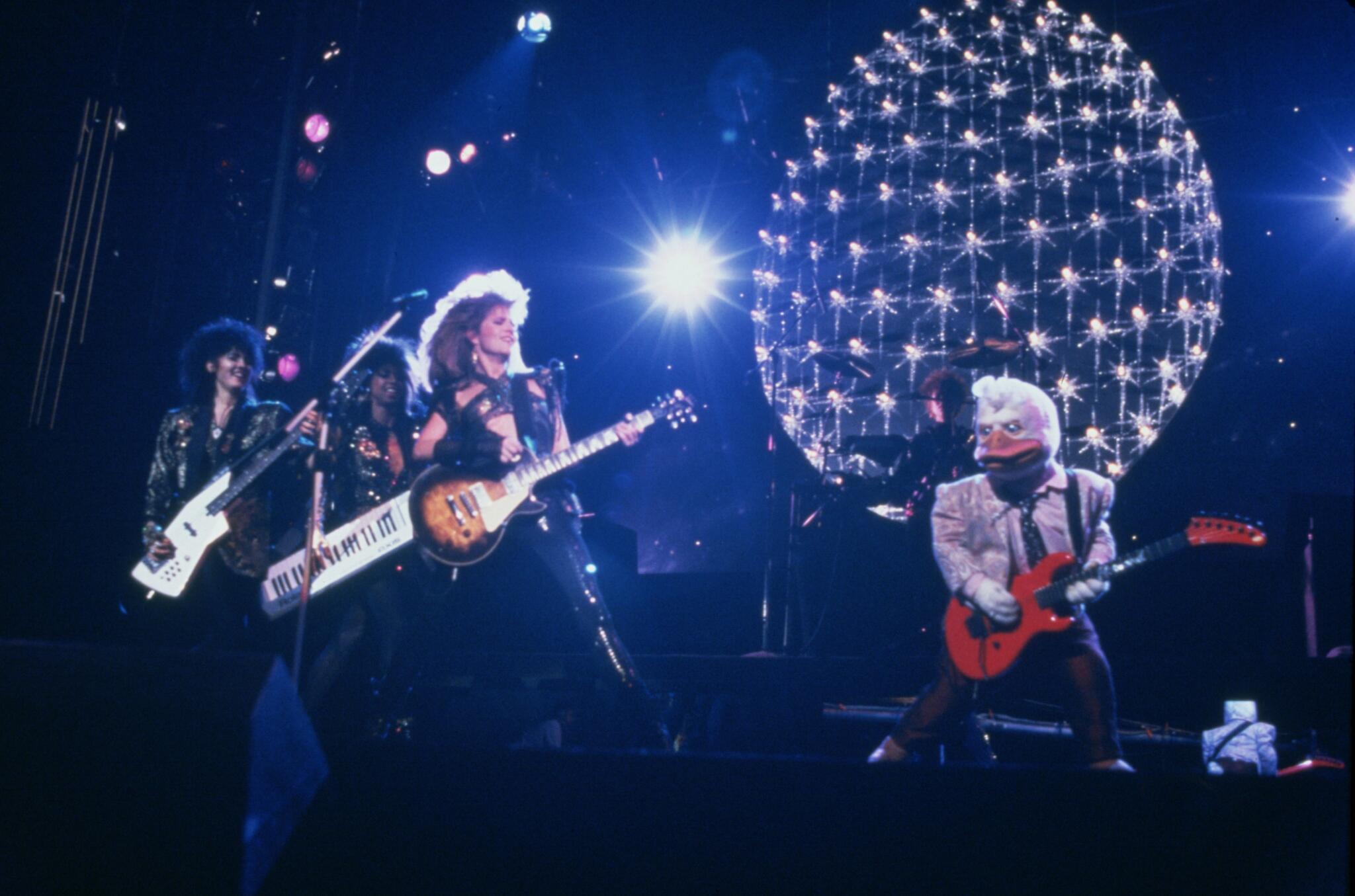
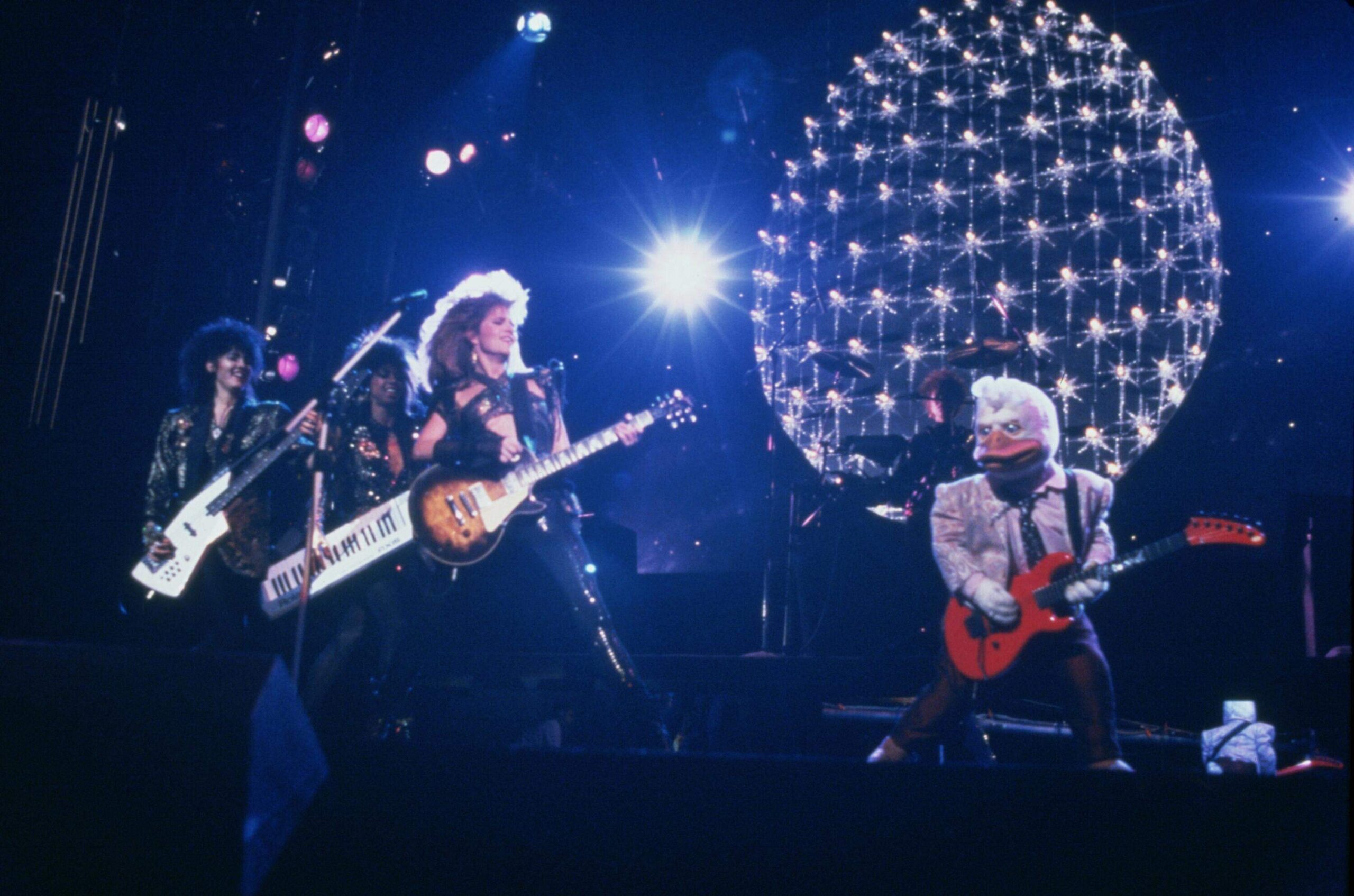
The mighty twin Philips Norelco DP-70 film projectors at the Somerville Theatre are busy these days, screening “The Odyssey” in 70mm all afternoon and evening in the venue’s massive, 840-seat auditorium. So we have to wait until after Odysseus gets home for things to get freaky. The Somerville’s robust repertory program goes nocturnal with “Midnight Specials,” keeping the large format film rolling into the wee hours of the morning with extremely rare 70mm presentations of George Lucas’ notorious 1986 mega-bomb “Howard the Duck” this Saturday, July 25, followed by the trippy, hippie bombast of Oliver Stone’s 1991 Jim Morrison biopic “The Doors” on Saturday, Aug. 1. From a rock star fowl to a foul rock star, these aren’t movies you’re going to see anywhere else, especially not on 70mm film.
When the Somerville showed “Howard the Duck” as part of the theater’s second annual 70mm and Widescreen Festival back in 2017, I hung around after the previous feature and watched the first reel — about as much as I could stand — just so I could say that I was present the last time “Howard the Duck” ever screened in 70mm. Yet bizarrely, the first feature film adaptation of a Marvel comic book has become something of a popular cult item on the revival circuit in recent years, perhaps because the movie is so thoroughly inexplicable.
The tale of a cigar-smoking, alien waterfowl ripped from his recliner and beamed to the mean streets of Cleveland by a malfunctioning interplanetary laser experiment was long a dream project of producer George Lucas. An avid fan of the comic, he hired his “American Graffiti” and “Indiana Jones and the Temple of Doom” writers Willard Huyck and Gloria Katz to bring it to the big screen, effectively ending their careers. “Howard the Duck” is such a baffling movie because during all those years of development, nobody seems to have decided what audience they were making the film for. This goofy, kid-friendly adventure keeps getting interrupted by lewd sex jokes and violent gross-outs. The confusion extends even to John Barry’s score, a hauntingly melancholy theme playing over the slapstick antics of a duck wearing people clothes.
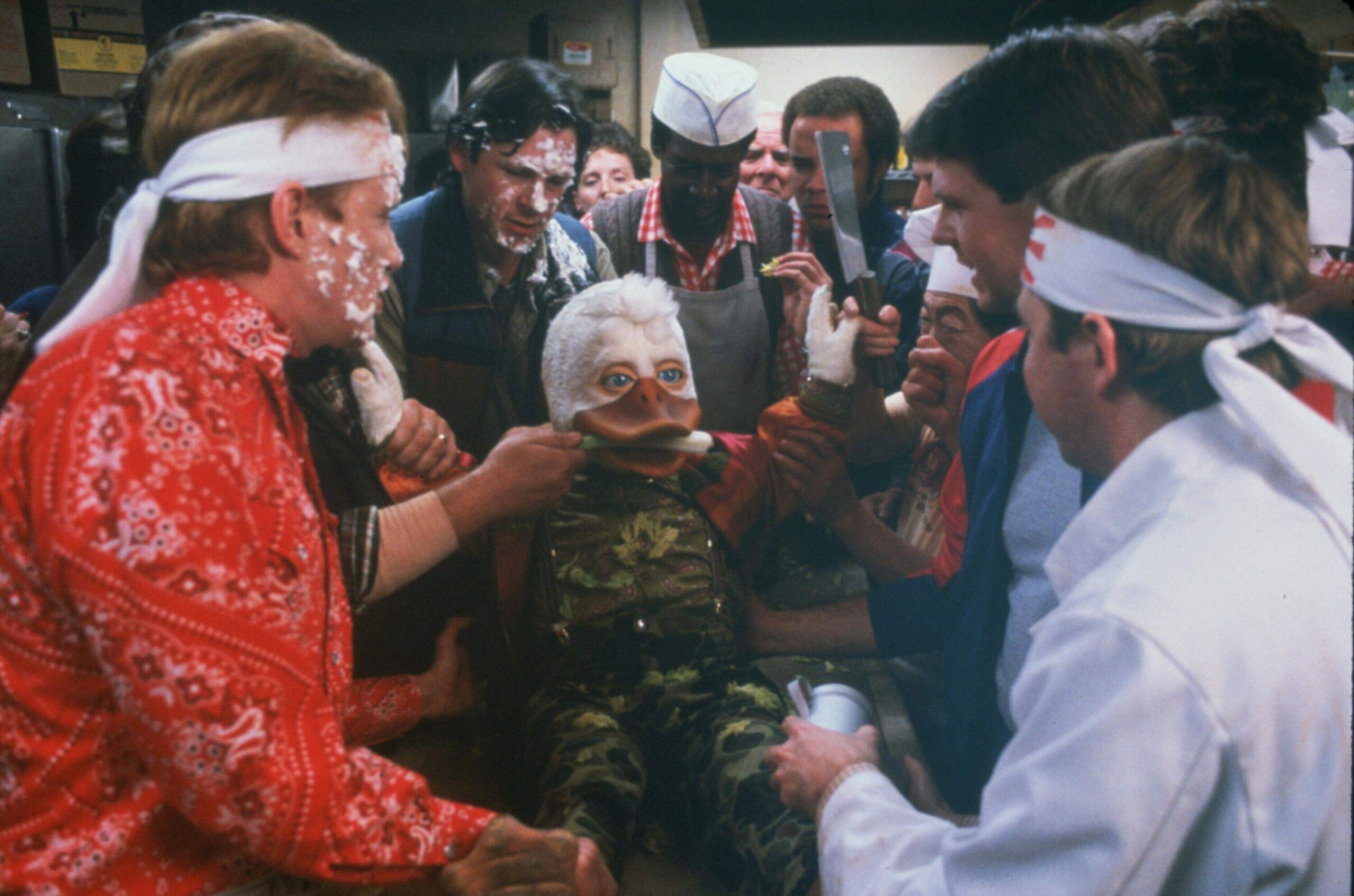
“Howard the Duck” was the second-most expensive film of 1986, yet Howard himself looks comically cheap. He’s obviously a little person in an alarmingly expressionless duck suit. I’ve seen minor league mascots with more convincing costumes. The comic book character’s irritable personality was ditched to make him more genial and blandly heroic for the film, which kind of defeats the source material’s premise of a skirt-chasing, cigar-chomping misanthrope who happens to be a duck. Co-stars Lea Thompson and Tim Robbins are giving broad, wide-eyed performances that would be at home on children’s television, an odd fit for moments like the one in which she finds a little duck condom in Howard’s wallet.
There’s so much weird sex stuff in this movie, not the least of which is a notorious scene in which Thompson’s frizzy-haired, wannabe rocker attempts to seduce our fine, feathered friend. The plumage on his forehead stands upright when he’s aroused. (Having spent the previous summer’s “Back to the Future” unknowingly trying to jump her teenage son’s bones, the fresh-faced Thompson was the stealth kink queen of ‘80s sci-fi.) These two first meet when Howard rescues her from a swarm of punks trying to rape her in an alley, which is another interesting choice for a PG movie about a wisecracking duck who plays the electric guitar. Within the opening minutes, there are not one but two scenes in which female ducks are seen topless, with large, round breasts and bright pink nipples. I often think about the artisans who designed the duck boobs, and wonder if they’d be proud to know their work is still being exhibited 40 years later in 70mm.
Some films hit you at the exact right moment in life and they’re yours forever. When I was 16 years old, my friends and I ditched school, got high and snuck in to see “The Doors.” You couldn’t ask for more optimum conditions under which to first experience Oliver Stone’s gonzo, psychedelic tribute to the man Lester Bangs christened “Bozo Dionysus.” Maybe the only big-budget studio picture of its era that could credibly be called orgiastic, the movie is a marathon of decadence and self-destruction brought off with fearless filmmaking brio, an acid trip into a psychological abyss that’s unthinkable in today’s age of sanitized, corporate brand extension biopics.
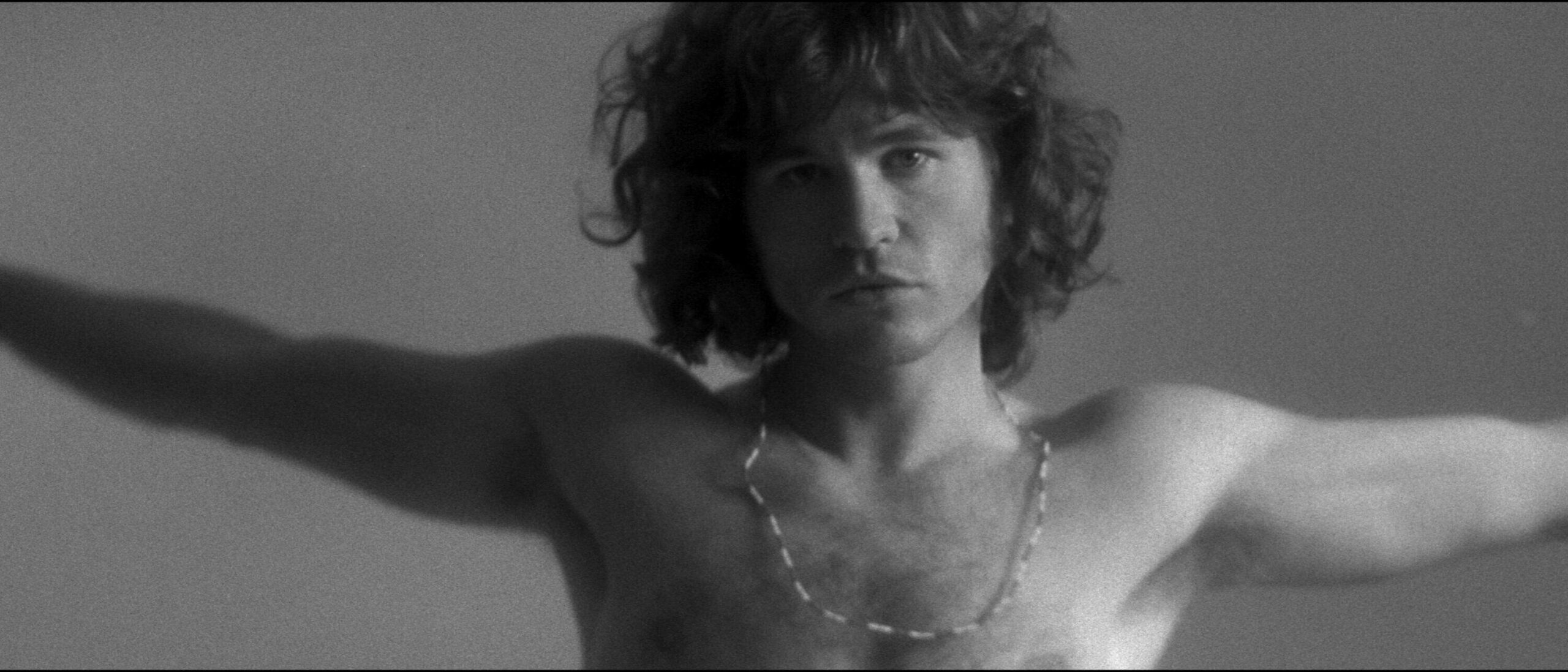
“The Doors” is insane. Val Kilmer gives the performance of his career as Morrison, who Stone seems to quite earnestly believe was a mystical shaman breaking on through to the other side. The other side of what, I’m still not exactly sure, but the film is breaking through something. Morrison’s advocacy for “a prolonged derangement of the senses” describes what it’s like to watch the picture, with its unhinged, surreal set pieces, searing colors and the white-hot spotlights of Robert Richardson’s cinematography. Morrison is followed throughout the film by the ghost of a Native American wise man and stalked by a bald, naked dude who represents Death. It’s all very adolescent and pretentious, which was perfect for this pretentious adolescent. “The Doors” probably seems pretty silly if you’re sober and an adult, but it’s ideal for someone first beginning to discover symbolism and drugs.
Of course, one could say the same about the music of The Doors, which is why the movie is such a fantastic fusion of form and content. It is incredibly embarrassing for a man to call himself The Lizard King, and it’s also pretty awesome. The overwrought grandiloquence of their music is why it totally rules, and, in keeping with his career-long aversions to subtlety and understatement, Stone creates a beat-for-beat visual corollary. The movie feels like a Doors song
It helps that the concert scenes are the most electrifying ever staged for a Hollywood film. Stone and Richardson shoot them like ancient, sacred rituals in which something sinister is being conjured, a bad mojo that keeps rising until the climactic, career-ending riot in Florida when Morrison was arrested for indecent exposure. It’s my favorite sequence in any Oliver Stone movie, an ever-escalating crescendo of bad vibes in which the singer turns his back on everything good so he can get down and boogie in a Stygian conga line with Death himself dancing over his shoulder.
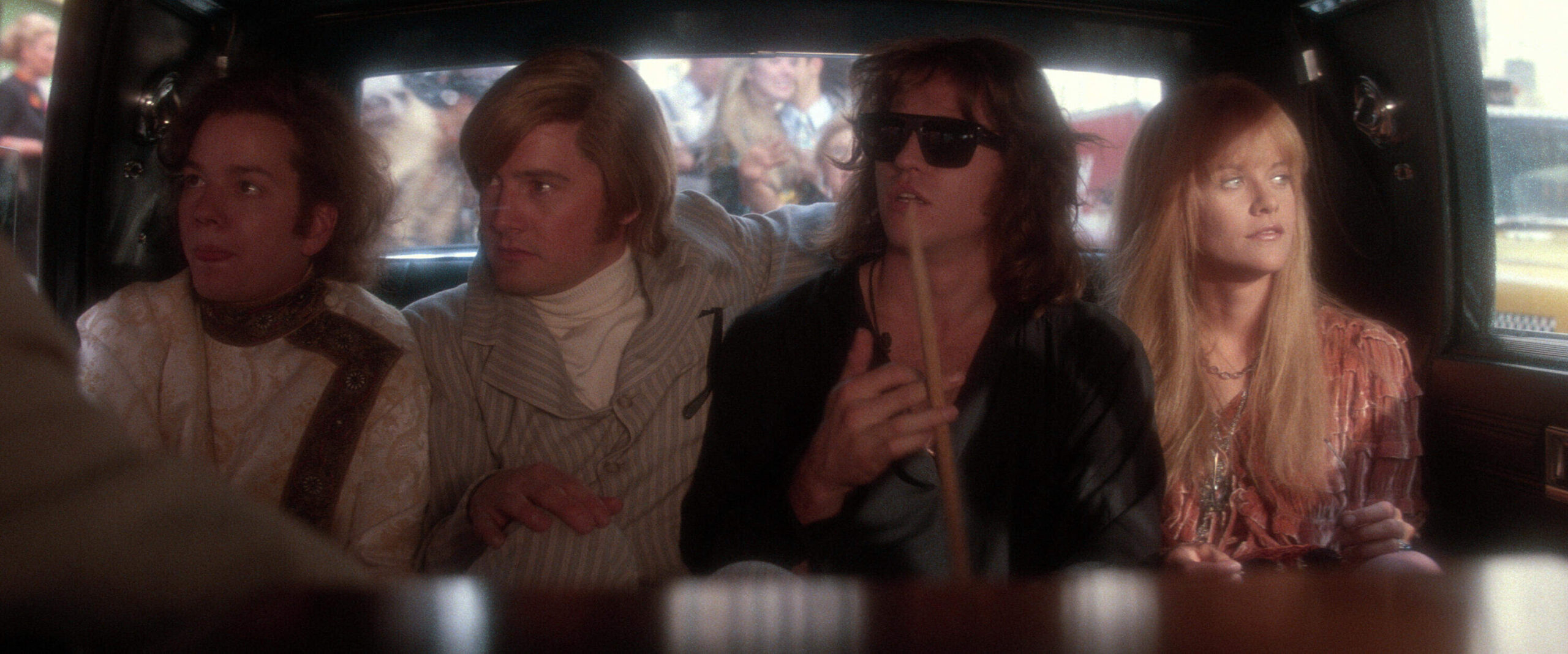
Music biopics don’t usually work because even our most gifted movie actors can never figure out how to be as charismatic as a legendary rock star. (If they could, they’d be legendary rock stars themselves.) The big exception to this is Kilmer, who is so overwhelmingly magnetic in the role that whenever I see footage of the real Jim Morrison, I’m a little disappointed that he’s not Val Kilmer. The character is written with a paucity of redeeming characteristics — a far cry from today’s hagiographies — yet Kilmer makes him funny, sexy, sad, childlike and somehow tragic even when he’s being an alcoholic moron, which is most of the second half of the picture. It’s the rock ‘n’ roll “Raging Bull.”
Back in my days as a bookstore manager, I once ran an event with Doors drummer John Densmore, who was promoting his 2013 memoir “The Doors Unhinged.” Afterward, we were chatting and I told him how much the movie meant to me when I was younger, and how much affection I can’t help but have for it still. His face fell for a moment and he said, “You know most of that stuff didn’t really happen, right?”
When I told him I understood it had been heavily fictionalized, Densmore added, “Oliver wanted to make his Fellini film. But if there had been that many naked women dancing on stage with us, I never would have been able to keep time.”
“Howard the Duck” screens in 70mm at the Somerville Theatre on Saturday, July 25. “The Doors” screens in 70mm at the Somerville Theatre on Saturday, Aug. 1
Film/TV
