

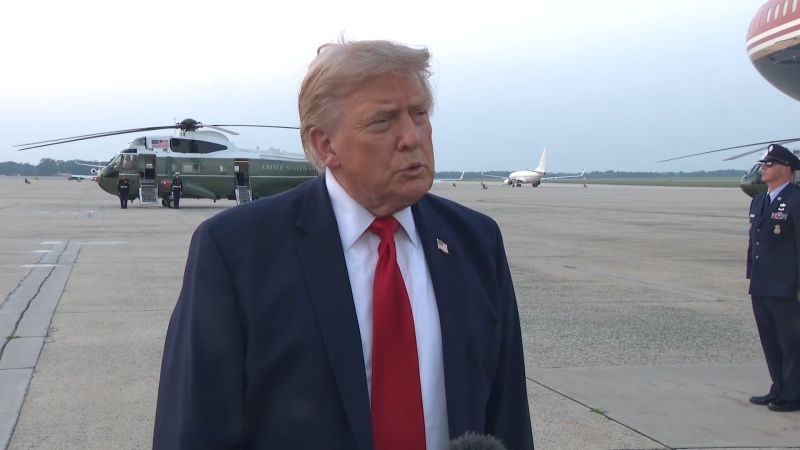
• Escalating conflict: President Donald Trump said Iran was hit “very hard” after the US completed a ninth night of strikes and explosions were reported across Iran early Monday local time. Military casualties and expanded attacks in recent days have deepened fears of a wider war
•US troops killed:The US has reported the death of another American service member, who was killed in northern Iraq during the controlled detonation of a downed Iranian drone. US Central Command also said it has located unidentified remains in Jordan, where a separate Iranian attack left two US troops dead and one missing in action
• Hormuz tussle:The British maritime authority reported a vessel on fire off the coast of Oman early Monday local time as US Secretary of State Marco Rubio criticized Iran for attacking ships and obstructing the key waterway. US allies in the Middle East also reported a wave of attacks on Sunday
10 Posts
A vessel is on fire and currently adrift off the coast of Oman after it was struck by an unknown projectile, the UK maritime authority said Monday
“The crew safely abandoned the vessel and have been recovered by a tug boat. The fire has not been extinguished,” the UKMTO said. No environmental impact has been reported
Earlier, the UKMTO said it had received a report that the vessel was on fire eight nautical miles northwest of Kumzar, Oman, near the Strait of Hormuz
Iran’s revolutionary guards claimed that two “non compliant” tankers were “brought to a halt”, state media IRNA reported. CNN cannot independently verify the claim
The global oil supply will remain disrupted as long as the fighting continues and energy facilities in the Gulf remain damaged, an energy analyst said Monday
Iran has repeatedly struck energy facilities in the Gulf, including two consecutive attacks on a Kuwaiti power and desalination plant over the weekend, according to Kuwait’s energy minister
“When we’re talking about a recovery, it’s not just about the stranded vessels (in the Persian Gulf) that we saw initially when the MOU (memorandum of understanding) was signed,” Bakr said
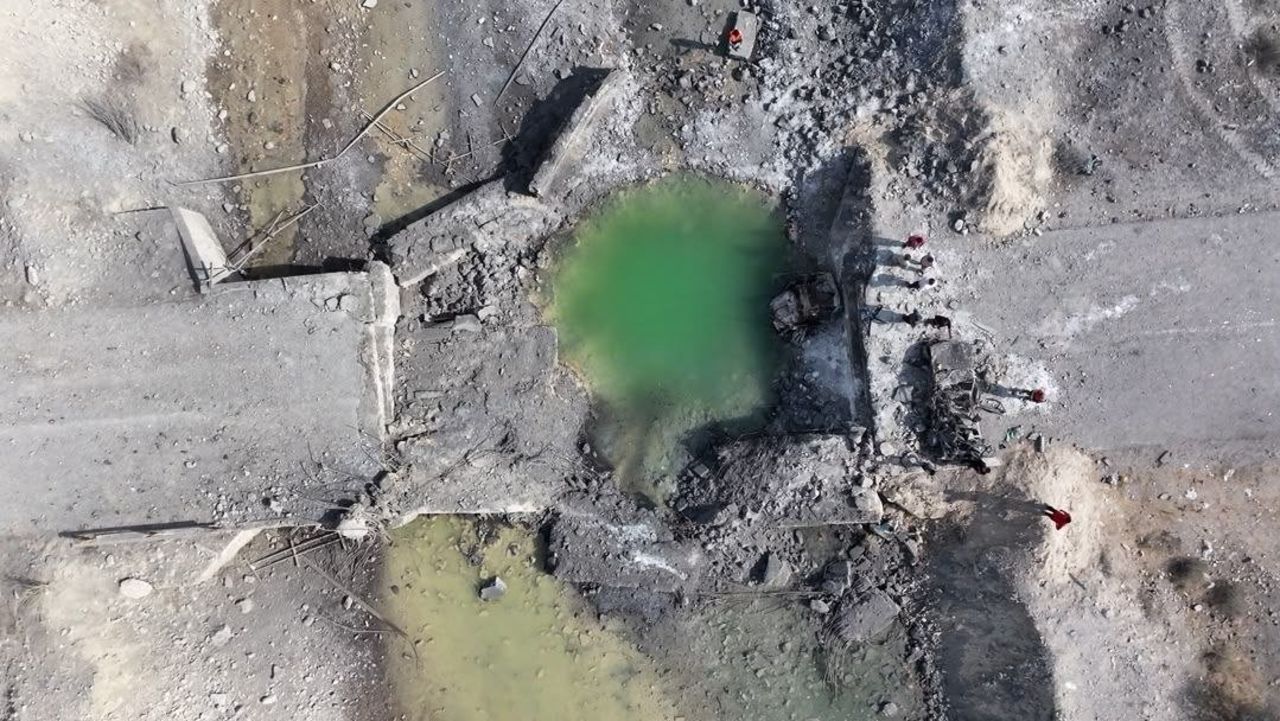
People observe the damage caused by US strikes to bridges in Bandar Khamir, Iran, on Friday, July 17.
Over the past week, the conflict between the United States and Iran has gone from a simmering tit-for-tat to something that much more resembles all-out war
US President Donald Trump last week threatened to broaden the war unless Iran stops attacking ships transiting the Strait of Hormuz
In recent days, the US has expanded its targets beyond Iranian coastal sites housing radar and drone facilities to include roads, tunnels, railways, port infrastructure and a desalination plant
Iran has, in turn, expanded its target list across seven countries in the region, and official media outlets have suggested that major ports in Gulf Arab states may soon be added. Kuwait has borne the brunt of Iranian strikes, with a desalination plant and oil refinery damaged. Jordan too has seen regular barrages
The conflict is at an inflection point
It might give way to yet another round of mediation and negotiation. But to most analysts, that seems unlikely
Read more about the risks of the expanding US-Iran conflicthere
Kuwait’s army said its air defenses are currently responding to “hostile drone threats” in a post on X Monday morning local time
“The sounds of explosions, if heard, are the result of air defense systems intercepting the hostile attacks,” it said
Sirens were also activated in Bahrain on Monday morning, according to the country’s Interior Ministry
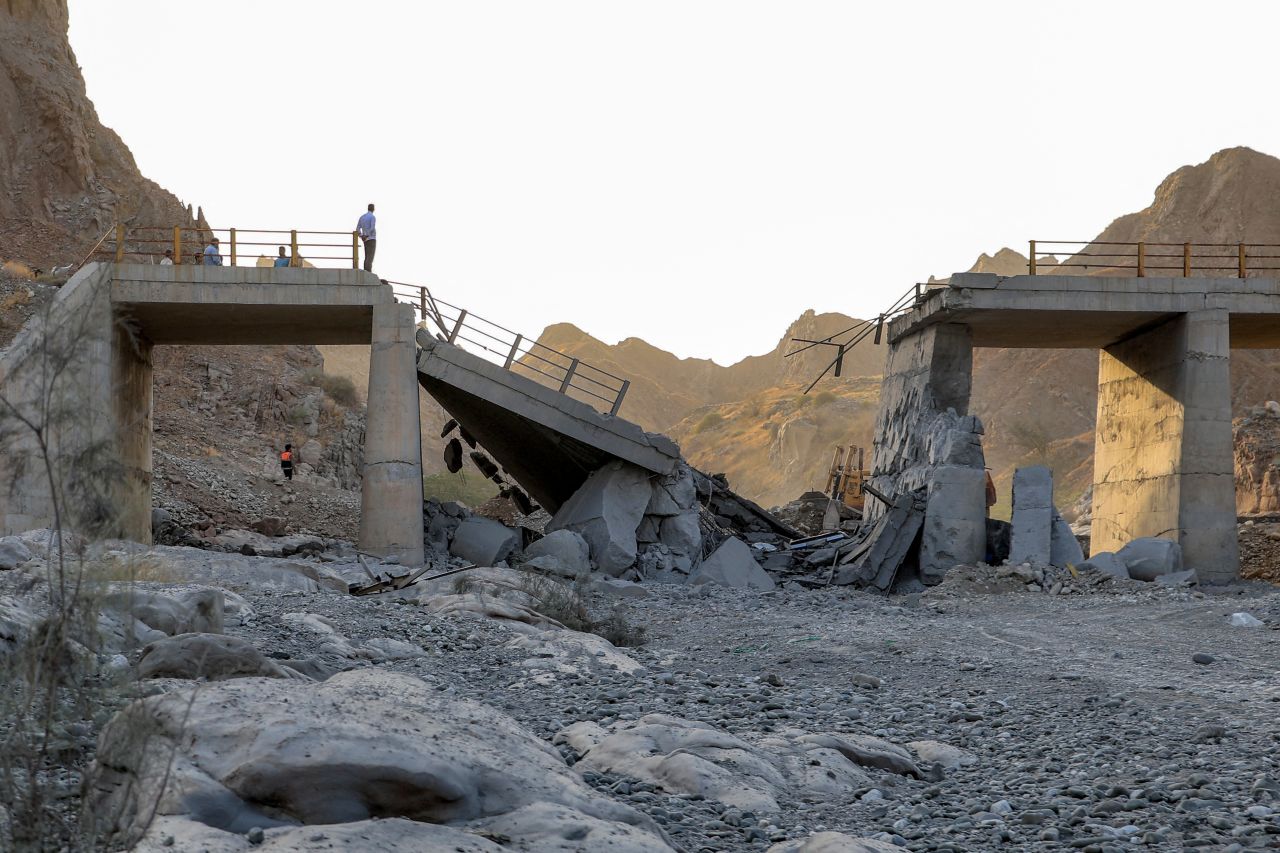
A heavily-damaged bridge which was hit by a US strike is pictured along the road connecting Roudan and Bandar Abbas in southern Iran on July 18, 2026.
As the United States and Iran trade air and missile strikes for the ninth straight night, Tehran is proving it can withstand the firepower Washington is employing and still respond with a lethality that the US military hasn’t seen since the early days of the war
Iranian missile and drone strikes on US forces in Jordan and Iraq have left at least three US troops dead, another missing, and more wounded
The Pentagon is not revealing its equipment losses, but Tehran is claiming large numbers of US Black Hawk helicopters destroyed and base infrastructure like aircraft hangars heavily damaged in its days of attacks
And as the US strikes Iranian infrastructure like bridges, ports and power stations, Gulf states like Kuwait and Bahrain, where the US maintains bases, are seeing their infrastructure damaged by Iranian drones and missiles
But Iran is showing no signs the US has degraded those capabilities in a way that an end to the renewed fighting is anywhere in sight
Experts told CNN in May that Iran likely had 1,000 missiles still left in underground storage sites, along with thousands of drones
Even US Vice President JD Vance has admitted US airstrikes alone won’t be enough to achieve one of the Trump administration’s main goals of keeping the Strait of Hormuz open
And now Iran has shown US troops face those same dangers around the region – with deadly consequences
Video released by CENTCOM shows US forces conducting the latest round of strikes against targets in Iran
US President Donald Trump has said Iran was hit “very hard” on Sunday night after a third US service member was killed over the weekend, deepening fears that the conflict will spiral further
If you’re just joining us, here’s the latest headlines:
- Ninth night of strikes:The US military said it struck a range of Iranian military targets in its latest round of bombing overnight Sunday into Monday. Explosions were reported across Iran early Monday local time, including in coastal port cities on the Gulf of Oman and the Persian Gulf. Explosionswere also reportedin the northwestern city of Tabriz for the first time in the past nine days, according to state media.
- Growing military casualties:The US said an American service member was killed on Saturday in northern Iraq during a controlled detonation of a downed Iranian drone. The death comes a day after the Pentagon announced the fatalities of two service members in Jordan. Trump said “we feel very badly,” as the number ofUStroop fatalities in the nearly five-month war hits 17.
- Vessel on fire:The UK maritime authority has said it received a report of a vessel on fire off the coast of Oman, near the Strait of Hormuz. Iran’s revolutionary guards claimed that two “non compliant” tankers were targeted, IRNA reported. CNN cannot independently verify the claim.
- Iran claims attacks:Iran said it launched a wave of missiles at “enemy targets,” early on Monday, state media IRNA reported. Meanwhile, the US Embassy in Bahrain warned Americans thatIran may target the capital Manama. It follows Iranian attacks on a power and desalination plant in Kuwait on Sunday, and Jordan and Bahrain reported intercepting Iranian strikes.
- Open to diplomacy:US Secretary of State Marco Rubio said Washington is open to diplomacy with Tehran, saying “if that door opens, we’ll be happy to see.”
- Reported nuclear plant strike:IranianDeputy Foreign Minister Kazem Gharibabadi warned of an “appropriate” response after Tehran accused the US of attacking the Dharkhovin nuclear facility in southern Iran, state media IRIB reported. The US has not confirmed the attack and the United Nations’ nuclear watchdog said it was looking into the reports.
CNN’s Helen Regan, Aleena Fayaz, Mohammed Tawfeeq, Auzinea Bacon and Yasha Saebi contributed reporting
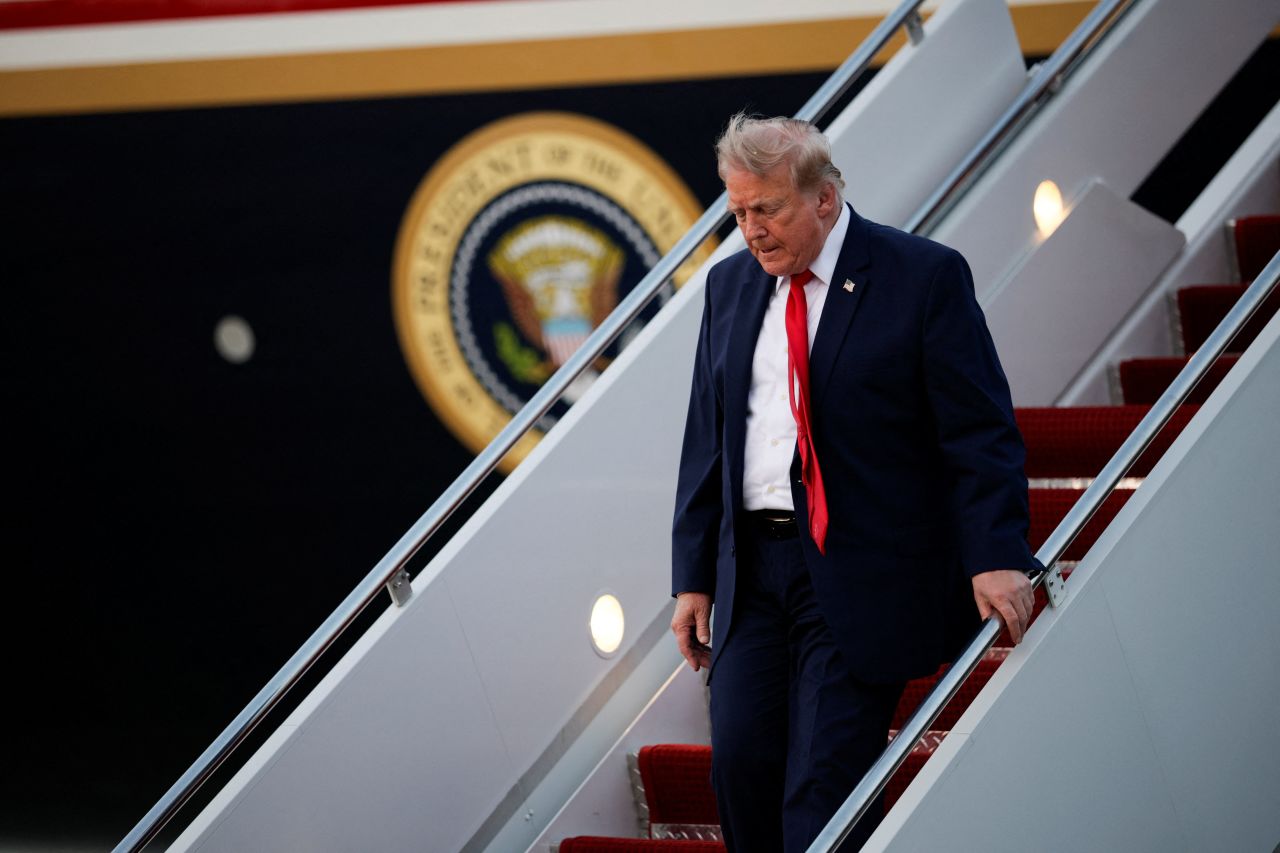
President Donald Trump deboards the plane as he arrives at Joint Base Andrews in Maryland, on Sunday.
President Donald Trump on Sunday said “we feel very badly” about the American service members who have died in the war with Iran, as the number of troop fatalities hits 17
“We feel very badly, but you know those great people, those great patriots … out there fighting that Iran cannot have a nuclear weapon,” Trump told reporters as he returned to Washington following attendance at the World Cup final
One service member was killed in northern Iraq on Saturday, while two others died during strikes in Jordan on Friday
Trump pivoted to touting the US military force, just after CENTCOM announced the ninth consecutive night of strikes against Iran
“Iran has been very, very badly damaged. They’ve lost everything almost militarily. They’ve got very little left,” the president said, adding, that the US “hit them very hard again tonight.”
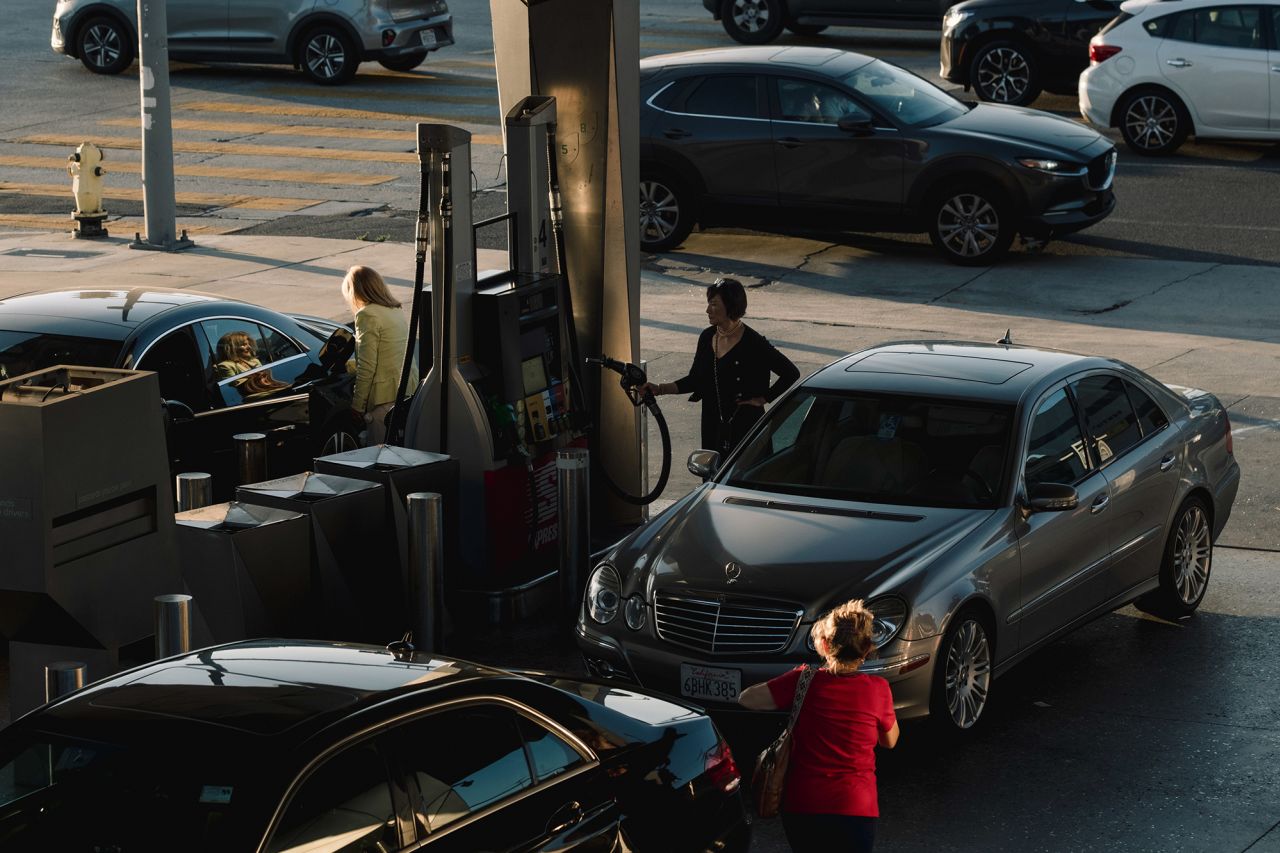
Drivers refuel vehicles at a Speedway gas station in Los Angeles, California, on July 2, 2026.
Oil prices rose about 3% Sunday after the United States and Iran exchanged tit-for-tat strikes for more than a week
Brent crude, the international benchmark, rose 3% to about $90.78 a barrel, and US crude climbed almost 3% to $84.85 a barrel
Traffic in the Strait of Hormuz, where 20% of the global oil supply flows, has been on the decline after tensions escalated last week. On Wednesday, the US reimposed its naval blockade of Iranian ports
Some ships have used alternative routes, including along the Omani coastline, which is not approved by Tehran
Gas prices have also been on the rise, but the US national average remains a tick below $4 a gallon At $3.992 a gallon, American drivers are paying about 34% more than they were before the war began
Dow Jones futures, S&P futures and Nasdaq futures were all down about 0.2%
The US military said on Sunday that another service member was killed in action during a controlled detonation of a downed Iranian drone. The death comes a day after the Pentagon announced the fatalities of two service members in Jordan
CENTCOM also said it located unidentified remains in Jordan after a service member was listed as missing in action
The deaths bring the number of US service members who have died in the nearly five-month war to 17
A Kuwaiti power and desalination plant was attacked by Iran on Sunday for the second consecutive day, Kuwait’s Ministry of Electricity, Water and Renewable Energy said
On Saturday, an Iranian provincial official said a US missile attack also damaged a desalination plant in the country. CNN has reached out to the US military for a response
The plants, which convert seawater into drinking water, are vital in the Middle East, providing a key lifeline and sustaining certain remote regions through droughts. Some countries in the region are almost entirely dependent on desalination for drinking water
In Kuwait and Oman, desalination accounts for around 90% of freshwater needs. In Bahrain, it’s 85%, and in Saudi Arabia around 70%. Major Gulf cities, including Abu Dhabi, Dubai, Doha, Kuwait City and Jeddah, are almost wholly dependent on desalinated water
Iran is less dependent on desalination than its Gulf neighbors for drinking water. Still, the process is key for providing water to coastal and island communities and to help to offset droughts
Desalination plants were also targeted when the current conflict began in March. At the time, the World Water Council — a UN-affiliated organization which advocates for global water security — condemned the attacks and called on all parties “to fully respect their obligations under international law.”
In a statement, it pointed to an article of the Geneva Convention which prohibits combatants from attacking essential reons and supplies.”
CNN’s Catherine Nicholls contributed to this reporting
