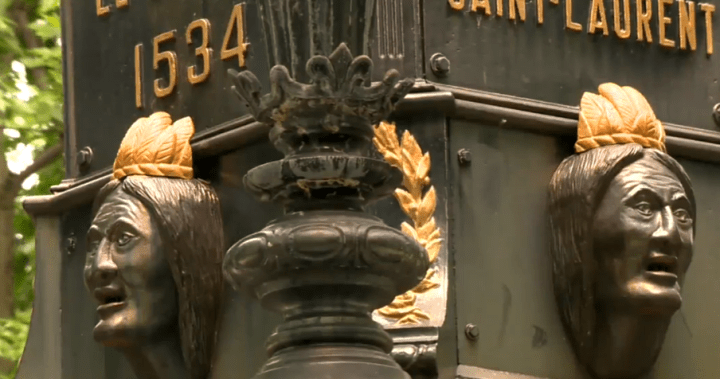
A historic fountain in Montreal’s St. Henri Park is prompting renewed discussion about how Indigenous peoples are portrayed in public monuments and how the city’s colonial past is remembered

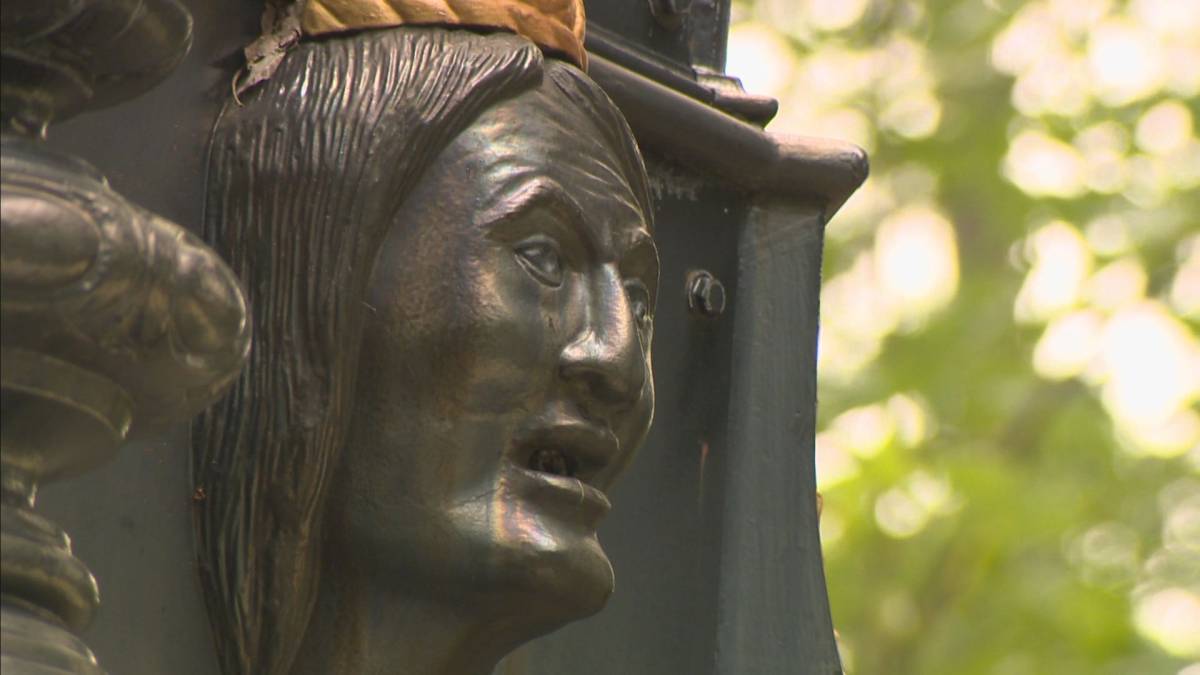
For Dr. Stanley Vollant, an Innu physician who lives across from the park, concerns about the Jacques Cartier monument became personal when his young daughter noticed the sculpted Indigenous faces
“My daughter asked me who are those monsters that are spitting out water,” Vollant said. “And I told her, it’s us. It is the faces of Indigenous people.”
Although the water fountain is currently not operating, Vollant said the carved effigies remind him of gargoyles and reflect a colonial-era view of Indigenous peoples
“I was ashamed. My daughter asked me, “Why they put the faces of us? These ugly faces of us on this statue?” he said
The monument, erected in 1893, includes an inscription commemorating Cartier’s claim of the land for the French Crown
“It says that he’s taking possession of this land in the name of his king,” Vollant noted, pointing out that Indigenous peoples had lived on the territory for thousands of years before European contact

Get breaking National news
Get breaking Canada news delivered to your inbox as it happens so you won’t miss a trending story.
By providing your email address, you have read and agree to Global News’ Terms and Conditions and Privacy Policy.
Vollant sees the monument as a symbol of colonial suppression, but he is not calling for its removal
“Because it’s a beautiful fountain,” he said
Taika Baillargeon of Heritage Montreal said monuments celebrating power, conquest and domination were common throughout the 19th century
“This was very typical and we actually, sadly enough, have a lot of these types of structures and elements in Montreal but also throughout Canada,” she said
Baillargeon said conversations about public monuments and historical representation have become more frequent as communities grapple with reconciliation and recognition of Indigenous histories
“We talk about reconciliation, we talk about recognition, and how we’re going to show in our public spaces a new way of how we see history today,” she said. “There’s always a tension between: do we erase or do we create new ways of making the dialogue possible?”
The debate echoes broader discussions in Montreal over monuments tied to Canada’s colonial history, including the Sir John A. Macdonald statue at Place du Canada, which has not been reinstalled since it was toppled during a protest
While Vollant acknowledges recent efforts by the city, including adding an Indigenous symbol to Montreal’s flag and renaming Amherst Street to Atateken, he believes more work remains
“And this statue maybe doesn’t show reconciliation at all,” he said
For Vollant, the fountain serves as a reminder that conversations about history, representation and reconciliation are far from over
For the full story, watch the video above
<img src="https://todaytrendnews7.com/wp-content/uploads/2026/07/CARNEY_PRAISES_RCAF_FIRST_RESPONDERS_YTS_thumbnail_720x1280_-1.jpg" alt="Click to play video: '‘Canadians always look after each other’: Carney praises first responders amid wildfires‘”>
1:03
‘Canadians always look after each other’: Carney praises first responders amid wildfires
- ‘Canadians always look after each other’: Carney praises first responders amid wildfires

Inquest into death of Indigenous woman hears from officer on the scene
Milton Park urban garden rooted in Indigenous traditions
Indigenous effigies on Montreal fountain spark anger
$20M campaign launched to repatriate Indigenous ceremonial items from Swiss museum