

• Latest strikes:The US military completed its latest wave of airstrikes against Iran at 9:40 p.m. ET Thursday, US Central Command said. It was the sixth consecutive night of strikes by US forces.While US bombing has largely focused on southern Iran, some recent strikes have reached deep inside the country
• Iran widens attacks:Qatar, Kuwait, and Jordan have come under Iranian fire as the conflict shows no sign of de-escalating. Iran also claimed it targeted US military forces in Bahrain and Syria. The fresh reprisals by Iran appear to be the largest in the region since talks with the US collapsed
• Days of escalation:Neither side has publicly signaled willingness to return to negotiations. Iran has warned the Strait of Hormuz is an “unbreakable red line” and responded harshly to US President Donald Trump’s threats to hit Iranian infrastructure
13 Posts
Video shows heavy plumes of smoke rising from Chabahar’s maritime control tower.
US forces attacked a maritime control tower in the Iranian city Chabahar for the third time this week
The attack was a missile strike on the tower, state-run Fars News and IRIB said. The tower is primarily used for search-and-rescue operations involving fishermen at sea as well as ensuring maritime security
US Defense Secretary Pete Hegseth posted an image on X that appears to show the tower falling , as a reply to an earlier post that read: “Iran does not control the (Strait of Hormuz).”
Earlier Friday, CNN obtained and geolocated a video showing a drone flying over a populated area of Chabahar, while smoke rises in the distance
Chabahar, located on the northern shores of the Gulf of Oman,was struck earlier in the war – but it has become a more prominent target since the ceasefire unraveled
Yasha Saebi contributed reporting
A tanker was reportedly hit by an unknown projectile 19 nautical miles east of Khasab, Oman, causing minor structural damage, the UK Maritime Trade Operations (UKMTO) said Friday
All crew are safe and accounted for, UKMTO said
On Thursday, an Iranian military spokesperson said Iran will “under no circumstances” permit the US to “interfere” with the Strait of Hormuz, he added. “This is Iran’s unbreakable red line.”
Iran claims to have targeted US facilities and partners across the Middle East on Friday, unleashing what appear to be its largest reprisals since a fragile ceasefire shattered almost a week ago
US forces have been pounding Iran – sometimes more than once daily – for the past six days. Washington says the renewed strikes are retaliation against Tehran for targeting commercial ships in the Strait of Hormuz, and not keeping its side of the memorandum of understanding that was to be the framework for a lasting peace
That agreement is now in tatters. And the Iranian military, which the Trump administration has said repeatedly has been decimated, retains its punch
Tehran could still have thousands of drones and missiles in its arsenal, according to previous CNN reporting, enough to keep up this pace of attacks for a long time
Just before the ceasefire began in April, Tehran still had thousands of drones and roughly half of its missile launchers intact, CNN reported, citing
By late May, Iran had restarted drone production and was replacing missile sites and launchers destroyed earlier in the war, sources told CNN.
Analysts note that Iran doesn’t need a huge inventory of drones and missiles to destabilize the region and keep the Strait of Hormuz effectively shut, cutting off around 20% of the world’s pre-war oil supplies
And by Thursday evening in the Gulf, Iran’s action over the past six days seemed to be having the desired effects
Just three ships had transited the Strait of Hormuz in the previous 24 hours, according to open-
Before the war, an average of about 110 ships transited the strait daily
Footage obtained by CNN showed a low-flying drone above Chabahar on Friday morning.
Video obtained by CNN showed a low-flying drone above the Iranian port city of Chabahar early Friday morning local time
The drone can be seen flying over a populated area in Chabahar while smoke rises in the distance
It is unclear who was operating the drone but its appearance was consistent with an American-made MQ-9 Reaper
The US has targeted Chabahar over the past several days including a strike that hit a maritime control tower near the city’s port
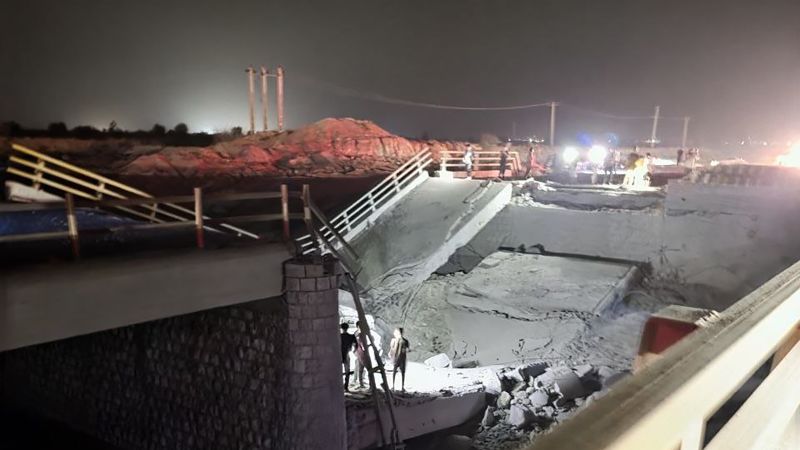
Video shows a damaged bridge in Hormozgan, Iran, following US strikes
Several bridges in southern Iran’s Hormozgan province were hit in the latest round of US strikes, the governor’s office said, according to Iran’s semi-official Fars news agency
Many of the bridges that were targeted were on routes connected to the city of Bandar Abbas, a coastal city on the Strait of Hormuz which is home to a Islamic Revolutionary Guard Corps naval base
A bridge damaged is seen following US Strikes, in Hormozgan Province, Iran on July 16, 2026.
Earlier, Fars reported a railway junction in Bandar Abbas had been hit. Iran’s energy ministy said power lines in Bandar Abbas and surrounding villages were damaged, according to semi-official Tasnim News Agency
A photo released by state broadcaster IRIB and geolocated by CNN showed a damaged Kahurestan Bridge, linking Bandar Abbas to the city of Shiraz, after it was reportedly hit by a US strike
At least seven people were killed and nine were wounded, reported multiple state media outlets
Video purports to show the aftermath of what Iranian media described as a US attack
CNN could not independently verify Iran’s claims, and has reached out to US Central Command for comment
US President Donald Trump has repeatedly threatened to strike Iran’s bridges and power plants if Tehran does not return to the negotiating table
Yasha Saebi contributed reporting
US military said it targeted Iranian military targets for the sixth consecutive night
The US military said it completed what it called its latest “major wave” of strikes against Iran on Thursday, as the war showed no sign of de-escalating after almost a week of back-and-forth attacks from both sides
Meanwhile, Gulf states including Qatar were fending off fresh attacks. Qatar, a key mediator in the US-Iran conflict, said a child was hurt by falling shrapnel as it intercepted an Iranian attack
Here’s the latest:
More on attacks: Iran accused the US of striking several bridges in the country as explosions rocked several areas. Many of the bridges that it said were targeted were on routes connected to the city of Bandar Abbas, a coastal city on the Strait of Hormuz
Allies under fire: Qatar, Bahrain and Kuwait reported fresh attacks early Friday morning local time. Qatar, which has a relatively friendlier relationship with Iran, has served as a key negotiator during the conflict. Jordan also reported intercepting three Iranian missiles, with no damage or casualties sustained. The Iranian military also claimed to have targeted US military forces in Syria
Trump’s primetime address: President Donald Trump sought a rare primetime address in wartime to speak directly to the American people, but he did not use the opportunity to clearly lay out his case for a path forward for the conflict in Iran. Read more about his speech here
Limit AC use, says ministry: Iran’s Energy Ministry called on Iranians to limit their use of air conditioning to allow for a more stable supply of electricity to the southern parts of the country. The ministry’s head of public relations, told semi-official Tasnim News Agency that following attacks in places like Bandar Abbas, power lines were damaged, causing supply disruptions
Strait of Hormuz:Shipping traffic dropped on Thursday from its already diminished levels, with just three ships transiting the Strait of Hormuz in the past 24 hours, according to open-
Oil and gas prices: The White House pushed back on concerns that renewed hostilities with Iran are again spiking oil and gas prices. There “may be temporary disruptions in the oil market,” press secretary Karoline Leavitt said, but she praised Trump’s energy policies and “swift actions” for preventing “massive increases in the price of oil that so many warned about.”
Iran’s Islamic Revolutionary Guard Corps (IRGC) claimed to have targeted US forces in al-Tanf, Syria, in what it said was retaliation for deadly US strikes in Iranshahr, according to a statement reported Friday by semi-official Tasnim news agency
CNN could not independently verify the claim and has reached out to US Central Command
US military forces departed the strategic al-Tanf garrison in February after more than a decade, amid a broader transition to a smaller US footprint in Syria, US Central Command said in announcement at the time
The IRGC said that as long as US action in the Strait of Hormuz continues, “not a single drop of oil or gas will be exported from the region.”
Yasha Saebi contributed reporting
Iranian state media released a video puportedly showing the launching of strikes toward Bahrain
Four countries where the United States maintains military facilities – Qatar, Bahrain, Kuwait and Jordan – all appear to have come under Iranian fire overnight into Friday
Qatar’s Defense Ministry said Friday morning it was fending off its second air attack of the day. An earlier wave left a child injured by falling shrapnel, according to the Interior Ministry
While Iran has repeatedly struck military bases in Bahrain, Kuwait and Jordan, it has refrained from striking Qatar in recent days. Tehran has not claimed the attacks on Qatar Friday morning
Qatar, which has a relatively friendlier relationship with Iran, has served as a key negotiator throughout the conflict. But also was targeted earlier by Iran in the war
Meanwhile in Bahrain, sirens were activated for the second time on Friday morning, according to a post on the interior ministry’s X account
Iran’s military claimed it targeted US military assets in Bahrain, according to state media IRNA. Video released by state media outlet IRIB on Friday purportedly showed drones being launched toward Bahrain. CNN has reached out to US Central Command for comments
Kuwait said early Friday morning local time it was responding to missile and drone threats and warned residents that explosions may be heard as air defense systems intercept attacks. The Islamic Revolutionary Guard Corps (IRGC) claimed it had targeted various military hardware in Kuwait, reported Iranian state media
Jordan’s armed forces said Friday three Iranian missiles had been intercepted with no casualties or damaged incurred
Iran’s IRGC also claimed Friday afternoon it had attacked a US radar in Oman, according to state media
President Donald Trump sought a rare primetime address in wartime to speak directly to the American people, but he did not use the opportunity to clearly lay out his case for a path forward for the conflict in Iran that has escalated in recent days
In fact, he barely mentioned the war
“We have the strongest and most powerful military by far anywhere in the world. I built it during my first term, and unfortunately, we’re forced to use it now,” he said from the East Room Thursday night
The United States, he added, is “winning big in Iran, and you will see the fruits of that labor very, very shortly.”
That was the president’s only reference to the conflict, as strikes have intensified throughout the week following the total breakdown of a ceasefire agreement
The US military said Thursday it launched a wave of airstrikes for the sixth consecutive night, and CNN has reported that Trump is now receiving options for expanding the US military operation in Iran as he weighs next steps
But Americans are skeptical of Trump’s strategy, with gas prices and the cost of living ticking up at home. A new Washington Post-Ipsos poll released Thursday reveals that just 29% of Americans approve of the president’s handling of the Iran conflict
Read more about his speech here.
Explosions rocked multiple areas of Iran Thursday evening local time as the US continued its sixth consecutive night of airstrikes against the country
As in previous days, the targets have largely been located in southern and coastal locations. CNN is unable to independently verify the claims
- Qeshm Island:Eight explosions were reported near Masan village on Iran’s Qeshm Island in the Strait of Hormuz on Thursday evening, the semi-official Tasnim News Agency reported. It said US fighter jets were also seen flying over the island.
- Bandar Khamir:Iran’s port city of Bandar Khamir on the Strait of Hormuz came under attack by US forces Thursday evening. According to Tasnim, two bridges were were struck in Khamir County, the Geryveh Bridge and the Kahurestan Bridge, linking Bandar Abbas to Shiraz, the fifth-most populous city in Iran. At least seven people were killed and nine were wounded, reported multiple state media outlets.
- Bushehr: Two explosions were heard in the Persian Gulf port city of Bushehr in southwestern Iran, according to Bushehr’s governor. At least one person was injured when Bushehr came under attack for the second time, the governor said.
- Ahvaz: Locations on the outskirts of Ahvaz, a key industrial hub in the southwestern corner of Iran, were targeted by US forces, the deputy governor for security and law enforcement in surrounding Khuzestan province told Iran’s official Islamic Republic News Agency (IRNA). He added that authorities were assessing the incident and that additional details regarding the attack, possible damage and response measures would be announced in due course.
- Iranshahr: The provincial capital of far southeastern Sistan and Baluchestan province, which borders Pakistan, also came under fire Thursday evening, Tasnim reported. According to the report, residents heard three powerful explosions coming from the vicinity of Iranshahr’s airport, and local reports indicated that the airport came under a heavy attack. According to IRNA, residents of Iranshahr heard a blast-like sound that shook parts of the city at around 11 p.m. local time. Official sources were quoted as saying that a location in the vicinity of Iranshahr was struck by an American projectile.
- Hamidiyeh County:Approximately six explosions were heard in the vicinity of Hamidiyeh County in southwestern Iran, state-run Islamic Republic of Iran Broadcasting reported Thursday night.
- Lorestan Province:An area in Chegeni County was hit, semi-official Tasnim News Agency reported.
The Persian Gulf’s Arab states were willing to overlook the flaws of the US-Iran memorandum of understanding (MOU) ceasefire agreement because they feared their economies would take another hit if a full-scale war returned, a regional expert said
“There have been deleterious effects on the economies already as a result of the last couple of weeks, but nothing like what we saw earlier this year,” said H.A. Hellyer from the Royal United Services Institute
“Even though the MOU was frankly not very well negotiated, you saw the Gulf efforts to come to an MOU because the alternative was returning to wholescale war,” he told CNN’s Lynda Kinkade on “Newsroom.”
Since the MOU collapsed, Iran has targeted US military bases across the Gulf and threatened to destroy “all infrastructure throughout the region.”
The warning came after the US threatened to strike bridges and power plants in Iran next week unless Tehran returns to the negotiating table
Background:The 14-point MOU addressed several touchy subjects between the US and Iran, including extending the ceasefire to Lebanon, where Iranian-backed militias have been at war with Israel, and ending hostilities around the critical shipping route, the Strait of Hormuz
Diplomatic gains have reversed over the past week after the US attacked Iranian cities in response to Tehran’s strikes on shipping in the Strait of Hormuz
And in a familiar pattern, US President Donald Trump once again threatened to strike Iranian bridges and power plants, prompting the Iranian military to issue counterthreats of expanding its targets across the region and blocking other maritime straits
In four months of hostilities, Iran and the US have exchanged similar threats and engaged in tit-for-tat military escalation, yet diplomacy has continued. Despite this latest round of strikes being the most intense since the April ceasefire, Iranian officials have yet to follow Trump in declaring the truce “over.”
Since the war began, Iran has been keen to demonstrate its ability to withstand pressure and respond to any escalation by inflicting pain of its own. It has sought to send a clear signal that it too possesses military options, and will use them. This round is no different
“If America’s hostile actions against Iran continue, the Islamic Republic’s response will be beyond the enemy’s calculations, and new arenas of confrontation will be formed,” the Iranian army spokesperson Mohammad Akraminia reiterated, according to Iranian state-affiliated media
Amid growing domestic pressure and US threats to withdraw from the agreement, Iran’s top negotiator, Mohammed Bagher Ghalibaf, warned that Iran could also abandon the deal and resume the war. Yet in the same breath he signaled that diplomacy remains equally important — and the deal remains in place
“We have never sought war and we are not seeking it now,” the negotiator and speaker of parliament said in a statement Wednesday, “but we must always be prepared for confrontation.”
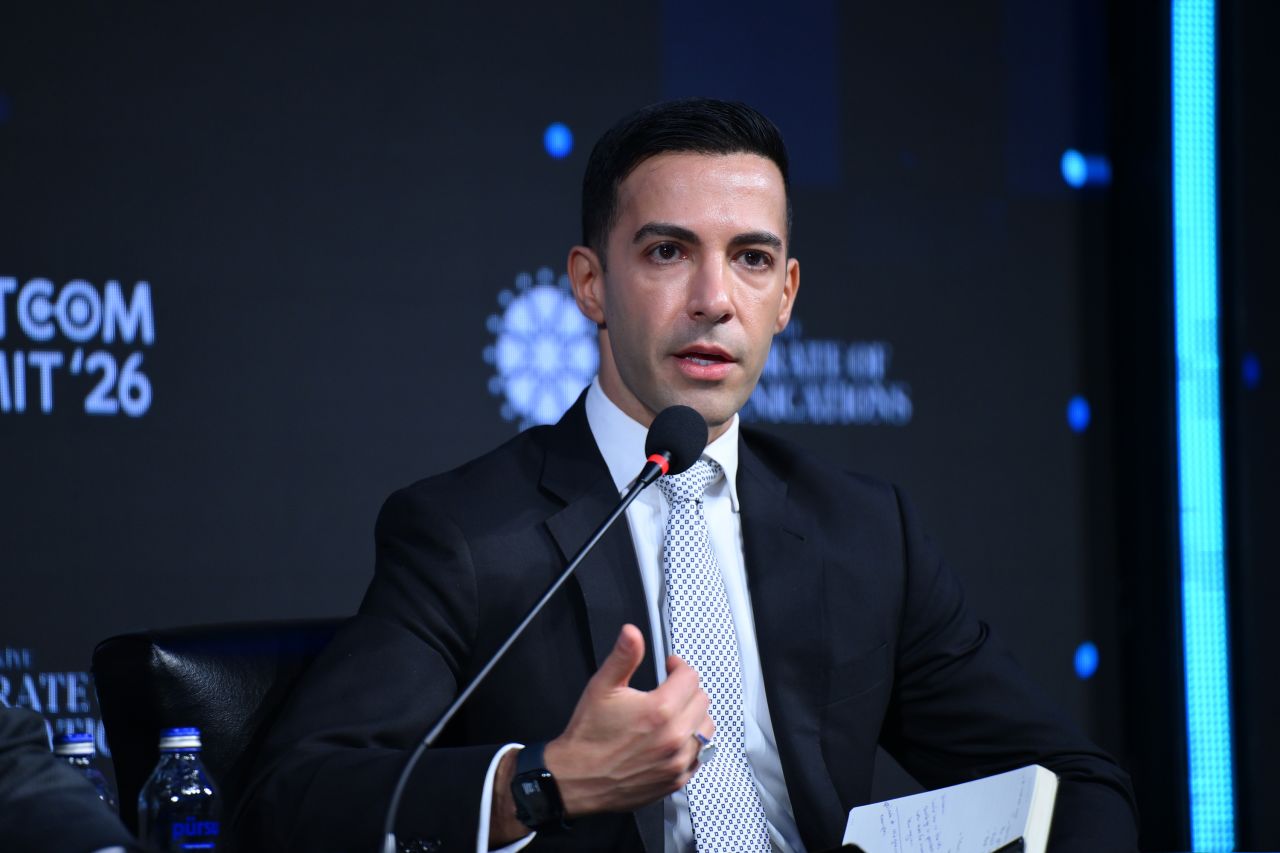
Ali Vaez, Iran project director and senior adviser at the International Crisis Group, attends a panel at the STRATCOM Summit 2026 in Istanbul, Turkiye, on March 28.
A regional expert has warned that the US and Iran risk entering a “forever war” as they continue to trade strikes after ceasefire talks were derailed
“It took about two months to negotiate a page and a half of the memorandum of understanding … It took only three weeks for it to unravel,” said Ali Vaez, a senior adviser and the Iran project director at the International Crisis Group
The two sides agreed to a shaky ceasefire in April and signed the memorandum in June. It was supposed to set the stage for talks on a permanent end to the fighting, Iran’s nuclear program, long-term administration of the Strait of Hormuz and other key regional issues
Vaez said the initial agreement failed to take hold because Iran and the US tried to “enforce their own interpretation” of the 14-point document
