

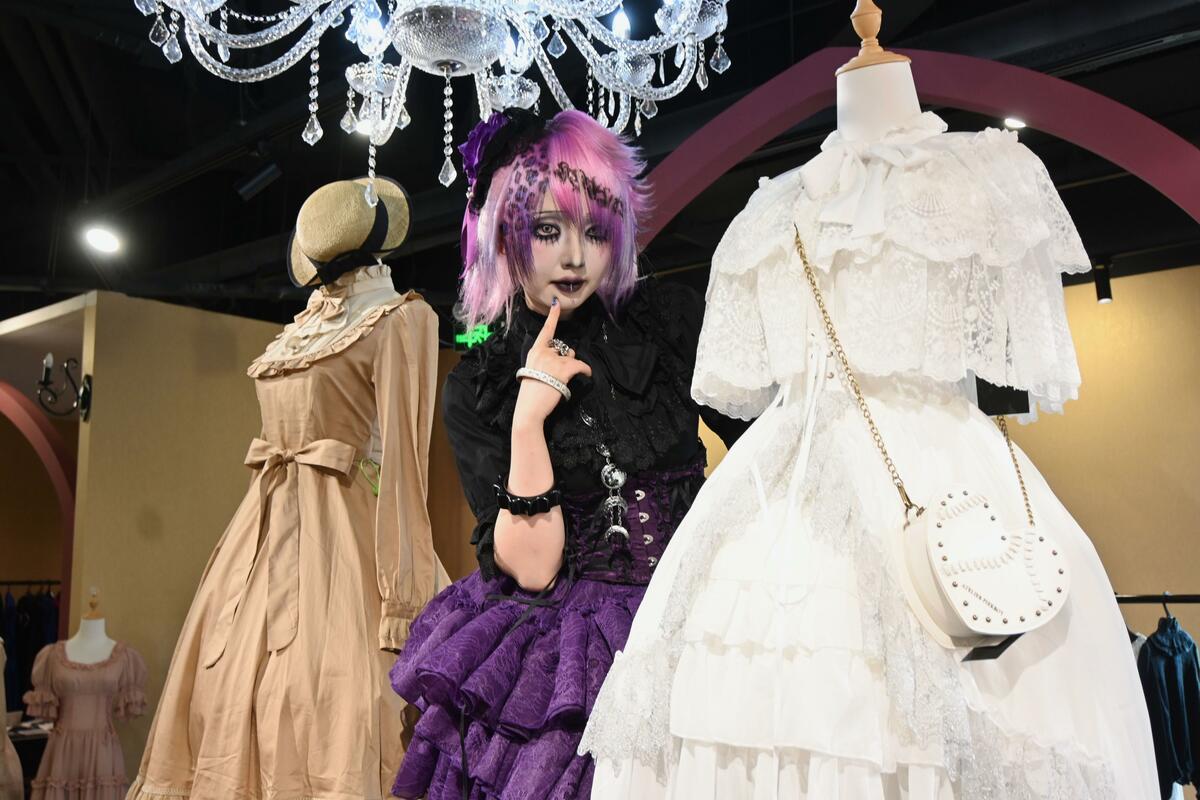
Japanese Lolita fashion, with its lace-trimmed dresses, ruffled collars and voluminous skirts inspired by Western dolls, is winning over a growing number of young women in <a href="https://todaytrendnews7.com/china-hits-out-at-british-steel-nationalisation/” title=”China hits out at British Steel nationalisation”>China, fueling demand for Japanese brands and helping turn a niche subculture into a growing consumer market
The style, which emerged in the 1990s in Tokyo’s Harajuku, a trendsetting shopping district and center of youth culture, has become one of the defining symbols of Japan’s “kawaii,” or cute, culture
In China, its popularity has spread through Japanese anime and films, attracting women in their teens and 20s who value individuality and self-expression
Women dressed in Lolita fashion are now a common sight in Chinese cities
At Japanese brand Atelier Pierrot’s store in a Shanghai shopping complex, racks are filled with black dresses featuring lace, ribbons and layered skirts
The clothing belongs to the “Gothic Lolita,” or “Goth-Loli,” subgenre, which combines the signature silhouette with darker colors and motifs
“I buy one outfit every month,” said a 29-year-old nurse during her recent visit to the store. “I also look forward to traveling to Japan each year to buy new pieces.”
Japanese brands enjoy strong recognition in China, and Japanese companies are increasingly opening physical stores there to tap into growing demand
According to a Chinese industry body, the country’s Lolita fashion market is expected to expand from 6.8 billion yuan ($1 billion) in 2024 to 15.6 billion yuan by 2030
More than 180 Lolita-related events were held across China in 2024, generating about 980 million yuan in on-site sales, data by the Japan External Trade Organization showed, underscoring the strength of a market that extends beyond online shopping
China has become one of Asia’s fastest-growing markets for Lolita fashion, with demand for Japanese brands continuing to grow
The trend is being driven in part by what is known in China as the “emotional economy,” where consumers increasingly favor products and services that offer emotional satisfaction rather than purely material value
Among young women, cosplay-related styles such as “hanfu,” or traditional Chinese dress, Lolita fashion and Japanese-style school uniforms are often grouped together under a popular online term loosely translated as the “three obsessions,” reflecting how deeply enthusiasts can become immersed in such subcultures
Social media-driven consumption, particularly a strong focus on “Instagrammable” aesthetics and photography, has also reinforced demand, pointing to a broader shift in lifestyle and identity expression among younger consumers
Seeking to convert enthusiasm for Japanese pop culture into sales, JETRO’s Shanghai office held an event at a Shanghai shopping complex from June to August featuring products from 19 Japanese brands. Visitors tried on outfits and posed for photographs
Among the guests was Popo, a Chinese influencer known for her Lolita fashion content. She said she fell in love with the style while in high school after seeing actress Kyoko Fukada wearing a Lolita outfit in the 2004 film Kamikaze Girls, also known as Shimotsuma Monogatari
“Even now I still often choose Japanese brands,” she said
Xu Xiaolei of JETRO, who organized the event, said Chinese fans are highly brand-conscious, with many regularly buying Japanese garments priced at more than 1,000 yuan each
She said she hopes the growing popularity of Lolita fashion will lead to further sales growth for Japanese companies
Related coverage:
