

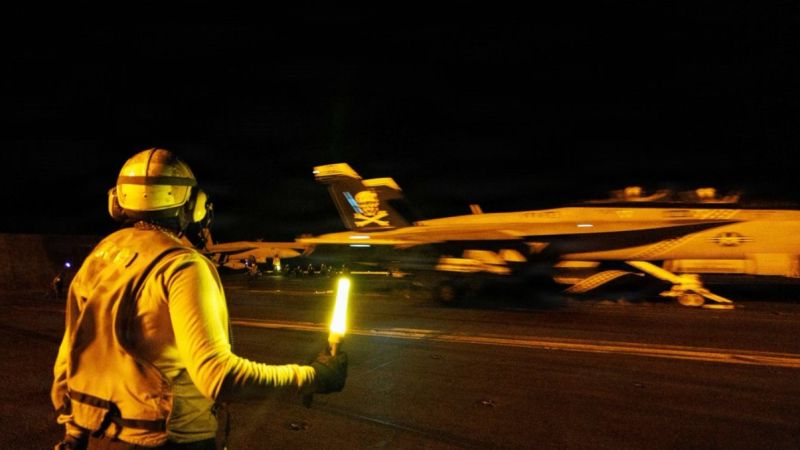
• Fifth straight day of US attacks:The US military launched two more waves of strikes today, the latest aimed at Iranian targets “used to threaten vessels freely transiting through the Strait of Hormuz,” US Central Command said
• US mulls expansion:President Donald Trump has also been receiving options for expanding the US military operation to loosen Tehran’s grip on the critical waterway
• Blockade underway:The US military said it disabled an empty oil tankersailing toward Kharg Island, an economic lifeline for Tehran. It marks the first vessel disabled by US forces since the naval blockade of Iranian ports went back into effect
• No plans for talks:Iran currently has no plans for negotiations, according to its Foreign Ministry spokesperson, who added that Tehran would not adhere to any agreement if the US “breaches its obligations.”
40 Posts
Explosions were heard in several areas across Iran, including the port city of Bandar Abbas and the southern cities of Ahvaz and Chabahar, late Wednesday evening local time, the country’s media outlets reported
Families and patients at Shahid Baghaei Hospital, a facility in Ahvaz in southwestern Iran that specializes in the care and treatment of children with cancer, were temporarily evacuated from the building after a projectile from a US strike landed nearby, state-run Islamic Republic of Iran Broadcasting (IRIB) reported
Valiollah Hayati, deputy governor for security and law enforcement of Khuzestan Province, reported that a strike caused damage to nearby homes and shattered the windows of some housing units
The reports follow US Central Command’s announcement of a new round of airstrikes against Iran
The US military said Wednesday it had disabled an empty oil tanker sailing toward Kharg Island, an economic lifeline for Tehran. It marks the first vessel disabled by US forces since the US naval blockade of Iranian ports went back into effect Tuesday
“US Central Command (CENTCOM) forces observed Curacao-flagged M/T Belma transiting international waters toward Kharg Island. The commercial vessel ignored multiple warnings as it attempted to violate the US blockade. A US aircraft disabled the vessel after firing hellfire missiles into the ship’s smokestack. The ship is no longer transiting to Iran,” CENTCOM said in a post on X
US Central Command added that during the first 24 hours of the naval blockade, it has redirected “two compliant commercial vessels and disabled one non-compliant vessel.”
During the last blockade, which was lifted after the US and Iran agreed to a memorandum of understanding in mid-June, CENTCOM claimed to have redirected 142 ships and disabled nine that didn’t comply over a two-month period
US forces began an additional round of strikes 3 p.m. ET, after early-morning attacks that targeted an island near the Strait of Hormuz
The new strikes focused on “Iranian military capabilities used to threaten vessels freely transiting through the Strait of Hormuz,” US Central Command said in a post on X. The statement didn’t specify the area of the strikes
“The US military is holding Iran accountable at the Commander in Chief’s direction,” the post added
Earlier Wednesday, US forces launched a 90-minute round of attacks on Greater Tunb Island. CNN reportedon the significance of several islands in March, including Greater Tunb, which is among what one researcher called Iran’s “arch defense.”
The first strikes began at 6 a.m. ET and were completed by 7:30 a.m. ET, the military said
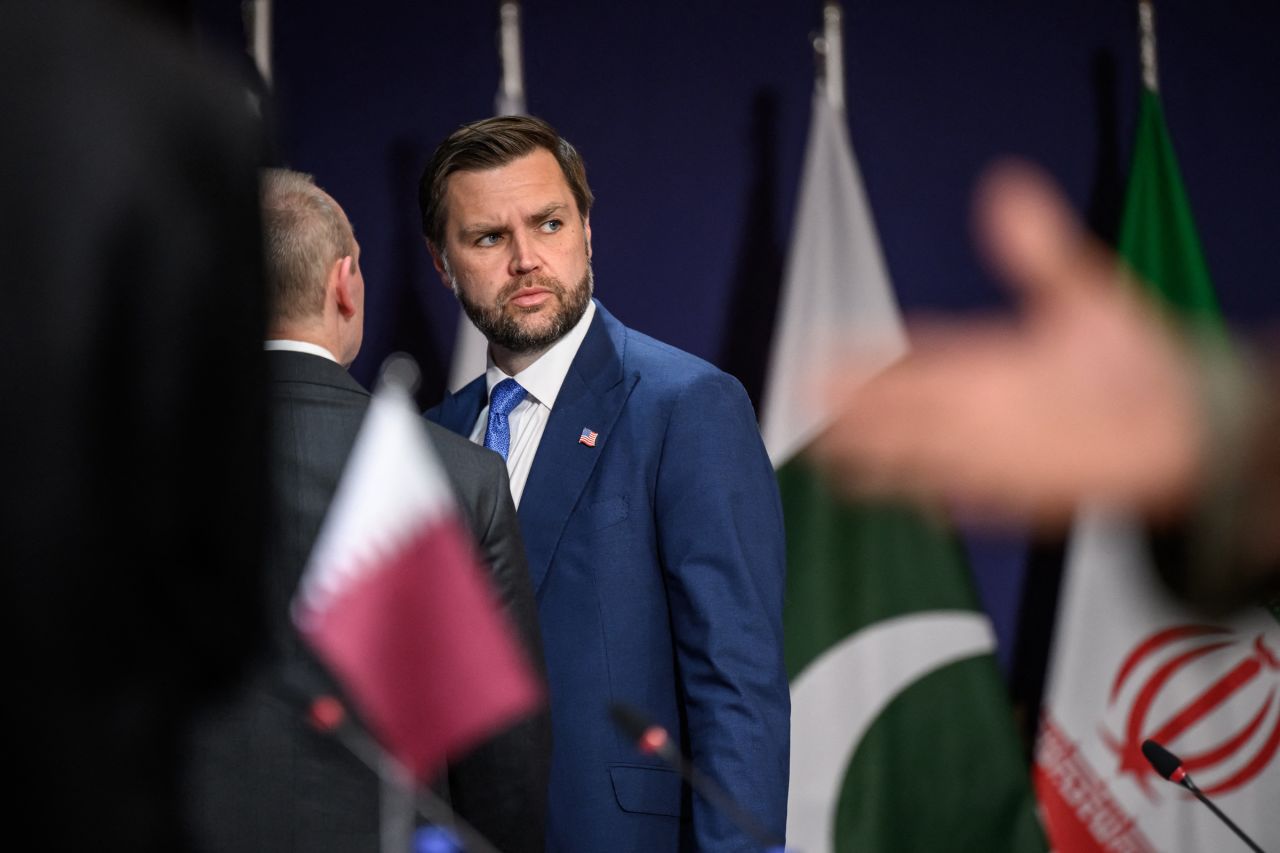
Vice President JD Vance, prior to a quadrilateral meeting between the United States, Iran, Pakistan and Qatar at the Burgenstock luxury hotel complex overlooking Lake Lucerne, Switzerland, on June 21.
Vice President JD Vance offered a defense of attempting diplomacy with Iran amid a renewal in hostilities, saying the war will not be won through military force alone
“I’m very frustrated by the Americans and frankly by people in other countries who are like, you cannot negotiate with the Iranians,” he said on an episode of “The Joe Rogan Experience” released on Wednesday
Vance has led US efforts to engage in negotiations with Iran over its nuclear program, but those efforts have stalled amid disputes over the Strait of Hormuz
President Donald Trump has cast doubt on the utility in continuing talks with Iran as the war resumes, claiming it is a “waste of time dealing with them.”
But Vance suggested the asymmetric threat posed by Iranians in the strait meant the conflict can only be resolved through diplomacy
“You can bomb them, you can take away their radar, you can take away some of their drones and some of their missiles, but it’s just too easy to fire at ships in the straits,” he said. “So you’ve got to actually be willing to talk and to try to figure out the problem.”
At least 13 commercial ships passed through the Strait of Hormuz over the last 24 hours, MarineTraffic data shows, amid boiling tensions between the US and Iran
Eight vessels moved into the Persian Gulf — six cargo ships and two tankers — while five departed, made up of three tankers and two cargo ships
The numbers are consistent with the depressed transit levels recorded over recent days, after indirect US-Iran negotiations fell apart. Before the war, an average of about 110 ships transited the strait daily
GPS spoofing also remains a concern in the region — a type of navigational interference that makes ships’ broadcast positions show up in false locations. The disruption has continued for months, sometimes throwing vessels’ reported coordinates off by dozens of miles and making traffic through the waterway more difficult to monitor
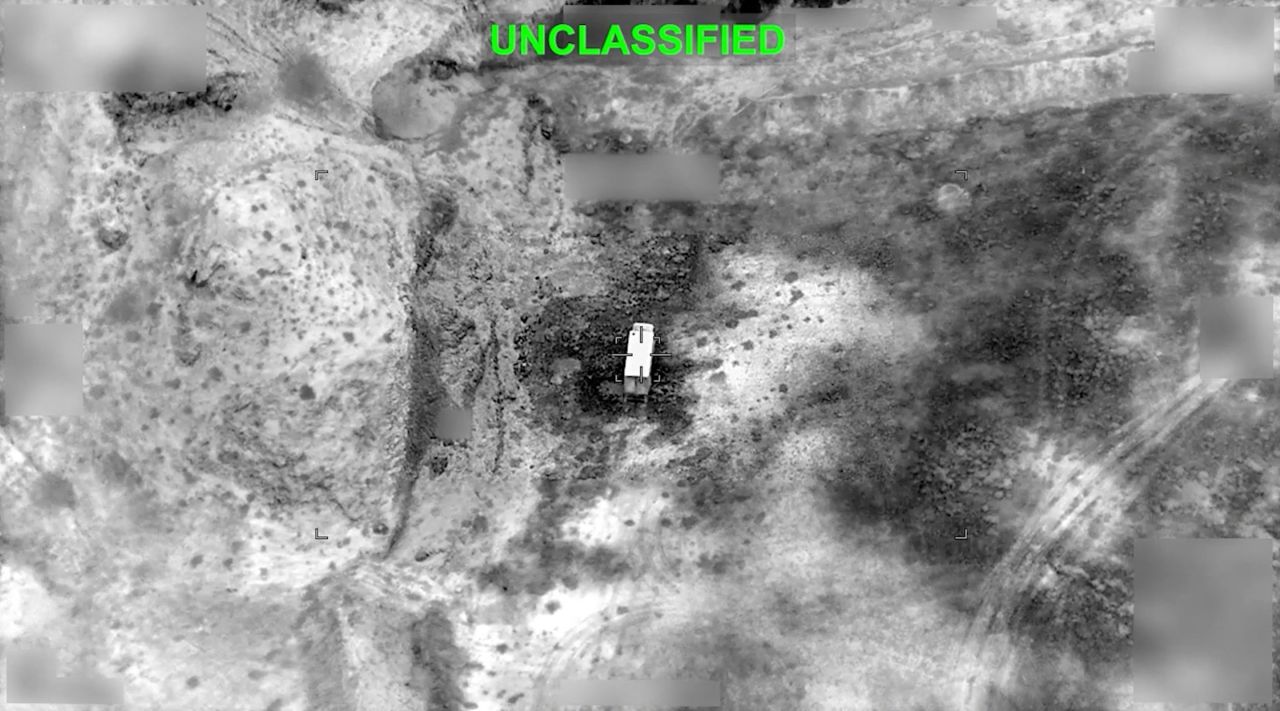
A screengrab from a video obtained from social media on Wednesday, shows a view shortly before what US Central Command say was a US strike on Iran.
Iran’s foreign ministry said it has no plans for negotiations as the United States carried out a new wave of attacks
Here’s the latest headlines:
- Iran will continue to respond “firmly” to US strikes and has no plans for negotiations, foreign ministry spokesperson Esmaeil Baghaei told Iranian media.
- At the same time, Iran’s chief negotiator Mohammad Bagher Ghalibaf said Tehran must continue to defend itself while also remaining open to diplomatic talks, according to a statement released by state-run Islamic Republic of Iran Broadcasting.
- Ghalibaf advocated for maintaining the “Iranian arrangements” in the Strait of Hormuz, which allow Iran to control the waterway, and accused the US of “trying to weaken the Iranian arrangements through force.”
- It comes after the American blockade of Iranian ports was reinstated. The US military said it has already redirected two commercial vessels since it began yesterday.
- The Oslo-based group Iran Human Rights, a nongovernmental organization with members inside and outside Iran, believes the Iranian regime has ramped up executions under the cover of the conflict.
- Meanwhile, Israel and Lebanon have agreed on the “structure and guidelines” for possible Israeli military withdrawal from southern Lebanon, a US State Department official said. An Israeli official described the Israel-Lebanon talks as “positive” and said they agreed on the need to disarm the Iranian-backed Hezbollah militants in Lebanon.
CNN’s Christiane Amanpour discussed the latest developments today with Leslie Vinjamuri, the President and CEO of the Chicago Council on Global Affairs
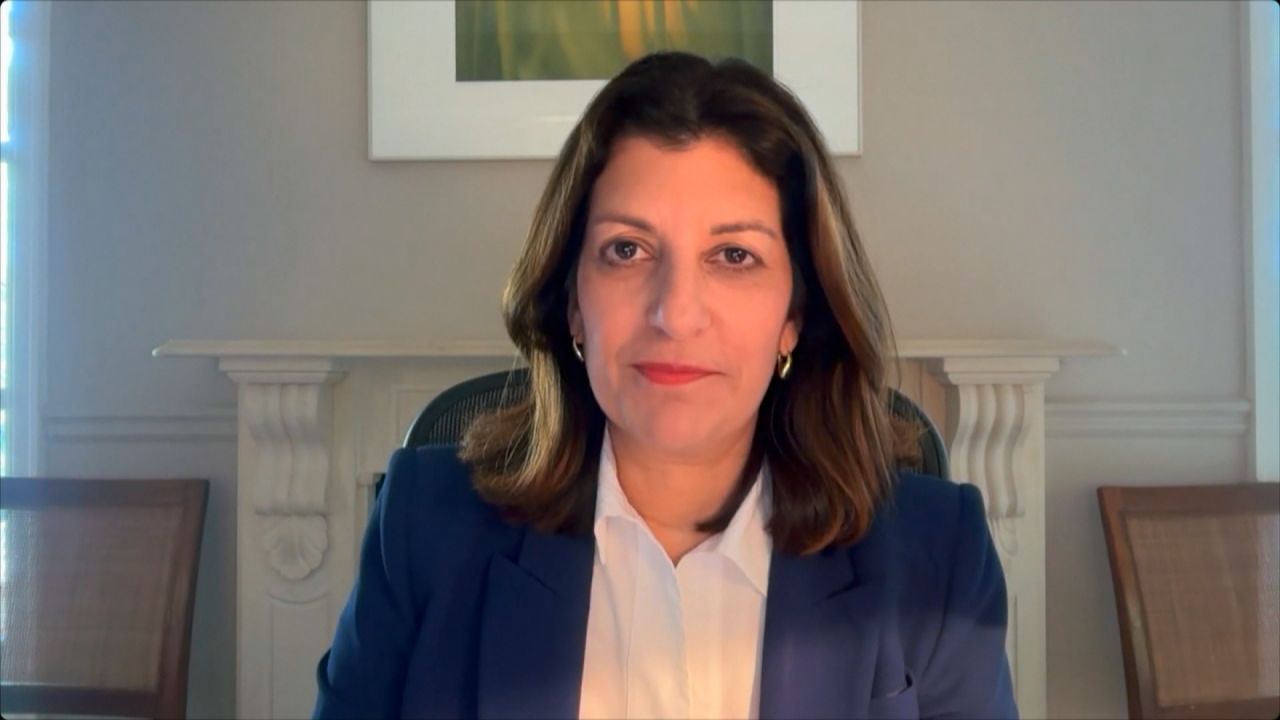
‘Iran is turning to old tactics and the US is taking the bait,’ says policy analyst
10:10• Source:
CNN
‘Iran is turning to old tactics and the US is taking the bait,’ says policy analyst
10:10
CNN’s Aida Karimi, Mitchell McCluskey, Isobel Yeung, Vasco Cotovio, Max Saltman, Jennifer Hansler and Oren Liebermann contributed reporting to his post
Iran must continue to defend itself while also remaining open to diplomatic talks, the country’s chief negotiator, Mohammad Bagher Ghalibaf, said in a statement released by state-run Islamic Republic of Iran Broadcasting (IRIB) on Wednesday
Iran is engaged in a “fundamental and existential” conflict with the US, he said
“We have never welcomed war, and do not do so now, but we must always be prepared for battle and be ready to defend our national security and interests with our lives,” said Ghalibaf, Iran’s parliament speaker. “At the same time, we must also use diplomacy and negotiations to advance and consolidate our national interests.”
Ghalibaf warned that Iran “has no reason to remain committed to an agreement if it derives no benefit from it” and that “the armed forces have full freedom of action” to respond to enemy aggression
He advocated for maintaining the “Iranian arrangements” in the Strait of Hormuz, which allow Iran to control the waterway, and accused the US of “trying to weaken the Iranian arrangements through force.” He insisted that “our national security depends on preserving” control over the strait
The politician also appealed to Iranians living in the southern parts of the country, the frequent target of airstrikes
“You are the lifeblood of Iran, and we would sacrifice our lives for you a thousand times over,” Ghalibaf said
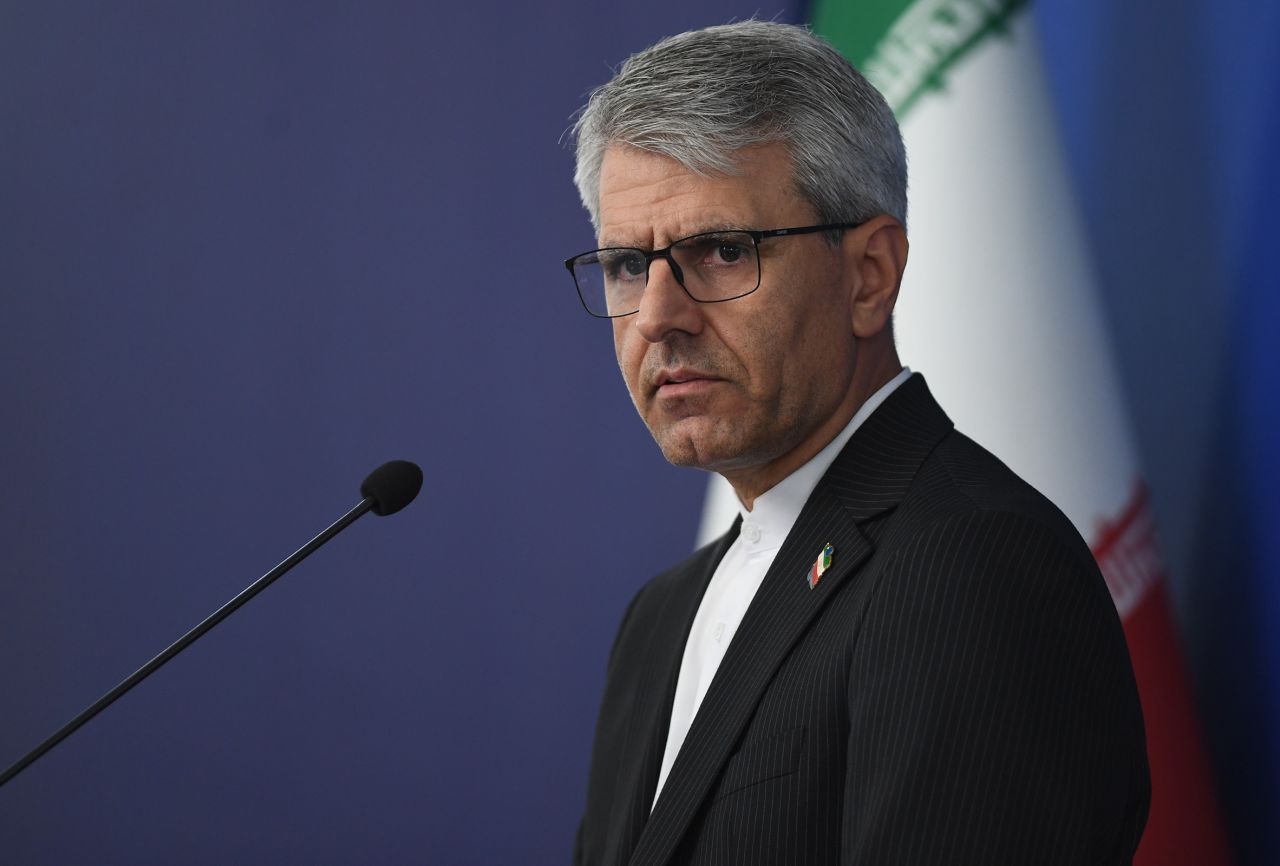
Iranian Foreign Ministry spokesman Esmaeil Baghaei speaks in Tehran, Iran, on July 13.
Iran will continue to respond “firmly” to US strikes and has no plans for negotiations, Foreign Ministry spokesperson Esmaeil Baghaei told Iranian media on Wednesday
“We currently have no plans for negotiations and remain focused on defending the country,” Baghaei told reporters outside a Tehran memorial service for the late Ayatollah Ali Khamenei’s son-in-law, according to video from Iran’s Student News Network (SNN)
Baghaei said Iran will not adhere to any agreement if the US “breaches its obligations.”
“This is a principle, and we will continue to follow it,” Baghaei said, adding that Iran believes the United States has disregarded the ceasefire from its inception
Soon after SNN reported the spokesperson’s comments, the semi-official Mehr News Agency reported that the US struck Iran’s Hengam Island near the Strait of Hormuz
On the sidelines of the memorial service, Deputy Foreign Minister Kazem Gharibabadi said Iran will “respond decisively” to any acts of aggression, Iran’s official Islamic Republic News Agency (IRNA) reported
“We will not leave any act of aggression or any action against the Iranian nation unanswered,” Gharibabadi said
Under the cover of conflict, the Oslo-based group Iran Human Rights (IHR), a nongovernmental organization with members inside and outside Iran, believes the Iranian regime has ramped up executions
So far this year, the regime has executed at least 47 political prisoners, a massive increase from 16 around the same time last year
Amid widespread protests across the country at the end of last year, US President Donald Trump warned leadership in Tehran against a violent crackdown on demonstrators, saying America would “come to their rescue.”
But as Trump and the White House tired of the US-Iran conflict, and the global economic repercussions worsened, their language softened and support for Iranian dissidents waned
You can read more about the plight of Iran’s political prisoners in our full article here, available to subscribers
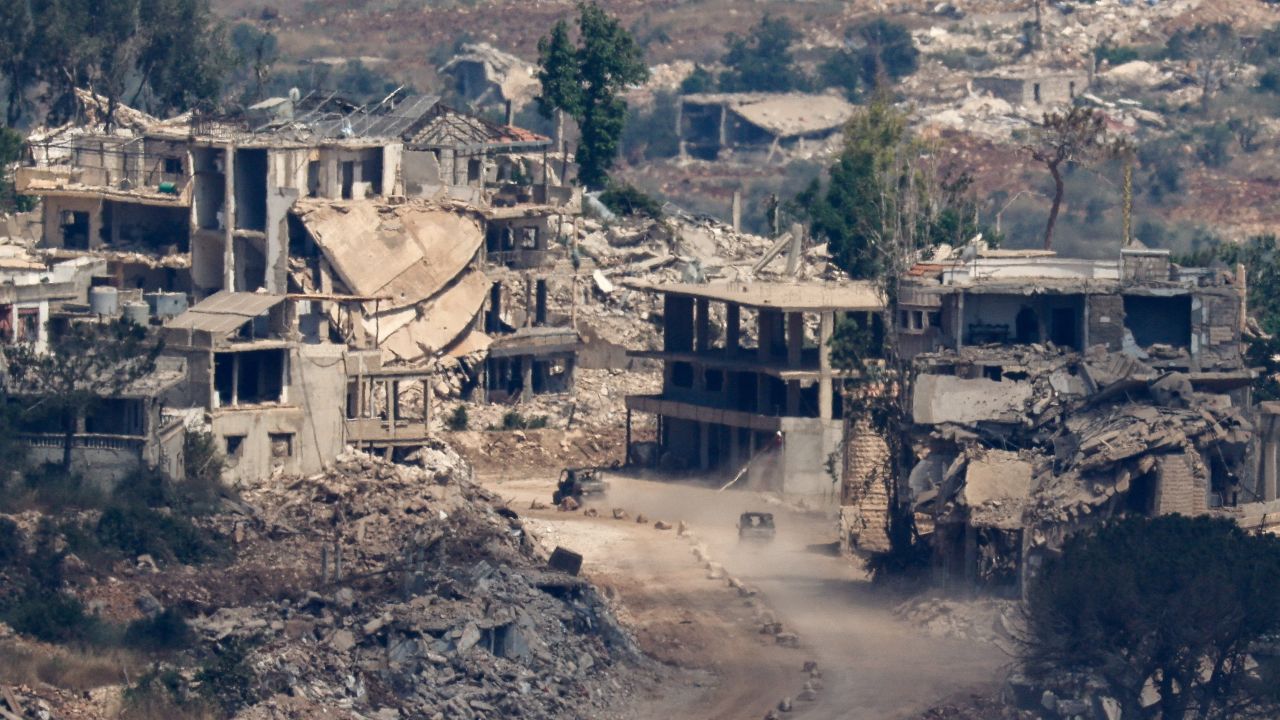
Israeli military vehicles drive amid destroyed buildings in Lebanon on June 27.
Two days of “productive and positive discussions” in Rome between Israel and Lebanon have ended, a State Department official said
The talks included participation from US representatives, led by State Department counselor Dan Holler
An Israeli official also described the talks as “positive” and said that Israel and Lebanon agreed on the need to disarm Hezbollah
The official said the two areas slated for the first Israeli military withdrawals from southern Lebanon have been “agreed upon.”
Israel will use the zones as a way of testing whether Lebanon’s government can secure the areas under the ceasefire agreement, which will be verified “by a third party,” the official said, without identifying who would serve in such a role
The agreement comes as the Israeli military said it killed three Hezbollah militants inside Israel’s “security zone” in southern Lebanon. The militants, Israel’s military said, “were carrying combat equipment” and posed a threat to Israeli soldiers nearby
The headline of this post has been updated
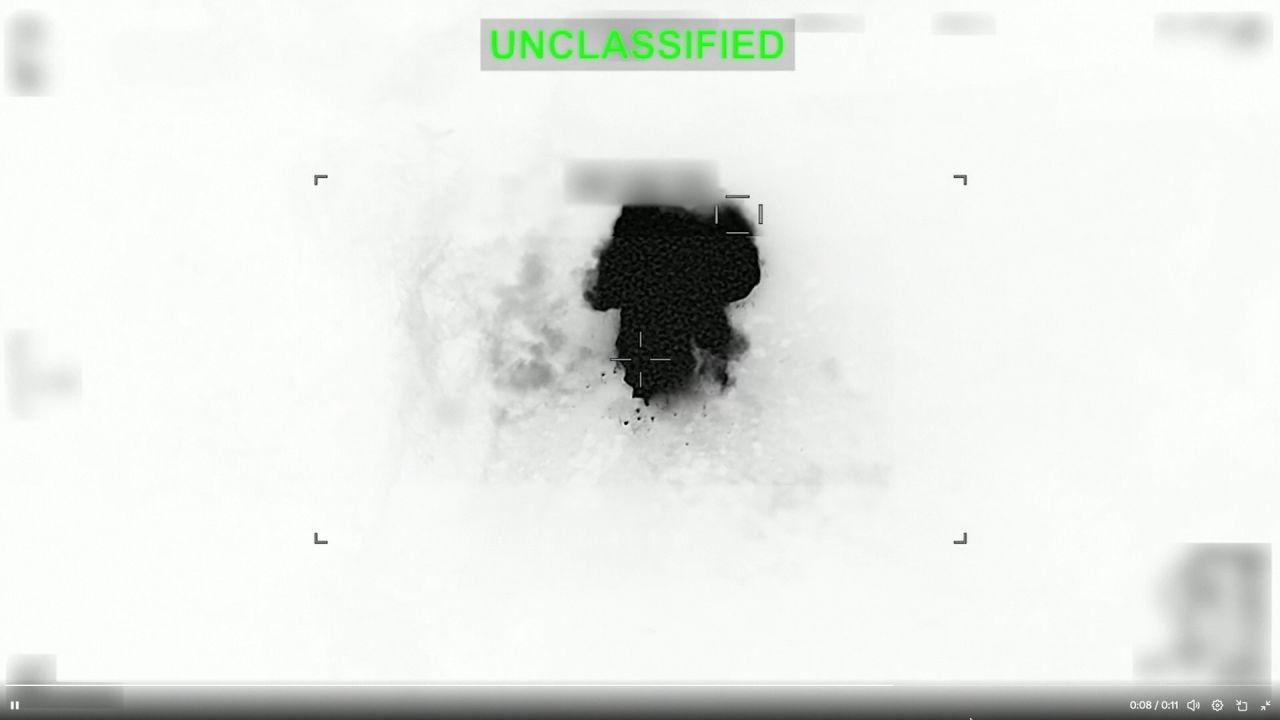
US Central Command releases video of attack on Iranian “military target”
0:23• Source:
CNN
US Central Command releases video of attack on Iranian “military target”
0:23
The US has carried out a wave of strikes on Iran today, marking another round of attacks after multiple airstrikes on consecutive nights
Meanwhile, the American blockade of Iranian ports has also been reinstated, with the US military saying it has already redirected two commercial vessels since it began yesterday
If you’re just joining us, here’s the latest:
- Before launching daytime strikes today, the US military carried out its fourth consecutive night of strikes against Iran, hitting dozens of military targets near the Strait of Hormuz and coastal areas, according to US Central Command.
- In retaliation for the US strikes, Tehran said earlier that it targeted US military infrastructure in Kuwait, Bahrain and Jordan.
- More than 260 people have been injured in recent US strikes against Iran, the country’s Health Ministry said today, including at least three women and six children. CNN cannot independently verify this figure. More than 30 civilians have been killed in the strikes, according to Iranian government spokesperson Fatemeh Mohajerani.
- Iranian Foreign Minister Abbas Araghchi traveled to Doha to attend a ceremony in honor of Qatar’s former emir, Hamad bin Khalifa Al Thani, according to the semi-official Mehr News Agency. It’s unclear if the trip will include discussions on restoring peace between the US and Iran.
- US gas prices rose another 3 cents to $3.89 for a gallon of regular in the latest daily reading from AAA today. Prices are now 10 cents higher over the past week after fighting resumed.
CNN’s Kit Maher, Lauren Chadwick, Clay Voytek, Helen Regan, Lex Harvey, Billy Stockwell, Aida Karimi and Chris Isidore contributed to this reporting
The US military says it has redirected two commercial vessels since reinstating a naval blockade against Iranian ports
“Since restarting the naval blockade against Iranian ports 17 hours ago, U.S. forces have redirected 2 commercial vessels attempting to run the blockade. The U.S. military remains vigilant and prepared to ensure full compliance,” US Central Command said in a social media post on Wednesday
The blockade of ships heading to and from Iranian ports began around 4 p.m. ET on Tuesday. The US had previously enforced a blockade on Iranian ports for roughly two months between April and June
CNN’s Haley Britzky contributed to this report
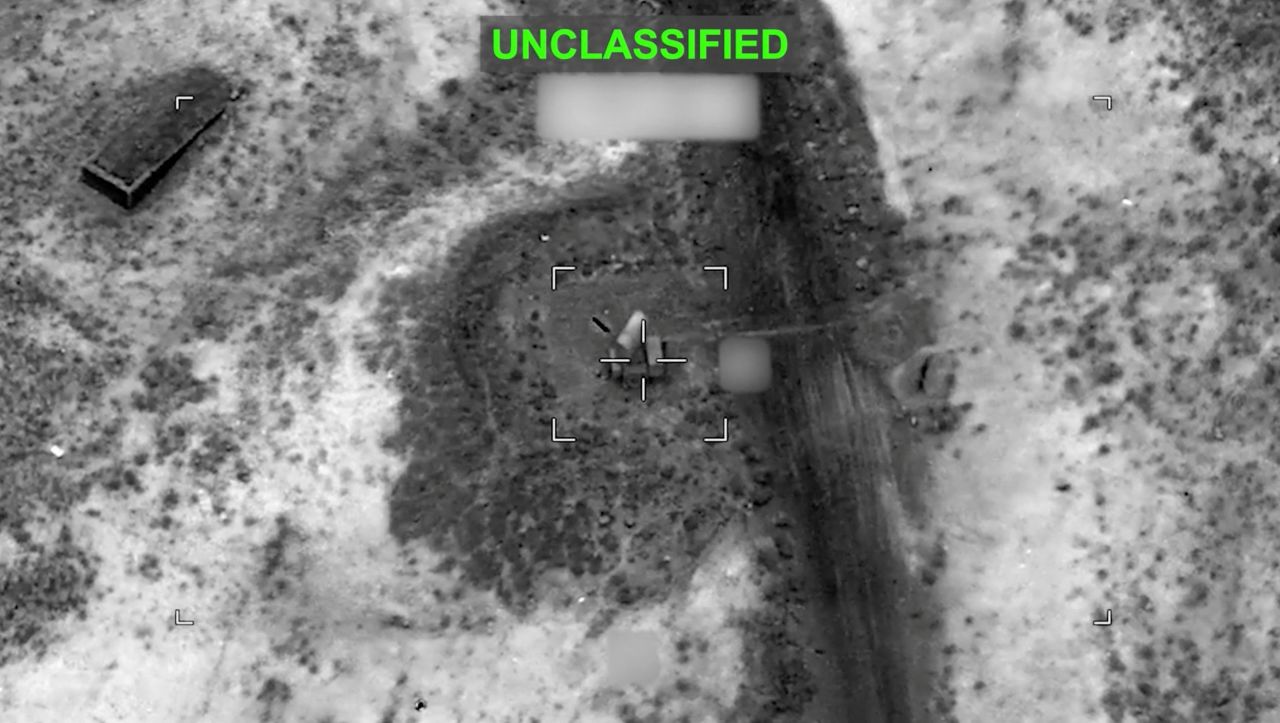
A projectile approaches a target at an unknown location following what US Central Command said were strikes on Iran, in this screen grab taken from a handout video released on Sunday.
More than 260 people have been injured in recent US strikes against Iran, the country’s Health Ministry said today
This includes at least three women and six children the Health Ministry’s spokesperson. “So far, 222 of the injured have been treated and discharged,” he added
Kermanpour said the injuries were sustained during the “latest wave of attacks against Iran,” but did not specify an exact timeframe
CNN cannot independently verify the figure
Earlier today, Iranian government spokesperson Fatemeh Mohajerani said more than 30 civilians had been killed in US strikes on the southern regions of Iran in recent days
Meanwhile, at least seven Iranian military personnel were killed in overnight US strikes targeting a military base in the country’s southeast, Iran’s army said
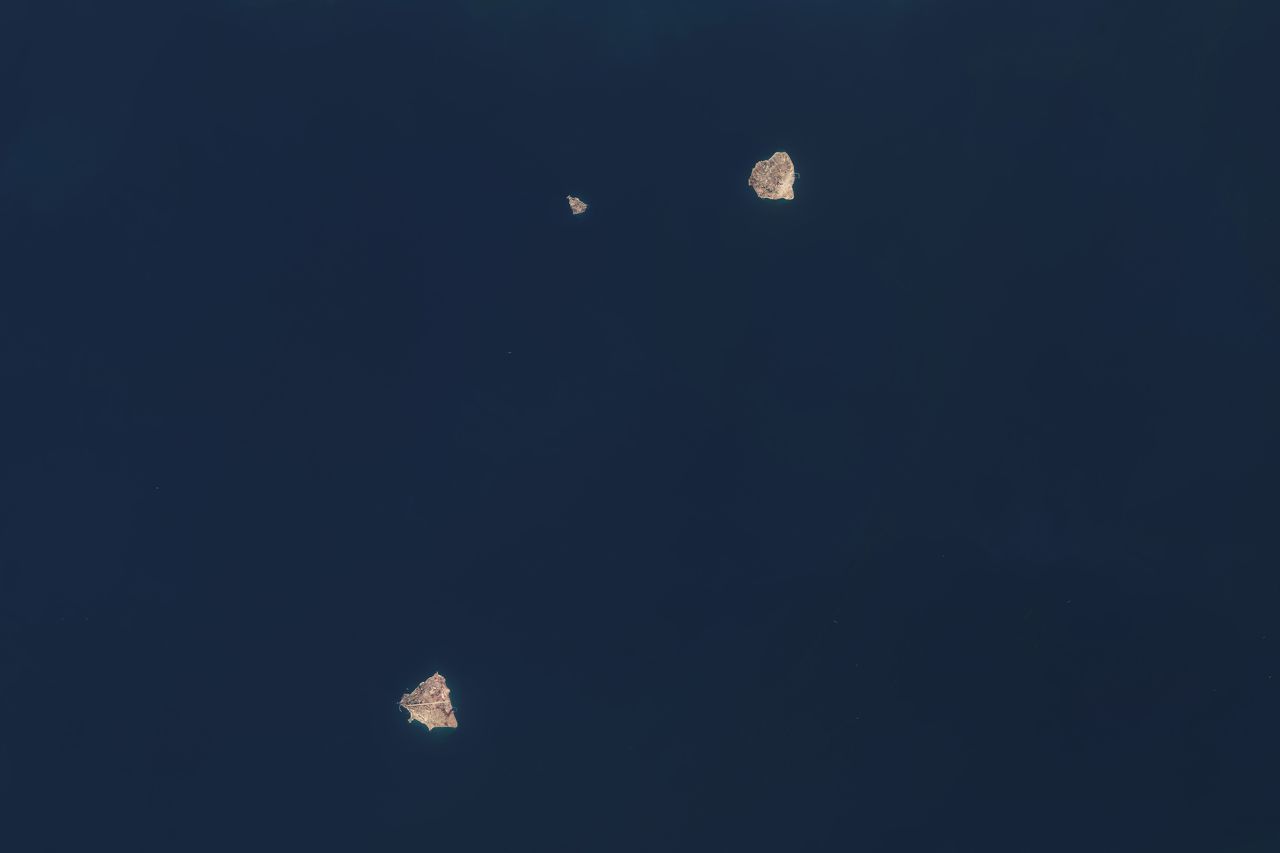
A satellite photo from March 16 shows Abu Musa, Greater Tunb, and Lesser Tunb, three small islands in the Persian Gulf near the Strait of Hormuz.
The Greater Tunb, a small island in the Persian Gulf close to the Strait of Hormuz, has was targeted in the latest wave of US strikes on Iran this morning
It is one of several islands in the region that experts say are important to securing the safe passage of ships – and naval vessels – through the Strait of Hormuz. The island is administered by Iran but claimed by the United Arab Emirates (UAE)
Researchers at Sun Yat-sen University in Zhuhai, China, call Greater Tunb as well as six other islands, Abu Musa, Lesser Tunb, Hengam, Qeshm, Larak and Hormuz, Iran’s “arch defense” regarding the strait
Iranian officials have referred to them and other gulf islands as Tehran’s “stationary and unsinkable aircraft carriers,” according to the researchers
Last year, the IRGC said it was reinforcing its presence on Abu Musa, Greater Tunb and Lesser Tunb, Iranian state media reported
Iran’s Foreign Minister Abbas Araghchi has traveled to Doha to attend a ceremony in honor of Qatar’s former Emir Hamad bin Khalifa Al Thani, according to the semi-official Mehr News Agency
Al Thani died on Sunday aged 74, the nation’s Amiri Diwan, its top government body, said
Iran has repeatedly targeted Qatar in recent weeks, using missiles and drones to strike Al Udeid Air Base in retaliation for US strikes, including on the day the former emir died
Qatar had been a key mediator in US-Iran talks that produced the Memorandum of Understanding in June, which is now unraveling. It’s unclear if Araghchi’s trip to Doha will include discussions on restoring the ceasefire
Before fighting between the US and Iran picked back up again recently, delegations from both countries had traveled to Doha for indirect negotiations
US Central Command releases video of attack on Iranian “military target”
0:23• Source:
CNN
US Central Command releases video of attack on Iranian “military target”
0:23
The US military said that it completed a 90-minute wave of strikes on Iran this morning, marking another round of attacks after multiple consecutive nights
Greater Tunb Island is one of the small islands located near the western entrance of the Strait of Hormuz. CNN reportedon the significance of several islands in March, including Great Tunb, which is among what one researcher called Iran’s “arch defense.”
The strikes began at 6:00 a.m. ET and were completed by 7:30 a.m. ET, the military said. Central Command also posted a video of what appeared to show thermal imaging of the attack
US President Donald Trump once again threatened to strike Iran’s power plants, saying that, if Iran does not return to the negotiating table, “next week it gets really bad for them, because next week comes the power plants.”
Iran has about 110 gas plants, a small number of which are hybrid, according to data from OpenInfraMap, an open-piled by volunteers
The country also operates solar, hydro, wind, oil, diesel, coal, geothermal and nuclear plants, according to the site
The three biggest plants by output run on gas:
- Damavand Combined Cycle Power Plant: located around 70 km southeast from downtown Tehran. Output: 2,868MW.
- Shahid Salimi:located in Mazandaran province, near the Caspian Sea. Output: 2,215 MW.
- Shahid Rajai:located some 110 km northeast of downtown Tehran. Output: 2,043 MW.
For context: Florida’s West County Energy Center is the largest operating natural gas power plant in the US, with an output of 3,750 MW
Iran produces most of its electricitylmost 28,000 GWh was from renewable energy in 2023, according to data from theInternational Atomic Energy Agency (IAEA) website
Iran says it only has one nuclear power reactor in operation — the Bushehr Nuclear Power Plant in the west — and another under construction, according to the IAEA. In 2023, Iran produced 5,740 GWh of electricity by nuclear energy
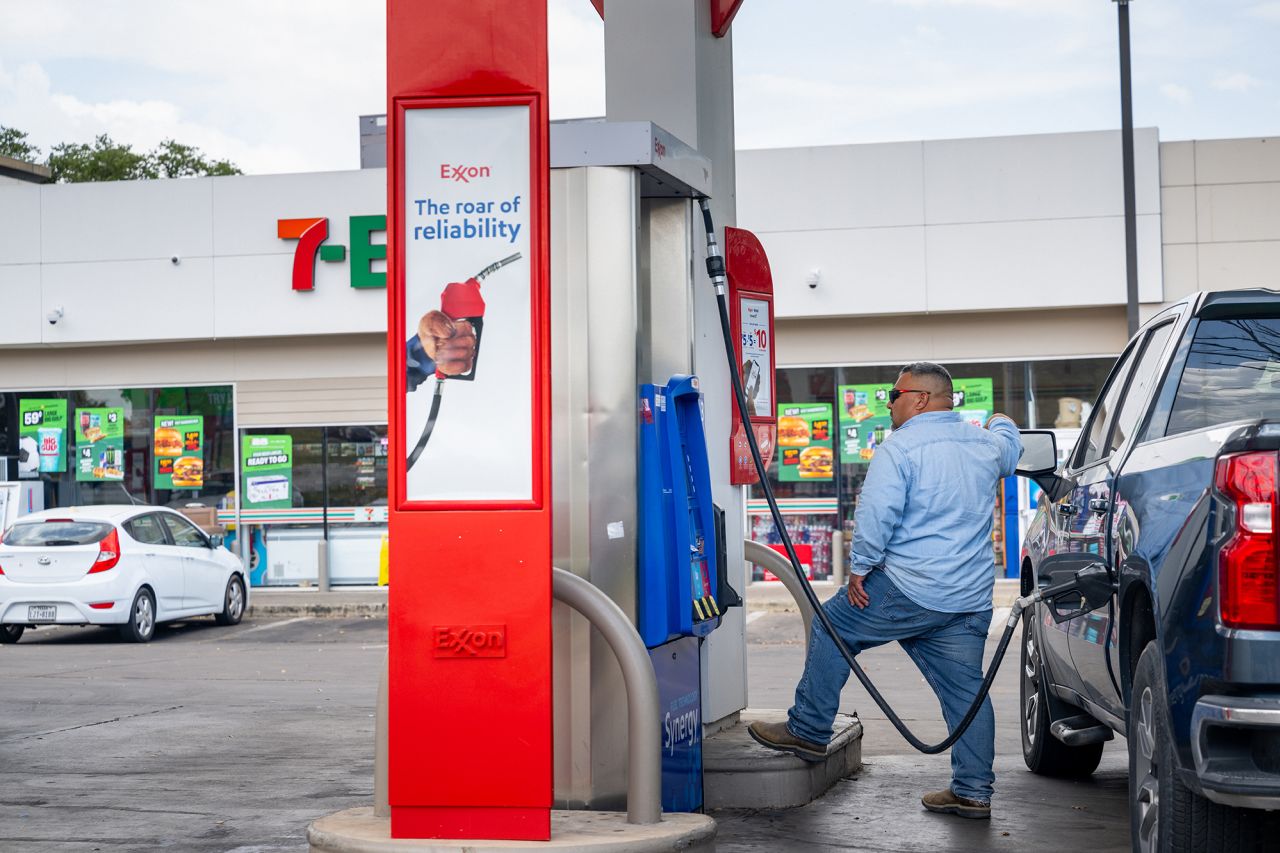
A person pumps gas at a gas station in Austin, Texas, on July 10.
Gas prices rose another 3 cents to $3.89 for a gallon of regular in the latest daily reading from AAA Wednesday. Prices are now 10 cents higher over the past week after fighting in the Middle East resumed
Prices had been falling steadily for nearly two months on hopes that the the war had ended and the Strait of Hormuz would be reopened
After the United States and Iran signed of a memorandum of understanding on June 18, the strait reopened and tankers that had been trapped in the Persian Gulf started to exit. But Iran continued firing on vessels, and last week President Donald Trump declared the ceasefire was over
Oil and gas prices have been steadily climbing since then
The gain in gas prices in the last week is the largest weekly increase that American drivers have faced since early May. And the $3.89 average is the highest average price in nearly three weeks
The ceasefire between the US and Iran appears to be in tatters, with the conflict between the two sides intensifying over recent days
Tehran and Washington agreed to a memorandum of understanding (MoU) last month
On June 25, Iran struck a commercial vessel in the Strait of Hormuz. The next day, in response, the US military hit Iranian military targets around the waterway On June 27, Iran’s Islamic Revolutionary Guard Corps (IRGC) said it targeted US military positions, and the US military again launched strikes against Iran
On June 28, a Trump administration official told CNN that both sides “will stand down for now.”
Here’s what has happened since the beginning of this month:
- July 1:US and Iranian negotiators travel to Doha, Qatar, for indirect negotiations. The delegations make “positive progress,” Qatari Foreign Ministry spokesperson Majed al-Ansari says.
- July 7: Iran fires on three commercial vessels in Oman’s territorial waters near the Strait of Hormuz, according to a US official. US Central Command says it launched strikes against Iran as “punishment.”
- July 8: Iran warns it will deliver a “crushing response” to the US strikes, and the IRGC says it has launched attacks at 85 US military targets across Bahrain and Kuwait. Trump castigates Iran as “evil, sick people” at the NATO summit in Turkey, saying the memorandum of understanding “is over.” Hours later, the US launches more strikes against Iran.
- July 9: Tehran says the US military has struck a railway bridge in northern Iran. CENTCOM says the US has hit around 90 military targets in another round of strikes. A US official tells CNN that both countries are continuing to engage in technical negotiations on nuclear issues.
- July 10:Trump says the US has agreed to continue talks with Iran, but also that Washington has informed Tehran the ceasefire is no longer in effect. Iran’s chief negotiator Mohammad Bagher Ghalibaf says Tehran is prepared for “all-out defense” if the US breaks the agreement. The Trump administration imposes fresh sanctions on Tehran.
- July 11:Iran’s foreign minister accuses the US of violating a clause on Tehran’s nuclear program in their MoU.
- July 12: The IRGC announces it has closed the Strait of Hormuz after firing a warning shot at a vessel attempting to use an unauthorized route to cross the waterway. The US military launches more strikeson Iran, and insists that the strait is still open.
- July 13: US attacks across Iran continue into the afternoon, killing at least two people, Iranian media reports. Trump says he will reinstate a blockade of Iranian ships in the Strait of Hormuz. The US carries out more strikes on Iran overnight.
- July 14: The IRGC says it “struck and disabled” what it called two “rogue supertankers.” Two tankers report being hit by missiles while transiting the southern route of the Strait of Hormuz, the UK Maritime Trade Operations center says. The US conducts more strikes overnight.
- July 15: Iran says that US strikes on the country have killed more than 30 civilians in recent days. In retaliation for the US strikes, Tehran says it has targeted US military infrastructure in Kuwait, Bahrain and Jordan.
CNN’s Mohammed Tawfeeq, Zachary Cohen, Jessie Yeung, Kevin Liptak, Sophie Tanno, Casey Gannon, Julia Benbrook, Hira Humayun, Pamela Brown, Lex Harvey, Davis Winkie, Isaac Yee, Clay Voytek, Betsy Klein, Alejandra Jaramillo, Aida Karimi, Lauren Kent, Jennifer Hansler, Rhea Mogul, Dalia Abdelwahab, Aleena Fayaz, Aileen Graef, Kathleen Magramo, Billy Stockwell and Helen Regan contributed to this reporting
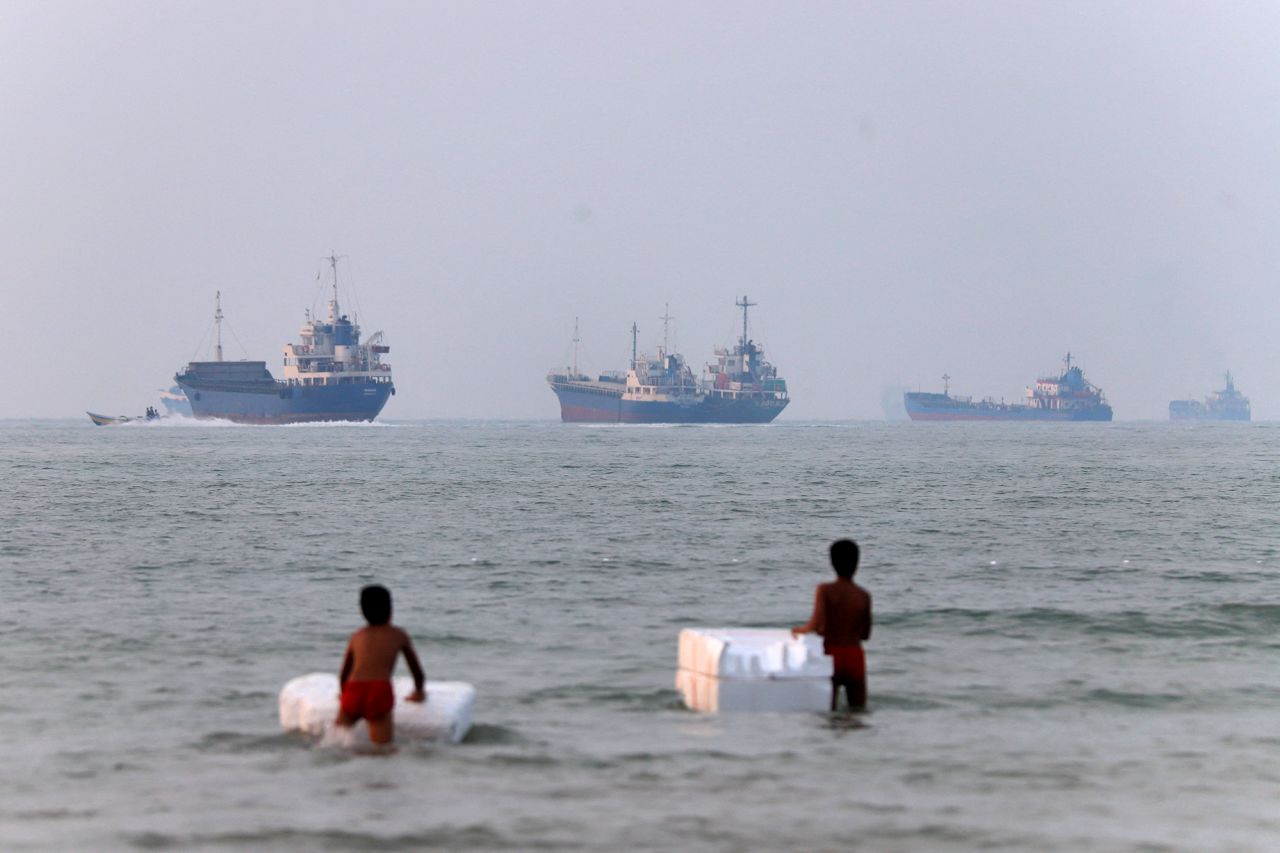
Vessels in the Strait of Hormuz near the beach of Bandar Abbas, Iran, on June 30.
What started as a campaign to diminish Iran’s nuclear capabilities and weaken its global terror networks has morphed into a dispute over control of one of the world’s most important trade routes
The Iran war has become a battle for the Strait of Hormuz, a global chokepoint for oil, natural gas, fertilizer and other commodities
If the conflict leaves Hormuz under the permanent control of Iran – or the United States – it could spell the beginning of the end of free passage on the open seas, a concept that has underpinned global trade for centuries
You can read more about Tehran’s new energy weapon, and what it means for global shipping, in our article here, available to subscribers
