
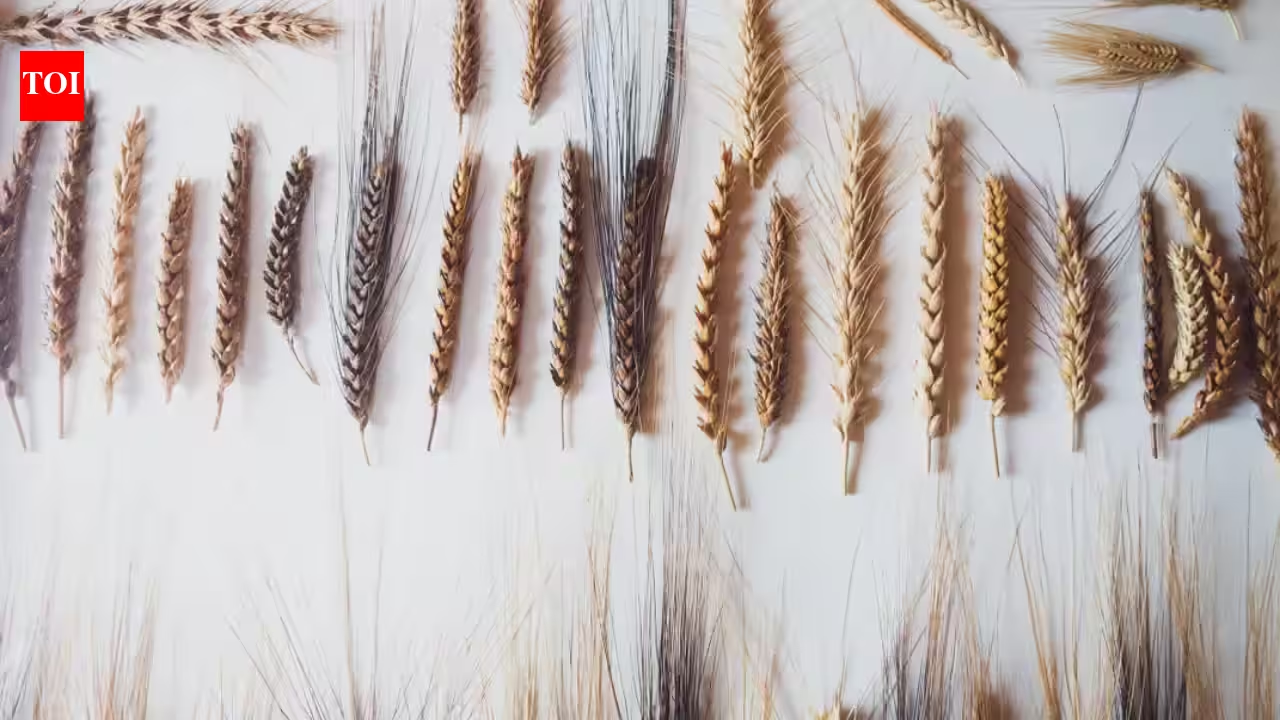
An Italian farmer who planted unidentified seeds found in his family’s attic ended up rediscovering a little-known heritage wheat variety that could offer useful lessons for agriculture facing climate change. As reported by Smithsonian Magazine, Claudio Grossi, a farmer near Parma in northern Italy, discovered that one of the plants growing from the seeds produced seven ears of grain on a single stalk, an unusual sight that reminded him of a passage in the Bible. The grain, later identified as Triticum turgidum, or poulard wheat, proved hardier than the commercial wheat varieties he was familiar with.The discovery dates back to the early 1990s, when Grossi was cleaning his attic and came across an old sack of seeds. He believed the bag had been left behind by his late great-grandfather, who established the family farm around 1915. The seeds were dry and cracked, and Grossi doubted they would grow. He carried them downstairs, scattered them over a pile of manure and forgot about them.But the seeds germinated, producing several kinds of wheat. One stood out immediately. Its plants grew to around six feet tall, roughly twice the height of typical commercial wheat, and developed a striking arrangement of seven ears: one long central ear surrounded by six shorter ones. The kernels were also larger than average and varied in colour, including yellow, black, red, white and green.“I thought it was a freak of nature,” Grossi told Smithsonian Magazine, explaining that he could not find a description of the unusual plant in the agricultural books he consulted.
Why the wheat reminded him of the Bible
Grossi, a practising Catholic, found an unexpected parallel while reading the Book of Genesis. In the biblical account, Joseph interprets a dream experienced by the Egyptian pharaoh, in which seven full ears of grain grow on one stalk, followed by seven thin ears. The resemblance led Grossi to wonder whether the wheat he had grown might have ancient origins. However, the biblical connection was an inspiration for his investigation, not scientific proof that the plant came from biblical times.The identity of the grain was eventually established through food-science research. Beniamino Perobelli, then a student at the University of Parma, investigated its nutritional properties for his undergraduate thesis. Working with the laboratory of Teofilo Vamerali, a professor at the university, he identified the wheat as Triticum turgidum, commonly known as poulard wheat. The species originated in regions including present-day Turkey and Egypt and other parts of the Mediterranean, and historical references showed that it had also been cultivated in Italy before farmers moved towards higher-yielding commercial varieties.The likely explanation for the seeds surviving in the attic was therefore more practical than miraculous: Grossi’s great-grandfather had preserved seeds from an older farming tradition.
A hardy crop with potential benefits
Grossi began growing the wheat on his farm and called it grano del miracolo, Italian for “miracle grain”. He found that it performed better during droughts than the commercial wheat varieties he knew, grew tall enough to shade competing weeds and did not require the same reliance on fertilisers and herbicides.The crop also offered an unexpected nutritional profile. Research described by Smithsonian Magazine found that the wheat contained more phosphorus and iron than modern wheat varieties examined in the comparison. Researchers also reported lower gluten levels and the presence of amino acids such as lysine, tryptophan and arginine. These findings concern the grain studied and should not be taken to mean that it is safe for people with coeliac disease or that it is universally healthier than modern wheat.Turning the grain into bread, however, required experimentation. Grossi found that dough made from its flour did not rise as well as conventional wheat dough and tended to collapse. In the early 2000s, he began working with a local baker who preferred traditional hand-kneading methods. They experimented with smaller batches, taller wicker baskets and less kneading until the dough held its shape more successfully.Grossi described the resulting bread as rich and nutty, with a sweetness he felt was different from that of bread made with ordinary commercial flour. A local organic grain company, Molino Grassi, eventually began offering the flour to artisanal bakers, restaurants and consumers in Italy and abroad.
Could ancient wheat help agriculture adapt to climate change?
The discovery has broader relevance because modern agriculture often depends on a relatively narrow selection of crop varieties. These varieties have helped increase food production, but relying heavily on a limited genetic pool can leave farming systems vulnerable to drought, extreme heat, plant diseases and pests.Francesco Sottile, an expert in agrosystem biodiversity at the University of Palermo, told Smithsonian Magazine that greater crop diversity can reduce this vulnerability. If one variety struggles under particular environmental conditions, another may still produce a harvest.He pointed to the severe drought experienced in Sicily in 2024, when many commercial wheat growers abandoned their fields before harvest. Some smaller farmers cultivating heritage grains were still able to collect their crops, he said. The example illustrates why traditional varieties may deserve further investigation, although it does not establish that every ancient wheat will outperform modern varieties under all conditions.The miracle wheat also has limitations. Its tall stems can be vulnerable to strong winds, heavy rain and hail, which may flatten plants before the grain ripens. Grossi addressed this problem by growing it alongside shorter wheat varieties that provide structural support.The discovery is therefore not proof that a single ancient grain can solve the climate crisis or replace modern wheat. Its importance lies in the genetic diversity and farming knowledge it brings back into consideration. As climate pressures intensify, studying heritage crops could help researchers and farmers identify useful traits for future breeding programmes.