

Cuba plunged into 3rd nationwide blackout in 2 weeks as fuel runs low
Associated Press
Published: July 14, 2026 at 7:16 PM
1 / 5
Copyright 2026 The Associated Press. All right reserved
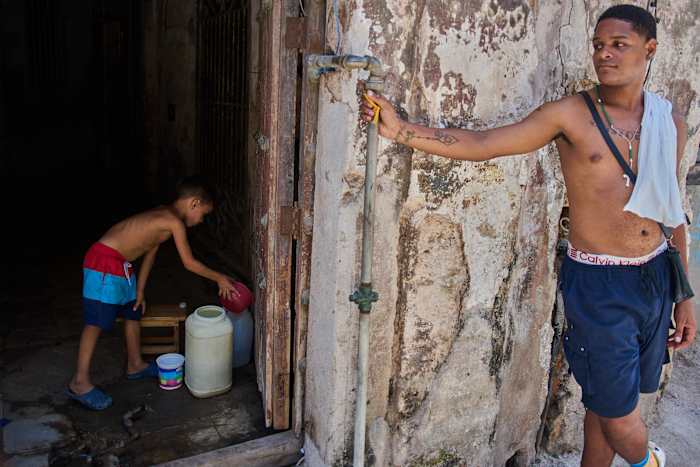
A youth collects water from the bottom floor of a residential building, during a blackout that stopped the water pump, in Havana, Cuba, Tuesday, July 14, 2026. /Ramon Espinosa)
HAVANA – Cuba suffered another blackout of the National Electric System, or SEN, on Tuesday, leaving the entire country without power, officials said. It was the third such incident in two weeks as a U.S. oil embargo stresses the island’s grid
Fuel has been running out across Cuba since January, when U.S. President Donald Trump threatened tariffs on any country that sells or provides oil to the island, deepening the island’s ongoing economic and financial crisis. Public transportation has largely been halted, and officials have canceled tens of thousands of surgeries
Recommended Videos
Cuba produces only 40% of the fuel it needs. A solution for fuel imports is not yet in sight
The state-owned Electric Union reported that a problem with a generating unit in the eastern province of Holguín caused “a sudden frequency change,” resulting in the SEN blackout around midday
Both the Ministry of Energy and Mines and the Electric Union indicated that “protocols for its restoration have been activated,” meaning that “micro-islands” are being established and then interconnected to provide power to priority locations, such as hospitals and food processing plants
By the afternoon, some parts of the capital Havana had power restored, The Associated Press confirmed, while authorities indicated that 4% of the city had received electricity. The provinces of Guantánamo and Cienfuegos reported that they had begun distributing power to their hospitals, and Matanzas confirmed that power had been restored to the city’s historic center.
Last week, two nationwide blackouts — on Monday and Friday — left more than 9 million Cubans in the dark, adding to two others in March, as well as several regional outages
The blackouts have a significant impact on the population and, combined with the energy embargo, have led to transportation limitations, reduced work hours and flight cancellations, in addition to serious public health consequences
The power outages also affect basic activities such as cooking, water supply, and internet and telephone service
On the streets of Havana, the blackout didn’t surprise residents
“These blackouts are normal in Cuba now. If something else happened, it would be strange,” said Roberto Liana, 69, a retail store clerk
Meanwhile, many were trying to adapt to the circumstances, like Sayli Aguilera, 25, a mother of two. “We’re improvising and doing what we can,” she said
Many families have installed solar backup systems such as panels and portable batteries, and the main mode of transportation for the population consists of electric motorcycles and tricycles equipped with photovoltaic power
___
Follow AP’s Latin America coverage at https://apnews.com/hub/latin-america
Copyright 2026 The Associated Press. All rights reserved. This material may not be published, broadcast, rewritten or redistributed without permission
