

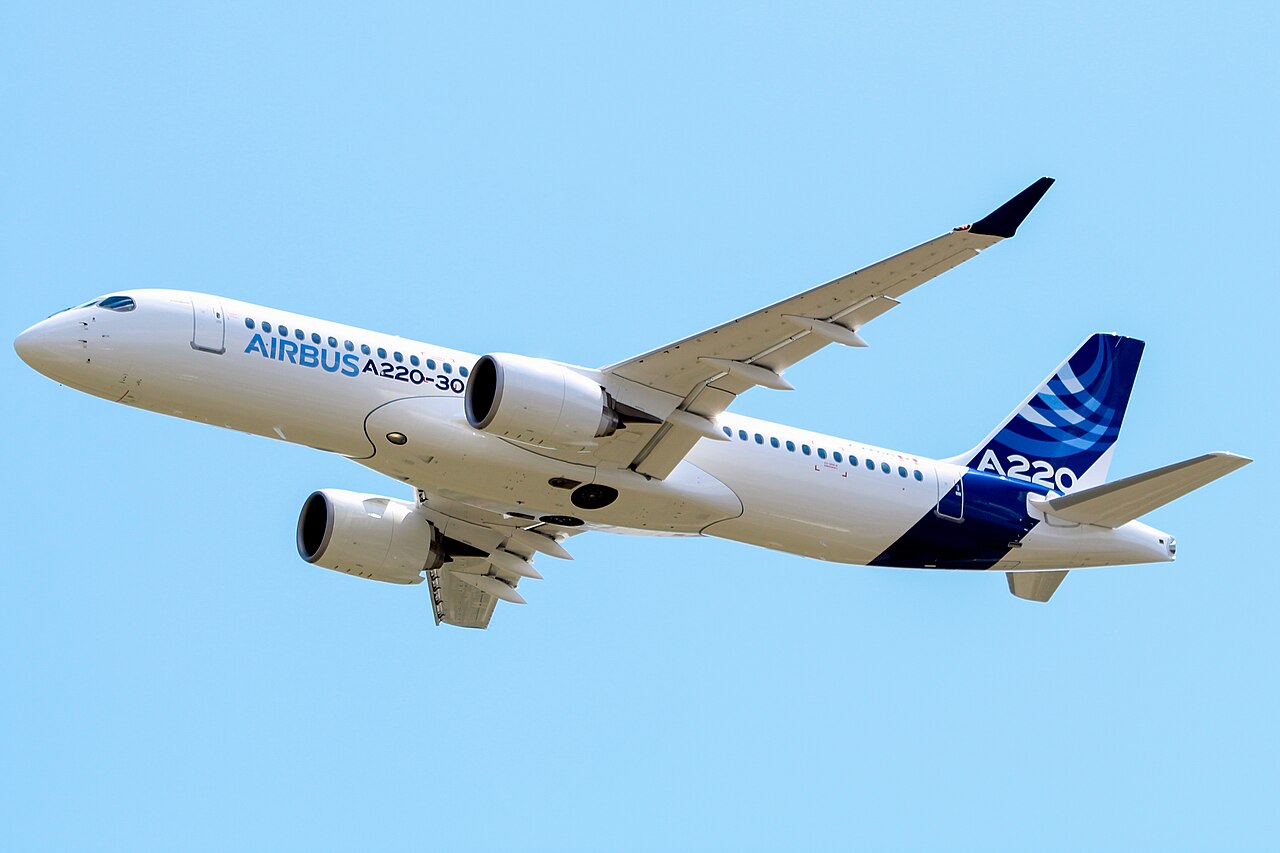
Since its first flight in 2016, the Airbus A220 family has taken the single-aisle regional jet market by storm. Now, with well over 500 aircraft in service, over 1,000 more on order, over 240 million passengers carried, and regularly serving over 500 airports worldwide, the A220 has transformed from a Canadian regional jet to a major global short-haul player
The Airbus A220 is one of the most remarkable success stories in modern commercial a aircraft began life as the Bombardier CSeries, a Canadian-designed airliner intended to fill a gap in the market between regional jets and larger single-aisle aircraft
After years of technical innovation, financial challenges, political controversy and ultimately a change of ownership, the aircraft has become one of the world’s most efficient and comfortable short- to medium-haul airliners
Aerospace Global News takes a look at the history of the A220, its spectacular rise from concept to first flight to first delivery, and how it has transformed the single-aisle short-haul market with its outstanding economics and high passenger appeal.
Origins of the Airbus A220: The Bombardier CSeries
During the early 2000s, Bombardier recognised a significant gap in the commercial aircraft market. Airlines operating aircraft such as the Boeing 717, Boeing 737-500 and older Airbus A318 and A319 models required a modern replacement specifically designed for the 100 to 150 passenger market
According to Bombardier, the idea behind the new aircraft was simple – to build a single-aisle aircraft from a clean sheet of paper and build it to be better than anything in its class
Rather than adapting an existing aircraft, Bombardierchose to develop an entirely new design. The programme was officially launched in July 2008 as the CSeries, with two variants:
- CS100 (later becoming the Airbus A220-100)
- CS300 (later becoming the Airbus A220-300)
The aircraft featured numerous technological advances, which included the extensive use of lightweight composite materials, advanced aluminium-lithium construction, fly-by-wire flight controls, modern and efficient Pratt & Whitney PW1500G geared turbofan engines, as well as large passenger windows to enhance the onboard experience
The new aircraft would also employ five-abreast seating, with wider seats than those available in six-abreast single-aisle aircraft flying at the time
These innovations promised fuel savings approaching 20% compared with older aircraft of similar size while offering passengers a noticeably quieter and more spacious cabin
Development challenges with the CSeries
Although technically impressive, developing the CSeries proved extremely expensive. The programme eventually cost Bombardier an estimated US$6 billion, placing enormous financial pressure on the Canadian manufacturer
Despite these pressures, the prototype CSeries aircraft first flew on 16 September 2013 from Montréal-Mirabel Airport (YMX), the home of Bombardier. Flight testing generally progressed well, although an engine failure during testing in 2014 delayed certification for several months
Transport Canada certified the CS100 in December 2015, followed swiftly by certification from the European Union A and the US Federal A. The larger CS300 variant received certification in 2016
July 2016: The first CSeries aircraft enters service
Swiss International Air Lines(SWISS) became the launch customer, introducing the CS100 into commercial service on 15 July 2016. The A220 had become the first clean-sheet design in its segment in a generation, and the first full fly-by-wire commercial aircraft made and certified in Canada
According to SWISS at the time, passengers immediately praised the aircraft for its exceptionally quiet cabin, its large overhead bins, spacious seating, excellent ride quality and the larger windows
The plane began travelling the globe, opening new routes and connecting people to places they had never been able to reach directly
From northern Europe to the Canary Islands, from East Africa to Mumbai, into the heart of London, and across the vast emptiness of the Australian outback, the A220 could accomplish it all. And it did all this so quietly that it earned a nickname, the ‘Whisperjet’
The longer CS300 followed in December 2016, with Lat version quickly became the more popular model because it offered substantially more seats while maintaining almost identical operating costs to those of the smaller 100 series
Boeing objects to the initial success of the CSeries
One of the defining moments in the CSeries programme occurred in 2017. Having secured a major order from Delta Air Linesfor 75 CS100 aircraft, Boeing claimed Bombardier had sold the aircraft below cost and petitioned the US Department of Commerce to impose tariffs exceeding 290%
Although the tariffs were initially supported, the US International Trade Commission ultimately rejected Boeing’s complaint in January 2018, concluding that Boeing had not suffered material injury
While Bombardier won the legal battle, the dispute highlighted how difficult it would be for the company to market the aircraft globally without a larger industrial partner on board
In October 2017, Airbus announced it intended to acquire a majority stake in the CSeries programme. The agreement officially closed in July 2018 and saw the following changes being made to the CSeries programme under the stewardship of the European planemaker
- Renamed the aircraft the Airbus A220
- Expanded worldwide marketing
- Integrated the aircraft into its global sales network
- Improved supplier relationships
- Established a second assembly line in Mobile, Alabama, specifically to serve orders from US carriers.
The moves taken by Airbus upon gaining control of the CSeries programme almost transformed the programme overnight
Airlines that had previously been reluctant to buy from Bombardier gained confidence in Airbus’ global sales and after-sales support network. Bombardier eventually exited the programme completely, leaving Airbus as the majority owner of the new aircraft programme and reaping the rewards
Airbus A220 production ramps up to meet early demand
With demand for the A220 soaring in its early years, Airbus was forced to establish a second production line for the type in Mobile, Alabama, joining the existing line in Montreal across the border in Canada
Both factories continue to increase production despite ongoing global supply-chain challenges affecting the aerospace industry. Airbus continues working towards substantially higher monthly production rates to meet strong customer demand
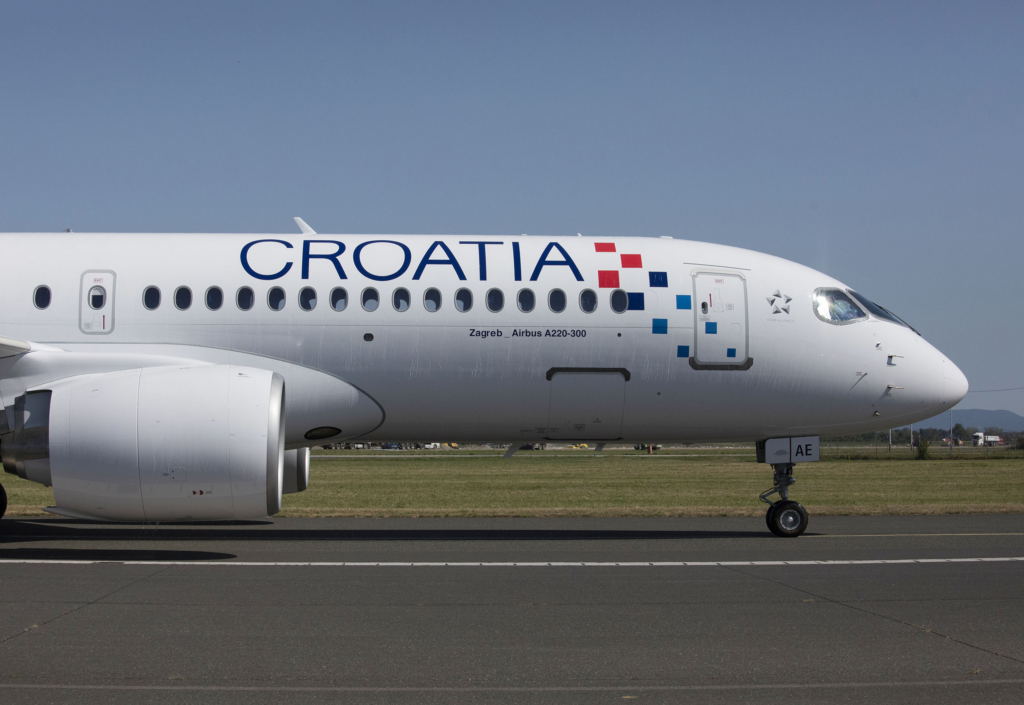
In addition to the economic and passenger benefits that the Airbus A220 could offer, the ability to operate from relatively short runways at regional airports while offering ranges exceeding 3,400 nautical miles afforded airline customers considerable operational flexibility for the type
However, early Pratt & Whitney PW1500G engines experienced several reliability issues, including premature wear and maintenance concerns. These problems resulted in temporary aircraft groundings among carriers globally and increased inspection intervals. However, the issue did not lead to any fatal accidents
As a result of these engine issues, some carriers grounded parts of their A220 fleets while others, such as EgyptAir and Air Austral, retired their fleets entirely. However, most airlines have persevered with the type and have retained their fleets.
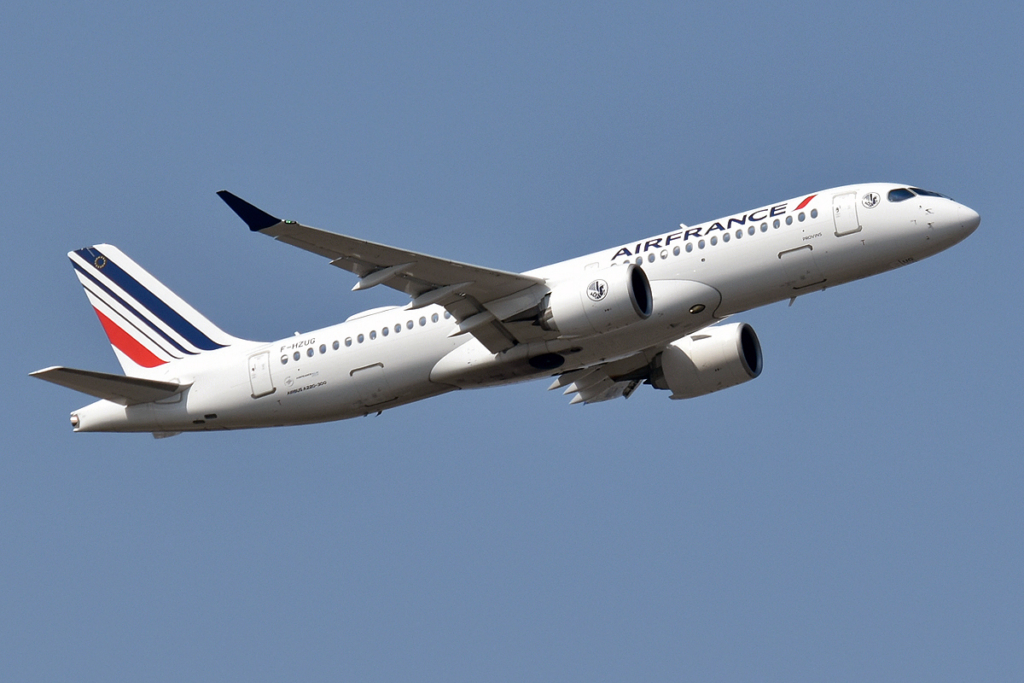
Following Airbus’s takeover of the CSeries programme, sales of the type accelerated dramatically. Nowadays, major customers include Delta Air Lines, Air France, JetBlue, Breeze Airways, Air Canada and airBaltic
In 2026, the A220 programme surpassed 1,000 firm orders after AirAsia placed a landmark order for 150 A220-300 aircraft, the largest single A220 order to date
Top Ten Airbus A220 operators worldwide
Based on aircraft currently in service during 2026, the largest operators of the A220 are –
Largest Airbus A220 Fleets by Airline
| Rank | Airline | Aircraft in Service* |
|---|---|---|
| 1 | Delta Air Lines | 86 |
| 2 | JetBlue Airways | 62 |
| 3 | Air France | 56 |
| 4 | airBaltic | 55 |
| 5 | Breeze Airways | 54 |
| 6 | Air Canada | 42 |
| 7 | Swiss International Air Lines | 30 |
| 8 | Croatia Airlines | 14 |
| 9 | QantasLink | 12 |
| 10 | Korean Air | 10 |
*Fleet numbers continue to change as new aircraft are delivered.
Airlines with the Largest Airbus A220 Fleets
| Rank | Airline | Aircraft in Service* |
|---|---|---|
| 1 | Delta Air Lines | 86 |
| 2 | JetBlue Airways | 62 |
| 3 | Air France | 56 |
| 4 | airBaltic | 55 |
| 5 | Breeze Airways | 54 |
| 6 | Air Canada | 42 |
| 7 | Swiss International Air Lines | 30 |
| 8 | QantasLink | 12 |
| 9 | Korean Air | 10 |
| 10 | Air Tanzania | 4 |
*Aircraft in service at the time of publication.
A220 safety record and incidents/accidents
The Airbus A220 has established an excellent safety record since entering commercial service. As of the present day, the aircraft has suffered no fatal accidents and no hull-loss accidents in commercial airline service
However, in June 2025, an airBaltic aircraft was written offafter it suffered extensive damage following an onboard fire while the auxiliary power unit was being tested on the ground. No injuries resulted.
Although no major operational accidents have occurred, several operational issues involving A220s have been recorded, including bird strikes and collisions with ground vehicles
Additionally, Airbus has also investigated corrosion affecting a limited number of aircraft components. The issue has been addressed through inspections and maintenance actions, with Airbus stating that fleet airworthiness has not been compromised
Competition and the prospects for an Airbus A220-500
The A220 competes primarily with other short-haul regional jets such as the Embraer E190-E2, the forthcoming Boeing 737 MAX 7 and the Airbus A319neo, which has proved unpopular with airlines so far
Many aactive market niche because it offers the economics of a larger narrow-body aircraft while remaining ideally sized for routes carrying around 120 to 150 passengers
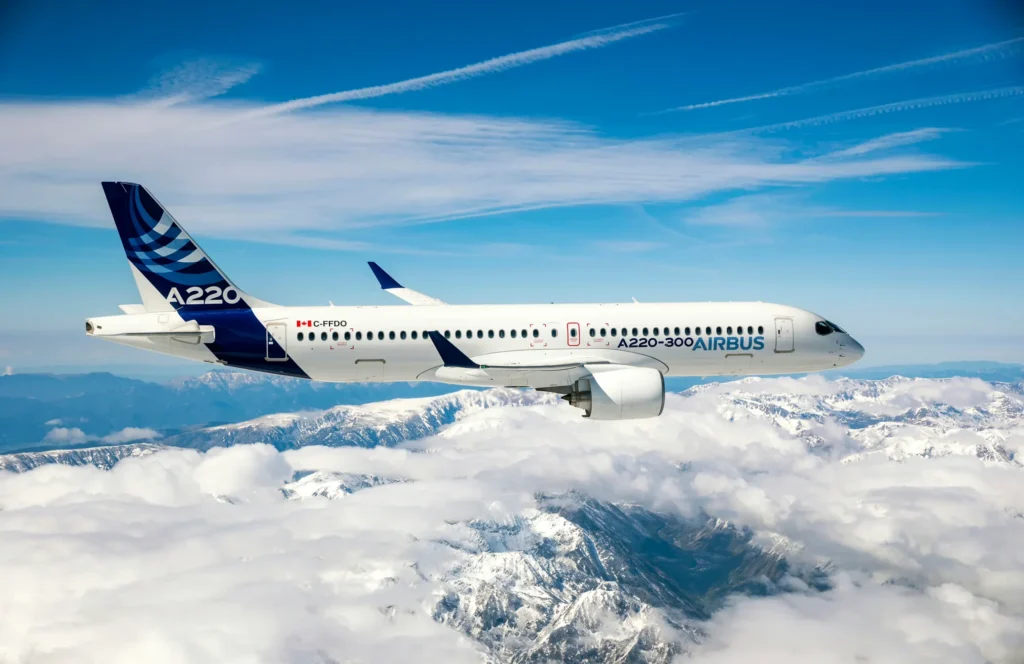
Looking ahead, the future appears bright for the A220 programme. Airbus continues increasing production while exploring the possibility of an even larger A220-500 variant, which many airlines, including AirAsia, have requested
Such an aircraft would directly compete with larger members of the Boeing 737 MAX and Airbus A320neo families. Airbus has not yet formally launched the project, but industry interest remains strong and speculation rife that the model will be launched in due course
Meanwhile, airlines increasingly value the aircraft’s combination of fuel efficiency, passenger comfort and environmental performance. The A220 is also certified to operate using up to 50% sustainable ahe future
The A220 – from unconventional beginnings to global sales success
Ten years on, the A220 is the most technologically advanced aircraft in its class. It is also, now, fully one of the family. It shares the same systems, the same tools, and the same support as the rest of the Airbus fleet and sits squarely within the Airbus commercial line-up.
Equally, the Airbus A220 represents one of the most unusual journeys in avived financial pressures, certification delays and an international trade dispute before finding new life under Airbus ownership
What once appeared to be a struggling programme has become a commercial success, with more than 500 aircraft delivered and over 1,000 orders secured
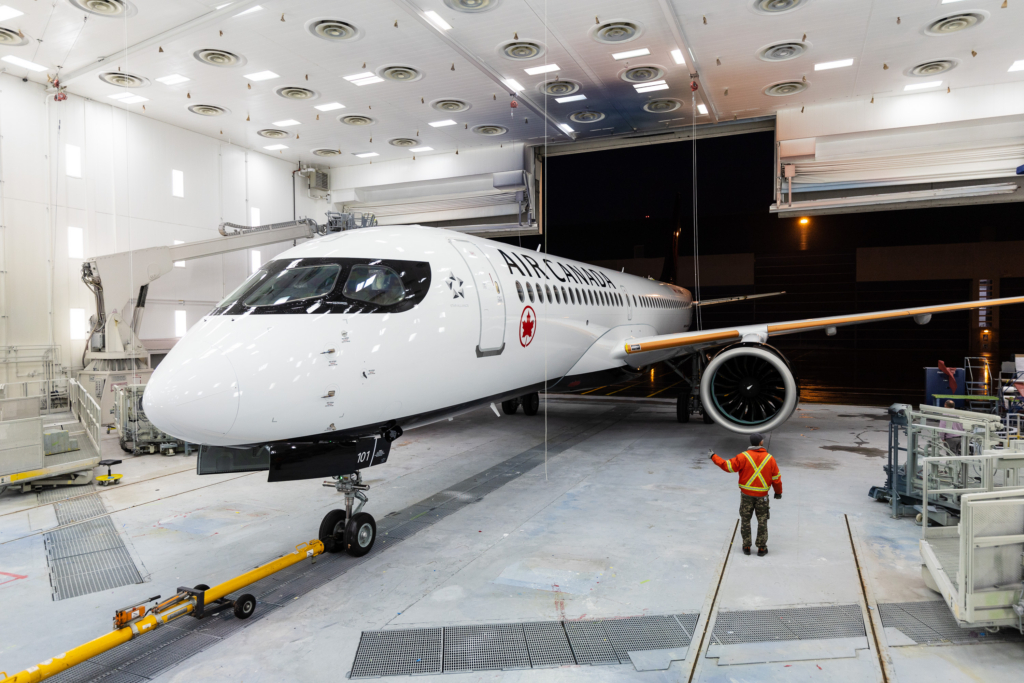
The aircraft’s advanced design, outstanding fuel efficiency, quiet cabin and strong operational performance have made it a favourite among both airlines and passengers. Equally impressive is its safety record – despite years of global service, the A220 has not experienced a fatal accident or hull loss in service
As production increases and airlines continue replacing older fleets, the A220 is well positioned to remain one of the world’s most important short- and medium-haul airliners for decades to come
Click here to read the latest air transport news from AGNClick here to read the latest air transport news from AGN
Featured image: Romain COUPY / Wikimedia Commons
News
Air TransportHistoryA220-100A220-300airBalticAirbusPratt & WhitneySWISS Air Lines
Sign up for our newsletter and get our latest content in your
inbox.
Similar Reads
1
Which airlines have ordered the Boeing 777X – and who gets it first? Which airlines have ordered the Boeing 777X – and who…
Boeing 777X
July 11, 2026
2
European Parliament approves overhaul of EU air passenger rights European Parliament approves overhaul of EU air passenger rights
Passenger Rights
July 10, 2026
3
Air Zimbabwe to relaunch non-stop London flights Air Zimbabwe to relaunch non-stop London flights
Air Zimbabwe
July 10, 2026
4
eVTOLs and next-generation aircraft to watch at Farnborough International Airshow 2026 eVTOLs and next-generation aircraft to watch at Farnborough International Airshow…
Farnborough Internation…
July 10, 2026
Related Topics
More from
Which airlines have ordered the Boeing 777X – and who gets it first?Which airlines have ordered the Boeing 777X – and who gets it first?
July 11, 2026
European Parliament approves overhaul of EU air passenger rightsEuropean Parliament approves overhaul of EU air passenger rights
July 10, 2026
Air Zimbabwe to relaunch non-stop London flightsAir Zimbabwe to relaunch non-stop London flights
July 10, 2026
eVTOLs and next-generation aircraft to watch at Farnborough International Airshow 2026eVTOLs and next-generation aircraft to watch at Farnborough International Airshow 2026
July 10, 2026
Collins brings electric thrust reverser test facility online as it looks beyond Airbus A350 Collins brings electric thrust reverser test facility online as it looks beyond Airbus A350
July 11, 2026
eVTOLs and next-generation aircraft to watch at Farnborough International Airshow 2026eVTOLs and next-generation aircraft to watch at Farnborough International Airshow 2026
July 10, 2026
RAF to receive upgrades across entire Typhoon fleet in £5.4 billion programme RAF to receive upgrades across entire Typhoon fleet in £5.4 billion programme
July 10, 2026
The world’s first commercial vertiport for eVTOLs and air taxis has been certified in Dubai The world’s first commercial vertiport for eVTOLs and air taxis has been certified in Dubai
July 9, 2026
Horizon Aircraft picks BETA flight control system for Cavorite X7 hybrid VTOL Horizon Aircraft picks BETA flight control system for Cavorite X7 hybrid VTOL
July 9, 2026
UK aerospace and defence sectors add £46.8bn as aircraft backlog grows UK aerospace and defence sectors add £46.8bn as aircraft backlog grows
July 9, 2026
Airbus says changing airline networks will reshape aircraft demand to 2045 Airbus says changing airline networks will reshape aircraft demand to 2045
July 8, 2026
Boeing starts up new 737 MAX final assembly line at Everett Boeing starts up new 737 MAX final assembly line at Everett
July 7, 2026
Collins brings electric thrust reverser test facility online as it looks beyond Airbus A350Collins brings electric thrust reverser test facility online as it looks beyond Airbus A350
July 11, 2026
eVTOLs and next-generation aircraft to watch at Farnborough International Airshow 2026eVTOLs and next-generation aircraft to watch at Farnborough International Airshow 2026
July 10, 2026
Gulfstream and Rolls-Royce show 100% SAF cuts contrails at 50,000 feet Gulfstream and Rolls-Royce show 100% SAF cuts contrails at 50,000 feet
July 8, 2026
Airbus and MTU plan hydrogen fuel-cell propulsion venture for future aircraft Airbus and MTU plan hydrogen fuel-cell propulsion venture for future aircraft
July 8, 2026
