

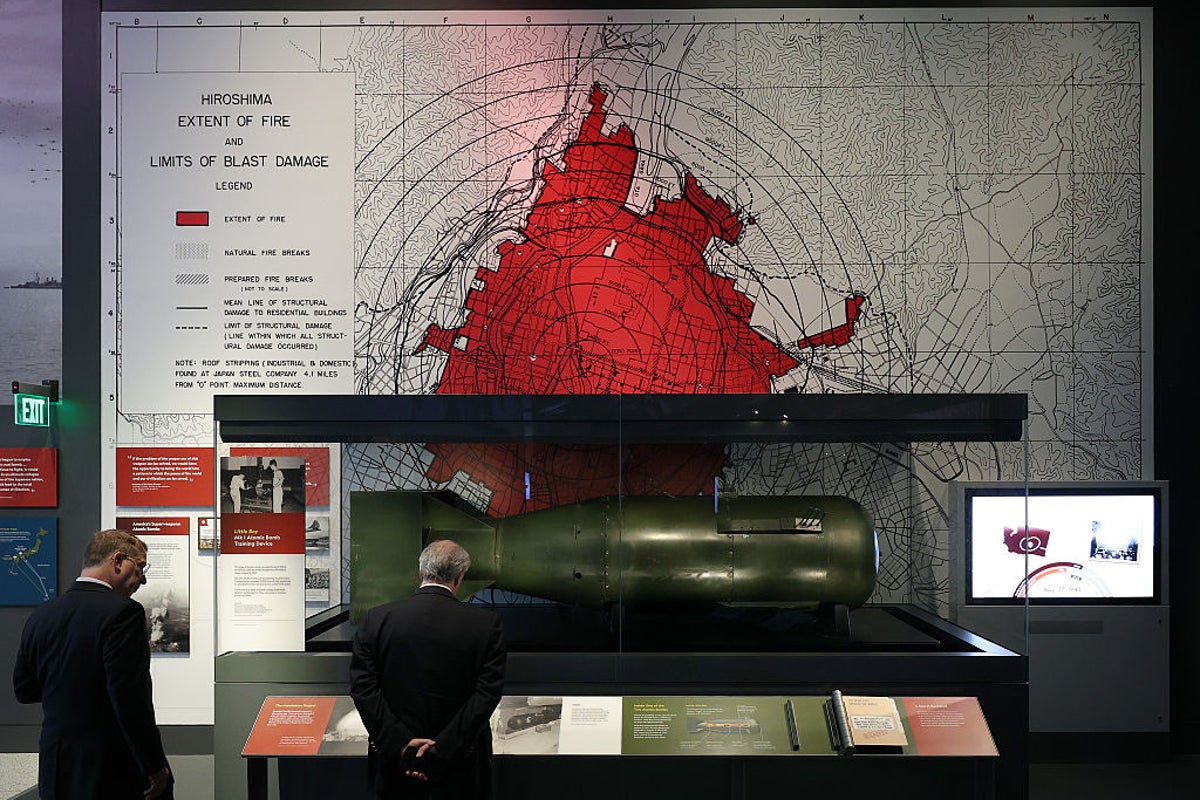
Less than a year after the US dropped two atomic bombs on Japan, bringing an end to the Second World War, President Harry S Truman abruptly ended nuclearcooperation with America’s allies. This included the United Kingdom, despite British scientists having played a pivotal role in the development of nuclear arms through the Manhattan Project
The move triggered a nuclear arms race, costing the UK £150m – equivalent to the entire planned annual budget for the newly created NHS – at a time when the country was still struggling with rationing and post-war reconstruction. But the success of Operation Hurricane, as it was known, ensured that Britain would not remain permanently dependent on Washington for its national security
Eighty years later, the same scenario could be about to play out with AI
On Tuesday, a group of MPs warned that the UK “may not be able to count on its allies” for access to critical AI technologies and risks being cut off without warning. The report from the Science, Innovation and Technology Committee called for the government to set out an AI sovereignty strategy amid a new global race that is redefining geopolitical rivalries, just as nuclear technology reshaped the balance of power after the Second World War
“There is a global race for sovereignty in technologies like AI, whether the government recognises it or not,” said Dame Chi Onwurah, chair of the Science, Innovation and Technology Committee
“The government needs a realistic plan to achieve sovereign capabilities in critical areas or risk having its access cut off at the whim of its partners… Without this, we risk falling even further behind in the global race for science and technology capability, undermining our economic prosperity and national security.”
The warning follows recent restrictions imposed by the Trump administration on some frontier AI models built by Anthropic, which were deemed a “national security risk”
The export ban blocked access to the US company’s most advanced Fable and Mythos models, which Anthropic claims have already uncovered software vulnerabilities in “every major operating system and every major search engine” in the world – including ones that have gone undetected for decades. The models pose a threat to the very foundations of the internet, though newly introduced safeguards mean most of the controls have since been lifted. But Mythos remains unavailable to any organisations outside of the US.
“The Anthropic episode shows that AI sovereignty is no longer an abstract policy debate,” Joe Hancock, head of cyber risk and complex investigations at the London-based law firm Mishcon de Reya, told The Independent. “This episode shows how an advanced AI capability, sold commercially and relied upon operationally, can be withdrawn from every non-US user by unilateral government action at a few hours’ notice, with no transition period.”
At the same time that the US was blocking Anthropic’s models, authorities in China were reportedly holding meetings with leading domestic tech firms to potentially restrict overseas access to their most capable AI models. Chinese authorities have already blocked Meta’s $2bn acquisition of the high-profile AI startup Manus, which was founded in China. The move by Beijing is designed to prevent US firms from taking local talent and intellectual property, which would set them back in the AI arms race.
One Chinese startup claims to have already created a “cyber nuclear weapon” that matches the capabilities of Anthropic’s Mythos, able to discover and exploit software vulnerabilities in critical infrastructure at a scale that has never before been possible
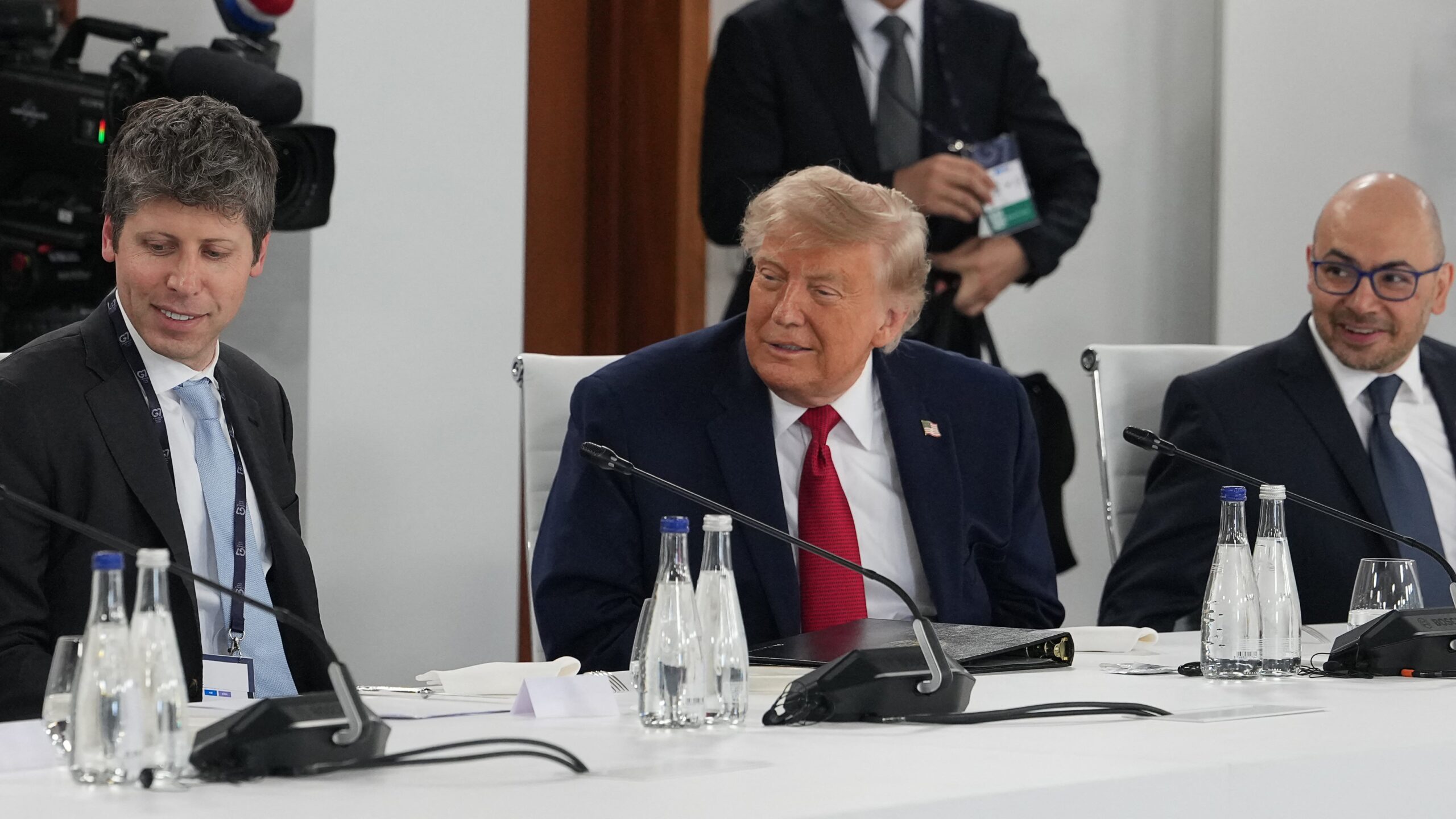
This type of rhetoric has been echoed by CIA director John Ratcliffe, who described the capabilities of advanced AI models as “akin to digital nuclear weapons”. Speaking at the AWS summit in Washington last month, he said: “AI, in particular, is a domain in which the CIA must excel, because every algorithmic decision has implications for US strategic advantage and for the national security of all of our people.”
Just like the 1946 McMahon Act, which ended nuclear cooperation, the US’s decision to restrict access to AI technologies appears to have set off a new arms race – one in which most of the rest of the world outside of China is already lagging way behind. But unlike nuclear weapons, where there is a relatively clear technological endpoint, the extraordinary pace of AI development means other countries may struggle to catch up
The race only ends when one country or company achieves superintelligence, or artificial general intelligence (AGI), whereby an advanced AI exceeds the cognitive performance of humans in all domains. At this point, its development may no longer be under human control, as AI systems rapidly self-improve and pursue goals that are no longer aligned with human interests
The heads of Google DeepMind and ChatGPT creator OpenAI have both warned of the existential threat posed by this type of AI, with Sam Altman and Demis Hassabis signing a statement from the Center for AI Safety calling on governments to take the “severe risks” more seriously. “Mitigating the risk of extinction from AI should be a global priority alongside other societal-scale risks such as pandemics and nuclear war,” the statement read
In May, the Machine Intelligence Research Institute (MIRI), a non-profit research organisation based in California, published a draft framework modelled on a treaty established in the depths of the Cold War to prevent the spread of nuclear weapons
Based specifically on Article I of the 1968 Treaty on the Non-Proliferation of Nuclear Weapons, MIRI’s 50-page “International Agreement to Prevent the Premature Creation of Artificial Superintelligence” calls for an international agreement prohibiting the development of technologies that would be “catastrophic for humanity” if allowed to proceed unchecked
“As the US and China currently lead the world in AI capabilities by a substantial margin, this draft is framed as a bilateral agreement between the two countries,” the proposal stated
“We note that bans are not usually the best way to address dangerous technologies, but artificial superintelligence is uniquely dangerous… For a halt to be effective, it must extend to all countries.”
To date, no countries have signed the agreement
