

Getting your Trinity Audio player ready…
For The Union-Tribune
They march across sidewalks, appear in kitchens, and build sprawling colonies beneath gardens and neighborhoods. Ants are among the most familiar insects in San Diego County, yet scientists say these tiny creatures play a much larger role in the local environment than many people realize
According to the University of California Statewide Integrated Pest Management Program (UC IPM), California is home to roughly 270 ant species, although only a small number are considered pests. In San Diego, one of the most common species is the Argentine ant, an invasive insect that has spread throughout Southern California and often enters homes in search of food and water
While homeowners frequently view ants as unwanted guests, experts emphasize that most ant species provide important environmental benefits. Ants help aerate soil through their underground tunnel systems, allowing water and oxygen to reach plant roots more effectively. Many species also act as natural scavengers, feeding on dead insects and animal remains, which helps recycle nutrients back into the ecosystem. In fact, some ants serve as predators, feeding on fleas, termites, caterpillars and other insects that can damage gardens or landscapes.
Ants also contribute to seed dispersal. As they carry seeds back to their nests, some are dropped or discarded along the way, allowing new plants to grow in different locations. Their activities can improve soil quality and support biodiversity throughout parks, open spaces, and residential landscapes
Despite these benefits, ants can become a nuisance outdoors when farming other unwanted insects such as aphids, or when they move indoors. San Diego’s warm climate allows ant colonies to remain active for much of the year, and periods of hot or dry weather often drive ants into homes in search of moisture. Kitchens, bathrooms, indoor potted plants, and pet feeding areas are common targets
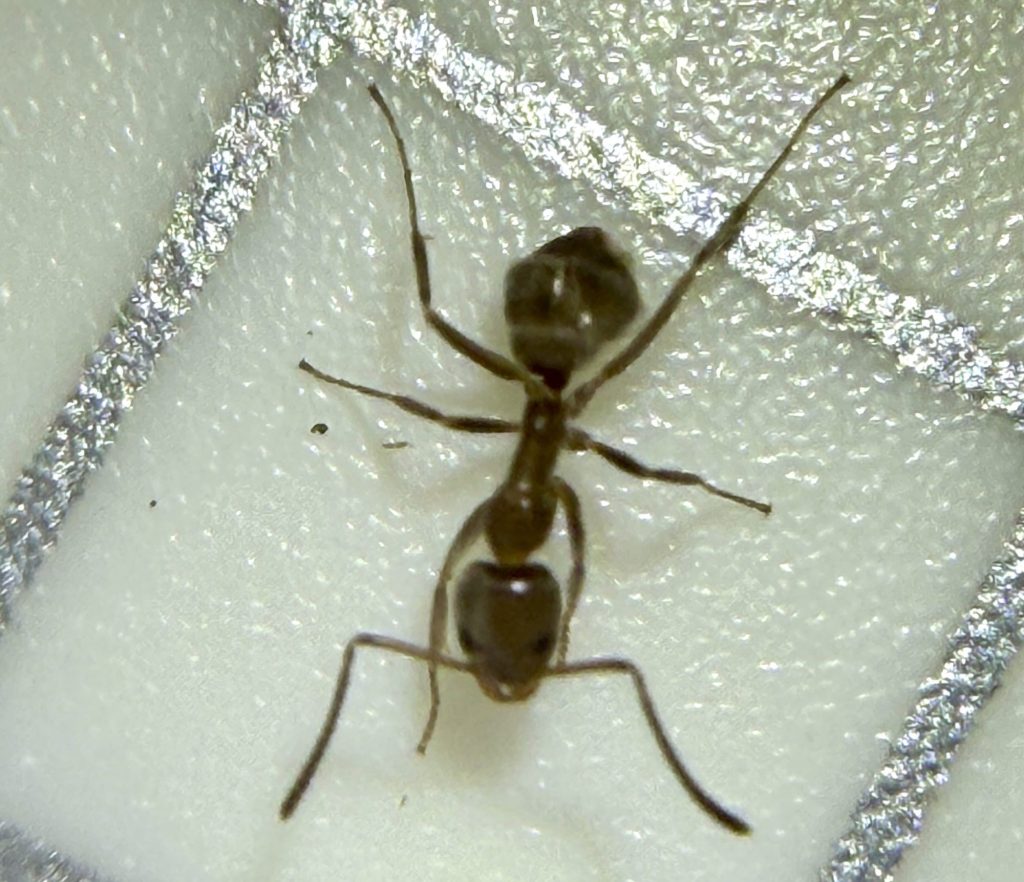
The Argentine ant, which is widespread in coastal Southern California, is especially known for forming massive, interconnected colonies. It is small, 1/8 inch long and uniformly dark brown, but mighty with millions of ants per colony. These ants travel in long trails and can quickly invade homes and landscapes. Other potential pest ant species found in California include odorous house ants, pavement ants, pharaoh ants, southern fire ants, and carpenter ants
UC researchers stress that successful ant control depends on proper identification of the species involved. Different ants have different nesting habits and food preferences, meaning that a treatment effective against one species may fail against another. Winged ants are often confused with swarming termites, which require a different management strategy
Fear not, the University of California recommends an Integrated Pest Management (IPM) approach. IPM focuses on long-term prevention while minimizing unnecessary pesticide use
One of the most important IPM strategies is sanitation. Ants are attracted to crumbs, spills, sugary substances, and accessible waterhing dishes promptly, and repairing plumbing leaks can make a home far less attractive to foraging ants
Exclusion is another key component of IPM. Seal cracks, gaps around doors and windows, gaps around garden hose pipes, and other entry points where ants may enter buildings. Keeping vegetation, mulch, and irrigation water away from foundations can also reduce ant activity near structures
When colonies are established, UC IPM recommends using ant baits rather than broad insecticide sprays. Slow-acting baits take advantage of ants’ social behavior. Worker ants carry bait back to the colony and share it with nestmates through a process called trophallaxis, allowing the treatment to reach queens and developing young. Bait station solutions include a low concentrate insecticide active ingredient and an attractant. They can be refillable or prepackaged and are most effective when placed away from homes, near where you see active ant trails or nest openings. Baits may take up to two weeks to have a noticeable effect on the colony, but it is worth the wait. In contrast, spraying visible ants often kills only a small portion of the colony while leaving the nest intact, with millions of workers ready to replace the small population killed by a contact spray.
UC experts also caution against excessive use of outdoor insecticide sprays, particularly on hard surfaces such as driveways and sidewalks. These products can wash into storm drains and contribute to water pollution without providing lasting control of ant populations
In gardens and landscapes, managing aphids, scale insects, and other sap-sucking pests can help reduce ant numbers. Many ants feed on the sugary honeydew excreted by these insects and will actively protect them from predators. Reducing honeydewgarden, plant nectar producing plants away from the base of your structure and clean up fallen fruit quickly
Although they may test the patience of homeowners, ants remain an essential part of Southern California’s environment. From improving soil health to controlling other insect populations, their ecological contributions often outweigh the problems they cause. Understanding which ants are truly pests — and which are beneficial members of the ecosystem — can help communities manage infestations more effectively while preserving the valuable roles these insects play in nature
Taylor is the UC Master Gardener Program Coordinator and previous staff research associate with the University of California
Get free gardening advice
UC Master Gardeners of San Diego County hotline: 858-822-6910
Email: help@mastergardenerssandiego.org
