

By The Associated PressJuly 10, 2026 1:19 am
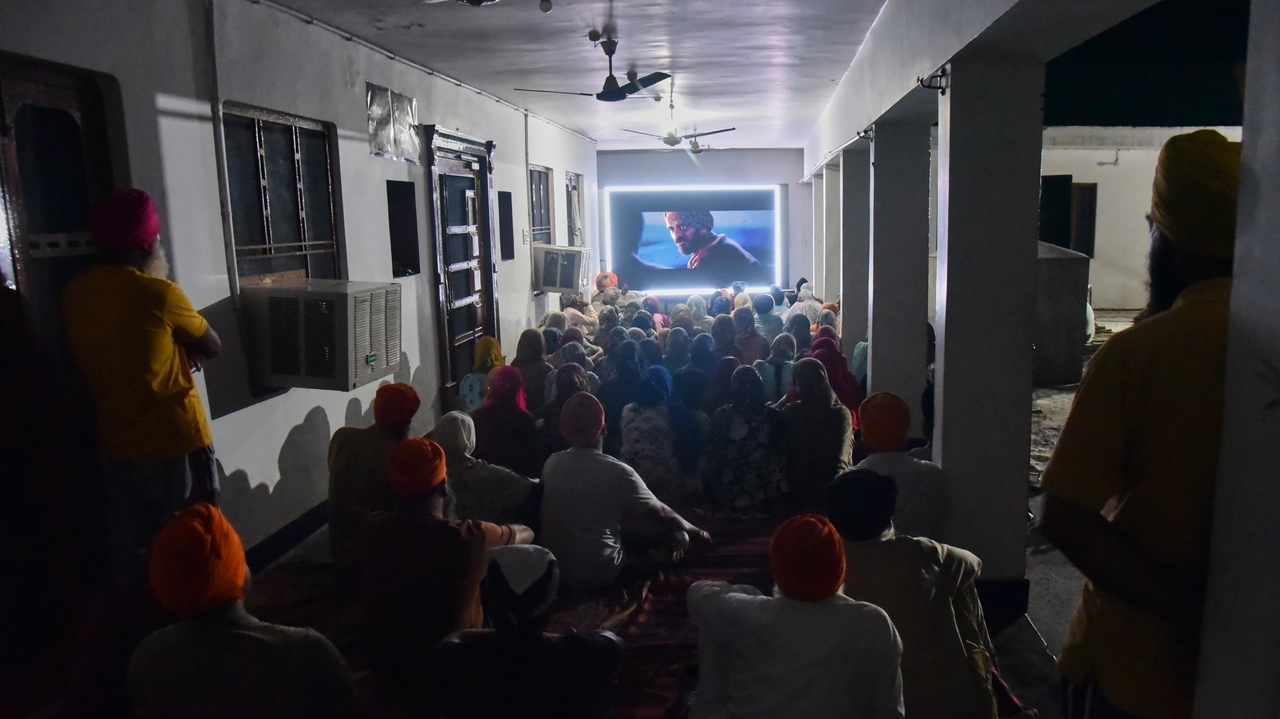
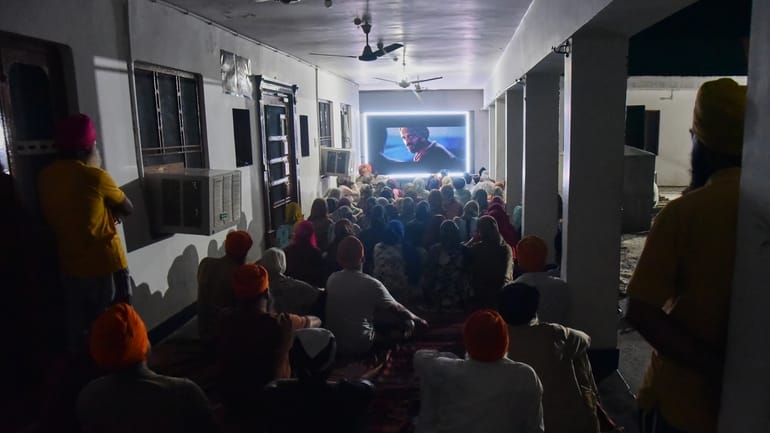
India — As dusk settled over Gurdaspur’s fields, villagers gathered in the courtyard of a Sikh temple to watch a movie that has been blocked by Indian officials
“Satluj” tells the true tale of a human rights activist who investigated thousands of disappearances and extrajudicial killings during a government crackdown on a separatist insurgency in India’s Punjab state in the 1980s and early 1990s
At the screening in Gurdaspur, elderly survivors of the insurgency sat beside teenagers born years after it ended. When the screen flickered to life and “Satluj” movie began, the crowd fell silent
Originally titled “Punjab 95,” the movie was stalled for three years after India’s censor board demanded more than 120 cuts. After failing to secure a theatrical release, it debuted on the ZEE5 streaming platform last week, but was removed in India two days later
The takedown had an unintended consequence
Across villages in Punjab, Sikh organizations, local activists and residents have begun organizing community screenings using copies that have circulated online. The screenings have transformed Sikh temple compounds and village halls into makeshift cinemas where audiences watch not just a film but a retelling of memories of one of India’s bloodiest internal conflicts
Spotlight on Punjab’s insurgency
“Satluj” draws on the life of rights activist Jaswant Singh Khalra, whose investigation into alleged extrajudicial killings exposed one of the darkest episodes of Punjab’s insurgency. The conflict pitted Sikh militant groups seeking an independent Khalistan against Indian security forces and claimed thousands of civilian, militant and police lives
During the insurgency, rights groups documented allegations of enforced disappearances, custodial killings and secret cremations. Khalra’s investigation alleged that thousands of people who had disappeared were cremated anonymously by police without informing their families or maintaining official records
Khalra was abducted in 1995 and later killed. Several police officers were convicted in connection with his murder
Although the insurgency was crushed and support for Khalistan waned within Punjab, the Indian government continues to view separatist sentiment as a national security concern. It has not publicly explained why the film was removed, but officials told local media they ordered it taken down on security grounds
Local organized screenings
The public screenings take shape through grassroots cooperation. Residents arrange for projectors, audio speakers and power generators, Sikh temples and village community spaces become open-air theaters for an evening, and volunteers spread the word from one household to the next
Inderjeet Singh Bains, who helps coordinate screenings in Gurdaspur district, said the initiative aimed to create spaces where people can watch together and reflect on a period of Punjab’s history that continues to resonate across generations
“When we screen the film, we see our elders and mothers, many of them 60 or 70 years old, crying because they have lost their sons. Our people have endured immense suffering,” Bains said
Gurmukh Singh, who attended a screening, said the film gave voice to stories the young in Punjab had heard only in fragments. For families in his village, he said, the insurgency was not history but lived experience, with many losing loved ones in the violence
“After watching the movie, there is a feeling of the grief our earlier generations had to bear,” Singh said
Movie fuels censorship debate
The takedown of “Satluj” has reopened a debate over artistic freedom in India, where films have increasingly run into censorship battles under Prime Minister Narendra Modi’s Hindu nationalist government. Critics have said such cases have become more frequent and accuse Modi’s government of promoting films that align with its nationalist narrative
“Everything happened right before our eyes, so what is there to oppose? The truth is coming to light, and people should be allowed to see it,” said Balwinder Singh, a Sikh religious leader
The government says movie certification decisions are made independently under the law
In a statement, ZEE5 said the film would no longer be available for viewing in India “in light of current developments.” It added that it would explore “every appropriate avenue through due process” to restore it
Audiences revisit painful memories
Diljit Dosanjh, the lead actor who plays Khalra, said he was unconcerned about whether the film remained online because once audiences had seen it, “it cannot be erased.”
That sentiment appears to be playing out in Punjab’s villages
Inside the temple compound in Gurdaspur, the audience watched scenes of police killings, crackdowns and families searching for answers. Afterwards, many lingered in conversation, comparing the film with the real-life memories they had carried for decades
Pawan Deep Kaur described the film as a heartbreaking portrayal of the suffering endured by the older generation
“It made us cry endlessly,” she said
Streaming Now
Credit: Newsday
Concerns at WTC health fund … America 250: Huntington arsenal … What’s up on LI … Get the latest news and more great videos at NewsdayTV
Get more on these and other NewsdayTV stories
Streaming Now
Credit: Newsday
Concerns at WTC health fund … America 250: Huntington arsenal … What’s up on LI … Get the latest news and more great videos at NewsdayTV
Get more on these and other NewsdayTV stories
Most Popular
Latest videos
0:42
Iran developments: Gas prices soar as supreme leader named1:18
The man was identified as Alex Pretti, an intensive care unit nurseCelebrations mark 2026 worldwide1:44
‘We knew we had to take it to the federal option’
